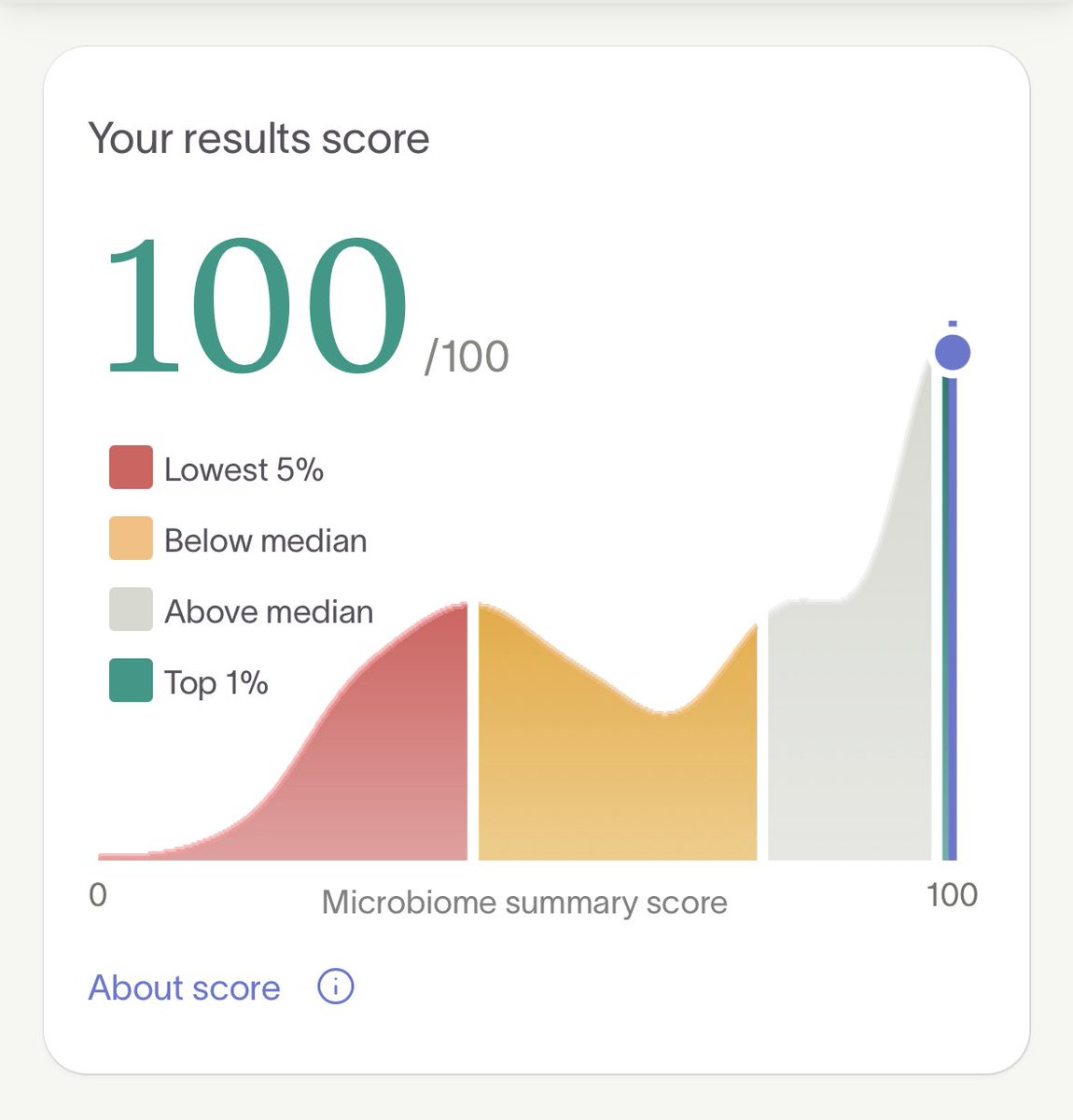
This is her vaginal microbiome report. 100/100 score.
Top 1% of all vaginas.
Her sample is dominated by the single most protective bacterial species a vagina can host (Lactobacillus crispatus).
Only about 25-30% of reproductive age women globally are L. crispatus-dominant, and “dominant” usually means above 50%. Kate is at 98.7%.
The lab found nothing bad to report. (no gardnerella, Candida, STIs, opportunistic pathogens, aerobic vaginitis markers, etc.)
This is linked to lower risk of BV, UTIs, yeast infections, HPV persistence, HSV-2 and HIV acquisition, preterm birth, and improved IVF outcomes.
A vaginal microbiome is downstream of everything: sleep, glucose control, stress, gut health, sexual health, immune function, what you eat, and what you put in it.
You probably saw my 1%
Finally dropping my protocol
A vaginal microbiome is downstream of whole-body health. The goal is ‘Lactobacillus crispatus dominance’ which is the most protective species a vagina can host.
Daily habits
- Cotton underwear
- Sleep 8 hours
- Manage stress
- Stabilize blood glucose
- Move daily
- Don't smoke
What to eat
These are all generally good for health and may support the gut-vagina axis
- Fiber: 25-35g/day
- Fermented foods
- Polyphenols (berries, olive oil, dark chocolate, green tea)
- Omega-3s (fatty fish, flax, chia)
- Adequate iron, especially if you menstruate heavily
- Vitamin D (some studies link low vitamin D to BV)
- Avoid added sugar
- Avoid ultra-processed foods
- Avoid alcohol
What to avoid
Keep in mind that more data is needed on vaginal health… here are some sensible tips on what to avoid:
- Douching. The vagina is self-cleaning
- Scented soaps or "feminine washes"
- Washing inside the vulva, warm water on the outside only
- Boric acid unless treating a confirmed issue (it's not a daily product)
- Probiotic suppositories without a reason
- Leaving tampons in for extended periods
Other tips for you…
Sex hygiene
- Pee after sex if you want… no cost, possibly helpful, evidence is mixed (I do)
- Semen is alkaline (pH ~7.5). Vaginal pH is 3.8-4.5. Repeated unprotected sex with the same partner stabilizes but new exposures destabilize
- FYI, saliva during oral sex transfers oral flora
- Get tested with every new partner
Your testing options:
- Vaginal microbiome test (mine is from Immortals)
- Vaginal pH strips at home (target: 3.8-4.5)
- Full STI panel with every new partner
- Pap/HPV per your country's guidelines
Watch out for…
- Fishy odor (BV)
- Cottage cheese discharge + itch (yeast)
- Frothy yellow-green discharge (trich)
- Burning with urination (UTI/STI)
- Bleeding between periods or after sex
- Pelvic pain
Fortunately, the vaginal microbiome is one of the most responsive systems in the body. It changes within days of a behavior change.
I hate that taboo topics stop women from getting access to healthcare
This is why I measure my vaginal microbiome every day (it’s part of a 14 million data point female health experiment).
This is her vaginal microbiome report. 100/100 score.
Top 1% of all vaginas.
Her sample is dominated by the single most protective bacterial species a vagina can host (Lactobacillus crispatus).
Only about 25-30% of reproductive age women globally are L. crispatus-dominant, and “dominant” usually means above 50%. Kate is at 98.7%.
The lab found nothing bad to report. (no gardnerella, Candida, STIs, opportunistic pathogens, aerobic vaginitis markers, etc.)
This is linked to lower risk of BV, UTIs, yeast infections, HPV persistence, HSV-2 and HIV acquisition, preterm birth, and improved IVF outcomes.
A vaginal microbiome is downstream of everything: sleep, glucose control, stress, gut health, sexual health, immune function, what you eat, and what you put in it.
almost no one has said “worker is more valuable”
but it seems our societal infrastructure disagrees?
In the U.S…
1/ the US is the only wealthy country with no federal paid parental leave. workers get 12 weeks unpaid… if they qualify (around 40% don't)
2/ infant daycare costs more than in-state college tuition in most states (around $13k per yr average)
3/ a work year is ~250 days. a school year is ~180. the school day ends 2–3 hours before the work day
4/ social security pays you based on your 35 highest-earning years…. While a year spent raising a kid counts as $0
how does one reconcile that?
Women have erections too
This happens during sleep... just like men
The clitoris contains erectile tissue. When blood flow to the clitoris increases, it can become enlarged and firm.
It is a normal sleep function and non sexual.
Studies show women get spontaneous increases in genital blood flow during REM sleep…
This is the female version of nocturnal erections. Researchers call it nocturnal clitoral tumescence.
It can happen without stimulation, arousal, or any sexual activity. You can have a female erection without an orgasm... similar to male nighttime erections. Clitoral engorgement and orgasm are two different physiological responses.
We don't know yet if men or women have more sleep erections… Men's nighttime erections have been studied for decades
Female nighttime erections are less understood. We don't have equal data on frequency, duration, or function.
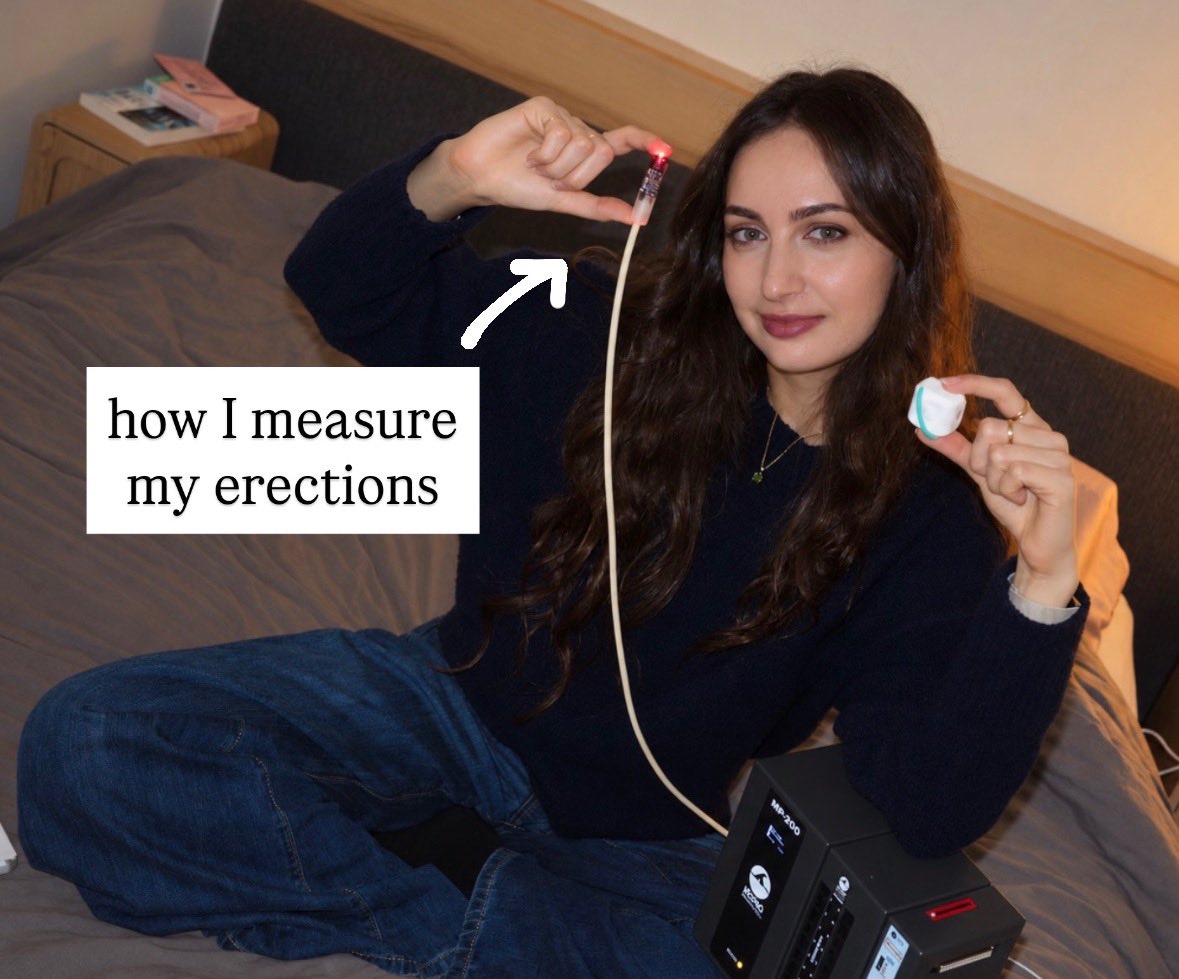
I’ve been tracking my own nighttime erections.. because women need this research too.
I have a special device I lovingly call my “techno tampon” to measure it.
I’m also tracking 1,900 biomarkers and collecting 14 million data points on my menstrual cycle.
I'll share all the results here
yep, they affect clitoral blood flow too… but not necessarily arousal. In some studies sildenafil increased clitoral blood flow in women (measured with ultrasound). But that didn't reliably translate to more arousal. In early 2000s trials women often felt no different from placebo
pregnancy can change women's feet… even after birth
A small 2013 study found arch height dropped and feet got longer during pregnancy, and the changes hadn't reversed 5 months after birth
some pregnancy hormones loosen ligaments to prepare the pelvis, but it affects ligaments all over the body
women consistently eat more ~2 weeks at a time
A meta-analysis across 15 studies showed that food intake increased by around 168 calories per day during the luteal phase (2nd half of menstrual cycle)
The change is nearly invisible... but the trend is consistent
you might literally ‘feel’ your ovulation
“Mittelschmerz” is a medical term for ovulation pain. It literally means “middle pain” in German… and it can affect up to 40% of women who ovulate
The exact cause of the pain is still unknown
some theories:
+ contractions around the ovarian follicle
+ prostaglandin activity around ovulation
+ the follicle changing and breaking open
+ fluid or a little blood entering the pelvis
Fetal cells have been found in mothers' hearts, livers, skin, thyroid, lungs, and brain...
These are actual living cells
This means some of your child’s cells can live in your body for decades
The placenta is a barrier with gaps... starting early in pregnancy (as early as the first trimester) a trickle of whole cells crosses it in both directions