🎟️ 2 Floor Tickets for sale
🗓️ December 8th, 2024
🪑 Seat Details: Section A6 Row 14
📍#VancouverTSTheErasTour
💰 Pair for $1,800 USD via PayPal G&S
💬 Follow, reply, name your favorite Taylor lyrics, tag a fellow Swiftie, and repost to enter
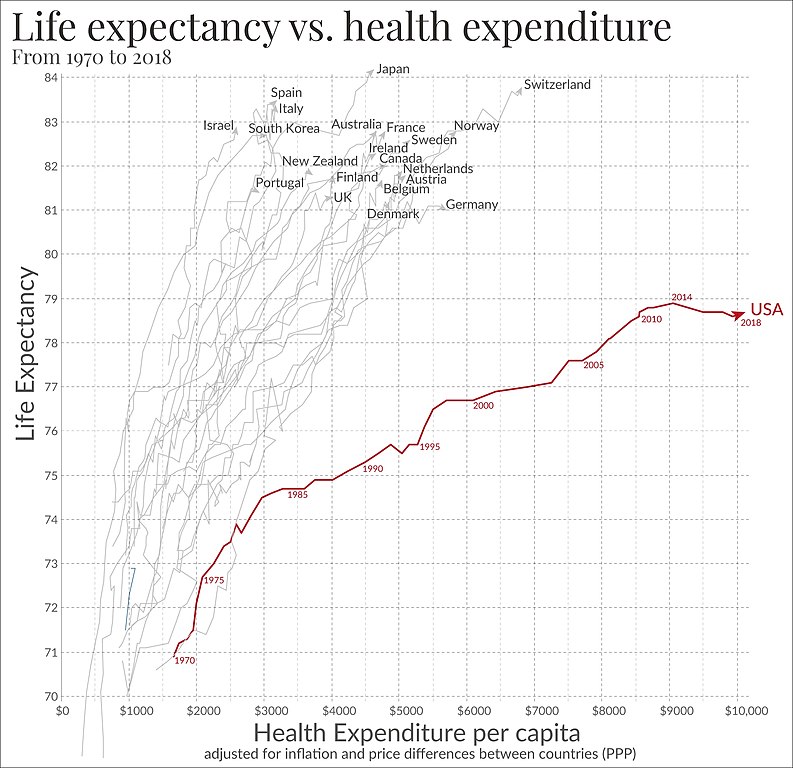
$10,000 per person on healthcare—that's what the US spends—according to a graph Trump shared on Joe Rogan's podcast.
Far more than Europe, yet Americans are sicker and die younger.
The reason for this?
After some digging, I found EXACTLY what’s going on: 🧵
The last minutes before penalty shootouts can teach us about managing under pressure.
France's Deschamps doesn't buy into penalty training. This can be spotted.
In the World Cup final, he seemed clueless about who would shoot. Tchouaméni was picked after intensely scanning.
1/8
$9.8B Deficit In Ontario: Does Anybody Actually Care? The Awful Truth Is: Not Really
But we SHOULD care because when no one gives a damn about Deficits we're training Government it's fine to disintegrate money
Ontario is the biggest Non Sovereign Debtor ON EARTH
Say What?
2/
@danielfoch Don’t think #2 is quite significant. Overall student demand will definitely not drop 50%, even with less intl students. It’ll change the distribution of intl vs domestic in uni towns, but prob no significant impact to overall demand, at least at unis outside the gta
In March We Hit 2 Full Years From The First Bank Of Canada Rate Increase: What Have We Learned?
We learned it REALLY DOES take 2 years for the full effects to set in: because the big cracks are only showing up NOW
Yes, we saw the slowest home sales year in decades 2023
2/
It is VERY worth noting that after 85 offers, the sale price was $999,999, by the way. Not $1,000,000.
This tells you the entire story.
It's almost as though lenders see no risk below a million dollars.
This is how CMHC cements the price floor.
@ronmortgageguy@danielfoch@MikePMoffatt It’ll definitely kill some of the ‘going away’ experience for domestic university students, and may deter some from going to unis outside the gta.
Also those off campus detached rentals are more like 70 year old 2000 sqft or less houses with 10 students.
@ronmortgageguy@danielfoch@MikePMoffatt It won’t have the impact people think. It will just change the demographic of students in on-campus housing vs local sfd rentals. Unis will prioritize on-campus housing for Intl students (more profitable) and force first year students to find their own housing.
@sm_cmc I mean sure but they’re not the only ones. I went to Mac and seen many student houses firsthand, in Hamilton at least, and I can tell you many domestic students also accept some of these disgusting living conditions. It’s unfortunate but it’s more than international students
I’m not sure if that will affect the mom and pop landlords too much…I think what it will do is lead to unis saving more of their on-campus housing for international students (since they’re more profitable) and force more first year students into the mom/pop rental market - net 0
This happens every January:
1⃣ There are very few homes getting listed for sale
2⃣ The nicest homes get 20+ offers
3⃣ The winner usually ends up overpaying
If you're a home buyer, remember that more homes will hit the market in the weeks/months ahead
The Ford government paid Mark Saunders $171,000 to be a special advisor on Ontario Place development, but there is no record of any of his work. An FOI request for any copies of advice or reports during his time in the role found “no records exist.” Story: https://t.co/HOMBQ7UTmS
Nature rejected her paper for not being original,
University of Pennsylvania (her employer) demoted her,
and yesterday Katalin Karikó won the Noble Prize in physiology.
In mid-2000s, Karikó and her Drew Weismann submitted their paper on mRNA (messenger Ribonucleic Acid) to Nature.
Nature desk rejected their paper for being "an incremental contribution" only. The paper was later published in another journal, Immunity.
Earlier in her career at the University of Pennsylvania, Karikó was demoted because her applications for grants kept getting rejected.
But Karikó persevered and kept on going.
In 2013, she joined BioNTech, a German company founded by two scientists, Uğur Şahin and Özlem Türeci. In 2018, BioNTech partnered with Pfizer to develop mRNA vaccines against the influenza virus.
When the COVID-19 hit the world, Karikó's research helped Pfizer to produce the first vaccine against the disease.
I don't know how the Nature editors who desk rejected Karikó's paper and the Penn administration who demoted her feel about Karikó Nobel Prize.
Takeaway: Many academics and scientists worry about getting published in "prestigious" journals. Instead of worrying about prestige, we should try to put our work out as quickly as possible like Karikó did.
Once you put your work out without caring about prestige, two good things happen:
1. Your work will lead to newer opportunities.
2. You will start getting feedback from the scholarly community, which you can use to iterate and improve.
Here's another interesting Nobel Prize story.
Peter Higgs, a British physicist, joined the University of Edinburgh in 1956. By 1964, Higgs has published his groundbreaking work about subatomic particles.
After 1964, Higgs published less than 10 papers.
When his department would ask him how many papers, he published in a given year, he would reply "None."
It happened so often that he stared feeling like an "embarrassment to the department."
The University of Edinburgh, however, never fired Higgs because in 1980 he had been nominated for the Nobel Prize.
Higgs retired in 1996 and stayed on as an emeritus professor at Edinburg.
In 2012, experiments conducted at the CERN laboratory confirmed Higgs work and the existence of Higgs Particle.
And in 2013, Higgs was awarded the Noble Prize in physics and the University of Edinburgh got rewarded for being patient.