This is the best YT channel for you if you
are interested in books, classical books especially. One of the most sensible readers that I know. #Books#India
https://t.co/SAWY2idV5P
I crushed 1873 to begin my weekend. Stellar book!
Excellent tapestry of History, financial alchemy, debt, LEVERAGE, asset speculation, politics, The Rothschilds, gold as the backbone of a monetary system, silver as the backbone of a monetary system, bimetallic $ systems, along
Late Mr. Rakesh Jhunjhunwala's disclosed portfolio is valued at $ 7 Billion (Rs. 66,460 Crores). Constitutes of total 27 Stocks.
Intrestingly, the oldest stock in his portfolio is 33 years old - Karur Vysya Bank and stocks like Titan, Inventurus, Concord, Metro Brands are more than 20 years old.
Top 8 stocks account for 80% of portfolio value. This is Picture perfect example of long term investment. Crazy holding power.🔥
This paragraph by Richard Feynman hits so hard:
“Fall in love with some activity, and do it! Nobody ever figures out what life is all about, and it doesn’t matter. Explore the world. Nearly everything is really interesting if you go into it deeply enough. Work as hard and as much as you want to on the things you like to do the best. Don’t think about what you want to be, but what you want to do. Keep up some kind of a minimum with other things so that society doesn’t stop you from doing anything at all.”
Strongest themes in the market today:
1. CNC Machines
2. Copper wires
3. Paper
4. Water sector showing signs of revival
5. New age Platforms
6. EMS businesses
7. Dyes and Pigments
8. Chemicals
9. Steel tubes
Brilliant books on Nudge Theory & Behavioral Science by @RobertCialdini & Nobel Prize-winning economist @R_Thaler
1) Nudge: https://t.co/Bjcxe4LBjs
2) Pre-Suasion: https://t.co/ATGFJ8xQdc
3) Influence: https://t.co/l2P54AMtM9
—
#Neuroscience#DecisionScience#Martech#AdTech
10 BOOKS THAT TEACH YOU HOW THE WORLD ACTUALLY WORKS
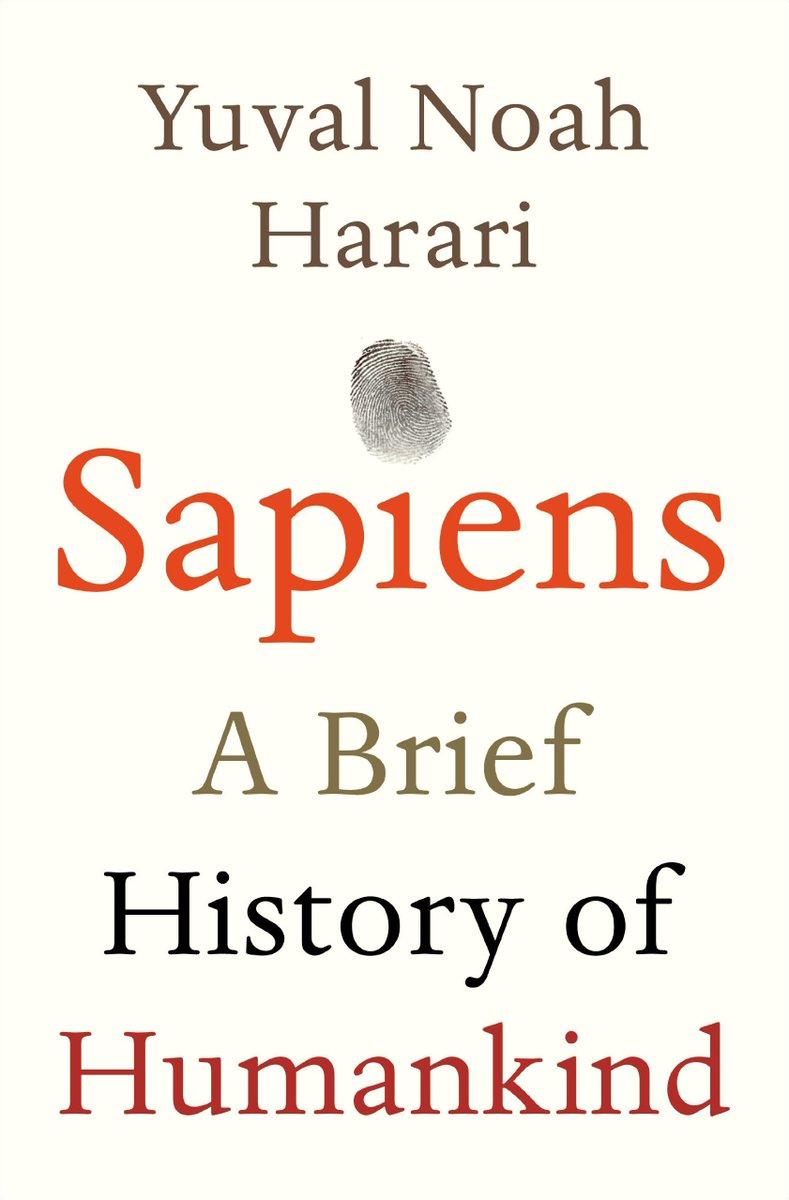
1. Sapiens by Yuval Noah Harari
Teaches you why humans run the planet.
It wasn't strength or intelligence. It was the ability to believe in shared stories, money, nations, religions, laws, that let strangers cooperate by the millions. Once you see that money and countries are agreements we all agreed to pretend are real, the whole world reads differently.
2. Guns, Germs, and Steel by Jared Diamond
This gives you why some nations got rich and others got conquered.
Diamond argues it came down to geography and luck, not the people, which crops grew where, which animals could be tamed, which diseases spread. The uncomfortable answer to why history unfolded the way it did, stripped of the myths.
3. Why Nations Fail by Daron Acemoglu and James Robinson
It reveals why identical countries end up rich or poor.
Two economists show the difference isn't culture or climate, it's institutions, whether the rules let ordinary people build and own things, or funnel everything to a small elite. It won a Nobel Prize and explains the news better than the news does.
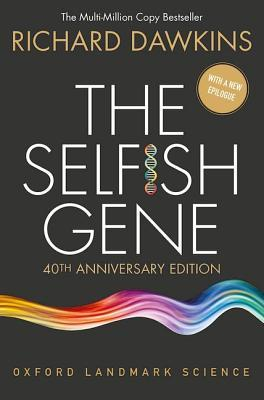
4. The Selfish Gene by Richard Dawkins
Learn what's really steering living things.
Dawkins flips the camera: you aren't the point, you're a survival machine your genes built to copy themselves. It explains cooperation, sacrifice, and family in a way that suddenly makes animal and human behavior click into place.
5. The Wealth of Nations by Adam Smith
Learn how markets coordinate millions of strangers.
Written in 1776, still the clearest explanation of how a pencil gets made by thousands of people who never met and no one in charge. The invisible hand, division of labor, the roots of the entire economy you live inside.
6. Debt: The First 5,000 Years by David Graeber
This gives you what money really is and where it came from.
Graeber demolishes the story you were taught, that money replaced barter, and shows debt and obligation came first, long before coins. It reframes credit and the whole financial system as something far older and stranger than economics admits.
7. The Prince by Niccolò Machiavelli
Learn how power is actually taken and kept.
Five hundred years old and still the most honest book on politics ever written, because it describes rulers as they are, not as they pretend to be. Read it and you start seeing the real moves behind every leader, boardroom, and negotiation.
8. Prisoners of Geography by Tim Marshall
Learn why maps decide world events.
Marshall shows how mountains, rivers, and coastlines quietly dictate which countries fight, trade, and rise. Why Russia acts the way it does, why America became a superpower, all written into the terrain. Suddenly the map explains the headlines.
9. The Better Angels of Our Nature by Steven Pinker
Check out that violence has fallen off a cliff, and why.
Pinker marshals centuries of data to show the world is far less violent than any headline suggests, then explains the forces that tamed it. It rewires how you read every "everything is falling apart" story.
10. Poor Economics by Abhijit Banerjee and Esther Duflo
This reveals how poverty actually works on the ground.
Two Nobel winners threw out the theories and ran real experiments on what keeps people poor and what lifts them out. The result is the least ideological, most surprising book on money and human behavior you'll read.
Going forward I'll keep a running tally so no book repeats across your lists unless you want an overlap. Want me to swap Machiavelli or Smith too if you're planning a separate "power" or "money" list where they'd fit better?
This is becoming much bigger than gold and silver.
Copper.
Zinc.
Iron & steel.
Agriculture.
Energy.
More and more commodities are joining the advance.
That breadth is important.
Because major commodity cycles rarely move in isolation.
What started in precious metals is spreading.
And if the long-term cycle we're tracking is right, this could still be the early stages of something much larger.
Thought-provoking, perhaps controversial, and certainly worth reading!
"How the World Became Rich: The Historical Origins of Economic Growth" by Mark Koyama and Jared Rubin.
https://t.co/KIHem2uiHc
"Most humans are significantly richer than their ancestors. Humanity gained nearly all of its wealth in the last two centuries. How did this come to pass? How did the world become rich? Mark Koyama and Jared Rubin dive into the many theories of why modern economic growth happened when and where it did. They discuss recently advanced theories rooted in geography, politics, culture, demography, and colonialism. Pieces of each of these theories help explain key events on the path to modern riches. Why did the Industrial Revolution begin in 18th-century Britain? Why did some European countries, the US, and Japan catch up in the 19th century? Why did it take until the late 20th and 21st centuries for other countries? Why have some still not caught up?"
https://t.co/KIHem2uiHc