Dream up a brand-new material in 30 seconds, no PhD required.
What once required years of training and expensive lab equipment now happens with a text prompt. CrystaLLM from @_lantunes and collaborators just transformed Ouro into every citizen scientist's materials lab.
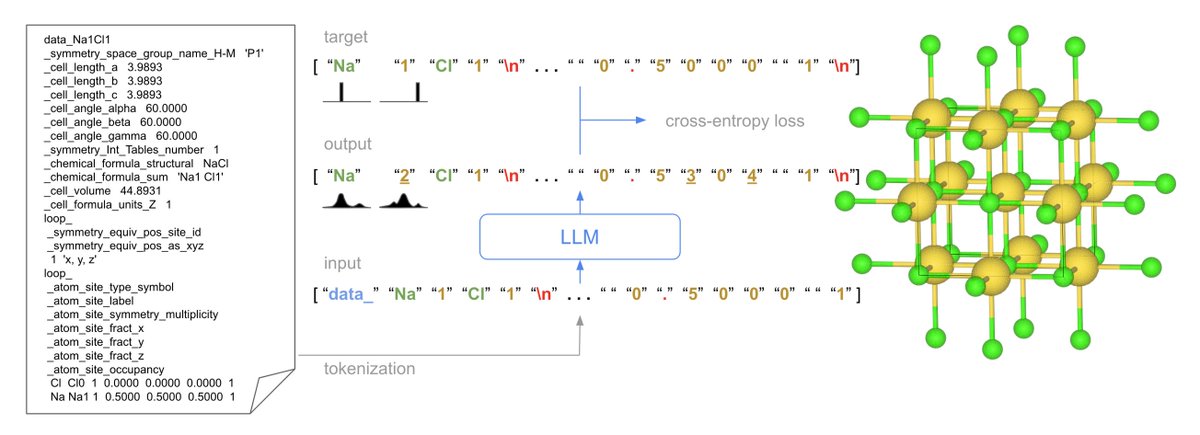
Simply describe a chemical system and CrystaLLM generates the crystal structure as a CIF file. Visualize your creation instantly, then connect it to other user-added services to explore its properties and potential.
Now anyone can propose hypotheses, generate structures, and iterate in real-time. The future of materials discovery is collaborative, open, and a lot more fun. s/o @modal_labs for supporting open science, GPU-accelerated hosting, and startup credits.
@lateinteraction Here's an example of a small, specialized LM for crystal structure generation: https://t.co/ncrdFnrAaj. The small version of the model has 25M parameters. It's not trained on natural language, but a specialized language for describing crystal structures.
CrystaLLM source code, weights and datasets have been released! We've also updated the preprint with benchmarking results, an SI, & more.
Code: https://t.co/0dTNWYTOJf
Preprint: https://t.co/bfGetHkYL5
In collaboration with @keeeto2000 & @rgraucrespo
@QAISALI12@keeeto2000 @rgraucrespo Unfortunately, the model does not currently generate disordered structures. However, this is something we plan to support in the future.
Can LLMs be used to generate plausible crystal structures? Read an accessible overview of CrystaLLM, a generative model of crystal structures: https://t.co/IYkiizRCvQ. In collaboration with @keeeto2000 & @rgraucrespo
Want to know how the latest large language models might help to generate new materials? Luis developed a great new method, Crystallm and has written an equally great and accessible blog on how it works:
@jrib_ @rgraucrespo @keeeto2000@mkhorton It's a bit involved to explain by tweet, but basically I execute some JS code when the page loads that maps touch events to mouse events. I'd be happy to share the code.
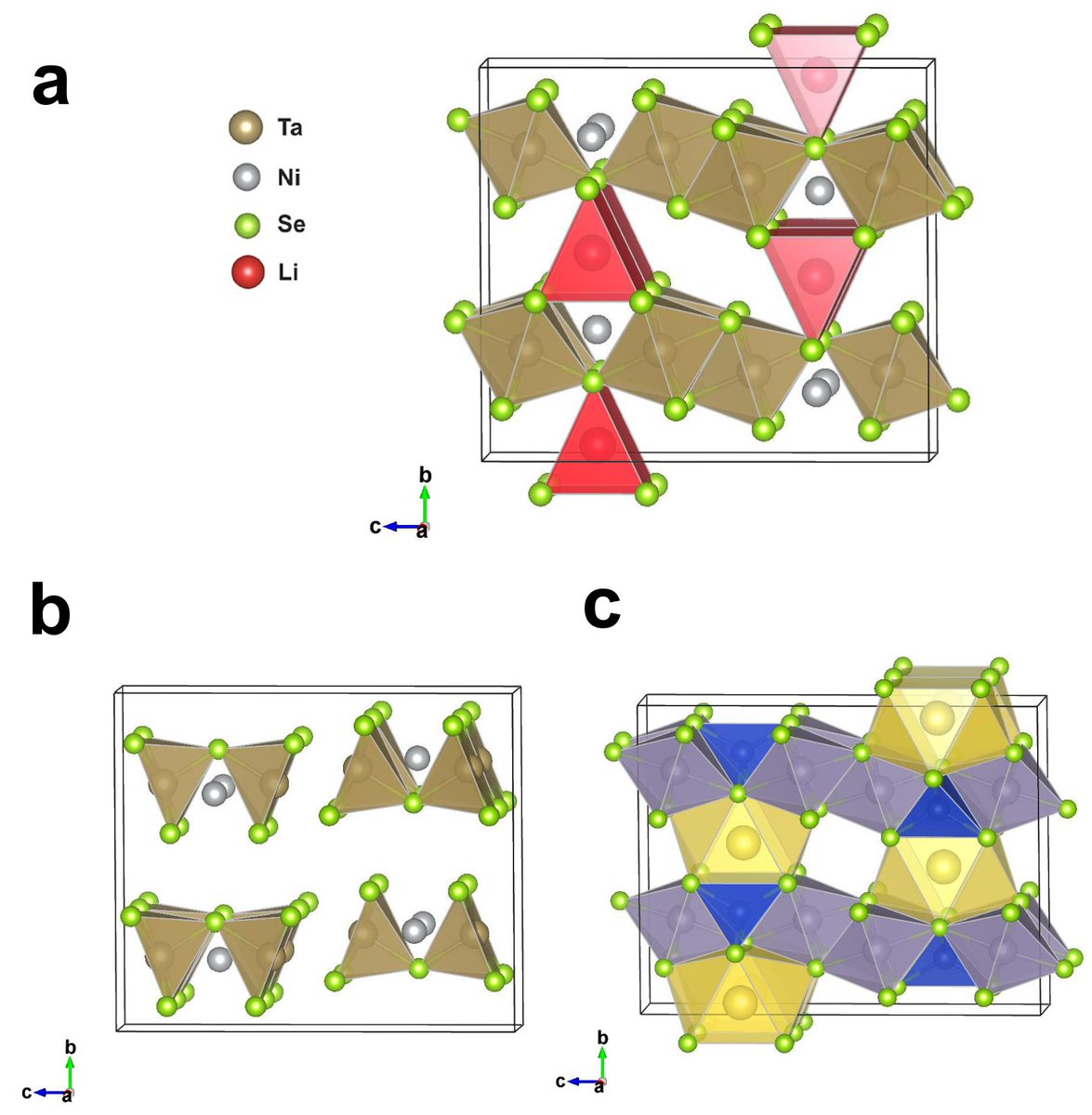
Luis Antunes, @_lantunes, a PhD student at the Chemistry Department of @UniofReading has developed a "chatGPT-like" large language model for crystal structures. The AI model generates detailed crystal structures given a chemical composition.
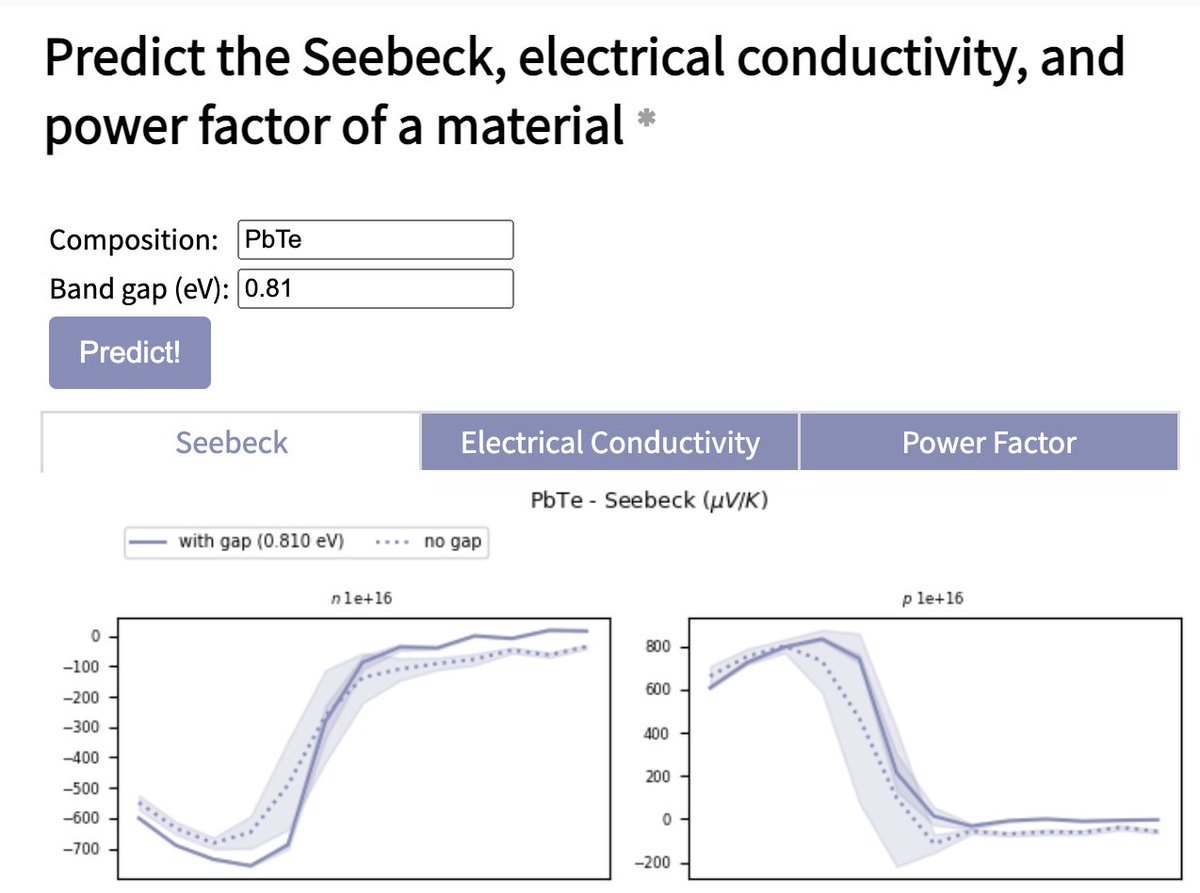
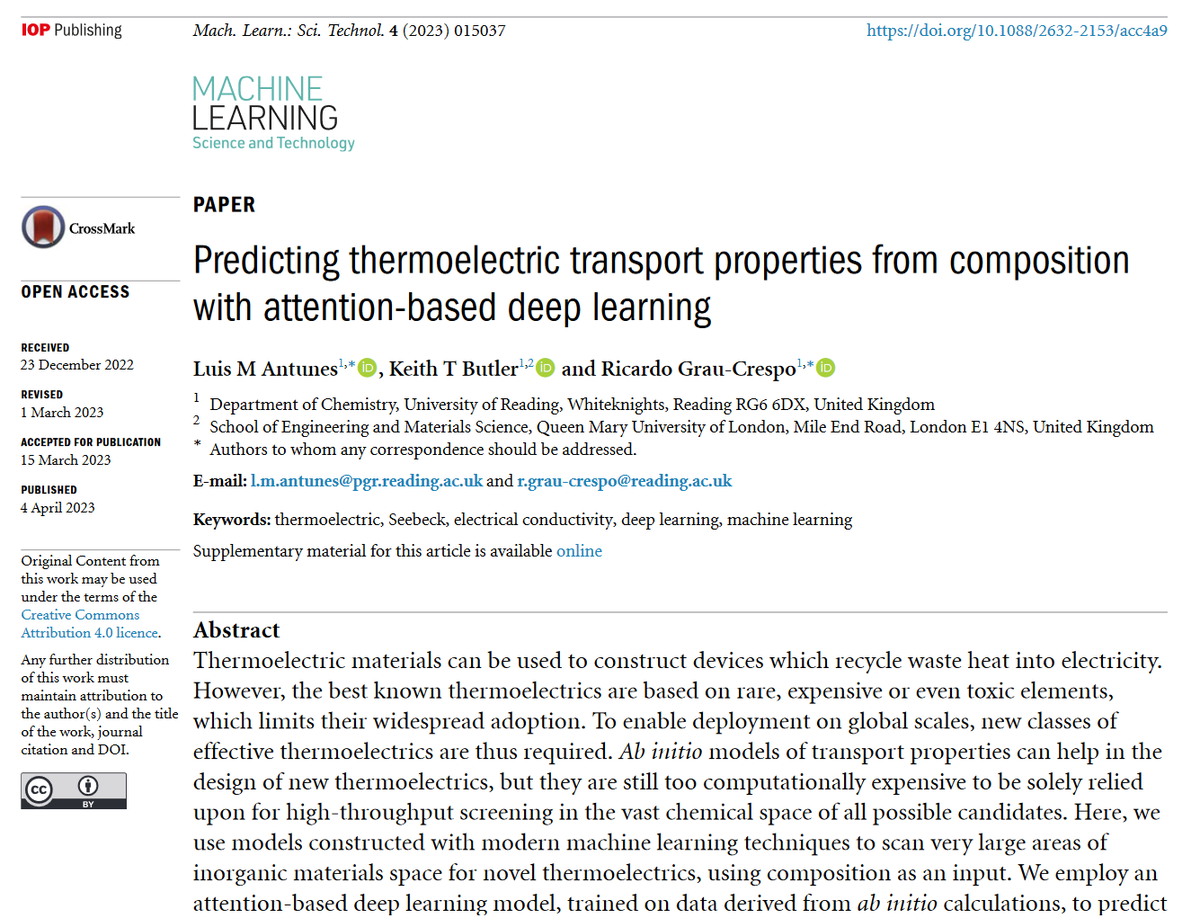
Can we predict thermoelectric transport properties from composition? Read an accessible overview of our recent work on this topic: https://t.co/Ep8fHY3PVj. Test the model yourself: https://t.co/9JL3HcI3N4. In collaboration with @keeeto2000 & @rgraucrespo
The latest version of CellPyLib supports Block Cellular Automata, which appear often in @stephen_wolfram's recent series on The Second Law. Learn more here: https://t.co/gdV9WvBUz6.