Pep Guardiola is much more than just an unbelievable manager.
He spoke up for the people of Palestine, Sudan and Congo while others looked away.
Pep used his platform to defend our shared humanity. That will never be forgotten. Thank you, Pep.
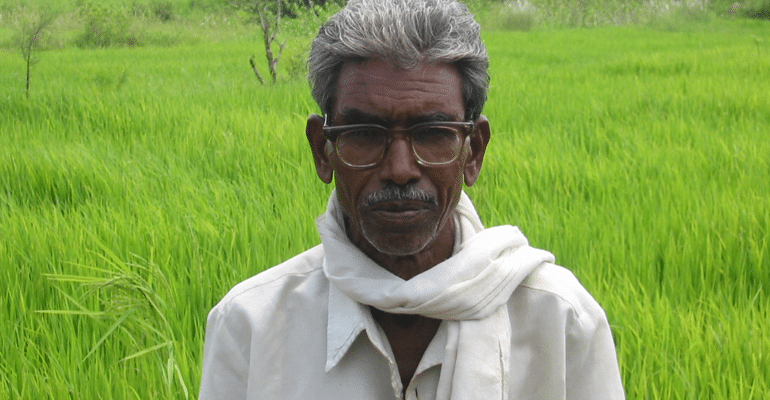
1 man found 3 yellow grains in the mud & spent 5 yrs protecting them from wild pigs. A trader named the result after his favorite watch brand to prove its quality, while a university stole the seeds to claim the credit. He fed millions, but worked as a daily wage laborer on his own soil. Discover the Ghost Farmer behind India's favorite thin rice.
While the world was looking at high-tech labs for the next green revolution, a school dropout named Dadaji Ramaji Khobragade was standing in his small 1.5 acre plot in Nanded, Maharashtra. While harvesting his usual Patel 3 rice, Dadaji noticed 3 yellow-seeded spikes (lomb) that looked different. Most farmers would have ignored them as impurities.
Dadaji picked those 3 spikes & stored them in a simple plastic bag. For the next 5 yrs, he painstakingly bred them in a tiny patch, protecting them from wild pigs with a fence of thorny bushes. He created a variety that was thinner, smelled better, & yielded 80% more than the conventional seeds.
Dadaji did not have a marketing team/a brand name. In 1990, a large landowner bought 150 kg of these seeds & sold the harvest to a local trader. At that time, HMT Watches were the ultimate symbol of Gold Standard & Reliability in India. The trader, who had recently bought a new HMT watch & was obsessed with it, decided to call the rice HMT Rice simply to signal that this rice was as High Quality as the watch.
The name stuck so hard that people today think HMT Rice was developed by the govt corporation (Hindustan Machine Tools), but the company had absolutely nothing to do with it!
In 1994, the Punjabrao Krishi Vidyapeeth (PKV), an agricultural university, approached Dadaji. They took 5 kg of his seeds under the pretext of experimenting. A few yrs later, the university released a new"variety called PKV-HMT. They claimed Dadaji’s original seeds were impure & that they had purified them.
They took the credit, the patents, & the glory. For yrs, the man who actually did the 5 yrs of backbreaking research was left working as a daily wage laborer on other people’s farms just to feed his family.
Dadaji Khobragade lived in poverty for decades while HMT Rice became a multi-crore industry across Maharashtra, Andhra Pradesh, & Chhattisgarh. It was only much later that the National Innovation Foundation (NIF) stepped in. They proved that the university’s new rice was genetically identical to Dadaji’s.
In 2010, Forbes magazine named him 1 of the most powerful Rural Entrepreneurs, & he finally received a National Award. But by then, he had already sold his own land to pay for his son’s medical treatment. Next time you eat a bowl of thin, aromatic HMT rice, remember it is not the product of a sanitized government lab. It is the result of a man who looked at three tiny yellow grains in the mud & saw a future that the PhDs missed.
The HMT in the rice does not stand for Hindustan Machine Tools; it stands for the Honesty of a Marginalized Toiler. Dadaji Khobragade proved that you do not need a degree to be a scientist; you just need an eye that can see the extraordinary in the ordinary.
A trader's love for a wristwatch gave the rice its name, but a farmer’s love for his land gave the rice its soul. 1 became a brand; the other remained a Ghost in his own fields.
@AzzurriLFC He was supposed to be a big talent in 2014 when Milan sold him off. I think only Verratti and Donnarumma are the genuinely World class players born in the 90s.
Just realized, while this is a fantastic article by Greg Chappell, the headline really goes back to 1981 underball incident against NZ. Hypocrite.
https://t.co/WK2SDWZyTx