Developer looking to scale #frontend web applications? In Building #MicroFrontends with a Team-Based Vertical Architecture, master a multi-team frontend architecture that favors team independence, solving common organizational issues: https://t.co/NjUZ1h9etj @_maxgallo
Independent experts can inspect the code that runs on Apple silicon servers to verify privacy, and Private Cloud Compute cryptographically ensures that iPhone, iPad, and Mac do not talk to a server unless its software has been publicly logged for inspection.
What 🤨 ?
🎉 After 283 days and 170 Pull Requests from 16 different contributors since initial launch, I am very excited to announce the release of @featurevisor v1.0 stable! https://t.co/yGmoJFdSg9
#OpenSource#FeatureManagement
Gemini is the latest player from
Google in the AI race, but also the crypto platform from the Winklevoss twins https://t.co/Q5uD3dpN4M #namingthingsishard
Seeing some qs on what Gemini *is* (beyond the zodiac :). Best way to understand Gemini’s underlying amazing capabilities is to see them in action, take a look ⬇️
We have reached an agreement in principle for Sam Altman to return to OpenAI as CEO with a new initial board of Bret Taylor (Chair), Larry Summers, and Adam D'Angelo.
We are collaborating to figure out the details. Thank you so much for your patience through this.
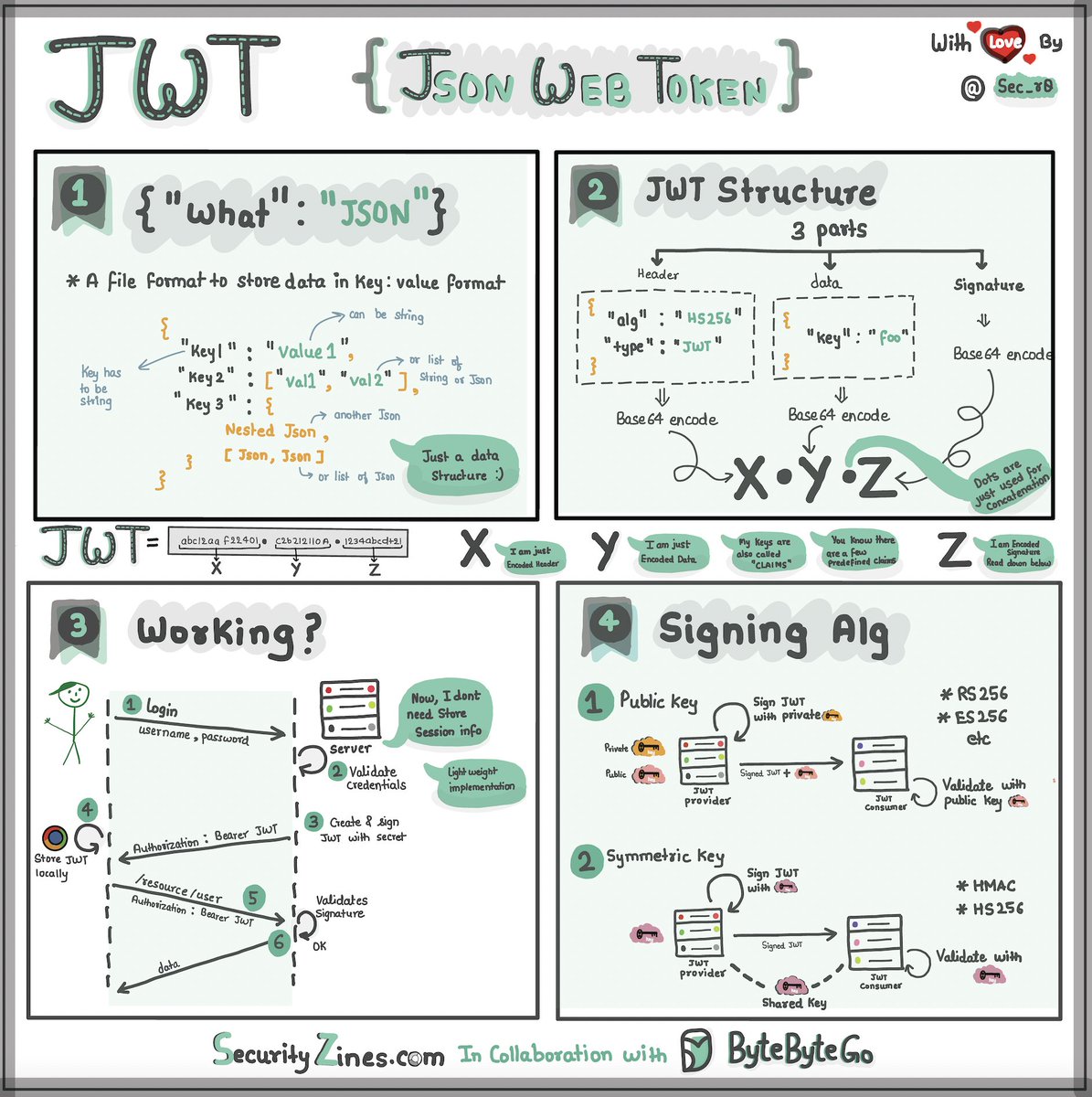
Explaining JSON Web Token (JWT) to a 10 year old Kid.
Imagine you have a special box called a JWT. Inside this box, there are three parts: a header, a payload, and a signature.
The header is like the label on the outside of the box. It tells us what type of box it is and how it's secured. It's usually written in a format called JSON, which is just a way to organize information using curly braces { } and colons : .
The payload is like the actual message or information you want to send. It could be your name, age, or any other data you want to share. It's also written in JSON format, so it's easy to understand and work with.
Now, the signature is what makes the JWT secure. It's like a special seal that only the sender knows how to create. The signature is created using a secret code, kind of like a password. This signature ensures that nobody can tamper with the contents of the JWT without the sender knowing about it.
When you want to send the JWT to a server, you put the header, payload, and signature inside the box. Then you send it over to the server. The server can easily read the header and payload to understand who you are and what you want to do.
Over to you: When should we use JWT for authentication? What are some other authentication methods?
–
Subscribe to our weekly newsletter to get a Free System Design PDF (158 pages): https://t.co/4QcX8btXGL
Wrote a guide on how Featurevisor can be adopted in a microfrontends architecture for feature management needs https://t.co/bl0IP0YAXq
Big thanks to @lucamezzalira, @_maxgallo, and @1e12y for their reviews and early feedback!
#microfrontends#featureflags#featuremanagement #architecture #javascript #frontend #devtools
@code_tank_dev@ManningBooks Thanks @code_tank_dev, yesterday it was working correctly for me but today the offer expired.
This link should always be working https://t.co/sKUYpfFwET
Deal of the Day May 29: Save 45% on my liveProject "Building Micro Frontends with a Team-Based Vertical Architecture" and other selected titles @ManningBooks https://t.co/GgTM1C6cnA
📣 Exciting news!
The recording for our webinar on "How to think about #microfrontends in #AWS" is now available! 🎥👀
Check it out now and discover the secrets of #SSR and the #frontend discovery service applicable to every frontend architecture
#cloud https://t.co/aJjXTWgtP0