Driving automation. AI safety. User experience. AI × society
PhD candidate researching safe and trustworthy autonomous vehicles and AI design in Nigeria.
It was a delight to present our CHI case study paper - on our experiences conducting ethnographic research to identify autonomous vehicles design factors for Nigeria's road transport systems - at the ACM #CHI2024 conference. You can find the paper here: https://t.co/FiBNDHNZ73
The frenzy over "catching" A.I. writing may be the latest in an older story: one not merely about tech, but about what's "human", how the definition keeps shifting, and who it excludes.
In @nytopinion: "What Does It Actually Mean to Write ‘Like a Human’?"
https://t.co/kZYC1i1AHR
This is why access should be extremely limited. People will pedestalize you and then punish you for turning out to be human having a human experience like them.
Two interesting things I discovered this week are:
1. That you can get genuine court affidavits online from the Nigerian Federal High Court. A genuine one, not the ones those roadside people give you.
The website has all sorts of affidavits, even ones I didn't know existed.
2. The National Population Commission has a working portal. You can register your newborn online and get a certified birth certificate that is accepted worldwide.
You can do all these things without any bureaucracy.
For 1, visit: https://t.co/mMEjgphabJ
For 2, visit: https://t.co/vEssNLkZ5l
Joseph Adedeji
The future of #ArtificialIntelligence is not pre-determined. As a technology developed by human beings, its future depends on the choices we make. We therefore have the responsibility to guide, change and, when necessary, reject its applications. A reliable system that serves the human person is of greater value than one that is exceptionally powerful but whose consequences cannot be adequately foreseen or controlled.
If you've ever wondered why smart TVs are so cheap, this is why.
@log4j rooted his Samsung and found an always-on hot mic, automatic content recognition, geolocation, network mapping, ad targeting and user profiling, shared with Samsung's "400 partners".
A lot of it can be blocked in <15 min, wrote a basic guide below.
What your TV is doing
The main culprit is ACR (automatic content recognition). Your TV screenshots what's on screen, fingerprints it, and sends it home to build your ad profile. Samsung does it every 500ms, LG every 10ms [1].
What is insane: it happens on connected devices too.
Plug in your laptop, your console, your work machine, and your TV can fingerprint that via HDMI [1].
He also found that if your Samsung doesn't have a mic, it'll look for one from a connected soundbar or bluetooth device.
https://t.co/vNdTnIQ6KF
It's on by default, and you likely agreed to it on the setup screen you clicked through in 10 seconds.
Step 1: Turn off ACR
Samsung: Terms & Privacy → Viewing Information Services
LG: Live Plus
Vizio: Viewing Data
Roku: "Use info from TV inputs"
Sony/Google TV: Samba Interactive TV
Menus vary by model, but those are the names to look for. While you're in there, opt out of interest-based ads, reset your advertising ID, decline every optional privacy agreement, turn off voice recognition, and delete apps you never open.
Step 2: Give smart devices their own network
Put the TV, cameras, speakers and vacuum on your router's guest/IoT network. The logic is simple: these devices rarely get patched. If one gets compromised (getting drastically more frequent with AI), it shouldn't be able to see your other devices or home network.
Step 3: Block trackers for the whole house with DNS-level filtering
NextDNS (cloud-based) is easy and has a solid free plan. Pi-hole is a little bit more work if you prefer self hosting. For simplicity we'll focus on the former.
1. Sign up at https://t.co/IwhafVWVM8 (free tier is plenty)
2. Privacy tab: add a blocklist (OISD is a good bet) and turn on Native Tracking Protection for Samsung, LG, Roku, Amazon (see attached image)
3. Setup tab: copy your endpoint
4. Paste it into your router's DNS settings as DNS-over-HTTPS/TLS (or use the IPs + "Link IP" if your router only does plain DNS)
5. Bonus: block outbound port 53 except to your router. Some devices hardcode their own DNS to get around you
Then open the NextDNS logs and watch how often your TV phones home. It's eye-opening. If an app or update breaks, find the domain in the logs and allowlist it.
Why they do this
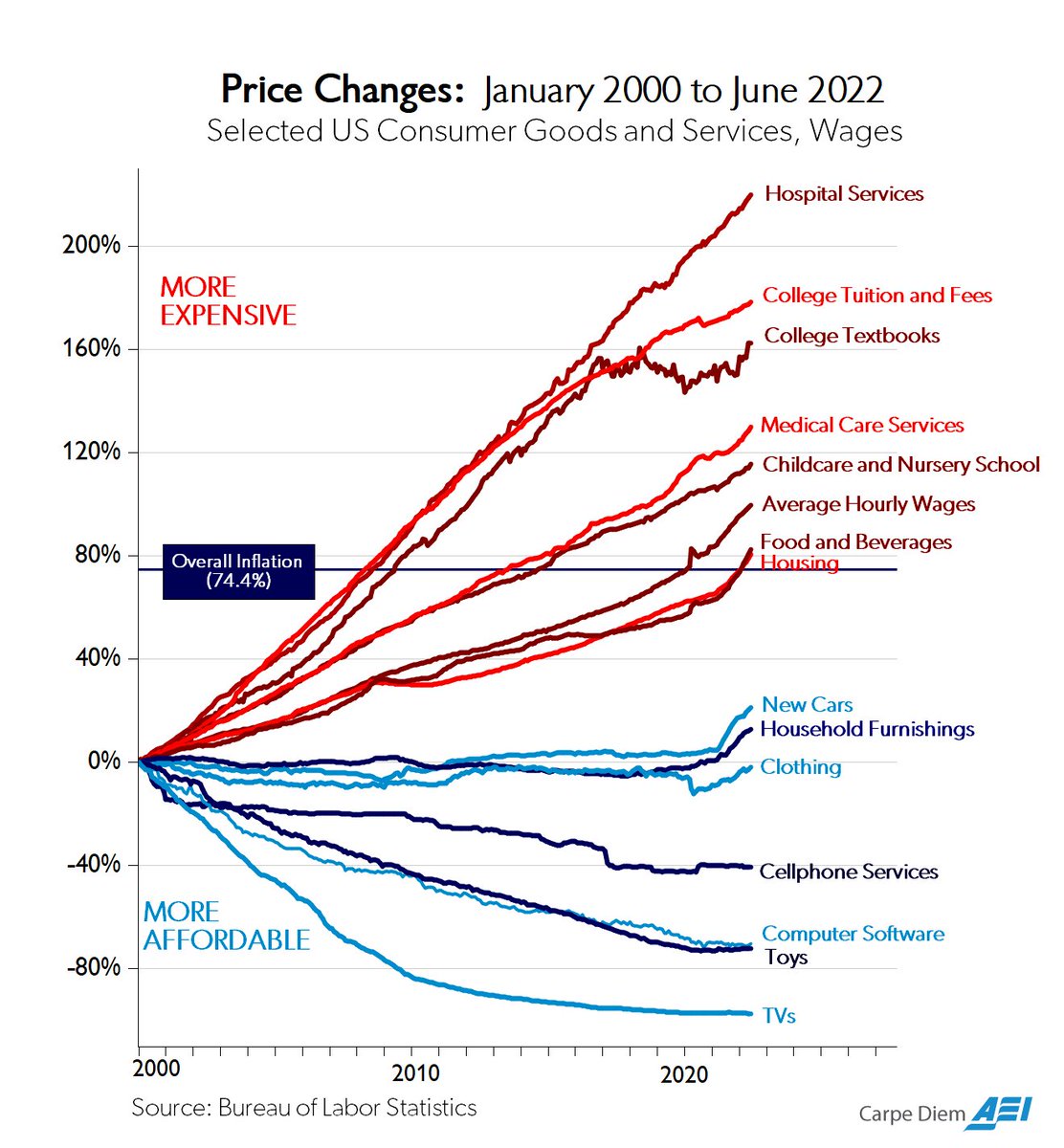
TV prices are down 97% since 2000 [2]. Most of that is better manufacturing and brutal competition. But once margins on the hardware hit zero, the cost moved to you.
In Q3 2024, Vizio lost $6.7M selling TVs and made $115.8M in gross profit from ads and viewing data [3]. They've said on earnings calls that they keep TV prices low to grow the audience they sell to advertisers. Walmart bought them in 2024.
This isn't a conspiracy theory either. Vizio paid $2.2M to the FTC in 2017 for tracking 11 million TVs without consent. Last December, Texas sued Samsung, LG, Sony, Hisense and TCL over ACR. Samsung and LG have since agreed to stop collecting that data without explicit consent [4].
TL;DR
1. ACR off
2. Ads + voice off
3. Smart devices on their own network
4. NextDNS filtering on the router
Sources:
[1] ACR study: https://t.co/S1IS8lXNbA
[2] Cost of US consumer goods: https://t.co/nclXELXcbd
[3] Vizio Q3 2024: https://t.co/CrVbwc9ZXk
[4] Texas v. Samsung: https://t.co/wFOUdeh1if
Things are moving so fast that everyone seems to have completely missed how insane it is that AI companies have been allowed to unleash agentic AI products with no regulatory guidelines.
Respectfully, AI has no agency, no goals.
It is the CEOs such as Dario, Sam, Elon, Zuck, and others whose goals - under the unsupportable guise that super intelligence will lead us to an age of unbounded abundance - are to increase their power and wealth and control.