Petro tuitea cualquier cosa -una mentira, un insulto, un delirio- y recibe 10.000 likes.
Mi teoría es que sus fanáticos ni siquiera lo leen. Simplemente le dan like porque es él y por la ridiculez aquella de “las lágrimas de fachos”.
Es la más clara muestra del fanatismo irracional que puede generar un caudillo y una advertencia de los peligros que eso conlleva para la sociedad y la democracia.
¡La guerra de la IA continua!
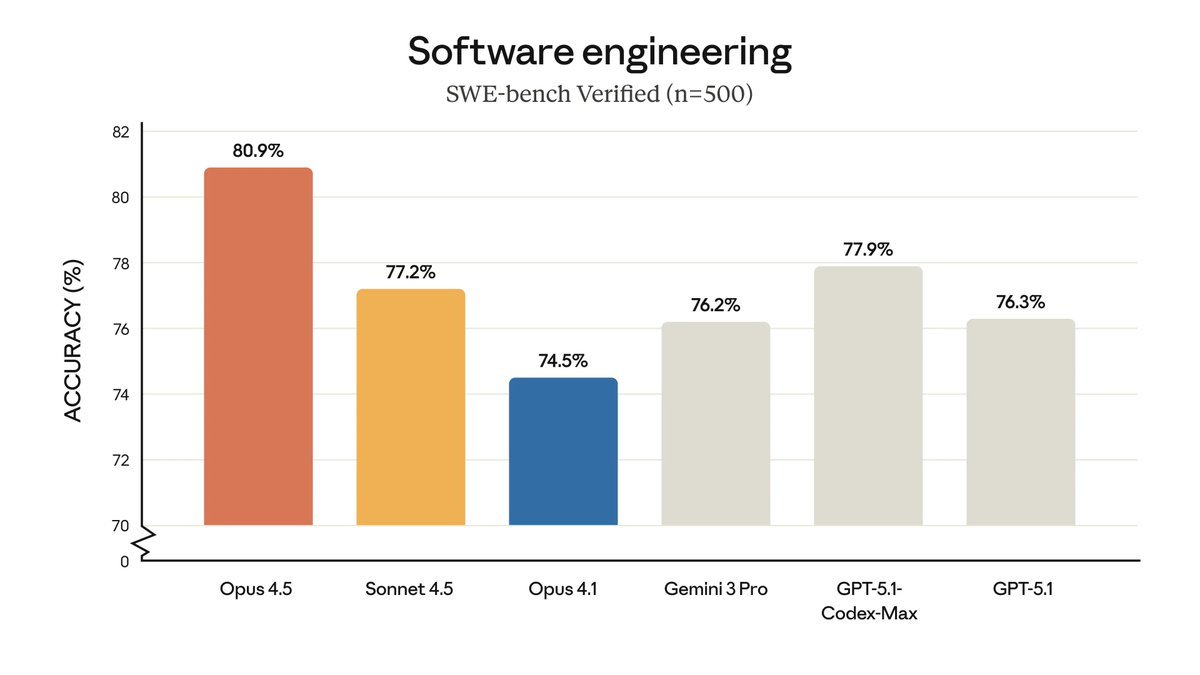
Nuevo modelo Anthropic Opus 4.5
✓ Por delante de Gemini 3 Pro en muchos benchmarks
✓ El mejor modelo de programación de lejos
✓ 3 veces más barato que Opus 4.1
Ya lo tienes disponible en Cursor y pronto el resto
If you’re still sending raw JSON into your LLMs, you’re burning tokens, latency, and budget!
Try TOON (Token-Oriented Object Notation).
Clear like YAML, compact like CSV:
• 30–60% fewer tokens
• Up to 50% lower costs
• Shines for tabular data.
Free and Open source 🧵↓
El framework que usamos en @RappiColombia para aprender y construir CUALQUIER COSA desde cero (actualizado y mejorado a la fecha)
El mismo que uso para que mi equipo desarrolle world-class capabilities
Aquí los 6 pasos clave 👇
𝗦𝗼𝗳𝘁𝘄𝗮𝗿𝗲 𝗘𝗻𝗴𝗶𝗻𝗲𝗲𝗿 != 𝗗𝗲𝘃𝗲𝗹𝗼𝗽𝗲𝗿
Software Engineer == Problem Solver
Don't attack problems with code. Try first to understand them from a business perspective and then a technical perspective. When you do this, make a plan for how to solve it.
Try to solve without coding. The best code is not code.
If you must code, then do it.
Remember, 𝗰𝗼𝗱𝗲 𝗶𝘀 𝗮 𝗹𝗶𝗮𝗯𝗶𝗹𝗶𝘁𝘆, 𝗻𝗼𝘁 𝗮𝗻 𝗮𝘀𝘀𝗲𝘁.
#softwareengineering #programming #developers
𝗛𝗼𝘄 𝘁𝗼 𝗴𝗲𝘁 𝗺𝗼𝗿𝗲 𝗱𝗼𝗻𝗲 𝘁𝗵𝗮𝗻 𝟵𝟬% 𝗼𝗳 𝗽𝗲𝗼𝗽𝗹𝗲
We all struggle with the things we should do next and what to prioritize. Here comes the 𝗚𝗲𝘁𝘁𝗶𝗻𝗴 𝗧𝗵𝗶𝗻𝗴𝘀 𝗗𝗼𝗻𝗲 (𝗚𝗧𝗗) 𝗳𝗿𝗮𝗺𝗲𝘄𝗼𝗿𝗸 to help. David Allen developed it in the 1990s, and the main idea behind GTD is that by getting all of your tasks and commitments out of your head and into a trusted system, you can reduce stress, increase productivity, and free up mental space to focus on more important things.
So, how it works is to have the following lists:
𝟭. 𝗜𝗻. Here, we put all the ideas we have as they occur. Write down every task, idea, or commitment that comes to mind, whether small or insignificant. When adding items here, you should ask yourself if this is actionable. You should remove or add the answer to the 𝗦𝗼𝗺𝗲𝗱𝗮𝘆/𝗺𝗮𝘆𝗯𝗲 list if the answer is NO. If it's actionable in the physical and visible sense, move it to the 𝗡𝗲𝘅𝘁 𝗔𝗰𝘁𝗶𝗼𝗻𝘀 list.
𝟮. 𝗡𝗲𝘅𝘁 𝗔𝗰𝘁𝗶𝗼𝗻𝘀. The most crucial section is that we have everything you can choose to do at any moment. Consider whether it takes less than two minutes to determine the next action. If this is the case, do it immediately (2-minute rule). If an action needs less than 𝘁𝘄𝗼 𝗺𝗶𝗻𝘂𝘁𝗲𝘀, it gives us overhead to track, compared to how long it takes. If you need more than 2 minutes, delegate it if possible and put it in the Waiting for a list or to your Next actions list if not.
Here, you can use the 𝗘𝗶𝘀𝗲𝗻𝗵𝗼𝘄𝗲𝗿 𝗺𝗮𝘁𝗿𝗶𝘅 to help you understand what you should do immediately, what to delegate, and what to delete.
𝟯. 𝗪𝗮𝗶𝘁𝗶𝗻𝗴 𝗳𝗼𝗿. This is the list where you put stuff you delegated to others, or you're waiting to reply to, or some issue blocks it.
𝟰. 𝗣𝗿𝗼𝗷𝗲𝗰𝘁𝘀. This is where we put stuff that needs more than one action, which is a grouping for actions. It is a simple list of projects with two or more actions. And be sure that there is at least one action from a project in the Next actions list.
𝟱. 𝗦𝗼𝗺𝗲𝗱𝗮𝘆/𝗺𝗮𝘆𝗯𝗲.This is where you put your ideas without concrete actions, which you want to pursue in the future but currently don't have time for.
Finally, don't forget to do a weekly review, which is a critical factor for success. You can do it once per week (30 minutes), e.g., on Friday or Sunday afternoon. Here, you make sure each project has at least one of the next actions, that each action in your next actions is something you need to do in the next week, and look through your Someday/maybe list and see if some actions should be moved in the list of current projects or next actions.
#personaldevelopment #productivity #gettingthigsdone
Honrados de que Kantar haya incluido a @mercadopago como una de las 20 marcas de servicios financieros más valiosas del mundo! Y muy agradecidos a los más de 50 millones de usuarios que nos eligen todos los meses! Juntos #Democratizamos_el_dinero
𝗪𝗵𝘆 𝘆𝗼𝘂 𝘀𝗵𝗼𝘂𝗹𝗱 𝗯𝘂𝗶𝗹𝗱 𝗮 (𝗺𝗼𝗱𝘂𝗹𝗮𝗿) 𝗺𝗼𝗻𝗼𝗹𝗶𝘁𝗵 𝗳𝗶𝗿𝘀𝘁?
In recent years, we have seen a significant increase in apps built using a microservices architecture. The main reason we selected this approach is to have small teams that can work in isolation without tripping over each other. Yet, this is an organizational problem, not a technical one. We can also build each service using separate technology and scale it independently.
With the 𝗺𝗶𝗰𝗿𝗼𝘀𝗲𝗿𝘃𝗶𝗰𝗲𝘀 𝗮𝗽𝗽𝗿𝗼𝗮𝗰𝗵, we also have a few disadvantages; the system is becoming complex to maintain and diagnose issues (logging and tracing). This is very important when dealing with microservices.
So, 𝗯𝘂𝗶𝗹𝗱𝗶𝗻𝗴 𝗺𝗼𝗻𝗼𝗹𝗶𝘁𝗵𝘀 𝗱𝗼𝗲𝘀𝗻'𝘁 𝗺𝗲𝗮𝗻 𝘀𝗼𝗺𝗲𝘁𝗵𝗶𝗻𝗴 𝗯𝗲𝘁𝘁𝗲𝗿 𝗽𝗲𝗿 𝘀𝗲. In the last few years, we have often seen the identification of monoliths with big balls of mud architecture or purely building legacy code, which doesn't mean to be. Yes, monoliths cannot scale-independent pieces of the system or release them separately, but those are mainly the biggest downsides. Still, you can create great and high-quality code inside. What monolith brings to us is much less complexity, reduced network calls, simpler logging and debugging, etc.
What could be one good solution, where we can still have separate modules and work on them but maintain simplicity, is to 𝗯𝘂𝗶𝗹𝗱 𝗮 𝗺𝗼𝗱𝘂𝗹𝗮𝗿 𝗺𝗼𝗻𝗼𝗹𝗶𝘁𝗵. A properly built modular monolith can be a good step that can be more or less transformed into a microservice solution tomorrow if needed.
When we want to build a modular monolith, it is crucial to 𝗳𝗶𝗿𝘀𝘁 𝗱𝗶𝘃𝗶𝗱𝗲 𝘁𝗵𝗲 𝘀𝘆𝘀𝘁𝗲𝗺 𝗶𝗻𝘁𝗼 𝗺𝗮𝗻𝗮𝗴𝗲𝗮𝗯𝗹𝗲 𝗺𝗼𝗱𝘂𝗹𝗲𝘀 before assembling those modules into a monolith for deployment. As all communication between the modules might result in a cross-network call, high cohesion and low coupling are crucial if you decide to break it into services in the future. This means that all inter-module communication must be abstracted, asynchronous, or based on messaging for the modules to handle calls that travel across the network in the future.
How can we put such a concept in place? 𝗪𝗲 𝗰𝗿𝗲𝗮𝘁𝗲 𝘀𝗲𝗽𝗮𝗿𝗮𝘁𝗲 𝗺𝗼𝗱𝘂𝗹𝗲𝘀, 𝘄𝗵𝗲𝗿𝗲 𝗲𝗮𝗰𝗵 𝗼𝗻𝗲 𝗰𝗮𝗻 𝗵𝗮𝘃𝗲 𝗶𝘁𝘀 𝗼𝘄𝗻 𝗮𝗿𝗰𝗵𝗶𝘁𝗲𝗰𝘁𝘂𝗿𝗲, and those modules are pulled together into a single API gateway. This allows us to deploy the whole system as a monolith, but it allows us to pull out separate modules into services if needed in the future.
In the end, we need to mention that this approach 𝗗𝗥𝗬 𝗰𝗼𝗻𝗰𝗲𝗽𝘁 (don't repeat yourself) in a few places, but this allows us to avoid unnecessary dependencies between modules.
Don't go for trends; always choose simplicity and use common sense to determine what will work for you.
#technology #softwareengineering #programming #techworldwithmilan #softwarearchitecture
@TeroMknen I'd generally recommend the "docs as code" approach ... Markdown/AsciiDoc files (1 per decision) in version control next to the code, published to other locations (e.g. Jira, SharePoint, etc) by your build pipeline if required.