This is a book from the 1980s. Atari sent it out to teach cabinet owners how to repair their machines. While the knowledge seems very specific to arcade cabinets, it’s engaging and many of the concepts covered are used all through out general electronics.
https://t.co/481ZDsCvkX
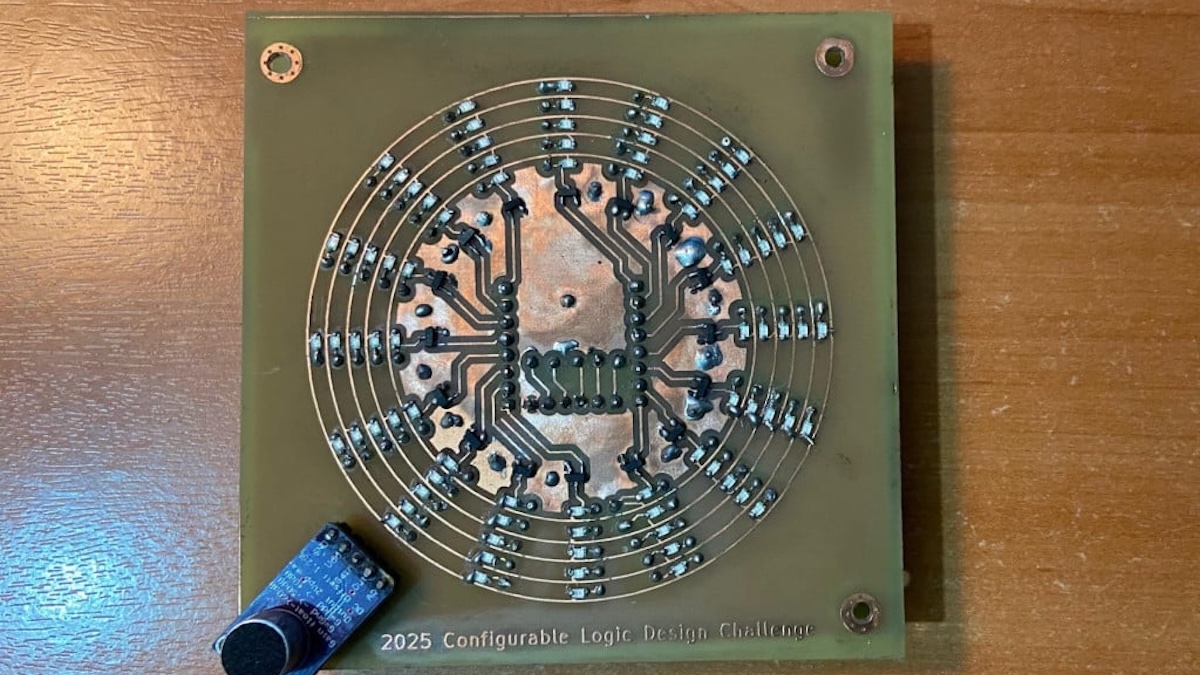
Emre Kayan leveraged the PIC16F13145's CLB to create a real-time audio spectrum visualizer system that captures sound signals through an analog microphone, performs a Fast Fourier Transform, and displays the results on a circular LED matrix: https://t.co/cUlxTgjZSc
We have an open position at Apple MLR to work scalable and efficient generative models that perform across diverse data domains—including images, 3D, video, graphs, etc. We care deeply about simplifying modeling pipelines, developing powerful and scalable training recipes. Interested or know someone perfect? Reach out via DM or contact me directly with your resume at [email protected]! Here’s the potential roles for the open position:
Research Engineer
- Focus: Scalable data pipelines, distributed training infrastructure, benchmarking and evaluation.
- Must-have: Strong software engineering fundamentals, experience with training scalability (>3B models), efficient ML implementations, and tensor-level expertise.
Research Scientist
- Focus: Creating novel generative modeling approaches (diffusion, flow matching, autoregressive), tokenizer-free architectures, and unified training recipes across modalities.
- Must-have: Strong publication record with multiple papers at top-tier venues (ICLR, ICML, NeurIPS, CVPR, etc.), deep expertise in generative modeling, optimization, or probabilistic methods.
Are you a researcher in signal processing for ecoacoustics / urban / industrial / medical acoustics?
Come give a 45-minute talk in Paris!
on Thursday, Nov 13rd, 2025
on the topic of your choice
streamed and recorded by @Ircam A/V crew
Call for speakers:
https://t.co/8uJI7lrdEd
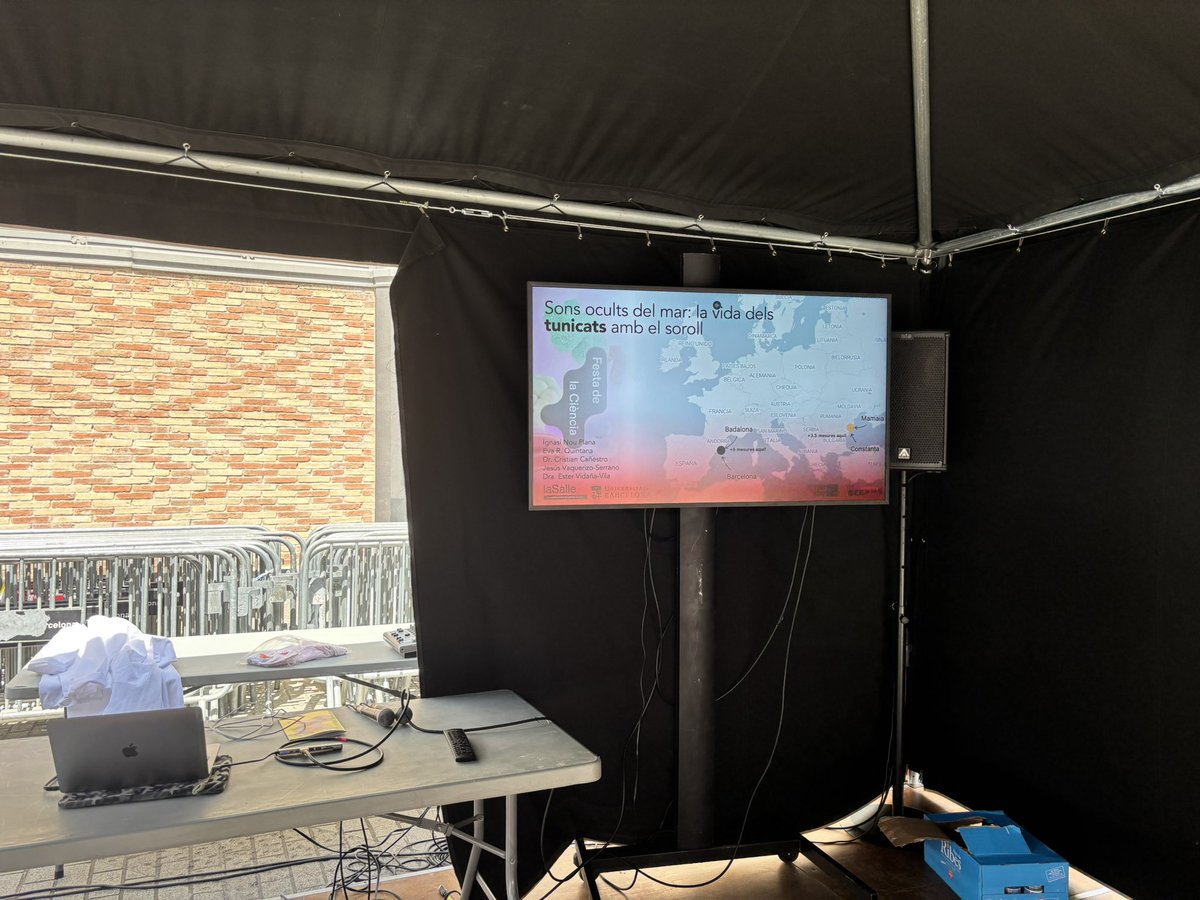
Preparats per començar la nostra activitat a la #FestaDeLaCiència25!
“Sons ocults del mar: la vida dels tunicats amb el soroll”. 🐟🪼🦠🔬🧫
Comencem a les 16:15, encara hi pots participar ✨.
Our team is hiring a postdoc in Audio AI!
What: speech, music, bioacoustics
How: multiresolution neural networks in the raw waveform Where: Nantes, France (https://t.co/tbNcztQDWh)
When: negotiable
How long: 12 months, renewable
Apply before May 10: https://t.co/YuRvlVL4SF
I'm teaching databases this semester at Berkeley. My students all seem unusually brilliant. Not many go to office hours, and not too many folks post on the course forum asking project questions.
Weirdly, the exam had the lowest recorded average in my 10 semesters teaching it.
The biggest winner of the AI race will be distributed systems people. Everything is converging onto a distributed network of stuff and it is only accelerating in the last two years.
It’s Giveaway Time! 🎉
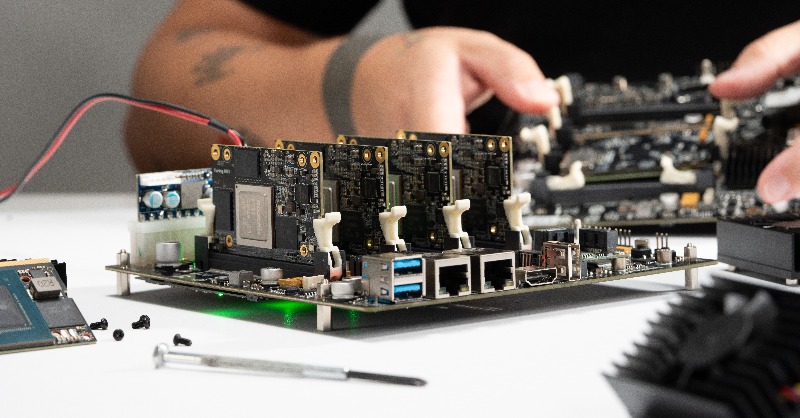
Share this post for a chance to win a Turing Pi 2.5 Cluster Board.
Winner announced November 25.
Get ready to build your dream cluster. Good luck!
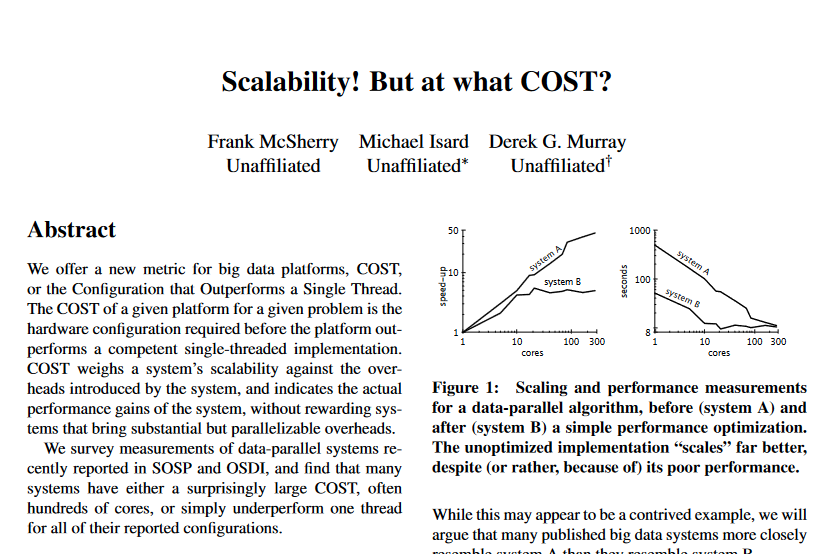
Scalability! But at what cost?
This paper is an absolute classic because it explores the underappreciated tradeoffs of distributing systems.
It asks about the COST of distributed systems--the Configuration that Outscales a Single Thread. The question is, how many cores does a big distributed system need to outperform some moderately-optimized single-threaded code running on your laptop?
As it turns out, scalability often comes with an extremely high COST. The authors examine several graph processing systems--including some big names like Spark--and find that they need dozens to hundreds of cores to outperform a single-threaded program.
Why is this the case? It's not because these distributed systems are badly designed, but because distributing computation is inherently inefficient for many problems.
Fundamentally, a distributed system cannot rely on all processors sharing state, at least not efficiently. This is a big issue! In graph algorithms, it means servers need to expensively exchange data and eliminates a wide swathe of algorithms and optimizations that rely on shared state. In distributed databases, it means expensive coordination is required to distribute transactions to ensure participating servers have consistent views of data.
Does this mean we shouldn't build scalable systems? Of course not! Many problems are well beyond the capability of a single server, no matter how optimized. But it does mean we should be mindful of the efficiency costs of scaling.
As an aside, I think this kind of thinking is why Postgres is so popular, despite not being distributed. A large Postgres server can handle a vast amount of traffic (especially with read replicas, which can be cheaply maintained). You need a huge company or incredibly heavy workload to outscale that single server, and when you do, the alternatives come with huge tradeoffs!
It took three years to finish, but our follow-up to the 2006 "What Goes Around Comes Around" is finally out! Stonebraker and I examine the last 20 years in databases and discuss why relational databases + SQL will continue to remain on top.
📄PDF: https://t.co/ZwTWSxXLWb
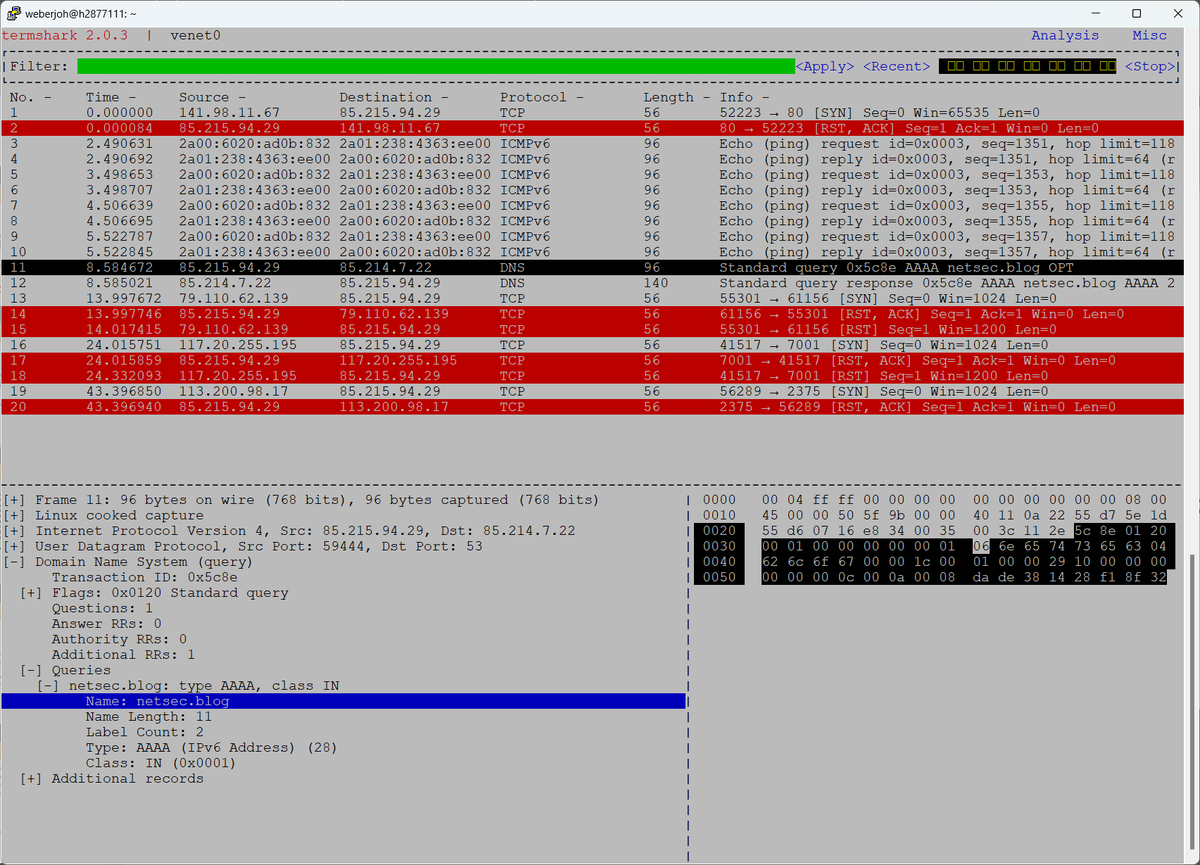
Uh, I was not aware that there is a terminal version of #Wireshark called termshark. Nice. Much easier to troubleshoot small stuff compared to tcpdump. You can even use your mouse!
Have you ever attended a cybersecurity awareness training session?
Follow the link below, vote and comment! 🚀
#REWIREproject#REWIREforum
https://t.co/Dds8bwwr8B