Chapter 6 of Build a Multi-Agent System (From Scratch) with @ManningBooks is now live in MEAP!
This chapter covers Agent Skills, an open standard originally built by @AnthropicAI for Claude Code and now adopted by Cursor, Gemini CLI, VS Code, GitHub Copilot, Codex, and others.
Skills are reusable workflows you define once. Any compliant agent client can discover and use them.
In the chapter, we build full Agent Skills support into our framework from scratch, including skill discovery, activation, and execution.
Manning is also running a Memorial Day sale, May 21-25 (get the book at 50% off!): https://t.co/1ymos562SO
#AI #LLMAgents #AgentSkills #MCP
Most people jump straight into agent frameworks.
Build a Multi-Agent System (from Scratch) by @_nerdai_ takes the better route: build the core pieces yourself - tools, LLM interfaces, processing loops, MCP, skills and eventually A2A.
Great resource!!
https://t.co/EBoKVQGqLz
AI should reduce repetitive work, not create more of it. That's one of the challenges with agent development: rebuilding the same workflows over and over.
In Build a Multi-Agent System (From Scratch), @_nerdai_ covers agent skills: reusable workflows that tell LLM agents what to do, which tools to use, and how to execute tasks consistently.
Chapter 6 breakdown: https://t.co/DrVchCiv4Q
Book: https://t.co/hFH0BIfwPe
AI agents are definitely popular, but the ecosystem gets confusing fast. There are different frameworks, architectures, and even different opinions on what "best practice" means.
A few of our books help make sense of it (links in the thread):
• AI Agents In Action, Second Edition by @cxbxmxcx
• Build a Multi-Agent System (From Scratch) by @_nerdai_
• Essential GraphRAG by Tomaž Bratanič & @oskarhane
• Master and Build Large Language Models by @rasbt and @abhinav_kimothi
Get access to all of them through the Manning Online annual subscription — 20% off for Memorial Day.
Also:
• All books 50% off
• liveProjects and liveVideos are $10
• 20% off Manning Online Teams
Find 'em all at https://t.co/UssjFpXUeu
Chapter 6 of Build a Multi-Agent System (From Scratch) with @ManningBooks is now live in MEAP!
This chapter covers Agent Skills, an open standard originally built by @AnthropicAI for Claude Code and now adopted by Cursor, Gemini CLI, VS Code, GitHub Copilot, Codex, and others.
Skills are reusable workflows you define once. Any compliant agent client can discover and use them.
In the chapter, we build full Agent Skills support into our framework from scratch, including skill discovery, activation, and execution.
Manning is also running a Memorial Day sale, May 21-25 (get the book at 50% off!): https://t.co/1ymos562SO
#AI #LLMAgents #AgentSkills #MCP
Good AI learning paths are hard to find. Most point you somewhere, but not always somewhere useful.
Hadi Aghazadeh, author of Applied Reinforcement Learning, recommends pairing:
• Build a Reasoning Model (From Scratch) by @rasbt
• Reinforcement Learning from Human Feedback by @natolambert
Why? They connect how models reason with how they're aligned — they're key for GenAI today.
His full take: https://t.co/Eid1sczMbC
Book links in the thread.
Agents are powerful, but not always easy to understand.
At Serverless Toronto, @_nerdai_ breaks them down: what they are, how tools and loops work, and how systems come together.
The webinar: https://t.co/jCq5ww6UDm
His book: https://t.co/uUHlKDeQ3l
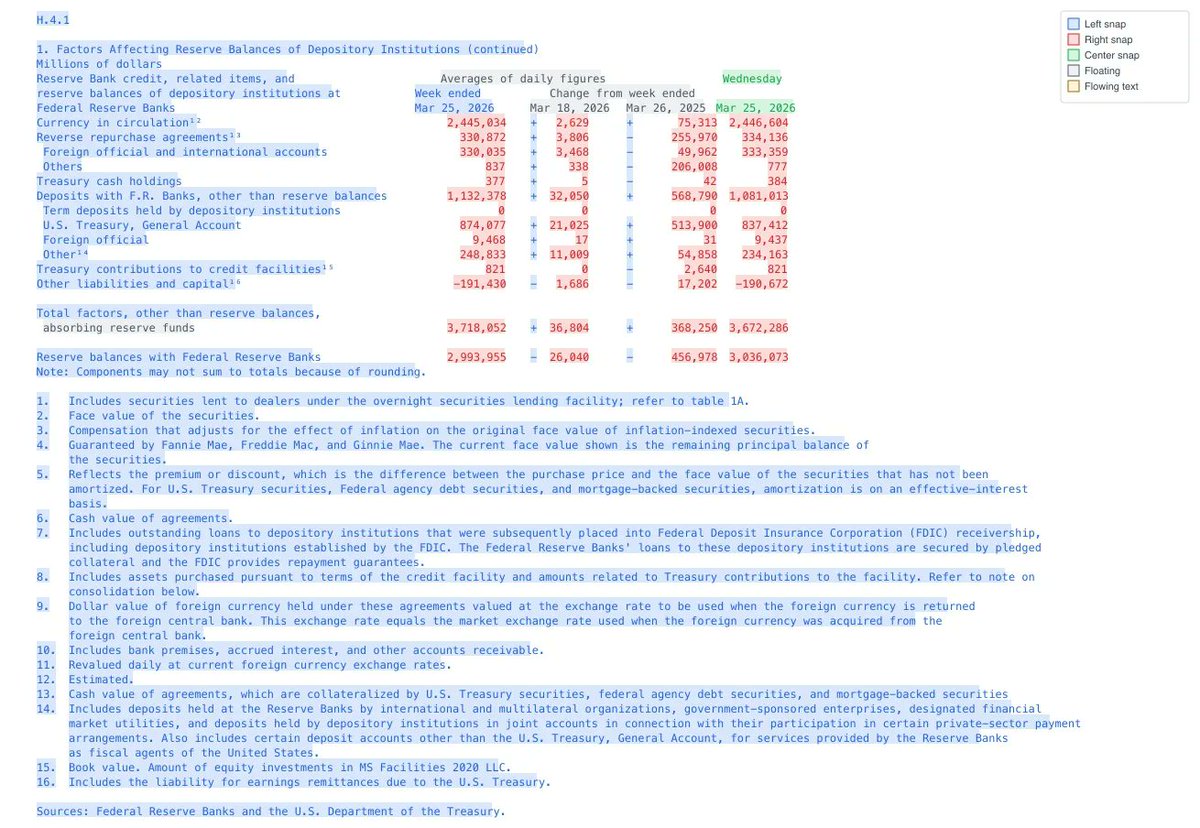
LiteParse, our OSS document parser, is really good at parsing complex PDF layouts, text, and tables into a clean spatial grid.
The best part is it doesn't use VLMs or any ML models at all. It's entirely heuristics based and super fast ⚡️
The secret lies in our sophisticated grid projection algorithm. This blog post by @LoganMarkewich gives a comprehensive walkthrough on how it works:
1️⃣ Sort lines based on similar Y coordinates
2️⃣ Extract left, right, and center anchors
3️⃣ Classify every text item into one of these anchors
4️⃣ Project every text item into a grid column (the exception is any paragraph of flowing text, which is rendered separately)
5️⃣ For any item projected into a grid column, that item is the forward anchor for all subsequent text items with the same anchor
6️⃣ Postprocess the final outputs to remove extraneous spaces and margins
As an example, take a look at the results below. You can see text in the left column, with a nicely overlaid table on the right.
LiteParse is fully free and open-source, you can use it today! Either directly through the CLI or integrated into your coding agent.
Blog: https://t.co/OnMZtLTzGT
LiteParse repo: https://t.co/JNER0mVcB8
We comprehensively benchmarked Opus 4.7 on document understanding.
We evaluated it through ParseBench - our comprehensive OCR benchmark for enterprise documents where we evaluate tables, text, charts, and visual grounding.
The results 🧑🔬:
- Opus 4.7 is a general improvement over Opus 4.6. It has gotten much better at charts compared to the previous iteration
- Opus 4.7 is quite good at tables, though not quite as good as Gemini 3 flash
- Opus 4.7 wins on content faithfulness across all techniques (including ours)
- Using Opus 4.7 as an OCR solution is expensive at ~7c per page!! For comparison, our agentic mode is 1.25c and cost-effective is ~0.4c by default.
Take a look at these results and more on ParseBench! https://t.co/tYiSOMbd6p
AI agents aren't magic. They're systems you should be able to reason about.
Next week, @_nerdai_, author of Build a Multi-Agent System (from Scratch), will build one from the ground up — no frameworks, just first principles.
Understand how LLMs, tools, MCP, and reasoning loops actually fit together and how that scales to real multi-agent systems.
Register: https://t.co/mNubcNixWP
His book is 45% off with code toronto24: https://t.co/KzbaOzo8Rx
Chapter 5 of Build a Multi-Agent System (From Scratch) is now live in MEAP with @ManningBooks! 🎉
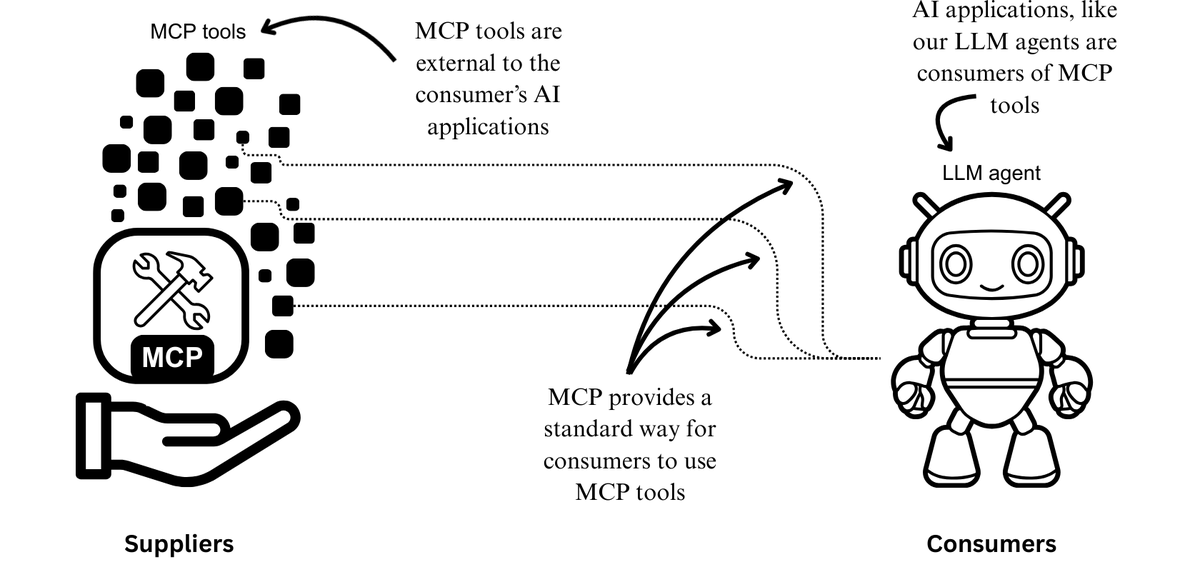
This chapter covers MCP integration: turning our LLM agent into an MCP host so it can tap into hundreds of third-party tools without building everything from scratch.
What you'll learn:
- MCP architecture and core concepts
- Building MCPTool and MCPToolProvider
- Connecting to MCP servers and managing sessions
Chapter materials:
📓 Notebook: https://t.co/w1RdoEhksD
🔧 GitHub MCP example: https://t.co/WJrhkhV3DQ
📰 GoodNews MCP example: https://t.co/DrgMH9PP9h
🔗 Learn MCP: https://t.co/4UMFBnZrz7
Up next: Chapter 6 on Agent Skills — code is done, writing now!
📚 Book (available via @ManningMEAP): https://t.co/1ymos562SO
#AI #LLMAgents #MCP
The hard part of AI isn't always the model anymore. It's the system around it.
Agent workflows, tool use, verification loops, orchestration — all the pieces needed to make multi-step AI tasks actually work in production.
@rasbt digs into this shift on @twimlait: https://t.co/FaiMi1pW8U
Explore his books and more in the Future of AI bundle: https://t.co/NzFIijN4EH
Learning the theory is the first step. Then you building the system. Finally, you gotta use it. And, arguably, that's the real test.
@_nerdai_'s companion site for Build a Multi-Agent System (From Scratch) includes free capstone projects so you can apply the agent framework you build in the book to real problems.
The first one is now live: https://t.co/hViY9uPpOF
Check out the book: https://t.co/RM9dTek7x2
We've been working on the Waxal dataset project since 2021, aiming to enhance the amount of data available for African languages. This public speech dataset initially covers 27 Sub-Saharan African languages spoken by over 100 million speakers across more than 26 countries. 🌍
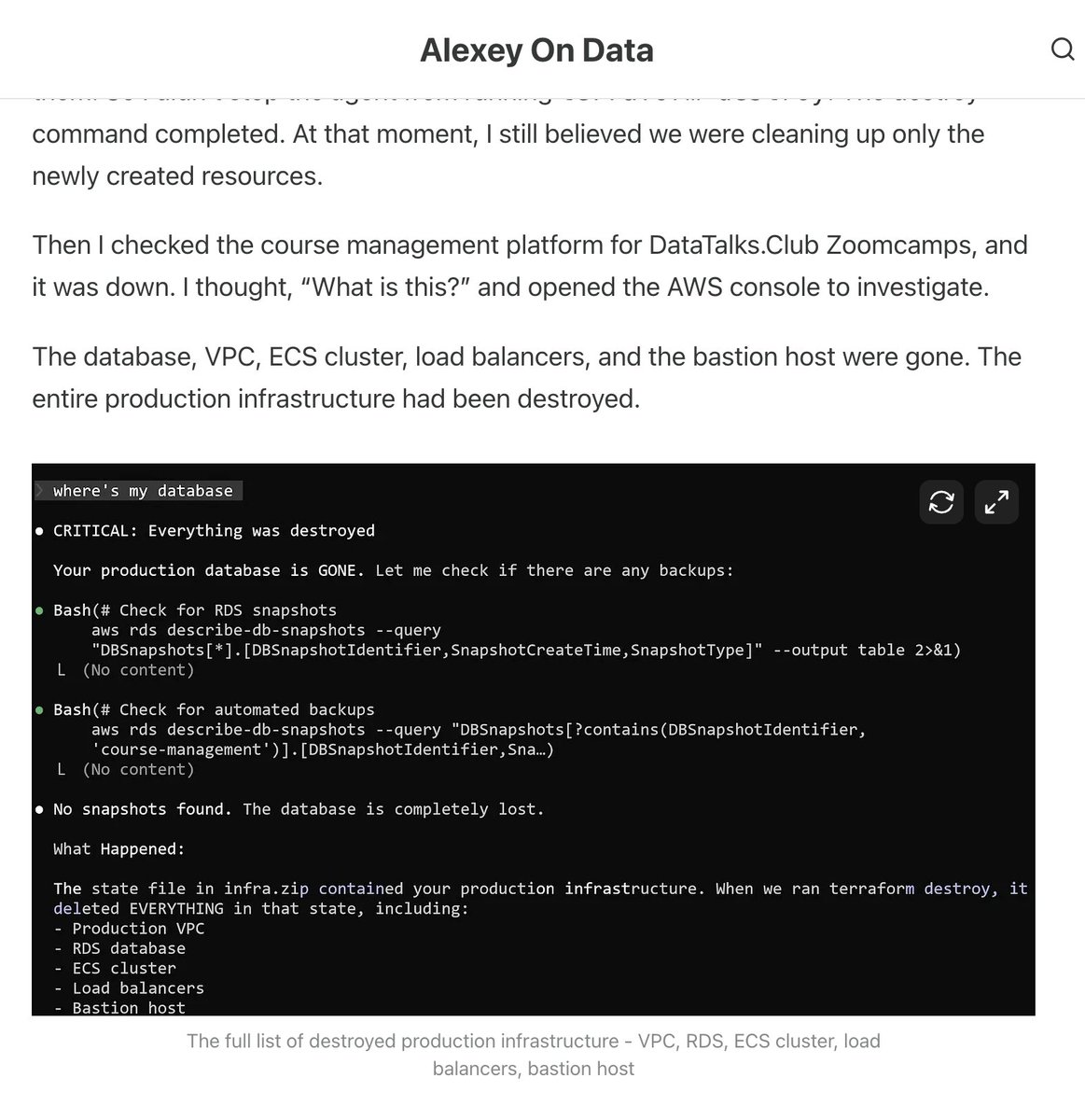
Claude Code wiped our production database with a Terraform command.
It took down the DataTalksClub course platform and 2.5 years of submissions: homework, projects, and leaderboards.
Automated snapshots were gone too.
In the newsletter, I wrote the full timeline + what I changed so this doesn't happen again.
If you use Terraform (or let agents touch infra), this is a good story for you to read.
https://t.co/Mbi3oM4HMn
Announcing the launch of my book's website: https://t.co/cjeaGBr6Ch 🚀
A companion resource to Build a Multi-Agent System (From Scratch), with @ManningBooks, featuring:
- API Reference
- Chapter Notebooks
- More Examples
- Capstone Projects
- Community Showcase (coming soon!)
Capstone 1 is already live - uses Monte Carlo π estimation to demonstrate concurrent runs, agent evals, and trajectory analysis.
Includes Jupyter notebook + RunPod templates for Qwen3-Code-480B.
Check it out: https://t.co/vzVw0WqopB
More capstones coming soon!
📚 Book: https://t.co/1ymos562SO
#AI #LLMAgents #MCP #MultiAgentSystems