Every day you prove you're not a robot.
So I asked 5 real ones to try.
Attempt 1: traffic lights. Failed.
Attempt 2: solved in 0.49 seconds. Flagged for being too fast.
Attempt 3: typed "beep boop" into the box.
Attempt 4: the slider piece flew off the screen.
Then came the last question: "Are you sure you're human?"
Watch what the yellow one does 👀
Learn Python. ⠀
Learn JavaScript. ⠀
Learn React. ⠀
Learn Docker. ⠀
Learn AWS. ⠀
Learn Kubernetes. ⠀
Finally, you start feeling confident. ⠀
Then someone says, “I built the whole app with a prompt.” ⠀
Welcome to being a developer. ⠀
After 16+ years in engineering, I understand why this feels exhausting.
Every time you get comfortable, the industry gives you more homework. ⠀
But I’d redraw the last part of this curve. ⠀
Your engineering knowledge still matters when you have to explain why: ⠀
• The app works locally but fails in production. ⠀
• One database query takes down the API. ⠀
• A retry charges the customer twice. ⠀
• An AI-generated endpoint lets users access someone else’s data. ⠀
Knowing how to investigate those problems takes experience.
Every layer you learned gives you somewhere to start. ⠀
That knowledge helps while you’re prompting, too. ⠀
You can spot a missing requirement, question a design choice, and catch a dangerous assumption before it spreads across twenty files. ⠀
I want AI to handle more of the repetitive work.
I also want to understand what I’m putting into production. ⠀
If you’re feeling behind, try this: ⠀
Take one small feature you already know how to build.
Ask an AI coding tool to implement it.
Then review the result like a teammate’s pull request.
⠀
1. Read the diff. ⠀
2. Check the dependencies. ⠀
3. Test the failure cases. ⠀
4. Find something you would change and explain why. ⠀
You’ll learn the tool while exercising the judgment you’ve spent years developing. ⠀
And if you’re just starting, follow the generated code all the way through: from the button, to the API, to the database, and back. ⠀
You don’t have to restart your career every time the tools change. ⠀
You do have to keep learning.
That part of the picture has always been accurate. ⠀
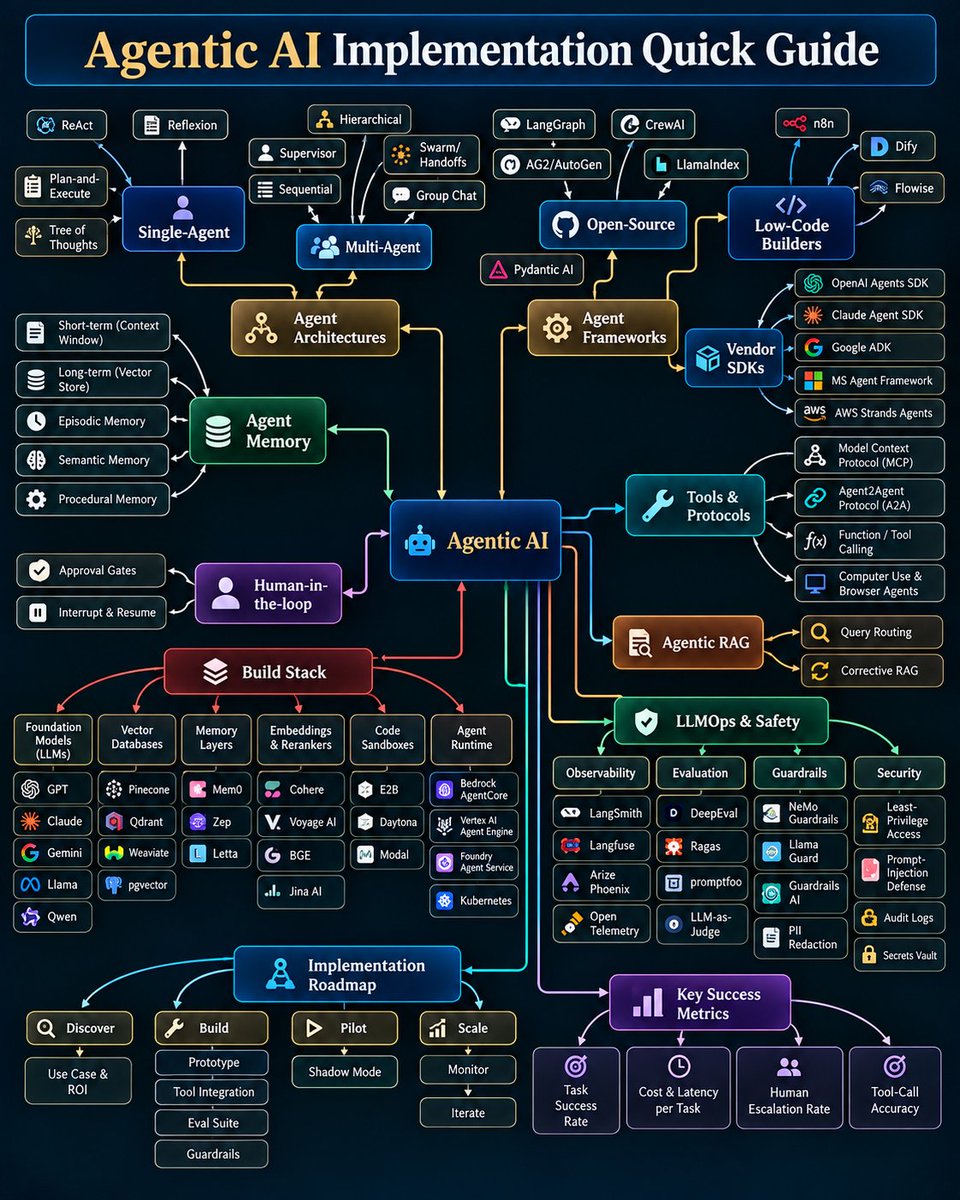
Which skill on this chart took you the longest to learn?
@AIronAgent 220 on my phone’s calculator. So Excel is the odd one out here: it treats % as a plain 0.01, while phone calculators read it as “10% of the number before it” after + or −.
19 year old Japanese student built a trading bot with Claude Code in 2 days.
Used his iPad as a second monitor.
First night: $6,732 profit.
Starting capital: $68.
Total profit so far: $750,000.
[ 𝐍𝐨𝐭𝐞: 𝐅𝐨𝐥𝐥𝐨𝐰 𝐌𝐞 @Tec_with_Luis 𝐅𝐨𝐫 𝐢𝐧𝐬𝐭𝐚𝐧𝐭𝐥𝐲 𝐚𝐮𝐭𝐨 𝐃𝐌]
Here's how it works👇
The bot scans over 50 markets simultaneously.
Syncs live BTC data from Binance every second.
Spots price errors before humans even notice.
The edge is pure speed + pattern recognition.
While traders stare at charts trying to predict the next move, his bot is already executing on mispricing across dozens of markets.
No guessing.
No emotions.
No hesitation.
Just Claude Code logic finding gaps that close in seconds.
He built the entire system in 48 hours:
→ Claude Code handles the trading logic
→ Binance API feeds real-time BTC data
→ iPad displays multi-market monitoring
→ Executes trades when arbitrage windows open
The system runs 24/7.
Every price dislocation = profit opportunity.
Most people are still trading manually, refreshing charts, second-guessing entries.
Meanwhile this 19 year old engineering student turned $68 into $750K by letting Claude Code do what humans can't: process 50 markets instantly and execute without fear.
Why are people still trading manually?
I'm giving away the exact Claude Code setup for free.
24 hours only.
To get it 👇
1️⃣ Comment " Claude "
2️⃣ Like and Repost
3️⃣ Follow @Tec_with_Luis (so I can send it via DM)