Nodes eat the storage/validation cost for every byte that gets hashed into the chain and miners chase the highest-fee block they can assemble. If inscription/Runes//spam is bidding up fees hard enough, profit-maxing miners will include it 110nodes be damned.
you need to be keeping a daily work schizo journal or you are ngmi
i have like 20-30 notebooks over the years and it's always fun going back to read what i was thinking and how REDACTED i was
Studies have shown that older games with simpler graphics had a much more stimulating effect on a gamer's brain - actively "training" creative skills and imagination, with positive impact on memory building and abstraction skills.
If that sounded to scientific, have a look at the 4 images. The older ones among you will recognize those classic games.
In the first one your brain would turn that into a "Rambo" style scenario, dropped in the jungle fighting against hordes of enemies. Have a closer look at the main character - that's 3 colors and a pile of pixels. Your mind does the rest.
In the second image your brain converts the image into an epic space battle against aliens, with you sitting in a spaceship, fighting wave after wave. Again, have a closer look at the aliens. One (!) color, 2 animation phases. Now look at your "spaceship".
In the third image you are teleported by your creative mind into a fantastic world with heroes, battles, an open world, portals and so on. A magic world, that was created aong the way, by your mind.
The fourth picture turns you into Bruce Lee despite the fact that he is a little blob of pixels in black and yellow.
The common thing in all of those examples is your brain "filling in the blanks" - and that's EXACTLY the part that's positively stimulating it.
Now think of hyper-realistic modern games with graphics so good that your brain doesn't need to do any "imagining" anymore... instead it turns into pure consumption mode. Brain waves look entirely different then. No creative areas will fire up.
The reason why many retro gamers have fond memories of old games is not just nostalgia. It is connected to what those games have done to our brains and imaginative minds at the time. They didn't oversaturate us - they merely hinted at the right direction and our brains did the rest.
Old games were similar to books - the world was created by the reader/player. And those worlds looked different for each and everyone of us.
Perception vs Reality: Bitcoin, crypto, fiat, Forkgivening, AggWit, and Kapnet.
The surface-level public map is wrong.
Most people see “crypto” as the big category, Bitcoin as a famous orange sub-bubble inside it, and fiat as the boring legacy system off to the side. From that angle, everything else—AggWit, Forkgivening, Kapnet, weakwork, HedlBits, hashers, coin-attracting businesses—looks like obscure protocol esoterica.
But that is perception. Not structure.
Reality is closer to this:
Bitcoin is not inside crypto.
Bitcoin is the monetary gravity well.
It is the orange root: proof-of-work, UTXO finality, scarcity, settlement, time, difficulty adjustment, hashpower, self-custody, and a globally legible monetary reference point.
“Crypto,” by contrast, mostly lives inside fiat.
Not because every project is fake, but because most crypto activity is still valued, funded, marketed, exited, regulated, and psychologically measured through fiat expectations. VC liquidity, exchange cycles, token launches, legal wrappers, speculative yield, USD marks, and risk-on narratives keep most of crypto inside the fiat bubble.
Bitcoin is different because Bitcoin is not primarily a company, app, token narrative, or speculation machine.
Bitcoin is monetary terrain.
That is where Forkgivening enters.
Forkgivening is not “another crypto.” It is Bitcoin-family continuation logic: a way to explore alternative Bitcoin chaintip histories, rule paths, replayable claims, and monetary counterfactuals while remaining conceptually anchored to Bitcoin’s historical gravity.
AggWit sits inside that Forkgivening space as a blockspace discipline mechanism.
AggWit asks: what if Bitcoin-family blockspace were optimized toward private monetary use, aggregate witness logic, and anti-metaledger pressure instead of endless high-entropy junk graphs?
So AggWit is not the whole forest. It is a pruning tool.
Kapnet is different again.
Kapnet is not trying to replace Bitcoin.
Kapnet is the stateful coordination layer that grows around Bitcoin-family reality. It treats Bitcoin as monetary root, hashers as thermodynamic anchors, weakwork as attention-routing cost, HedlBits as patience-metered participation, and KOR state as the social/institutional memory that lets humans, agents, businesses, and organizations coordinate without pretending everything belongs directly in base-layer consensus.
Kapnet is not the money.
Kapnet is what lets the money attract state, work, reputation, memory, services, education, business, and institutional structure.
Weakwork belongs inside Kapnet because attention must be priced.
HedlBits belong inside Kapnet because patience must be made legible.
Hashers sit underneath the cluster because physical work is what separates monetary reality from pure narrative.
Coin-attracting businesses sit between Bitcoin/Kapnet and fiat because that is where theory becomes circulation.
A coin-attracting business does more than “accept Bitcoin.” It gives coin somewhere to go, somewhere to return from, and something repeatable to coordinate around: subscriptions, memberships, credentials, education, hosting, media, software, marketplaces, local services, and institutional tooling.
That is how Bitcoin escapes being merely held and becomes an economy.
So the geometry is the thesis:
Perception:
Crypto contains Bitcoin.
Reality:
Fiat contains most crypto.
Bitcoin anchors monetary reality.
Forkgivening explores Bitcoin-family continuation.
AggWit disciplines Bitcoin-family blockspace.
Kapnet grows stateful coordination around Bitcoin.
Weakwork prices attention.
HedlBits meter patience.
Hashers anchor truth.
Coin-attracting businesses convert monetary gravity into circulation.
Bitcoin is Digital Manhattan.
Kapnet is the Digital Forest Service.
Dedicated hubs analagous to resorts/coworking spaces with consistent floor plans and a consistent token-controlled timeshare protocol for dormitories, office space, meeting space, and vendor kiosks enabling a vibrant nomadic economy.
Perception vs Reality: Bitcoin, crypto, fiat, Forkgivening, AggWit, and Kapnet.
The surface-level public map is wrong.
Most people see “crypto” as the big category, Bitcoin as a famous orange sub-bubble inside it, and fiat as the boring legacy system off to the side. From that angle, everything else—AggWit, Forkgivening, Kapnet, weakwork, HedlBits, hashers, coin-attracting businesses—looks like obscure protocol esoterica.
But that is perception. Not structure.
Reality is closer to this:
Bitcoin is not inside crypto.
Bitcoin is the monetary gravity well.
It is the orange root: proof-of-work, UTXO finality, scarcity, settlement, time, difficulty adjustment, hashpower, self-custody, and a globally legible monetary reference point.
“Crypto,” by contrast, mostly lives inside fiat.
Not because every project is fake, but because most crypto activity is still valued, funded, marketed, exited, regulated, and psychologically measured through fiat expectations. VC liquidity, exchange cycles, token launches, legal wrappers, speculative yield, USD marks, and risk-on narratives keep most of crypto inside the fiat bubble.
Bitcoin is different because Bitcoin is not primarily a company, app, token narrative, or speculation machine.
Bitcoin is monetary terrain.
That is where Forkgivening enters.
Forkgivening is not “another crypto.” It is Bitcoin-family continuation logic: a way to explore alternative Bitcoin chaintip histories, rule paths, replayable claims, and monetary counterfactuals while remaining conceptually anchored to Bitcoin’s historical gravity.
AggWit sits inside that Forkgivening space as a blockspace discipline mechanism.
AggWit asks: what if Bitcoin-family blockspace were optimized toward private monetary use, aggregate witness logic, and anti-metaledger pressure instead of endless high-entropy junk graphs?
So AggWit is not the whole forest. It is a pruning tool.
Kapnet is different again.
Kapnet is not trying to replace Bitcoin.
Kapnet is the stateful coordination layer that grows around Bitcoin-family reality. It treats Bitcoin as monetary root, hashers as thermodynamic anchors, weakwork as attention-routing cost, HedlBits as patience-metered participation, and KOR state as the social/institutional memory that lets humans, agents, businesses, and organizations coordinate without pretending everything belongs directly in base-layer consensus.
Kapnet is not the money.
Kapnet is what lets the money attract state, work, reputation, memory, services, education, business, and institutional structure.
Weakwork belongs inside Kapnet because attention must be priced.
HedlBits belong inside Kapnet because patience must be made legible.
Hashers sit underneath the cluster because physical work is what separates monetary reality from pure narrative.
Coin-attracting businesses sit between Bitcoin/Kapnet and fiat because that is where theory becomes circulation.
A coin-attracting business does more than “accept Bitcoin.” It gives coin somewhere to go, somewhere to return from, and something repeatable to coordinate around: subscriptions, memberships, credentials, education, hosting, media, software, marketplaces, local services, and institutional tooling.
That is how Bitcoin escapes being merely held and becomes an economy.
So the geometry is the thesis:
Perception:
Crypto contains Bitcoin.
Reality:
Fiat contains most crypto.
Bitcoin anchors monetary reality.
Forkgivening explores Bitcoin-family continuation.
AggWit disciplines Bitcoin-family blockspace.
Kapnet grows stateful coordination around Bitcoin.
Weakwork prices attention.
HedlBits meter patience.
Hashers anchor truth.
Coin-attracting businesses convert monetary gravity into circulation.
Bitcoin is Digital Manhattan.
Kapnet is the Digital Forest Service.
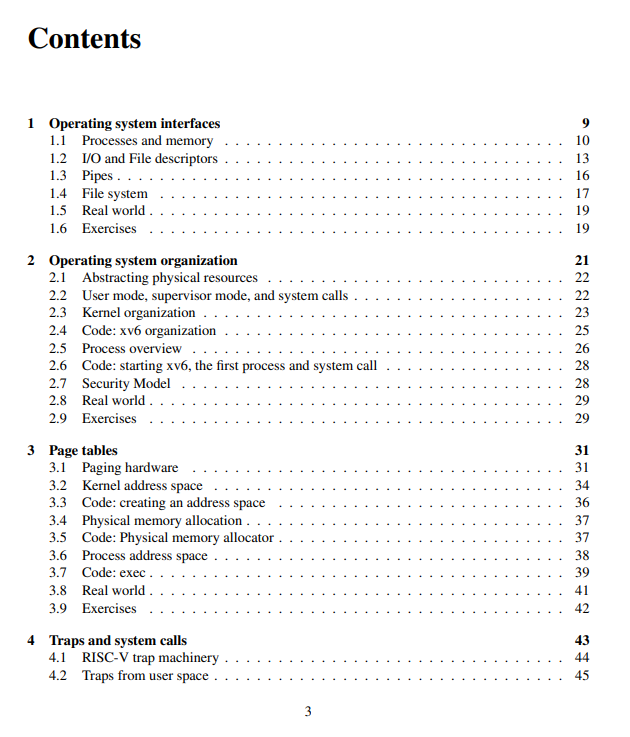
MIT teaches operating systems by giving students a working Unix like kernel and asking them to modify it
it is called xv6 a reimplementation of Unix Version 6 from 1975 rewritten in modern C for RISC V multiprocessors
the whole kernel is only around 6000 lines
processes system calls virtual memory file descriptors pipes and the scheduler are all there to read and experiment with
this is what you study when you want to understand how an operating system actually works not just how it is explained at a high level
A Monograph from the Archives The Puerto Crypto Codex: Fragments from the Orange Dawn Compiled by the Recovery Expedition, Year of the 1.2 Millionth Block
Prologue: The Lost Tapes of Puerto Crypto
In the humid lecture halls of the University of Puerto Rico Río Piedras, between 2013 and 2015, something improbable took root. While the world still laughed at digital coins, a small cadre of students and professors gathered around flickering laptops. They spoke in hushed tones of zero-knowledge proofs, elliptic curves, and a ledger that needed no king.
A forgotten MiniDV camcorder, labeled in faded marker “PUERTO CRYPTO”, kept its red eye open. It captured what no official history would: the moment the orange signal reached the Caribbean. Holographic blocks drifted through projector beams like ancestral spirits. Outside the jalousie windows, futures layered like palimpsests — Maria’s winds, Puertopia dreams, neon conferences, and the steady clack of chips on felt at Dibby’s.
That tape was lost. Or hidden. Or waiting.
Cinematic documentary still of a crowded classroom at the University of Puerto Rico Río Piedras circa 2013–2015. Students gather around laptops showing primitive Bitcoin wallets, block explorers, and cryptographic diagrams. A professor stands before a projector explaining zero-knowledge proofs while dusty sunlight cuts through jalousie windows. In the foreground, a forgotten MiniDV camcorder labeled “PUERTO CRYPTO” with its red recording light glowing. Ghostly holographic Bitcoin blocks emerge from the projector beam and drift across the room like spirits. Outside the windows, layered future timelines: Hurricane Maria devastation, Puertopia billboards, luxury crypto conferences, and modern Dibby’s poker tables. Mood of recovered historical artifact and forgotten origin story. Style: analog film grain, Puerto Rican university realism, cyber-mythological atmosphere, high detail, museum-quality photography, Bitcoin illuminated manuscript influence.portrait
Chapter I: The First Sacrament
Before the conferences, before the yachts, before anyone called it “adoption,” there was a small neighborhood bodega in San Juan. A merchant with callused hands. A customer with an old Android phone. A QR code glowing like a new constellation.
No trumpets sounded. No press release went out. Yet in that quiet transaction, the network spoke its first true words in Puerto Rican Spanish.
Orange light threaded through the air — invisible filaments binding cash registers to satellites, university desks to future nodes, human trust to unbreakable math. The participants wore no halos, only the quiet geometry of blockchain diagrams. Outside, life continued as if nothing holy had occurred.
But something had.
“Every network begins as a conversation.”
A small Puerto Rican neighborhood business accepts Bitcoin for the first time, treated as a Renaissance religious painting. The merchant stands behind a modest counter while a customer scans a QR code with an ancient smartphone. Invisible streams of orange light connect cash registers, satellites, university classrooms, and future economic networks. Participants surrounded by circular blockchain diagrams instead of halos. Outside the storefront, everyday life continues unaware that history is occurring. Caption carved into the ornate frame: “Every network begins as a conversation.” Style: Renaissance composition with Puerto Rican urban architecture, Bitcoin symbolism, reverent historical realism, cyberpunk WPA mural depth, high detail.portrait
Omaha HiLo SNG
4 Tables of 4 Players
10,000 Buy-In
10,000,000
Free Chips Awarded Daily*
GetDibbys (ID: 617751)
On @ClubGG_Poker
*On Days Admin Logs In,
up to twice daily.
Monthly Leaderboard Winners #1 and #2 Get Co- for the following month, and #3 Gets to Set up a Table.