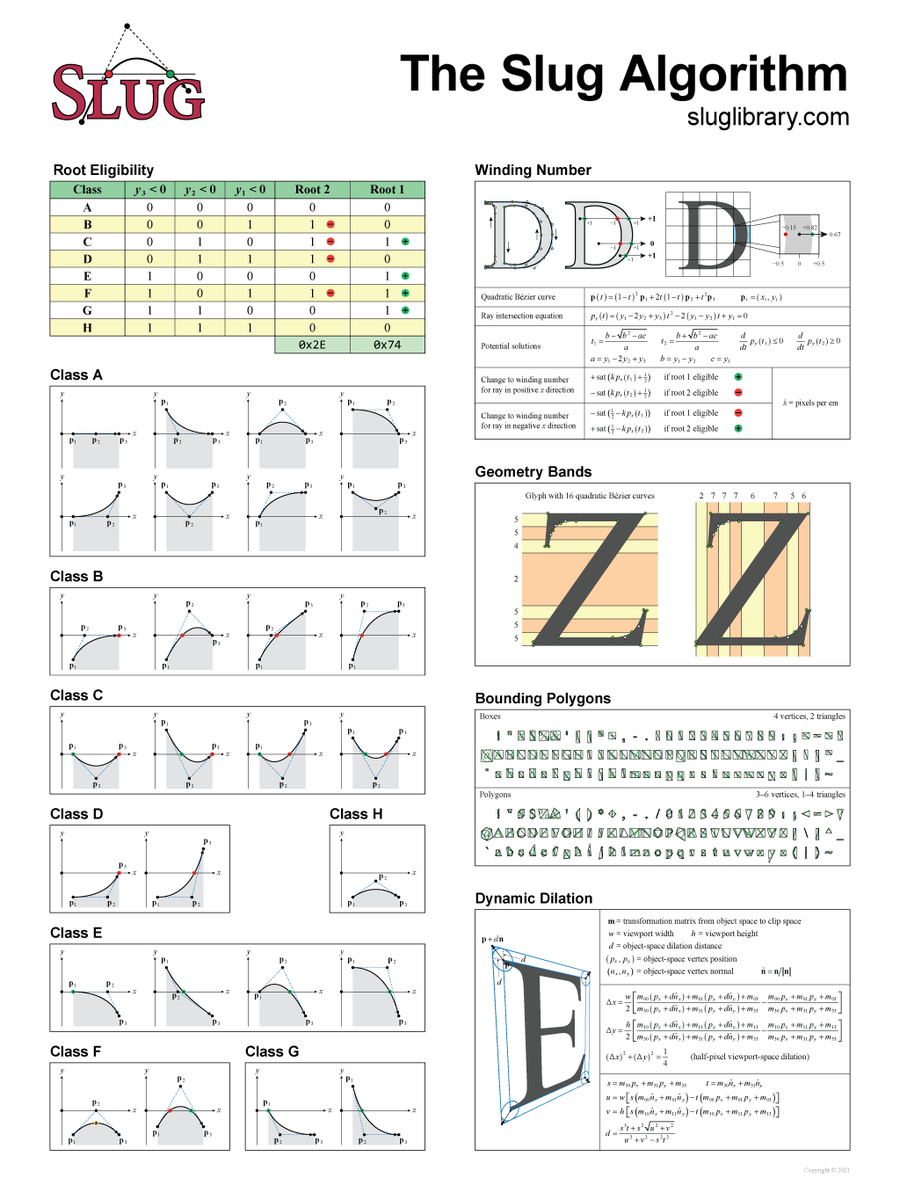
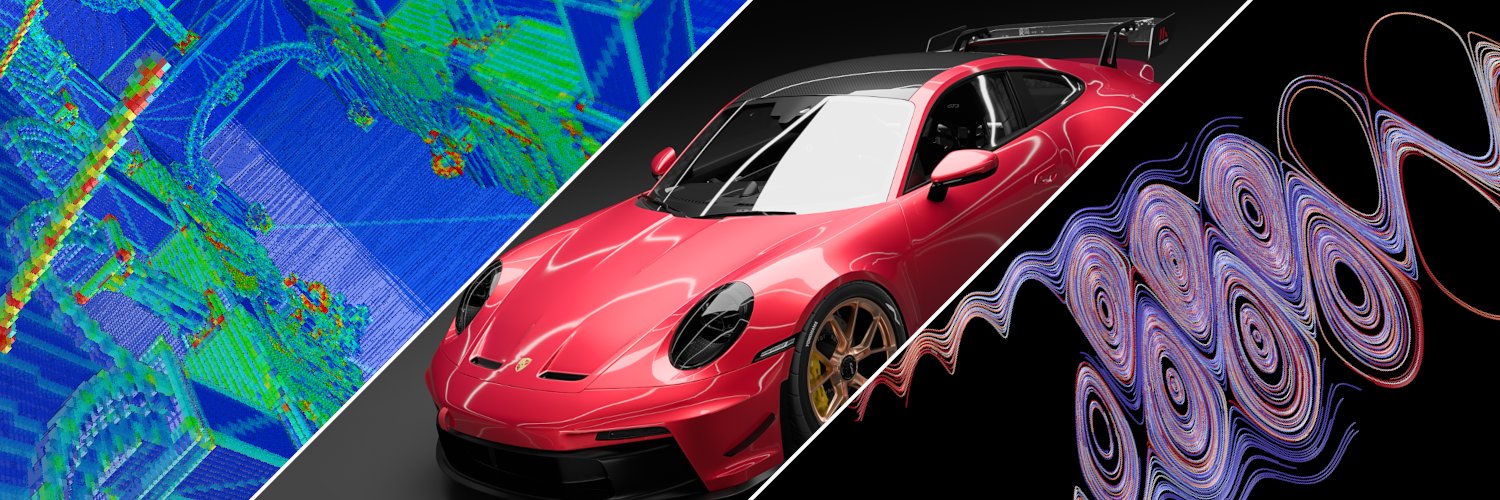
New blog post: A Decade of Slug
This talks about the evolution of the Slug font rendering algorithm, and it includes an exciting announcement: The patent has been dedicated to the public domain.
https://t.co/xWEz0q2c4N
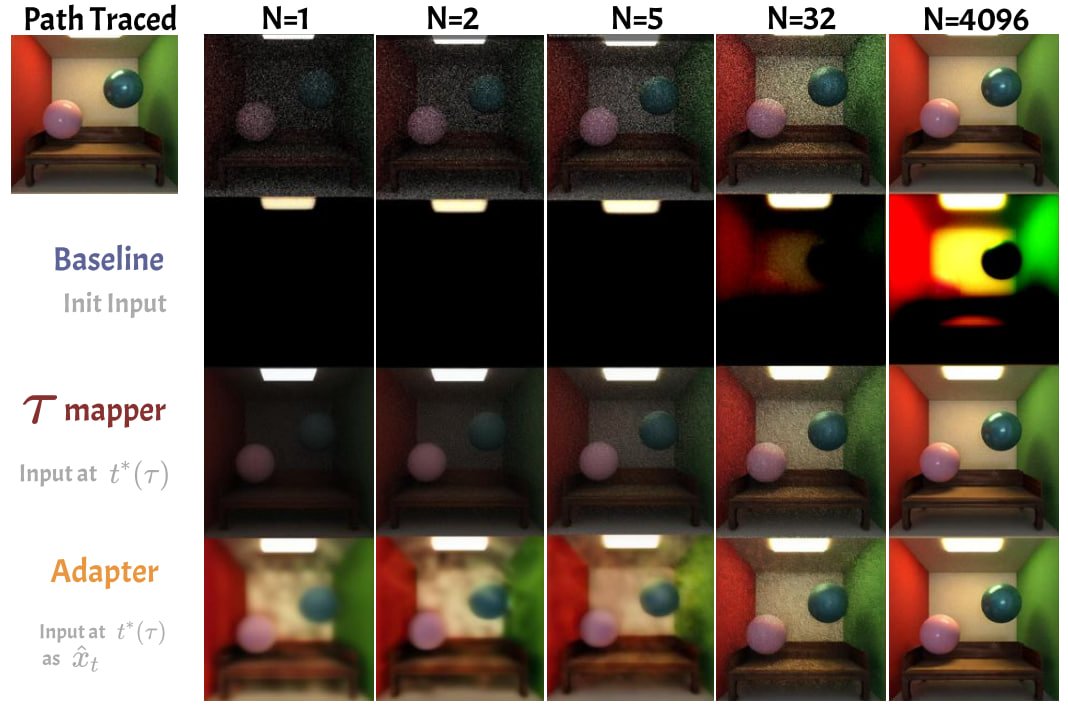
monte-carlo path tracing performs iterative denoising
diffusion model does it as well
the authors bridge the two:
maps MC noise → diffusion noise + correct timestep
so diffusion model can finish rendering as a learned denoiser
I don’t often post outside AnKi’s website but here’s a new blog post explaining how Vulkan barriers work at the hardware and driver level on Mali GPUs #vulkan https://t.co/yqzJ6Ltpke
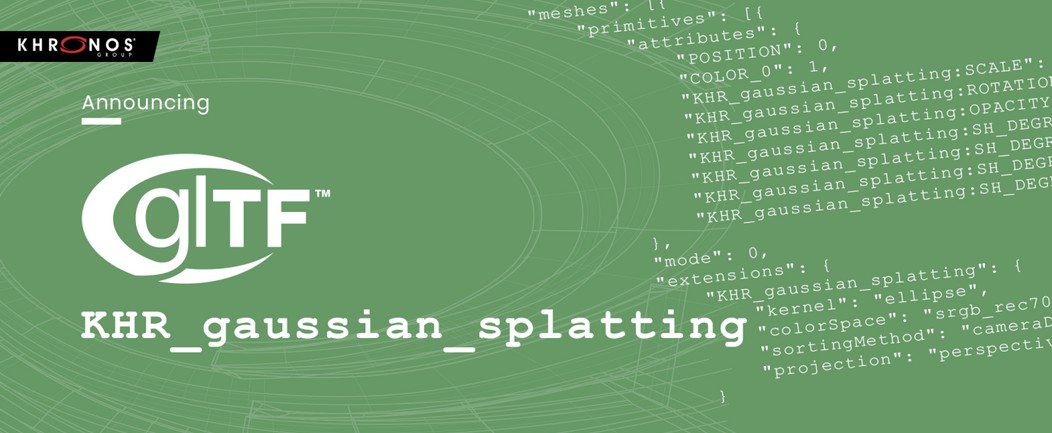
We're excited to announce a release candidate for the KHR_gaussian_splatting baseline extension. This extension enables storing 3D #Gaussian splats in #glTF 2.0, the most widely adopted 3D asset delivery format.
Learn more: https://t.co/FlgITBW7ll
Ray marching is a common approach to GPU-accelerated volume rendering, but gives biased transmittance estimates. My new @SIGGRAPHAsia paper (+code) proposes an amazingly simple formula to eliminate this bias almost completely without using more samples.
https://t.co/12nr5SeM2y
🚀New blog alert! Dive into LunarG’s game-changing KosmicKrisp reveal at #XDC2025 – a Vulkan-to-Metal driver bringing FULL Vulkan 1.3 conformance to Apple Silicon! Built in 10 months, it’s a win for macOS devs. Read all about it: https://t.co/vyrYZFFXOp #Vulkan#AppleSilicon
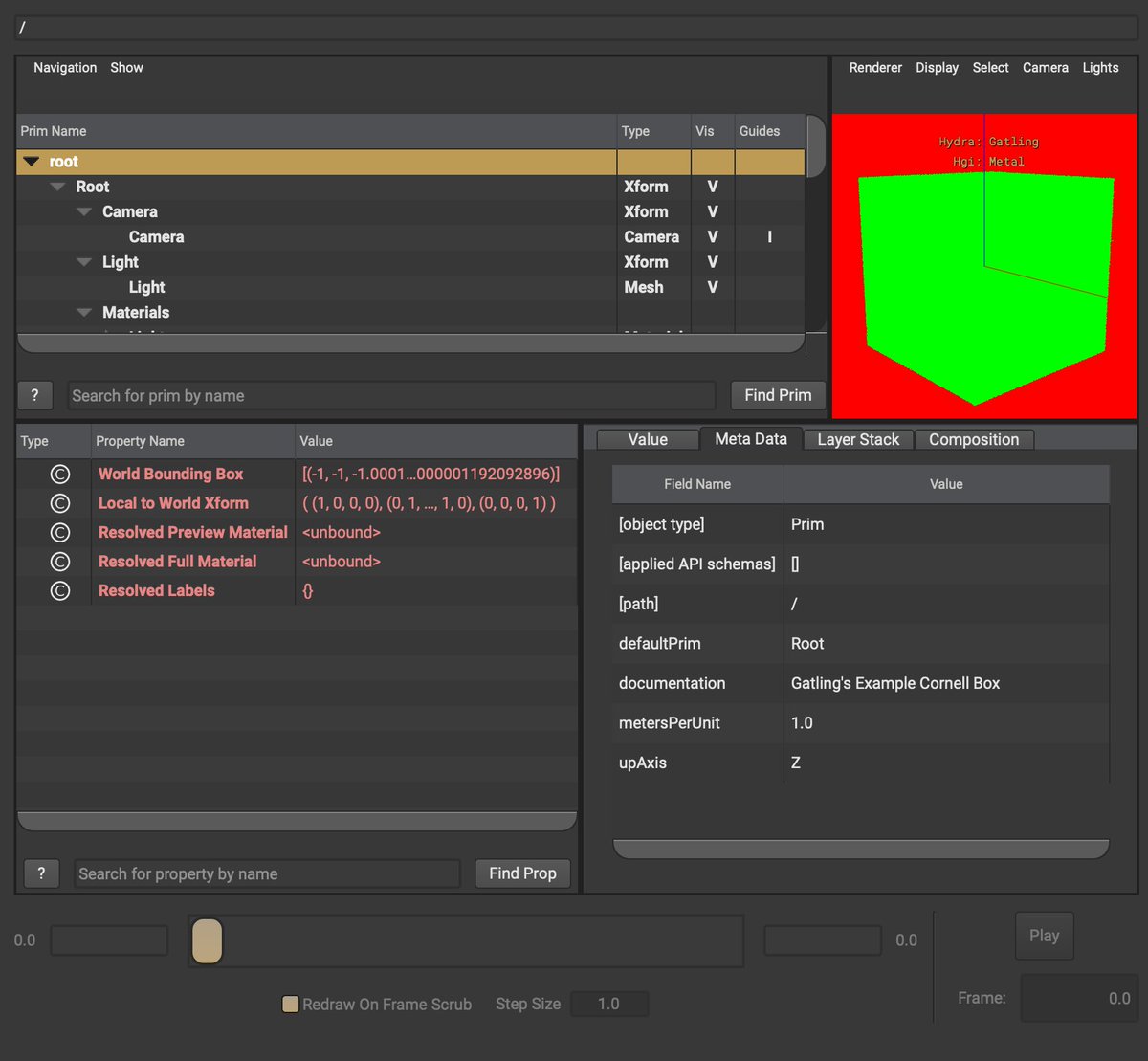
What I’m working on right now is a Metal backend for gatling. The idea is to use metal-cpp with GLSL shaders, by forking SPIRV-cross to support ray tracing pipelines :) (very WIP)
Btw, a few weeks ago I released a small plugin for usdview. It allows inspection of UsdShade networks using a custom Qt node graph. It’s open source, lightweight and simple to install.
OpenQMC released their code! the readme is quite a document but it looks like it includes blue-noise-across-pixels versions of Sobol and PMJ and can do all the construction you need to sample subpixels/lens/lights to as many dimensions as you need https://t.co/QvAwrWHzfj
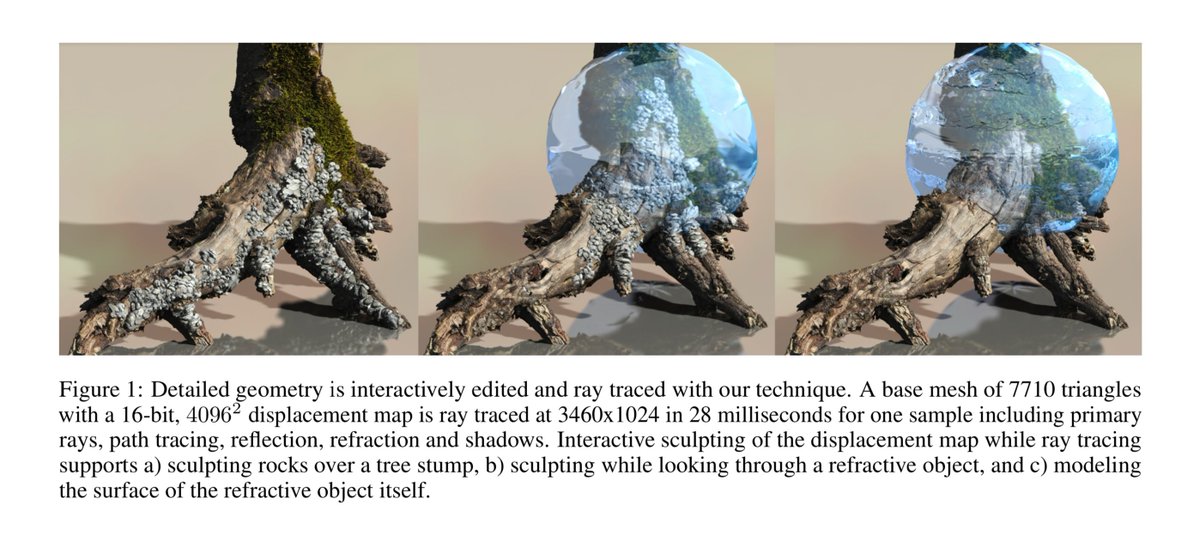
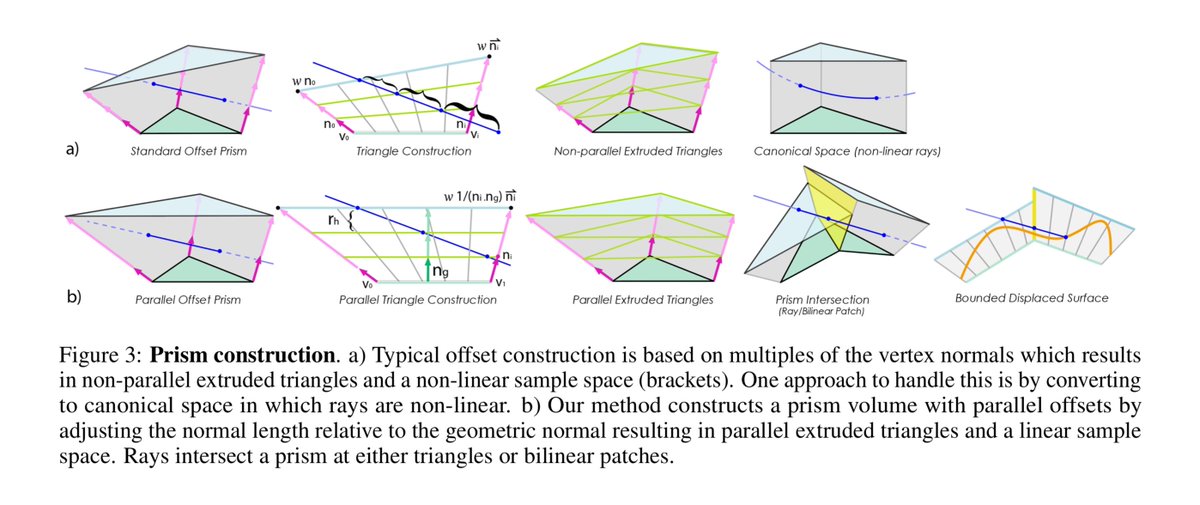
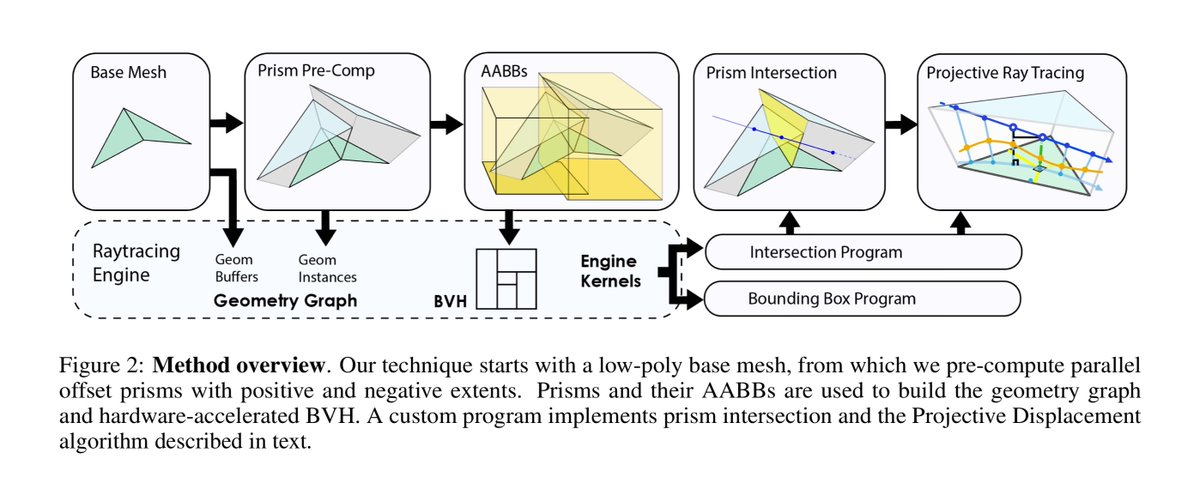
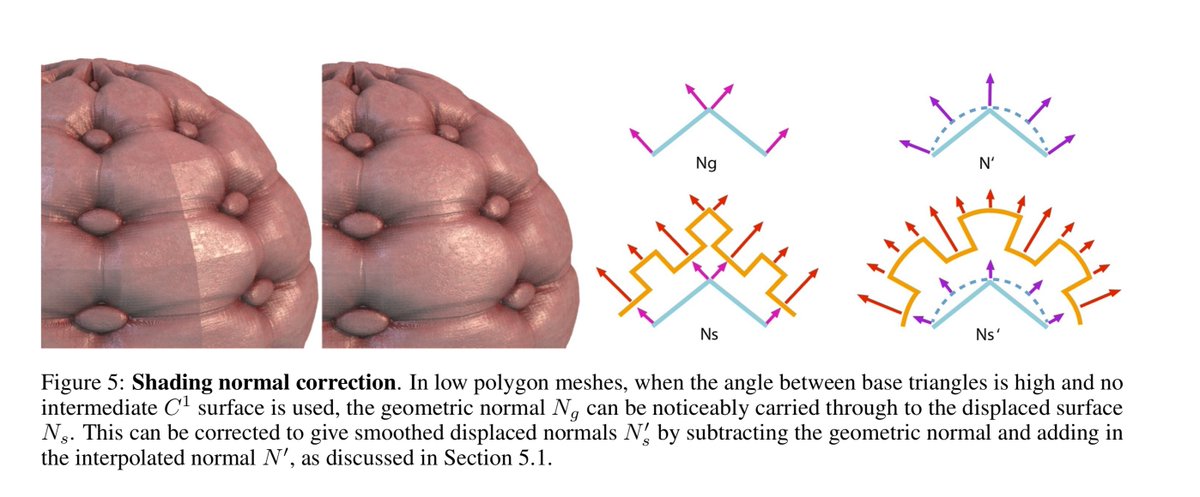
Projective Displacement Mapping for Ray Traced Editable Surfaces
Rama Carl Hoetzlein
https://t.co/OLFCMkwgoy
Abstract:
Displacement mapping is an important tool for modeling detailed geometric features. We explore the problem of authoring complex surfaces while ray tracing interactively. Current techniques for ray tracing displaced surfaces rely on acceleration structures that require dynamic rebuilding when edited. These techniques are typically used for massive static scenes or the compression of detailed source assets. Our interest lies in modeling and look development of artistic features with real-time ray tracing. We demonstrate projective displacement mapping, a direct sampling method without a bottom-level acceleration structure combined with a top-level hardware BVH. Quality and performance are improved over existing methods with smoothed displaced normals, thin feature sampling, tight prism bounds and ray-bilinear patch intersections. Our method is faster than comparable approaches for ray tracing, enabling real-time surface editing.
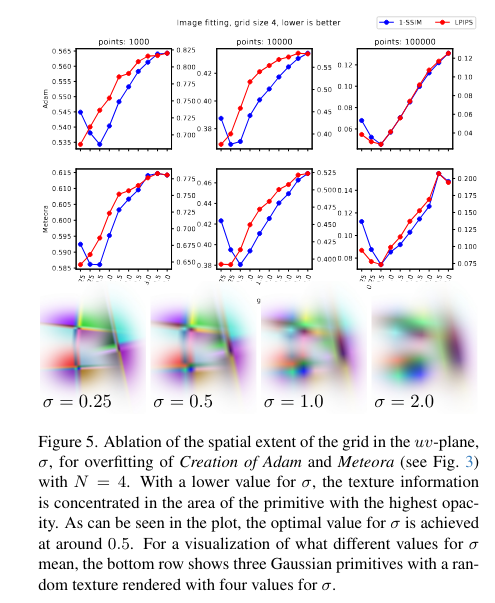
Gaussian Billboards: Expressive 2D Gaussian Splatting with Textures
Contributions:
1. An extension to 2DGS with a spatially-varying color defined by a per-primitive texture.
2. A detailed ablation of the introduced hyperparameters.
3. An evaluation of 2D and 3D scene representations showing the improved capabilities of Gaussian Billboards in representing texture details.
🔥LunarG’s KosmicKrisp powers Vulkan on Apple Silicon with Mesa! Learn how this driver advances Vulkan with strong progress toward 1.3 conformance and enhanced performance. Read more: https://t.co/G9HVh5pvts Learn more next week at #SIGGRAPH2025! #Vulkan#KosmicKrisp#Graphics