DeepSeek just published the price of a token, and it should make you angry.
From their own DeepInfer docs: 1 cluster serves 155 trillion tokens a day, at $38 of revenue per GPU-hour, and thats at off-peak prices. Their API is $0.30 per million input tokens and $1.20 per million output at peak.
Yuchen Jin did the math: even if they rented B300s at $7 an hour, thats about 82% gross margin. Other estimates go higher.
So cheap AI is not charity and it is not "dumping". At these prices serving a frontier-class model is a very profitable business, if your inference stack is good enough.
Now remember every time a US lab told you that intelligence is expensive. That $200 a month is a fair price. That limits exist because compute is scarce.
Part of that is true. Part of it is a business model built on you not knowing what a token actually costs.
DeepSeek just showed everyone the numbers and gave away the engine. Every inference company can now compete on price with the same software. Thats how AI gets cheap for everyone.
@rikarends Main problem that it still use legacy concepts in retopology and as result looking outdated.
Even 10y.o zBrush had more way to do a same automated and fully controlled by the artists. And this is not the topology guides.
3D-Coat an another example with superior retopo tools.
DeepSeek just published the price of a token, and it should make you angry.
From their own DeepInfer docs: 1 cluster serves 155 trillion tokens a day, at $38 of revenue per GPU-hour, and thats at off-peak prices. Their API is $0.30 per million input tokens and $1.20 per million output at peak.
Yuchen Jin did the math: even if they rented B300s at $7 an hour, thats about 82% gross margin. Other estimates go higher.
So cheap AI is not charity and it is not "dumping". At these prices serving a frontier-class model is a very profitable business, if your inference stack is good enough.
Now remember every time a US lab told you that intelligence is expensive. That $200 a month is a fair price. That limits exist because compute is scarce.
Part of that is true. Part of it is a business model built on you not knowing what a token actually costs.
DeepSeek just showed everyone the numbers and gave away the engine. Every inference company can now compete on price with the same software. Thats how AI gets cheap for everyone.
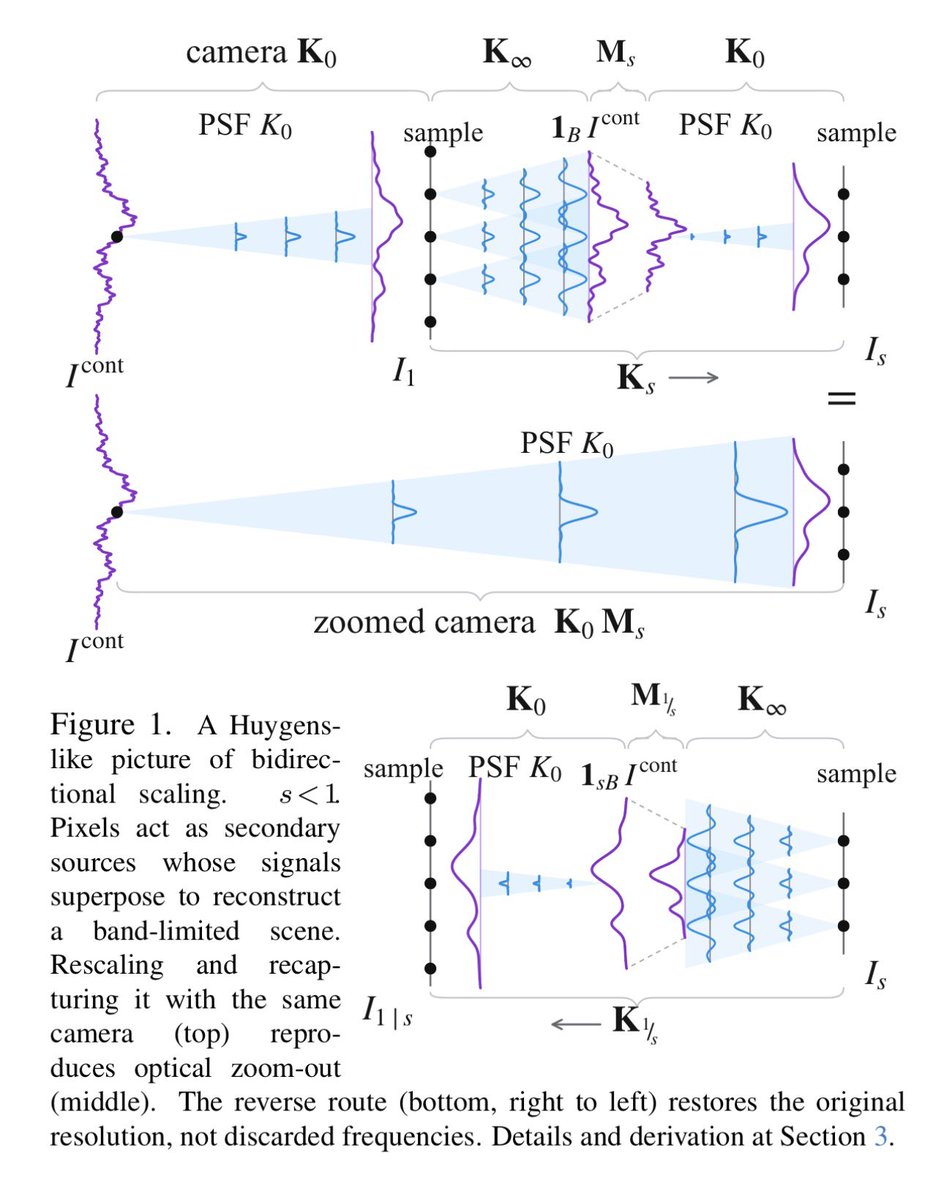
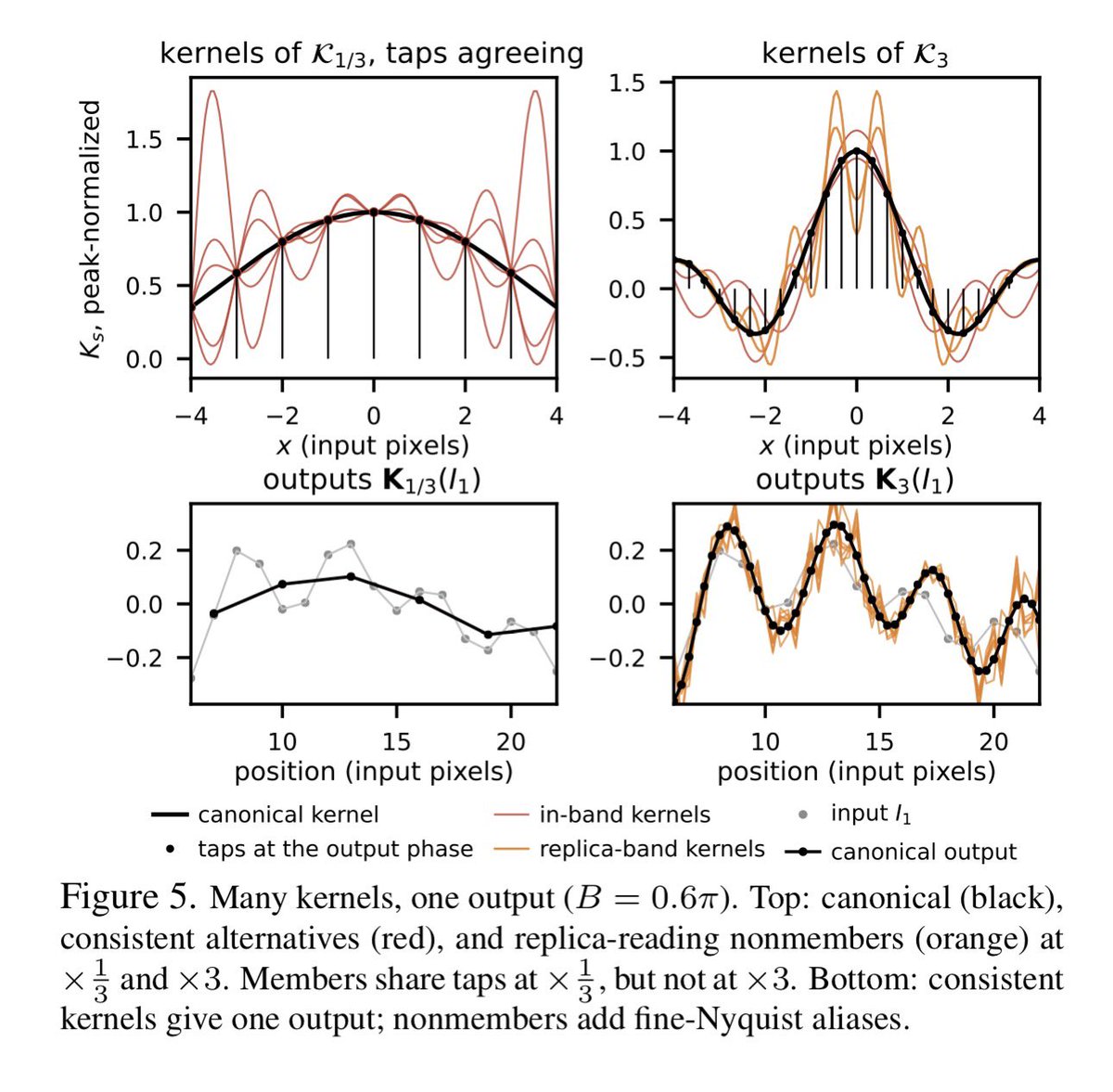
A Unified Theory of Image Scaling: Point Spread Functions, Discrete Kernels, and Scale-Spaces
Assaf Shocher (Technion – Israel Institute of Technology)
https://t.co/jOuR7eafLe
Abstract:
We derive the optically aligned system of image-scaling operators Ks that reproduces optical zoom (exact zoom-out, canonical zoom-in), by identifying a Huygens-like consistency principle in which each pixel acts as a secondary source. The system is determined in closed form by the camera's point spread function (PSF), itself the operator K0. The operators compose, Ks′∘Ks = Kss′ (with band projection for down-up), and account for both upscaling and downscaling, which form a Moore-Penrose pseudoinverse pair, K1/s = K†s. We show that image scaling, as routinely practiced, is neither optically faithful nor internally consistent; for example, common anti-aliasing rules generally correspond to no camera, and two resizes by a factor of 1/2 generally do not equal one resize by a factor of 1/4. Gaussian scale-space kernels cannot be exact finite-aperture PSFs. Gaussian scale-space is an idealized special case of what emerges here: a generalized scale-space for sampled images, derived entirely from camera optics, bidirectional, and not limited to Gaussian kernels. The system goes beyond scaling and supports composable and invertible subpixel geometric transformations. We empirically validate its optical predictions with real captures and noisy optics simulations, and demonstrate its practical impact on the stability of tasks such as super-resolution and classification.
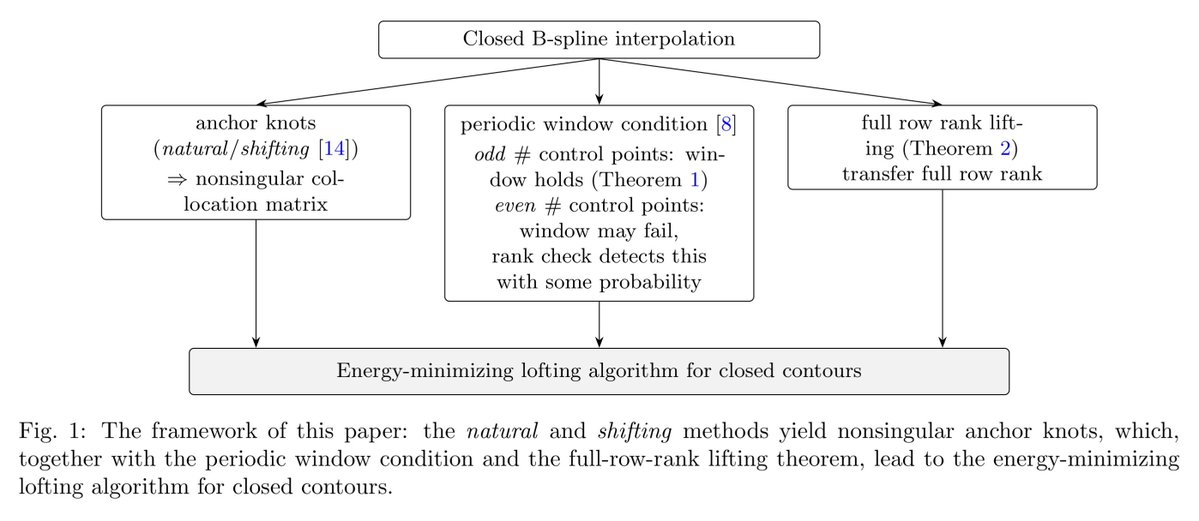
Energy-minimized interpolatory B-spline lofting for sequences of closed contours
Shutao Tang, Zixuan Zhao
https://t.co/MxQaW0s6eq
Abstract:
B-spline lofting through closed cross-sections is common in reverse engineering, but interpolating each section on its own knot vector can produce an unnecessarily large control net. We construct a common-knot method for closed section curves of odd and even degree by minimizing the strain energy of each section subject to its interpolation constraints. Feasibility for closed section data and uniqueness of the resulting saddle-point solution require full row rank of the periodic collocation matrices, a property that a previously proposed periodic Schoenberg-Whitney window condition does not always guarantee. We establish the exact parity distinction: the condition is sufficient at odd point counts but admits singular configurations at every admissible even point count. For the odd and even degrees used here, the natural and shifting anchor knots are nonsingular; at odd point counts the window condition certifies the selected candidate, whereas at even point counts a rank test with an anchor fallback is applied. The lofting method therefore retains a nonsingular square subsystem for each section and uses nestedness to transfer full row rank to the rectangular common-knot system. Across six closed-contour models the common-knot method uses 83-98% fewer control points than traditional interpolating lofting, with section energies no larger than those of a previous knot-selection method within numerical precision.
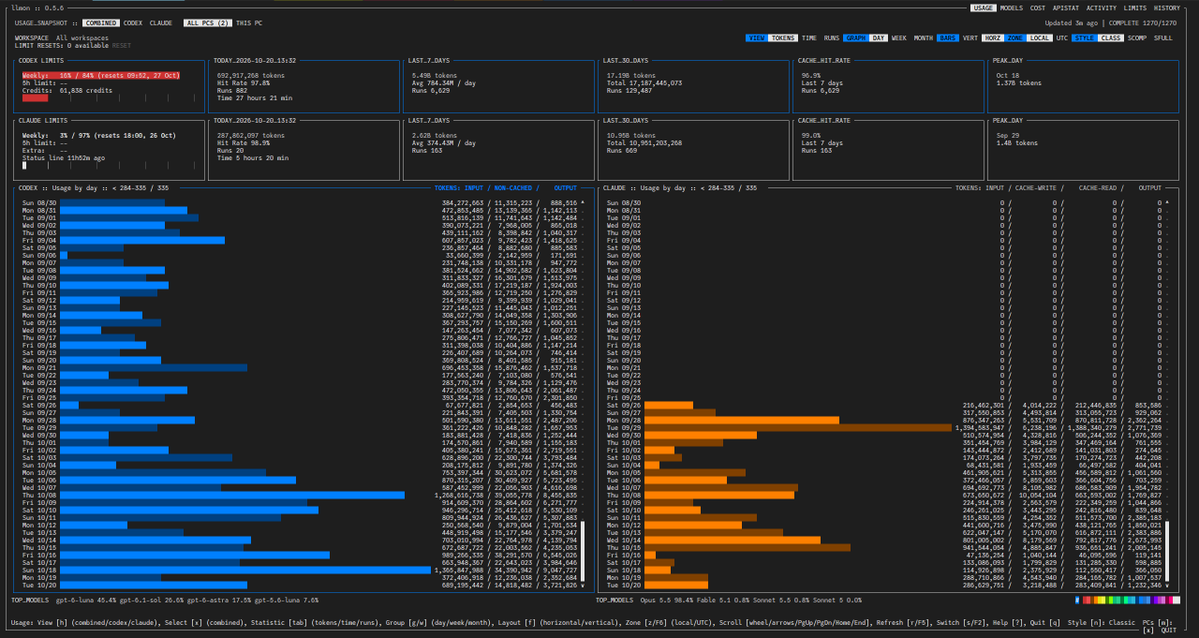
@floriancroquet Still weird. Not only because i have used own reset, but also because for 2 hours i already used 10% of weekly limits. Only Sol and Luna.
@NOTimothyLottes Negligible, I guess. Only we geeks can guess where AI was used. Others don't care if the result is "canny," or they feel weird if it's "uncanny."
Dear @apple I’m an idiot but you are genius. Please in a simple form explain me how image captured with native iPhone camera, required, fucking 10sec, to just load for the edits?
@DiEvilSTR занятно что до смене манифеста все это умел делать uBlock Origin, включая удаление частей интерфейса (да и по уму сейчас тоже умеет). Но проблема в том то они постоянно меняют не только код страницы но и интерфейс :D