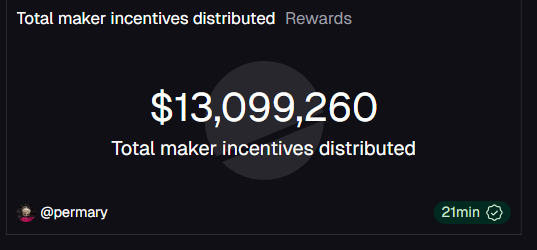
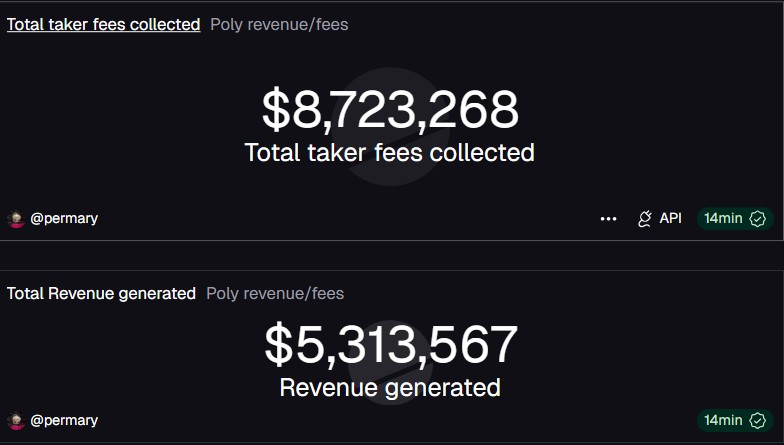
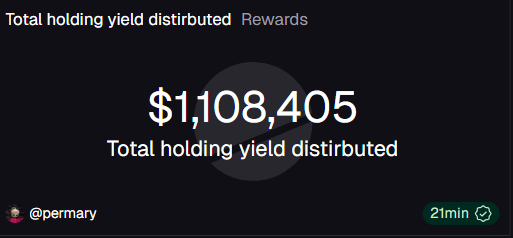
Got curious about how much @Polymarket has generated from taker fees and how much has been distributed to users as holding rewards and liquidity provision, so I decided to make a dune dashboard tracking these metrics.
Let me trace the timeline here because nobody's connecting it.
Step 1: Scrape the entire internet. Every book, every article, every conversation, every piece of art, every forum post. Do it without asking. Do it without paying.
Step 2: Train a model on all of it. Call it "artificial intelligence."
Step 3: Go to BlackRock's Infrastructure Summit and announce: "We see a future where intelligence is a utility, like electricity or water, and people buy it from us on a meter."
Step 3 is where you sell people's own knowledge back to them. On a meter.
They took the collective output of human thought, compressed it into a model, and now they want to charge you by the token to access a version of what you and everyone you know already created.
One Reddit user put it perfectly: "They stole all this data from us, the people, our life's work, creativity, art, by devouring the internet and blowing through all copyright laws. Now they want to sell it back to us in the form of a utility."
Imagine if someone photocopied every book in the public library, burned the library down, and then opened a subscription service for the copies.
That's the metered intelligence business model.
And they're pitching it to infrastructure investors as though they invented water.
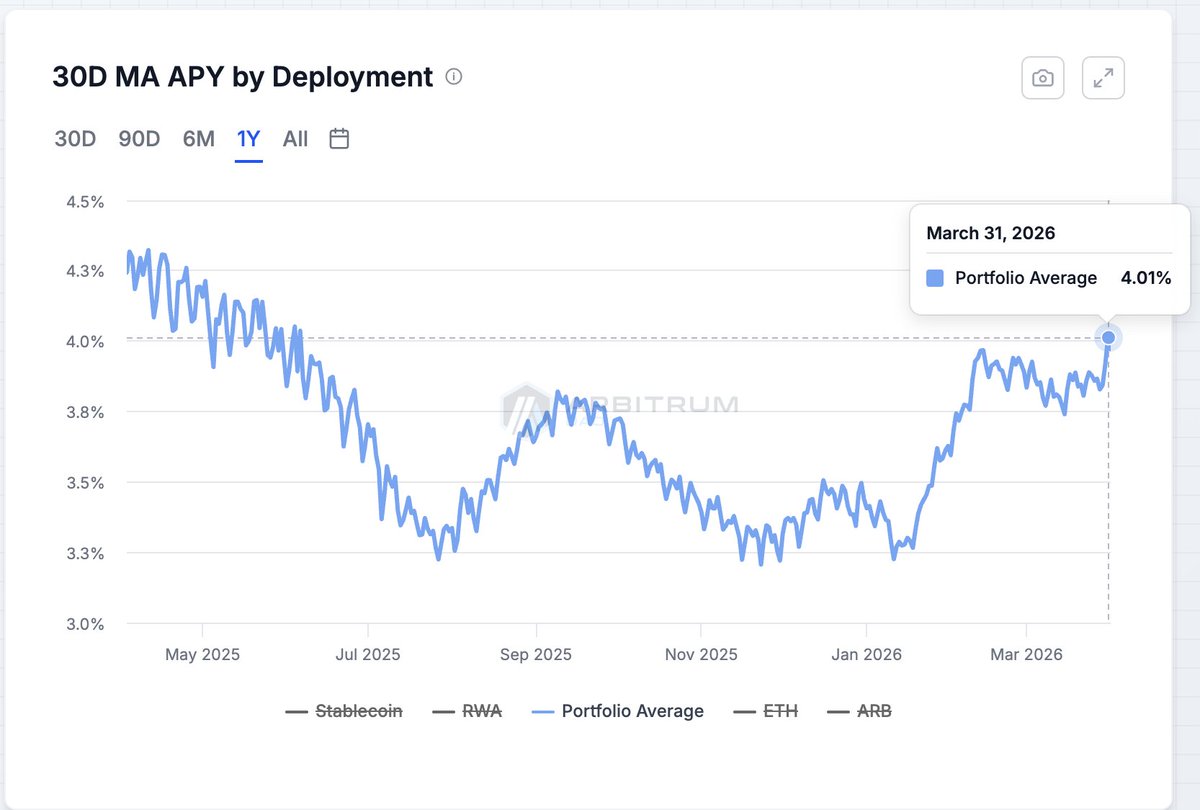
The Arbitrum DAO Treasury Management Program is outperforming both the T-Bill rate and the Aave USDC supply rate.
If the APY can be maintained at 4%, a $90M portfolio could generate a $3.6M annual return for the DAO.
[Polymarket Data Guide for Analyst and Engineer]
1/
Polymarket, the largest decentralized prediction market on Polygon, has processed over $20B in cumulative trading volume and distributed over $10M in liquidity rewards— both maker and holder incentives.
The ability to access and make sense of data helps traders and maker markets win. Better data improves your analysis, sharpens your backtests, and gives you a real edge in this highly competitive market
In this thread, we'll break down how Polymarket works, the data models behind it, where to find data, and the data tools commonly used in the web3 ecosystem.
Full article at the end of tweet
🚨NEW EPISODE: The RWA Reality Check🚨
In today's episode, we're joined by @JW_Seoul from @NexusDataLabs for a deep dive into the current state of RWAs, onchain data, and where real usage actually stands.
We discuss:
- JW’s path from TradFi credit to onchain analytics
- Building Nexus Data Labs
- The reality behind RWA growth vs headlines
- Why most RWA stablecoins sit idle
- The missing piece: DeFi composability
- Permissioned vs permissionless token constraints
- Tokenized funds, treasuries, and actual usage
- Prediction markets growth and Polymarket dominance
- Hidden revenue dynamics of stablecoin collateral
- Polymarket’s impact on Polygon usage
- Onchain data gaps and the rise of crypto data analysts
- The convergence of TradFi and crypto skillsets
And much more—enjoy!
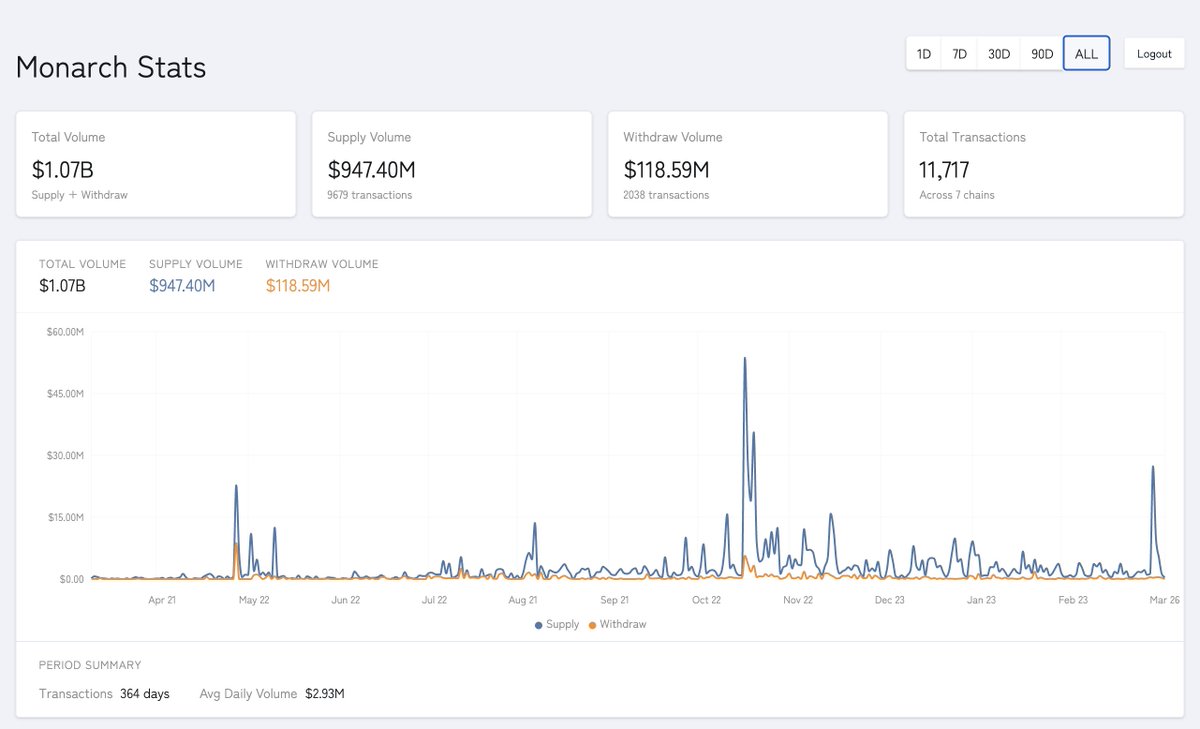
Monarch has processed more than 1B in volume.
This is a big milestone, 1B volume processed through a platform that prioritize transparency. No trusted entities, no intermediaries.
Just people interacting with immutable morpho cotracts.
People are taking back control.
Do not use AI. I will use AI to check if you used AI, then I will post the results of my use of AI to discover your use of AI and shame you for it. What utter stupidity.






![SekFook's tweet photo. [Polymarket Data Guide for Analyst and Engineer]
1/
Polymarket, the largest decentralized prediction market on Polygon, has processed over $20B in cumulative trading volume and distributed over $10M in liquidity rewards— both maker and holder incentives.
The ability to access and make sense of data helps traders and maker markets win. Better data improves your analysis, sharpens your backtests, and gives you a real edge in this highly competitive market
In this thread, we'll break down how Polymarket works, the data models behind it, where to find data, and the data tools commonly used in the web3 ecosystem.
Full article at the end of tweet](https://pbs.twimg.com/media/HE6v5hpakAADwWK.jpg)