*BRILLIANT*
The French made a short film about what could happen after all immigrants would follow the ‘_white, angry old man’s_’ advice to go back where they came from.*
Researchers mathematically proved that AI will cause something worse than mass unemployment.
It’s called “The Tragedy of the Cognitive Commons."
For the last three years, everyone has obsessed over a single question: Will AI steal our jobs?
That’s the wrong question.
A breakthrough research paper just exposed a much darker reality.
The real danger is that AI will quietly destroy the human capacity to do anything well.
Here is how the it works.
Every industry relies on what researchers call the "Cognitive Commons”, a shared pool of deep professional expertise that regenerates itself generation after generation.
How is that expertise built?
Through friction. Through doing the boring, difficult, junior-level work. Through manual trial and error.
That is how you build "Internalized Mastery."
When companies adopt AI to automate entry-level work, the logic looks airtight on a quarterly balance sheet. Cut costs. Speed up output. Skip the grunt work.
Every individual company is making a rational choice. But collectively, they are draining the pool dry.
When you eliminate junior roles, you destroy the pipeline that creates senior experts.
The researchers call the result the Validation Tether.
Effective human oversight of AI depends entirely on deep domain expertise.
As professionals increasingly delegate thinking to machines, they lose the mastery required to spot when the AI is wrong.
The experts validating AI outputs today look competent.
The terrifying question is: Who comes after them?
When the current generation of veterans retires, who will be left with the skills to audit the systems running our economy?
Nobody.
We are trading our long-term intellectual independence for short-term productivity boosts.
Every time you let AI bypass the struggle, you are borrowing expertise from the future.
And the interest rate is your profession's ability to think for itself.
I did my own investigation because I obviously don't trust them.
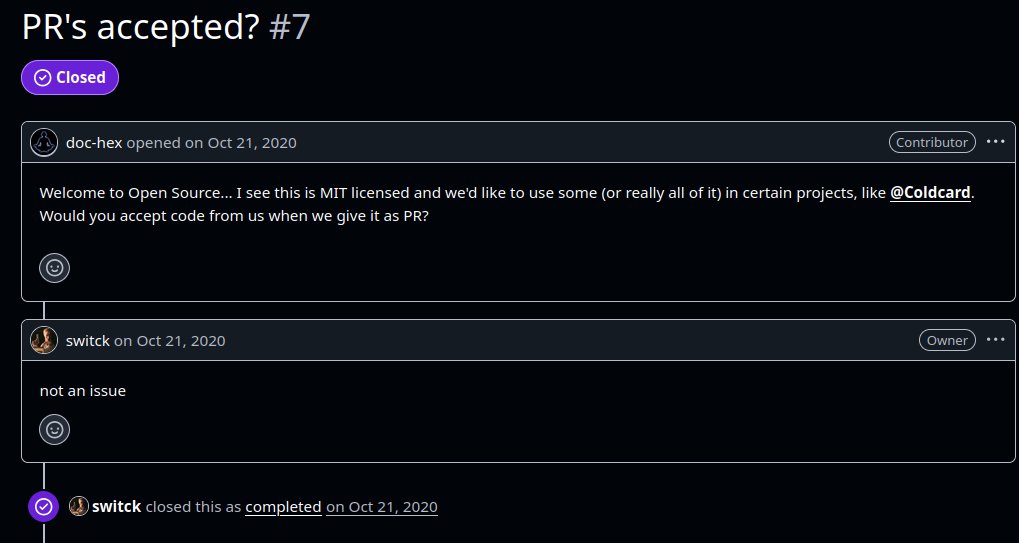
What I found is that the external dependency of the firmware with the critical vulnerability hidden in it was written by CoinKite's CTO @DocHex pretending to be someone else.
All of the following can be verified:
@Shuttlecock@erikkain I was hoping it would be partially resolved in BND but I guess scriptwriters are holding out for wrapping it up in another movie. On the other hand Peter is back in Ned's (and MJ's) life to some small degree so he could rebuild friendships from there, nothing stopping him really.
@Shuttlecock@erikkain Pretty sure it was just Ned recognising Spider-man is Peter from when he visited as Spider-man and MJ let slip his name was Peter. However it's deliberately ambiguous at this point I think.
Imagine getting surprised at your wedding with a video of your love story across eras 🥹
It ends with how they actually met.
Insanely cool use case for AI video - the groom's friends made it for him (he's on IG at pure.sagyna).
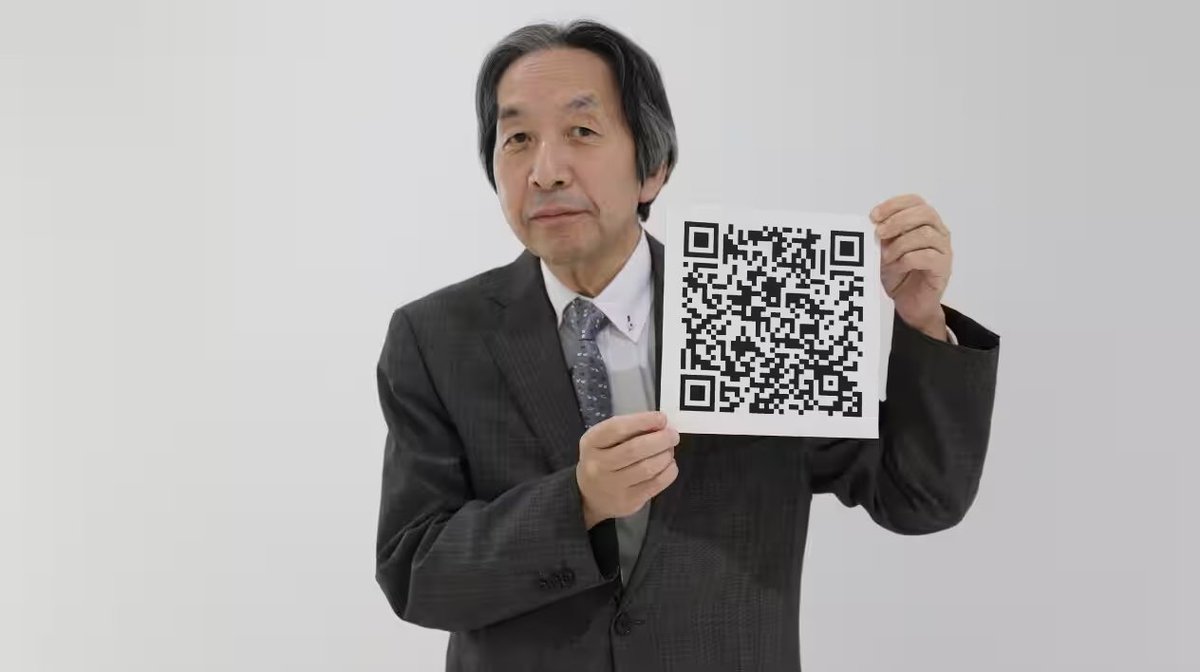
A Japanese engineer invented the QR code for one job, tracking car parts on a Toyota line, then his company chose to give the patent away for free, which is the only reason it ended up on every restaurant table on Earth.
His name is Masahiro Hara. The company was Denso Wave, a parts supplier owned by Toyota.
In 1992 the problem landed on his desk, and it was not glamorous. Workers on the factory floor were drowning.
Every car part had a barcode, but a barcode can only hold about twenty characters, so to track one component they had to stick five or ten barcodes on it.
A worker would stand there scanning a single part ten times in a row. Some of them were scanning close to a thousand barcodes a day. The job had stopped being about building cars and turned into pointing a scanner at stickers all day long.
And there was a second problem nobody upstairs cared about. This was a factory. Oil got on everything. A smudge of grease across a barcode and the whole thing became unreadable, and the line stopped.
Hara was asked to make the scanner faster. He looked at it for a while and realized the scanner was not the problem. The barcode itself was the ceiling. A line of black bars can only hold information going one direction, left to right.
He decided to build something that held information in two directions, up and down as well as across, so it could store hundreds of times more in the same little square.
Then came the part that sounds made up but is not.
Hara played Go on his lunch breaks, the old board game with black and white stones sitting on a grid. He was staring at the board one day and it clicked.
The grid of black and white stones was already a way to store information in two directions. That was the shape of his code.
But building the code was the easy half. The hard problem was speed, because the whole point was to be fast, and a scanner wastes most of its time just trying to figure out where the code is and which way it is turned.
The fix came to him on a train. He was looking out the window at buildings, and one building stood out from all the others because of its shape against the sky. That was the idea.
He put three little square targets in three corners of the code. The moment a scanner sees those three squares, it knows instantly where the code is and how it is rotated, even upside down, even at an angle.
Now here is the detail that shows how far he was willing to go. Those three corner squares only work if nothing else on the page looks like them.
If a magazine ad or a cardboard box happened to have the same black and white pattern nearby, the scanner would get confused and grab the wrong thing.
So Hara and his tiny two-person team went and surveyed printed material. Magazines. Flyers. Cardboard boxes. Piles of it, for days, reducing every picture down to its ratio of black to white area, hunting for the one ratio that almost never shows up in print anywhere. They found it. One to one to three to one to one.
That exact rhythm of black and white is baked into every corner square of every QR code on Earth, and it is there because it is the pattern the printed world almost never produces by accident.
Then he solved the oil.
He built the code so it carries a backup of its own information, spread mathematically across the whole square. You can tear off, smudge, or scratch out up to thirty percent of a QR code and it still scans perfectly, because the code rebuilds the missing piece from the copy it kept of itself.
A worker could get grease on a third of the label and the line would keep moving. This is the same math that lets a scratched CD still play and lets a spacecraft send data back across the solar system without asking to repeat itself.
He finished in 1994. He named it Quick Response, after what it does for the person using it, not after what it is.
And then Denso made the decision that actually mattered.
They held the patent. They could have charged a fee on every single scan, and given how many billions happen now, that would have made someone unimaginably rich.
Instead they announced they would not enforce their rights to collect royalties, and they published the specification openly so anyone could use it. Hara later said it was not even a big argument inside the company.
That one choice is the whole story. A code that costs nothing to use is a code everyone builds on. Airlines put it on tickets. Phone makers built readers into cameras.
Then a pandemic hit and the world needed a way to hand someone information without touching anything, and the free little square that a Toyota engineer built for greasy factory workers was suddenly on every menu, every payment, every door.
Hara still works there. He has said, more than once, that he never imagined it would spread this far, and that the part he is proudest of is that it got used to keep people safe.
The man built it to survive oil on a factory floor. It ended up surviving everything else too.
You have scanned his work a hundred times this year. Now you know whose it was.
Taiwan solved tax evasion in 1951 with a trick so cheap it should embarrass every tax authority on the planet.
The problem was an all-cash economy full of small shops. A merchant pockets the cash, skips the receipt, and the sale never existed. Auditors can't catch what was never recorded, and hiring enough of them to watch every noodle stand costs more than the missing tax.
So finance chief Ren Xianqun flipped the incentive. Print a lottery number on every receipt. Draw winners every two months on live TV. Top prize today: NT$10 million, about $310K.
Suddenly the customer and the shopkeeper want opposite things. The merchant wants the sale off the books. The customer wants the ticket. And there are millions more customers than merchants. Every transaction now carries a built-in witness demanding the paper trail.
Year one, reported tax revenue jumped 75%, from NT$29 million to NT$51 million. Seventy-five years later, roughly 70% of Taiwanese still play. Convenience stores redeem the smallest NT$200 prizes at the register, so even a coffee receipt feels like a scratch card.
The elegant part is what the audit force costs. The prize pool runs about NT$7 billion a year, roughly $20 million. In exchange, the government gets 23 million unpaid auditors working every checkout line in the country, forever. No inspector general on earth delivers that coverage at that price.
Greece, Italy, Portugal, and Slovakia all copied it. The most effective compliance tool ever built looks like a game, and that's exactly why it works.
I'm a cardiologist. I've spent twenty years as the person patients trust to interpret their bodies. And I need to tell you something that most physicians won't say out loud:
AI is about to change the power dynamic between you and your doctor. Forever.
Four days ago, OpenAI's o3 model diagnosed 18 children with rare diseases that the best human specialists at Boston Children's Hospital couldn't solve — some after nearly twenty years of searching. Published in the New England Journal of Medicine.
Two weeks ago, WashU researchers proved that nine routine blood markers can calculate your biological age — and predict cancer risk years before any tumor forms. A free calculator. Available to anyone.
Last month, AI-enhanced coronary CT angiography detected inflamed arteries in patients whose standard stress tests said "normal." Patients who would have gone home reassured and wrong.
The pattern is unmistakable. The tools that used to require a specialist, a referral, a three-month wait, and a $400 copay are migrating into your phone, your bloodwork portal, and your own hands.
And I'm watching something in my practice I never expected.
Patients are walking in more informed than some of the residents I trained. They've run their PhenoAge score. They know their ApoB. They've read the study about Lp(a) before I've had time to bring it up. They come with questions so specific that the conversation starts at a level it took me years of training to reach.
This used to threaten physicians. It shouldn't. It should liberate us.
Because here's the truth about the old model: a 15-minute appointment where your doctor runs a basic metabolic panel, glances at the numbers, says "looks fine," and sends you home — that model was never good enough. It was just all we had. It missed 75% of future heart attacks. It caught cancer late. It told women with microvascular disease they had anxiety. It filed children with rare diseases as "unsolvable."
AI doesn't replace the physician. I've said this before and I mean it — the human moment, the clinical judgment, the hand on the shoulder when the diagnosis lands — that's irreplaceable.
But AI does something the old model never could: it gives you the ability to see inside your own biology with a depth and speed that was impossible a decade ago. To track your own numbers. To calculate your own biological age. To bring data to your doctor that elevates the conversation from "am I sick?" to "where exactly am I heading, and what do we do about it?"
The patient who walks in with their ApoB, their Lp(a), their hsCRP, their PhenoAge calculation, and a list of questions from the latest research — that patient doesn't threaten me.
That patient is the easiest person in my practice to keep alive.
Because they've already done the one thing most patients never do: they stopped waiting for permission to understand their own body.
I went into medicine because I wanted to help people live longer. What I've learned is that the patients who live longest are the ones who took ownership — not of my job, but of their own data, their own questions, and their own decisions.
The tools are here. The research is published. The calculators are free. The blood tests cost less than a dinner out.
You don't need to wait for your annual physical to find out what's happening inside you. You don't need permission to understand your own biology. And you don't need to accept "looks fine" from anyone — including me — when the science offers a deeper answer.
The revolution isn't coming. It's in your pocket. In your patient portal. In the published studies you can read yourself.
The only question left is whether you'll use it — or keep waiting for someone to tell you it's time.
Your body. Your data. Your life.
Take ownership. Your future self is counting on it.
@AvidCommentator For PS5 it loads the entire game onto the SSD anyway, the disc is just the DRM license key to run it non-digitally now. People would want to use an external hard drive to archive games to free up space - you can play PS4 games directly from HDD however.
Since 1893, Princeton professors have left the room when students take their final exams. The idea was that if you treat students honorably, they would behave honorably.
In response to AI-fueled academic dishonesty, the university just ended that system. https://t.co/hwjs3Q6pCe
Two economists just published a mathematical proof that AI will destroy the economy.
Not might. Not could. Will — if nothing changes.
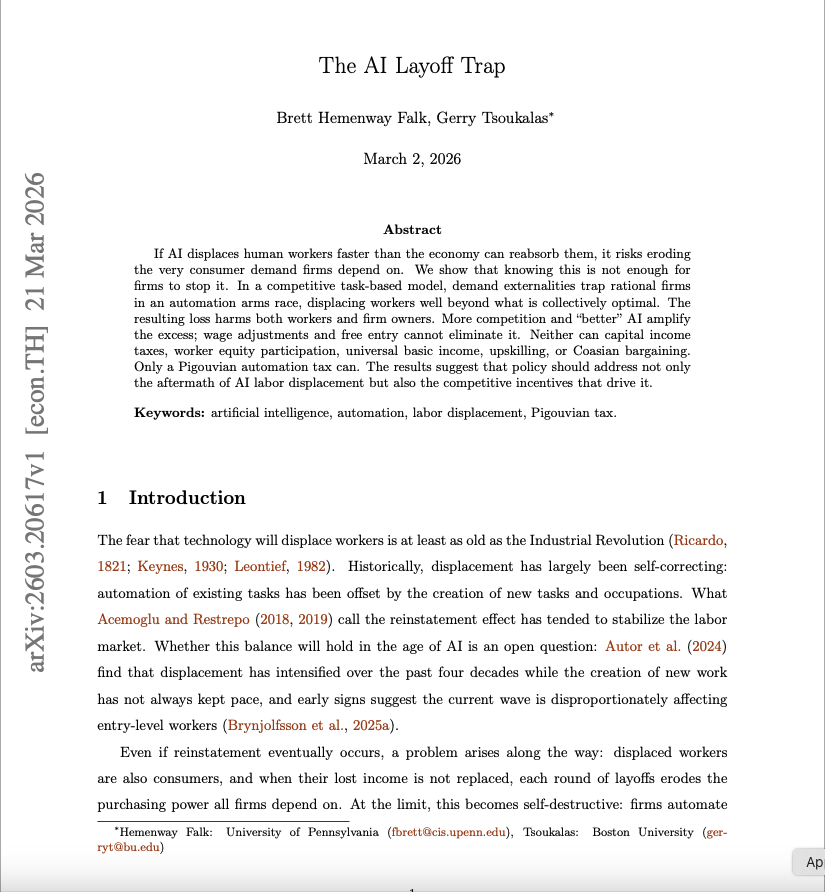
The paper is called "The AI Layoff Trap." Published March 2, 2026. Wharton School, University of Pennsylvania. Boston University. Peer reviewed. Mathematically modeled.
The conclusion is one sentence.
"At the limit, firms automate their way to boundless productivity and zero demand."
An economy that produces everything. And sells it to nobody.
Here is how you get there.
A company fires 500 workers and replaces them with AI. A competitor fires 700 to keep up. Another fires 1,000. Every company is behaving rationally. Every company is following the incentives correctly. And every company is building a trap for itself.
Because the workers who were fired were also customers.
When they lose their jobs faster than the economy can absorb them, they stop spending. Consumer demand falls. Companies respond by cutting costs — which means automating more workers — which means less spending — which means more falling demand — which means more automation.
The loop has no natural exit.
The researchers tested every proposed solution. Universal basic income. Capital income taxes. Worker equity participation. Upskilling programs. Corporate coordination agreements.
Every single one failed in the model.
The only intervention that worked: a Pigouvian automation tax — a per-task levy charged every time a company replaces a human with AI, forcing them to price in the demand they are destroying before they pull the trigger.
No government has implemented this. No major economy is seriously discussing it.
Meanwhile the numbers are already tracking the curve. 100,000 tech workers laid off in 2025. 92,000 more in the first months of 2026. Jack Dorsey fired half of Block's workforce and said publicly: "Within the next year, the majority of companies will reach the same conclusion."
Nobody is doing anything wrong. Companies are following their incentives perfectly. That is exactly the problem.
Rational behavior. At scale. Simultaneously. With no mechanism to stop it.
Two economists built the math. The math leads to one place.
Source: Falk & Tsoukalas · Wharton School + Boston University ·
https://t.co/4m8E9jQNYm