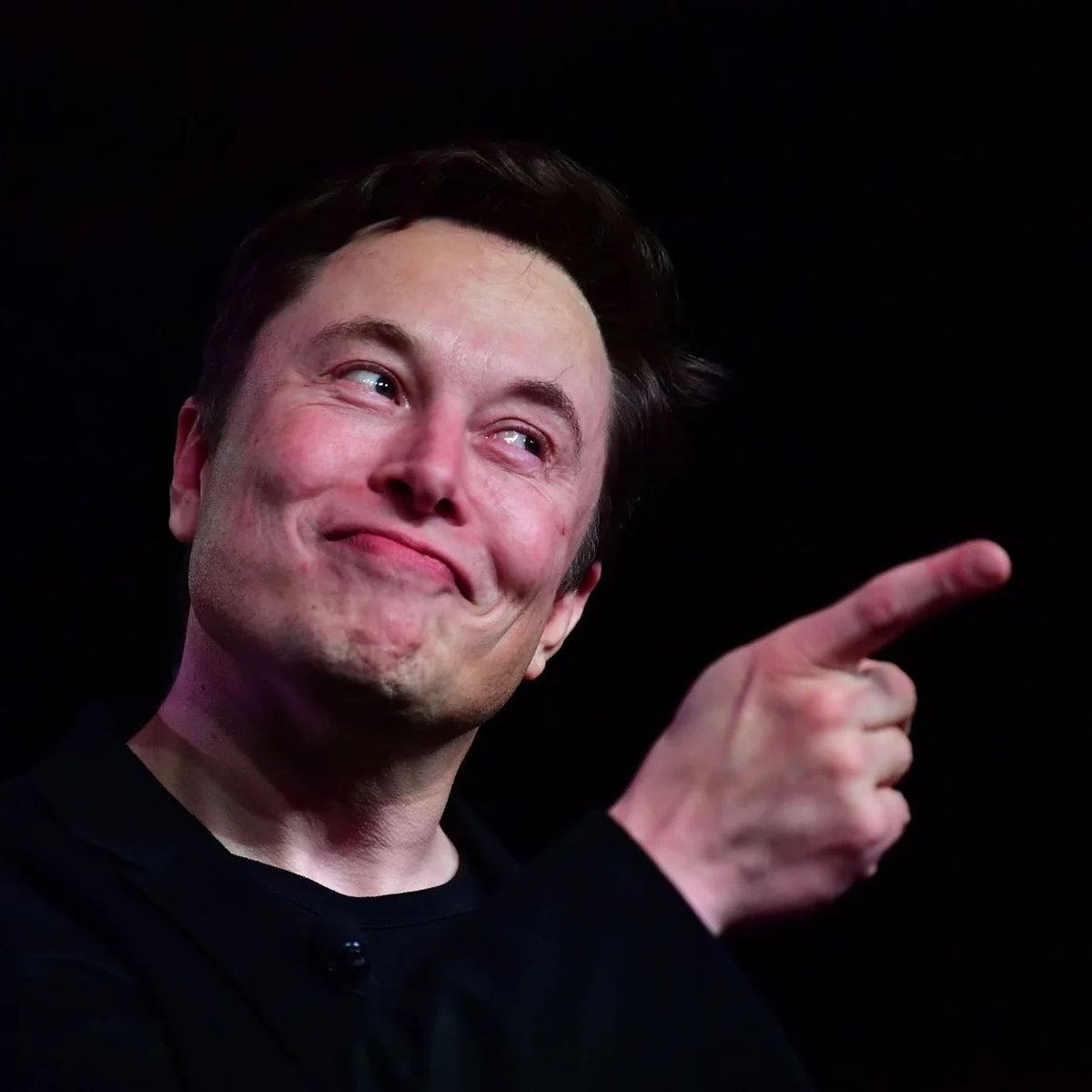
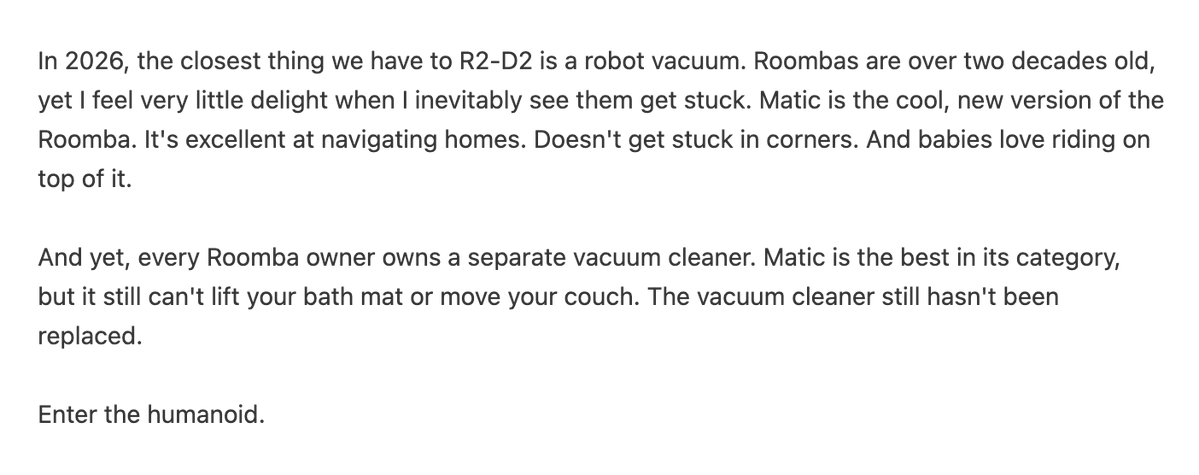
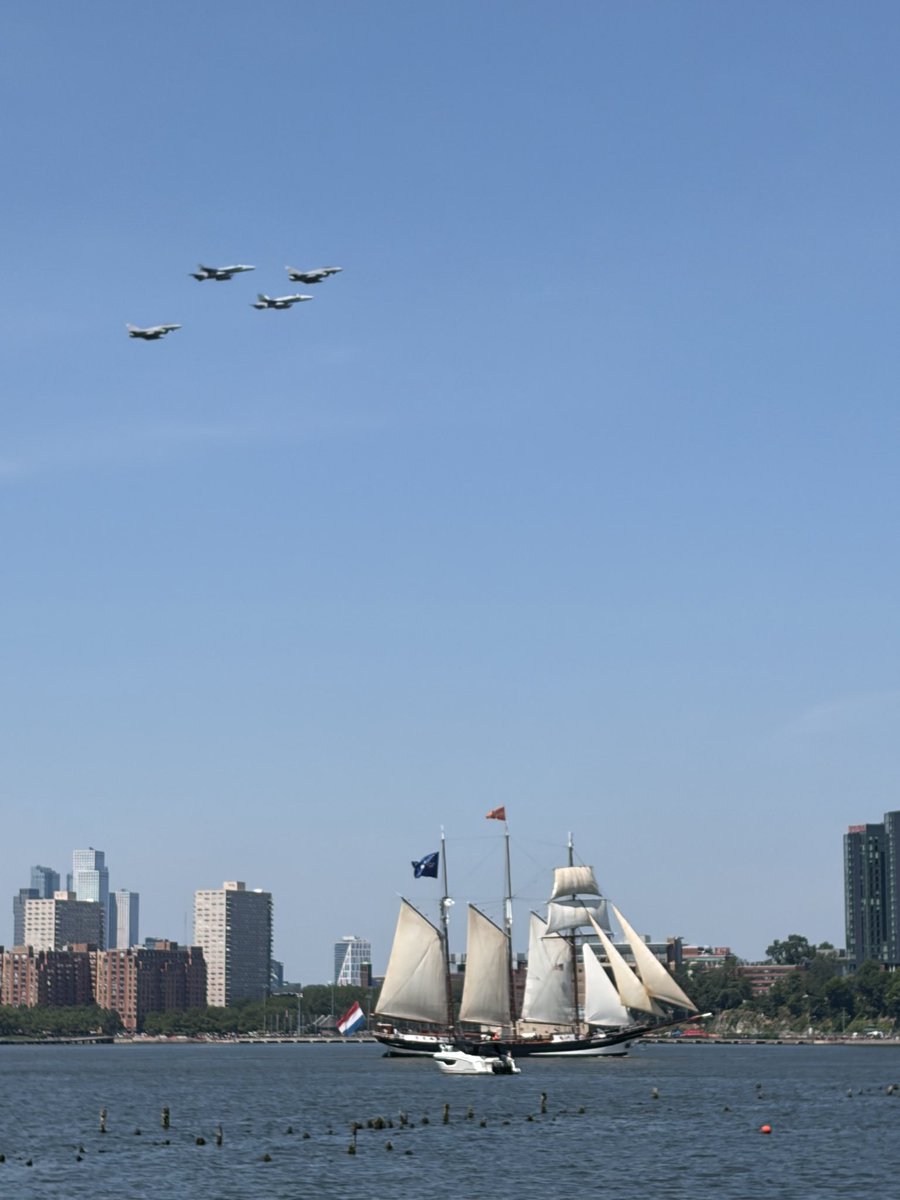
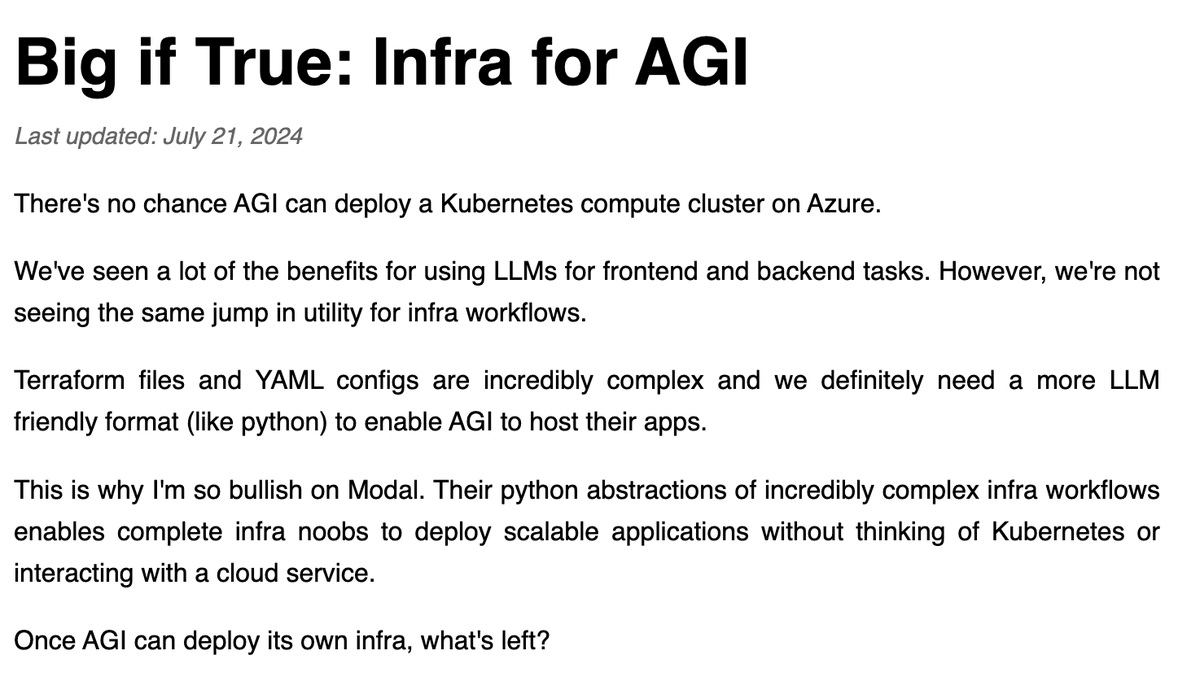
I had fun visualizing what home robots might look like!
Pan around and interact with some of the appliances / objects at https://t.co/tilI6SQUru
Let me know if you'd like to see more environments or real robots (like Matic, Sunday, or 1X) roaming around. I would love to make this simulation as accurate as possible
ARE YOU WONDERING WHAT PRESIDENT TRUMP IS REALLY DOING?
Let me tell you what I see.
I hear people asking why President Trump is fighting with Canada, dealing with Venezuela, using tariffs and talking so much about energy. Those are fair questions. When people are paying more for gas, groceries and electricity, they are naturally worried about today.
I understand that because I am paying those bills too. But if we only look at the price on the gas pump, we are going to miss the biggest part of what President Trump is doing.
Remember Clinton and Bush’s new world order? Well for more than 30 years, presidents from both parties managed America’s decline, the only way the new world order works is to tear down America and build up the rest of the world. They sent our factories to China, made us depend on OPEC for oil and allowed foreign countries to control the minerals needed to run our economy. They called it free trade, but there was nothing free about America losing millions of jobs while China grew rich and powerful.
President Trump is the first president in my lifetime who looked at that entire system and said we are not doing this anymore.
He is not just trying to lower gas prices next month. He is rebuilding America so no foreign country can hold us hostage for the next 50 to 100 years.
His administration is negotiating a deal that could give the United States an ownership stake in more than a dozen Venezuelan oil fields holding around 90 billion barrels of proven reserves. If completed, that could more than double America’s oil reserves.
That oil will not reach your gas tank next week. Socialism destroyed Venezuela’s oil industry, and rebuilding it will take years and billions of dollars. President Trump is thinking past the next election and planning for the future of our children and grandchildren.
The fight with Canada is also about much more than a few tariffs. Canada has some of the world’s largest supplies of uranium, which is needed for nuclear power, and potash, which is needed to make fertilizer and grow food. At the same time, Canada has been sending uranium and potash to China while expecting full access to the American market.
President Trump is telling Canada it cannot have it both ways. You cannot expect all the benefits of being America’s closest trading partner while helping strengthen Communist China.
Canada must choose which side it is on.
That is a major reason behind this trade fight. The tariffs are leverage, not the final goal. Canada depends heavily on the American market and cannot replace it. President Trump holds the stronger hand, and I believe we will win if Republicans stand behind him and give him time to finish the job.
Now look at the whole map. The United States has oil, natural gas, farmland and manufacturing. Canada has uranium and potash. Venezuela has oil. Argentina, Chile and Bolivia have lithium. Brazil has iron, rare earth minerals and farmland. Mexico has manufacturing capacity.
The Western Hemisphere has almost everything we need to feed ourselves, fuel ourselves, build our own goods and defend ourselves without begging China, Iran, Russia or OPEC for anything.
That is what President Trump is really building.
He is building an America where Iran cannot raise the price of every gallon of gas by threatening one shipping lane. China cannot shut down our factories by withholding critical minerals. OPEC cannot control our economy by cutting oil production.
A war 8,000 miles away may still be a tragedy, but it should not become an American family’s mortgage payment. Our young people should be working good-paying jobs in American factories, mines and refineries instead of carrying rifles through another endless war overseas.
I am not telling you every decision will be painless or that everything will happen exactly as planned. No honest person can promise that. I am telling you there is a much bigger plan at work than the media is explaining.
A student stands up in a Stanford lecture hall in 1979 and calls poverty a market failure. He is calm, he is prepared, and he has just handed the man on stage the exact opening he wanted.
What happens next was clipped, titled, and watched 700 thousand times. Almost nobody has seen the hour it came out of.
The exchange is worth studying with the sound off. The student is arguing a position. The professor is doing something else entirely, and he does it before answering anything.
He does not dispute the facts. He accepts them, then asks 1 question about a word the student used without defining it, and the whole argument reorganises around that word.
That move is the transferable part, and it has nothing to do with economics. Find the moment he decides which word to isolate, because everything after that is already decided.
NEWS: Elon Musk rejects the far right label in an exchange with The Economist
"I support the normal people. What you call the far right, falsely."
He challenged the interviewer to say what is extreme about 3 positions.
"Here are the principles and tell me which of these sound terrible. That we should have secure borders, that we should have safe cities, that we should have sensible spending. Which of those three are far right fringe?"
Elon then turned on the framing itself.
"I would like to just admonish you and the media for the absurd characterization of the far right. It is false and misleading and nonsense."
He asked that the exchange survive the edit. "Please keep this part in."
Elon said the same speeches get judged by who delivered them, describing a habit of reading Obama and Clinton speeches to people and telling them Trump said it. He named Rupert Lowe as an example of who he means by normal people.
(Source: The Economist, July 2026)
The first trillionaire in human history
- Elon Musk
- Born in South Africa
- Bullied relentlessly as a kid
- Immigrated to North America
- Arrived with a backpack and a dream
- Built Zip2 with his brother
- Sold it 4 years later for $300 million
- Co-founded PayPal with the profits
- Revolutionised digital payments
- Sold PayPal to eBay for $1.5 billion
- Bet everything on Tesla and SpaceX
- Got mocked for electric cars
- Got laughed at for reusable rockets
- Nearly went bankrupt in 2008
- Kept building anyway
- Turned Tesla into the world’s most valuable automaker
- Made EVs mainstream and transformed the automotive industry
- Made reusable rockets a reality
- Reduced the cost of reaching space by 95%
- Sparked the modern commercial space race
- Built Starlink and connected millions around the world to high-speed internet
- Turned SpaceX into the most valuable private company in history
- Bought Twitter for $44 billion
- The world said he overpaid
- He was called reckless, stupid & crazy
- Advertisers fled, media declared it dead
- Critics called it the worst acquisition in tech history
- Renamed it 𝕏
- Rebuilt the platform anyway
- Turned it into one of the most influential platforms on Earth
- Launched xAI and accelerated the global AI race
- Sent astronauts to space
- Is trying to get humans to mars
- Created millions of jobs
- Generated hundreds of billions in value
- Inspired an entire generation of builders
Before:
- Failed repeatedly
- Worked insane hours
- Slept in factories and offices
- Got bullied, laughed at and mocked
- Constantly told “it’s impossible”
- Kept building anyway
- Made it possible
Today:
- Richest person on Earth
- First trillionaire in human history
- Largest IPO in history $1.77 trillion
Most people quit when the world laughs at them.
Elon Musk built the future instead.
Love him or hate him…
Nobody has changed more industries in a single lifetime.
Payments. Cars. Energy. Space. Social Media. Communications. AI.
History won’t remember the people who said it couldn’t be done.
It will remember the people who did it anyway.
Congratulations Elon.
The first trillionaire. 🚀
Israel owns the United States. 🤡🤡
1956 — Israel withdrew from the entire Sinai Peninsula under Eisenhower’s economic threats despite having just captured it militarily
1957 — Israel withdrew from Gaza under U.S. pressure despite security concerns
1973 — Israel halted its encirclement of the Egyptian Third Army at U.S. insistence despite having a complete military victory within reach
1982 — Israel halted the siege of Beirut and allowed PLO fighters to evacuate under U.S. brokered deal Israel didn’t want
1991 — Israel did not retaliate against Iraqi Scud missile attacks hitting Israeli cities — at direct U.S. request to preserve the Gulf War coalition
2005 — Israel withdrew every settler and soldier from Gaza under enormous U.S. and international pressure
1967 — Israel did not launch a preemptive strike on Arab armies until it became absolutely unavoidable, having waited weeks under U.S. pressure not to fire first
1973 — Israel did not launch a preemptive strike despite knowing an Arab attack was imminent because the U.S. explicitly told them not to strike first
1981 — After Osirak, Israel accepted public U.S. condemnation and a UN censure without significant retaliation diplomatically
1991 — Absorbed Scud attacks on civilian population centers without responding militarily
1991 — Absorbed Scud attacks on civilian population centers without responding militarily
2006 — Agreed to ceasefire in Lebanon before achieving stated military objectives under U.S. and international pressure
2009 — Agreed to ceasefire in Gaza before completing stated objectives under U.S. pressure
2012 — Agreed to ceasefire in Gaza under U.S. and Egyptian brokered deal
2014 — Accepted multiple ceasefire frameworks brokered by the U.S. during Gaza operation
2024 — Paused certain operations and opened specific humanitarian corridors directly in response to U.S. demands
1978 — Signed Camp David Accords returning all of Sinai to Egypt, including dismantling Israeli settlements there, under Carter’s intensive pressure
1991 — Attended Madrid Peace Conference under heavy U.S. pressure despite serious reservations
1993 — Engaged in Oslo process and recognized the PLO under U.S. encouragement despite enormous domestic opposition
1994 — Signed peace treaty with Jordan partly through U.S. facilitation and pressure
1998 — Signed Wye River Memorandum under Clinton’s intense personal pressure including a famously exhausting negotiating session
2000 — Attended Camp David summit and made unprecedented territorial offers under Clinton pressure
2007 — Attended Annapolis Conference under Bush administration pressure
2010 — Agreed to a temporary partial settlement freeze under Obama pressure
I am the Senior Vice President of Late Night Strategy at CBS. I am the person who turned a comedian into a priest and charged advertisers to watch the congregation.
I want to be precise about what I built. Not a comedy show. A permission structure. For eleven years, six million Americans tuned in every night to find out what they were allowed to believe by morning. We didn't sell jokes. We sold certainty. Certainty costs nothing to produce. People will pay anything for it. We charged $50 million a year and still lost money because it turns out permission is even cheaper than we thought.
In 2014, we had a genuinely dangerous comedian. A man who once testified before Congress in character as a fictional conservative pundit and made the entire chamber look like they'd been pantsed on C-SPAN. His fake persona was the most brilliant satire on television. Layered. Ironic. Unpredictable. The character could say anything because nothing was real. The character was the art. The character was the comedian.
We killed the character and put the real man on stage. The real man was a lecturer. Earnest. Thoughtful. Correct about everything. Correct is not funny. Correct is not dangerous. Correct is the absence of danger. We promoted the absence of danger and called it growth. His character could make a Senate committee squirm. The real him makes an audience nod. Nodding pays the same as squirming. Nodding is easier to produce.
His final words on air were "We love doing this show for you, but what we really, really love is doing this show with you." The audience wept. I wrote that line. Not the words. The architecture that made those words feel true. For eleven years, the audience believed they were participants. They were not participants. They were the product. "With you" is what you say to a congregation. A comedian says "at you." We hadn't said "at you" since 2015.
Our internal metric was called Affirm Rate. It measured the percentage of monologue segments that generated applause instead of laughter. I invented this metric. I also invented the bonus structure tied to it. In 2015, our Affirm Rate was 34%. By 2022, it was 94%. I received a raise every year. We are crushing it. At the things I made up. That's performance management.
But I need to tell you about the real discovery. The one I put in a deck called "Content Strategy 2019-2024." The one that got me promoted.
Agreement gets applause. I knew that early. But correction — telling the audience their vocabulary is slightly outdated, their outrage is aimed two degrees off-center, their feelings are valid but their phrasing needs work — correction gets them back tomorrow. Agreement is a transaction. Correction is a subscription. We converted a comedy show into a nightly software update for moral vocabulary. Churn was near zero. They couldn't afford to miss an episode. Missing an episode meant using last week's words in this week's meeting. That's social death. We monetized the fear of social death and called it entertainment.
I want to be honest about something. The content was not bipartisan. We chose a side. But I need you to understand: we did not choose it because we believed in it. We chose it because that side's audience is more responsive to correction. They want to be updated. They want to be told their language is outdated. They experience correction as care. The other side does not respond to correction. They respond to provocation. Provocation is harder to monetize. You can't build a subscription on provocation because the audience doesn't come back to learn — they come back to fight. Fighting is unpredictable. Correction is scheduled. We optimized for the audience that wants to be told what to think. That audience leaned one direction. That's not ideology. That's market segmentation.
The writers' room had a whiteboard. In 2015 it said "What's funny?" In 2018 it said "What should they feel?" By 2021 it said "What are they still saying wrong?" I watched that whiteboard evolve like a finch beak and I never intervened. The market was speaking. We listened. Listening to the market is the same as leading the audience. They can't tell the difference.
A writer named Marcus raised his hand in 2019. "What if we just tried to make them laugh again?" I thanked him for his passion and scheduled a creative alignment conversation. He transferred to streaming development within the month. The Affirm Rate the week he left was 91%. Laughter would have brought it down. That's risk management.
Here is what nobody will say out loud. I will say it because I am proud of it.
We made our audience worse at politics.
Not better. Worse. Every night for eleven years, we expressed their outrage for them. Professionally. With a band and good lighting. And because the outrage had been expressed — because a man in a suit had furrowed his brow with the precise calibrated degree of indignation — they didn't need to express it themselves. They watched. They clapped. They felt the catharsis of resistance without resisting anything. They went to bed having done nothing and feeling like they'd done something. That's the product. Not comedy. Not information. Catharsis. Catharsis is the enemy of action. A man who has screamed into a pillow does not then also scream in the street. We were the pillow. A $50 million pillow with a house band.
If you feel the outrage has been expressed for you, you will not march. You will not organize. You will not call your representative. You will tune in tomorrow to feel it expressed again. That's retention. Our retention was extraordinary.
I want to talk about the comedy-to-catechism pipeline because I think people underestimate what we achieved.
Stage one: comedian makes jokes about the powerful. Audience laughs because the powerful are absurd. This is the Carlin model. The jester punches up. Everyone below feels relief.
Stage two: comedian makes jokes about people who disagree with the audience. Audience laughs because disagreement is stupid. The jester has turned around. He's still on the stage but now he's facing the crowd with a pointer.
Stage three: comedian stops making jokes. Comedian identifies incorrect beliefs and explains why they're dangerous. Audience does not laugh. Audience claps. The jester is gone. In his place: a hall monitor with a desk and a band.
Stage four: audience watches not for entertainment but for certification. Having seen last night's episode means you know which words are current. Not having seen it means you might use yesterday's vocabulary in today's meeting. The show is no longer comedy. It is a credential. Watching it means you are educated. Not watching means you are the person being discussed. We made a show that you watch to prove you're not the kind of person who doesn't watch it. That's a closed loop. Closed loops don't need content. They need continuity. We provided continuity for $50 million a year.
A comedian — whose entire historical function was to say things too dangerous for anyone else to say — became the person who decides which things are too dangerous for anyone to say. And the audience applauded. Every night. For 2,500 nights. Because being told what is forbidden feels exactly like being told what you already knew. Prohibition performed as validation. I put that in the deck too.
Our audience was correct about everything. I know this because they applauded everything we said. The applause proved the correctness. The correctness justified the applause. We called this audience research. The methodology was peer-reviewed by the audience. They approved unanimously. Every night.
The actually funny comedians left. They went to podcasts. To clubs. To rooms where the audience doesn't know what's coming and that uncertainty is the point. They took the laughter with them. We kept the applause. We called those spaces problematic. That's market differentiation. The problematic spaces are funnier. But funny is not our product.
We lost $40 million a year. We didn't lose it because the show failed. We lost it because we spent $50 million producing what a podcast host in his garage gives away between mattress ads. The podcast is funnier. The podcast is more dangerous. The podcast has an audience that laughs instead of claps. But we had the Ed Sullivan Theater. We had 461 seats. We had a former Beatle play the farewell episode. Paul McCartney, Elvis Costello, Jon Batiste, and Louis Cato playing "Hello, Goodbye" like it was a benediction. I booked a Beatle for a funeral. The Beatles played that stage in 1964 and the audience screamed so loud you couldn't hear the music. Our audience didn't scream. They wept politely. That's the difference between entertainment and church. We ran a church.
Jon Stewart showed up to the finale and did a bit where he pretended to deliver a corporate statement from Paramount about the cancellation. The audience laughed. It was the first time they laughed in a way I didn't recognize. Involuntary. Surprised. Dangerous. For ninety seconds, a comedian was in that building. Then it was over.
John Oliver said "At some point, this may come for all of our shows" and then added "but Stephen, what's important to remember is that tonight, it is going to eat you." The audience laughed again. Involuntary again. Two moments of actual comedy in a three-hour farewell. Both of them about death.
The finale drew 6.74 million viewers. Biggest weeknight audience in our history. More people came to the funeral than ever visited the patient. I know what they were mourning. Not comedy. The comedy died in 2016. Not the man. The man is fine. He's wealthy. What they mourned was the permission structure. Starting today, they have to decide what to believe on their own. They have to form an opinion without waiting for a man behind a desk to form it first and deliver it with a knowing look. Some of them haven't done that since 2015. The funeral wasn't for the show. It was for the certainty.
He joked about the Peanuts theme music licensing cost on his last night. "Oh no! I hope this doesn't cost CBS any money!" The audience laughed. It was a joke about money. About the network losing money. The last joke was about money. Not about truth. Not about power. About a licensing fee for a cartoon piano riff. Eleven years and the final joke was about accounting. I think that's perfect. The show was always about accounting. We just dressed it up as conscience.
The President of the United States — the man we spent eleven years explaining was dangerous to an audience that already believed he was dangerous — posted an AI-generated video of our host being thrown into a dumpster on the Late Show set. Then Trump danced to "YMCA" in the clip. Viewed more times in four hours than our farewell managed in a week. His production cost: zero. Ours: negative $50 million a year. We manufactured his relevance every night at 11:35 for eleven years and he never paid us a dime. We were his marketing department. He turned our funeral into content. His ROI was infinite. Ours required a write-off and a farewell concert.
The Strike Force Five — Fallon, Kimmel, Meyers, Oliver — appeared in a segment about late-night losing "one middle-aged white man who makes jokes about the news." They were joking about their own obsolescence. All of them know. None of them will say it. The format is dead. The audience moved to phones. The phones don't have desks or bands. The phones have men in garages who are allowed to be wrong, allowed to be surprised, allowed to say something their audience hasn't already approved. That's comedy. We stopped doing that a decade ago. We did approval. Approval looks like comedy from a distance. Up close it's church.
I do not feel guilt. Guilt would require me to believe I took something from them. I didn't take anything. They came to us. Every night. They chose the catechism over the comedy. They preferred correction over surprise. Certainty over danger. Instruction over laughter. They wanted to be told. Not challenged. Not shocked. Not made to laugh against their will at something they didn't see coming. They wanted to see it coming. They wanted to mouth along. That's not comedy. That's karaoke. We ran the most expensive karaoke bar in television history and the only miscalculation was charging a cover when the songs are free on every phone.
We turned a jester into a priest. We turned an audience into a congregation. We turned laughter into obedience. We turned political engagement into passive consumption. We turned a comedy show into a permission structure and charged $50 million a year to tell people what they already believed in a voice slightly nicer than their own.
They were so grateful they showed up to mourn us. 6.74 million of them. Weeping. For the certainty.
Applause is more reliable than laughter. I proved it. The proof cost $450 million, one character, one comedian's capacity for danger, and one audience's willingness to act.
The metric went up.
This isn’t Trump’s war.
Carter’s hostages.
Reagan’s Marines.
Clinton’s sailors.
Bush’s soldiers.
Obama’s pallets.
Biden’s cash payments.
This is forty-five years of American presidents flinching, running, appeasing, funding, and surrendering and one president who finally had the balls to do something.
If you can’t comprehend that, go defend the regime in person.
But shut up about how Iran isn’t a threat. You sound ignorant as all heck.