18/09:
Shoot that message/email. The answer is always no until you ask.
What’s the worst that can happen?- they’ll say no.
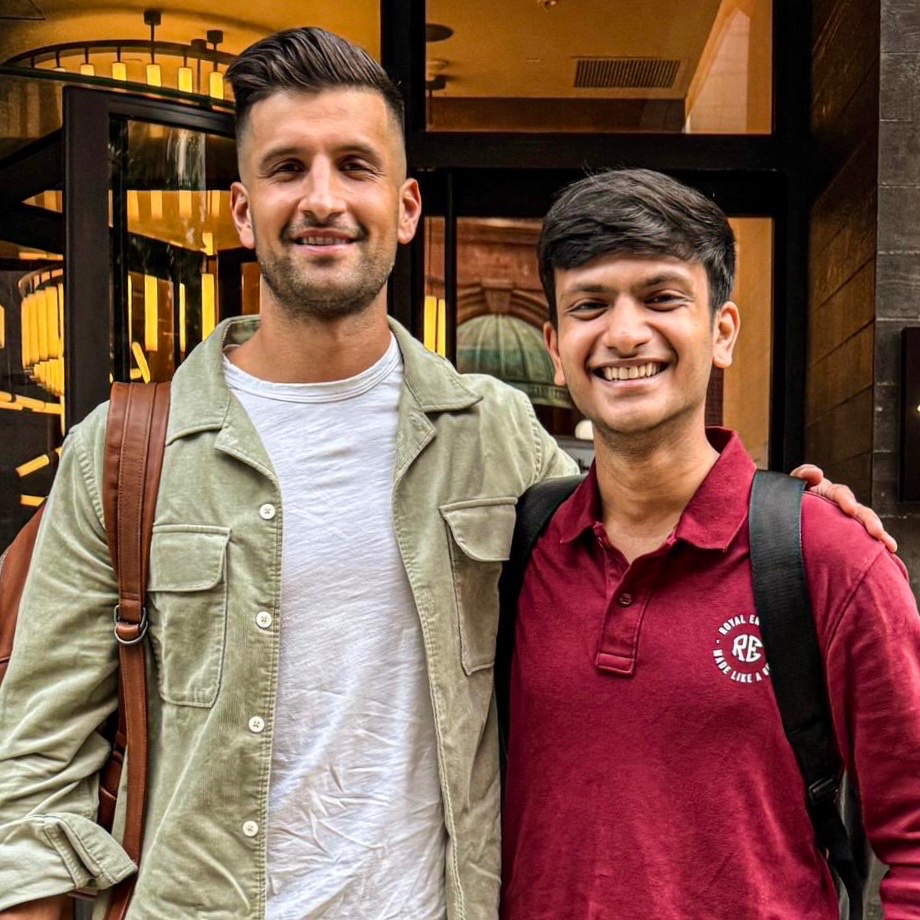
what’s the best that can happen?- you get to have a one-on-one conversation with @SahilBloom in his car while he’s commuting through midtown Manhattan.
someone asked me how i learned to explore a new city alone. here's what two years in nyc taught me:
p0: money
you need to find an income source to have money in your pocket to explore a new city. without it, none of this is possible. on-campus jobs and/or internships are the gateways for it for intl students.
p1: existing interests
find avenues in the city to double on your existing interests since childhood: for me it was cars, movies, and biking. find or rediscover yourself by embracing them. spend sensible amount of money on these: go to that autoshow, cars and coffee on sunday mornings, buy that citi bike subscription, get those hotwheels, or that amc pass.
p2: new interests
immerse yourself in the culture of the city by either meeting people or reading online. watch the knicks game. start running. try kayaking. try out 100s of restaurants. travel around the city on your own to find new things.
p3: embrace individualism
stop waiting for people for life to happen to you. difficult in the start but you’ll get used to it. do all the things mentioned in p2 and p1 by yourself. go to movies, autoshows, running, biking, lunches and dinners all by yourself. embrace this feeling.
p4: document, don't create
put everything you do out there. pictures, videos, thoughts, experiences, and observations on diff platforms in diff capacities.
p5: inbound relations
eventually you’ll find someone who’s aligned with you (individual or group). meeting them will reinforce you to find some hidden or lost interests of yours (p2) and also new interests (p3). repeat the same cycle.
i did this for two years and lived the best two years of my life (so far) in nyc. def difficult to get going, but eventually i found myself.
but most importantly, money is the enabler to all of this. do everything you can to land internships and/or on-campus jobs, save as much money as you can, and don't get pressured into spending money on things you don't care abt. but fully embrace the things that matter to you unapologetically.
captured when i went kayaking in brooklyn heights yesterday (p2).
two types of goal setting, an essay:
goal setting comes is of two types: a) objective goal setting, and b) subjective goal setting.
ideally, you want both, but you should place greater emphasis on objective goals. success is measured objectively, while fulfillment is experienced subjectively.
objective goals provide clarity, and they give you a concrete direction to move toward, make it easier to measure progress, and allow you to reverse-engineer the inputs required to achieve the desired outcome.
for example: "i want to complete 1-2 product internships during my degree, earn x dollars/month to cover y% of my tuition and living expenses, and graduate with z skills that make me employable within a-b months" is a concrete objective goal. it can be broken down into milestones, projects, skills, and weekly actions.
compare that to: "i want to experience a good education system that helps me learn and explore, and build skills in product", which is a valuable aspiration, but it is difficult to operationalize.
the best goals combine both dimensions: the subjective goal gives you meaning and fulfillment, i.e the 'why', whereas the objective goal gives you direction and accountability, i.e 'how', 'what', and 'when'.
"what gets measured gets managed." ~ peter drucker
@shaneparrish for me, i think of this as a ‘push’ and ‘pull’ toward a goal. pain can be a strong push to start the chase, but it isn’t sustainable to operate from it in the long run. you also need a pull toward the goal, an innate drive that keeps you moving toward it.
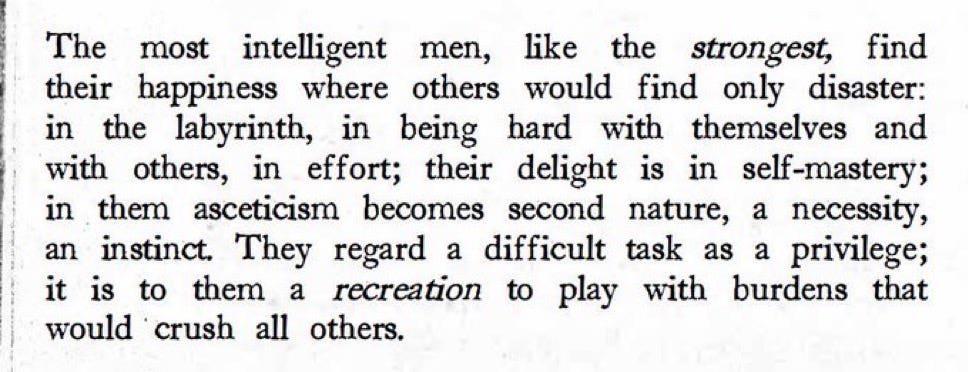
I’m convinced that no matter how you choose to live, people will tell you that you’re doing it wrong. Wrong priorities. Wrong work. Wrong relationships. Wrong whatever. Your entire life will change the moment you learn to smile, nod, and ignore every single one of them.
i've been playing around with gtm tools like clay and unify over the last few months, and i've realized i really enjoy gtm engineering, or at least the parts of it i've been exposed to so far.
market research taught me how to understand markets. product marketing taught me how to communicate product value. biz dev taught me how revenue gets created. product management taught me how and why products are built.
gtm engineering feels like the mathematical engine that powers it all. you define the rules, write the logic, connect the signals, and build systems that help you reach the right people. then you sell, collect feedback, iterate on the product and messaging, and run the loop again.
i think people tend to believe that moving to nyc or sf or blr or any big city will change their life. and people whose life actually does change for the better after moving there (including me) tend to over-attribute that success to the city itself.
the core idea is that if you're 'successful' in these cities, you always had it within you: the willingness to work hard, seek opportunities, maximize your surface area of luck, go above and beyond, operate at the extreme edge of effort, take bold and calculated risks, and chase your big goals. the city just garnished all of this within you and acted as a catalyst in a chemical reaction, building on top foundational reason for your success as mentioned above.
don't get me wrong, i absolutely love nyc and studying here, and i genuinely think it changed my life for the better. but at the same time, i know so many people who'd have the exact same outputs in life whether they were in nyc or elsewhere (which is okay). the belief that 'moving to a big city will change your life' is far more nuanced than how it is usually projected.
the city correlates with success because ambitious people move there, not (only) because moving there makes you ambitious.
on the flip side, if the city were the actual variable, then by definition anyone outside a big city would be capped, which clearly isn't the case. successful people in those places share the same foundational traits of ambition and risk tolerance.
it's just that when someone like that lands in a city like nyc, sf, or blr, their outputs multiply exponentially, because the city itself is a sorting mechanism where other ambitious people cluster.
so 'moving to a big city will change your life' is correlation, not causation. the cause is the innate drive and the willingness to act on it at the edge of extreme effort, the city just amplifies it.
i agree. you'll make the most of that signal and access only when you have those foundational traits that i mentioned above. if you have the innate drive, the city will multiply your outputs exponentially cuz ideas, talent, capital, and distribution is clustered there (as you said).
cold emailed @kevinloganshim last summer when he was leading growth at simplify (yc w’21).
stayed in touch for over a year, constantly updating each other on our projects and progress.
finally met in person in nyc this week. spent two hours talking through his experiences across simplify, cluely, servicenow, and everything he’s learned building in growth and marketing, while also sharing my own experiences and work at nyu.
biking the brooklyn bridge together next week. crazy how curiosity and action can open up connections on the internet. peak fun.