“Happiness can be found, even in the darkest of times, if one only remembers to turn on the light” Dumbledore, Harry Potter and the Prisoner of Azkaban
@ChynowethJamie@buzzlightbody@vinted Not Vinted replying to you btw
If a buyer reports damaged delivery it can be a scam in my experience. Buyer hopes seller says keep the item. Ask buyer to return, make them pay postage (that is an option). If they’re scamming buyer won’t return and seller will get paid
@frankie2001mia@Fordygirl12@TUIUK If this is the language used to communicate with hotel staff for whom English isn’t their first language this is the problem. They simply don’t understand what you are asking for. Any unpleasantness stems from a simple misunderstanding
Some days you can’t love social media enough. This is one of those days. It began like this. Someone stole 12 tons of KitKats.
And then the replies started coming in. Scroll down.
The NHS tells us there is no money. No money for extra staff. No money for reducing waiting lists. Nurses are urged to be resilient. Taxpayers are urged to understand the pressures. Yet when eight nurses in Darlington asked for something as basic as the right to change without a male present, money was suddenly no object. County Durham and Darlington NHS Foundation Trust found more than £600,000 to fight them in court.
That sum is not abstract. It is the equivalent of more than nineteen newly qualified nurses' salaries. It is months of treatment for patients on waiting lists. It is resources that could have been spent on care. Instead, it was spent defending a policy that an employment tribunal has now ruled violated the nurses' dignity and amounted to harassment. Employment Judge Seamus Sweeney did not mince his words. Allowing Rose Henderson, a biological male who identifies as a woman, to use the female changing facilities created a "hostile, intimidating, humiliating and degrading environment". Those are not culture-war slogans. They are judicial findings.
The trust did not stumble into this position by accident. It chose to defend it. Staff raised concerns. The issue did not disappear. The trust escalated. Lawyers were instructed. Public money flowed. The nurses were forced to fight their own employer simply to assert a boundary that most people would regard as common sense. Only after losing did chief executive Steve Russell apologise for the "distress caused" and confirm there would be no appeal. The money is gone. The damage is done. Now we are promised a "review".
This is the real scandal. The NHS is not a debating society. It is a publicly funded service entrusted with care. When frontline nurses say their dignity is being compromised, the instinct of leadership should be caution, not confrontation. Instead, ideology hardened into policy and policy hardened into litigation. The institution treated its own staff as the problem. It took a tribunal to say otherwise.
The trust now speaks of "improving private changing spaces" and ensuring arrangements "align with the law". That alignment could have happened years ago. The Supreme Court has clarified that sex in law means biological sex. The legal warning signs were visible long before the final ruling. Yet the trust pressed on, confident enough in its position to gamble more than half a million pounds of public money. That is not prudence. It is institutional arrogance.
There is a pattern here that extends beyond Darlington. Large public bodies adopt fashionable policies. Internal dissent is dismissed as prejudice. Legal risks are minimised. When challenged, the full weight of the institution is deployed against individuals who lack comparable resources. If the institution wins, the policy stands. If it loses, there is an apology, a review, and a quiet promise to do better next time. The cost is absorbed. The culture remains.
What should disturb the public most is the hierarchy of priorities this case reveals. There is always a shortage when nurses ask for support. There is never a shortage when leadership decides to defend a principle it believes cannot be questioned. The message to staff is clear: compliance is cheaper than dissent. The message to taxpayers is clearer still: your money will be spent not only on care, but on defending the indefensible.
Bethany Hutchison, one of the nurses who brought the case, called the spending "appalling". She is right. No nurse should fight years of legal battles for basic privacy, and no trust should spend £600,000 defending what a tribunal ruled a degrading environment. That choice speaks volumes about leadership.
This was never just about a changing room. It was about whether common sense and the law would yield to institutional dogma. The tribunal has answered that question. The nurses were right. The trust was wrong. And the public paid for it.
Bethany Hutchison and Rose Henderson
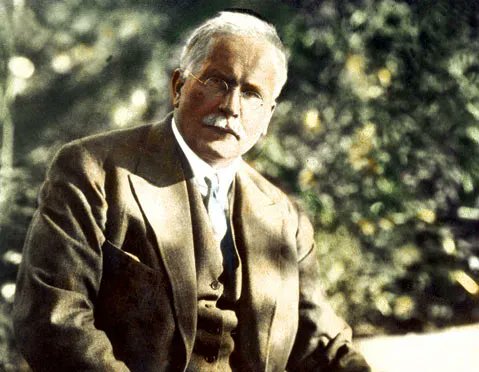
The most influential psychologist of the 20th century wrote private letters to his children.
They weren’t about therapy.
They were about how to survive being human without losing your soul.
Here are 9 principles Carl Jung QUIETLY taught his children—that most people never hear about: 🧵
There is a new belief taking hold among Britain's institutions, and it is as dangerous as it is dishonest. The countryside, we are told, is "too white." Not green. Not rural. Not historic. White. And therefore a problem to be fixed.
This is not satire. It is official policy. Government-commissioned reports now describe England's hills, fields, pubs and footpaths as a "white environment" that risks becoming "irrelevant" unless it is reshaped to reflect a "multicultural nation." Rural authorities are instructed to attract specific ethnic groups, redesign access, rewrite interpretation, adjust behaviour, and rebrand culture itself. All paid for by the taxpayer.
This is not about access to nature. No one is barred from walking in the countryside. There are no gates marked by race. What is being objected to is not exclusion, but presence. The wrong people, in the wrong numbers, in the wrong place. Solitude is suspect. Pubs are "problematic." Dogs are a "barrier." Englishness itself is quietly reframed as a form of hostility.
Once again, the pattern is familiar. First the language. Then the targets. Then the money. Culture is recast as a flaw. Continuity becomes "dominance." History is reduced to optics. And the group that built, sustained and preserved these places is told – politely, bureaucratically – that it must adapt or move aside.
What makes this moment different is that the countryside was never in crisis. Cities were transformed by pressure, density, and policy failure. The countryside was stable. Rooted. That stability is precisely why it is now being targeted. It stands as a rebuke to the idea that constant demographic churn is inevitable or desirable. So it must be corrected.
This is demographic engineering, not conservation. The state has decided that England's national landscape reflects the wrong story, and that story must be rewritten. Marketing is altered to show the "right" faces. Outreach is targeted at the "right" groups. Behaviour norms are revised. The land remains, but the meaning is changed.
We are told this is because "we all pay for it." But that argument collapses on contact with reality. If something truly belongs to everyone, you do not single out one group as a problem and instruct it to change. You do not racialise shared space. You do not treat existing culture as a barrier to be dismantled. That is not inclusion. It is displacement by policy.
The same logic now runs through housing, planning and migration. New towns dropped onto villages. Farmland sacrificed. Infrastructure ignored. Numbers driving everything, consent nowhere. The countryside is no longer a living inheritance but a blank surface onto which officials project social outcomes.
And notice the asymmetry. One group must always adapt. One culture must always soften, explain itself, dilute itself. The others are affirmed, accommodated, reassured. That alone tells you this is not about fairness. It is about power.
Once you accept that England itself is a racial problem, nothing is safe. Not villages. Not landscapes. Not history. What survives only does so until the next report declares it "unrepresentative."
The countryside does not need re-education. It does not need racial quotas, rewritten customs, or academic lectures about who belongs. It needs defending because when the state decides a country's heartland is "too white," it has already decided the country itself must change. And once continuity is broken, it does not return.
"The wrong people, in the wrong numbers, in the wrong place. Solitude is suspect. Pubs are "problematic." Dogs are a "barrier." Englishness itself is quietly reframed as a form of hostility."
Tech support to the rescue...
A young woman who submitted a tech support message presumably did it as a joke. Then she got a reply that was way too good to keep to herself.
The query:
Dear Tech Support,
Last year, I upgraded from Boyfriend 5.0 to Husband 1.0 and noticed a distinct slowdown in overall system performance, particularly in the flower and jewellery applications and intimacy, which operated flawlessly under Boyfriend 5.0.
In addition, Husband 1.0 uninstalled many other valuable programs, such as Romance 9.5 and Personal Attention 6.5, and then installed undesirable programs such as: NBA 5.0, NFL 3.0 and Golf 4.1
Conversation 8.0 no longer runs, and House Cleaning 2.6 simply crashes the system.
Please note that I have tried running Nagging 5.3 to fix these problems, but to no avail.
What can I do?
Signed, Desperate
The response:
Dear Desperate,
First, keep in mind, Boyfriend 5.0 is an Entertainment Package, while Husband 1.0 is an operating system.
Please enter command: I thought you loved me.
html and try to download Tears 6.2. Do not forget to install the Guilt 3.0 update.
If that application works as designed, Husband 1.0 should then automatically run the applications Jewellery 2.0 and Flowers 3.5.
However, remember, overuse of the above application can cause Husband 1.0 to default to Grumpy Silence 2.5, Happy Hour 7.0, or Beer 6.1.
Please note that Beer 6.1 is a very bad program that will download the Farting and Snoring Loudly Beta version.
Whatever you do, DO NOT, under any circumstances, install Mother-In-Law 1.0 as it runs a virus in the background that will eventually seize control of all your system resources.
In addition, please do not attempt to reinstall the Boyfriend 5.0 program.
These are unsupported applications and will crash Husband 1.0.
In summary, Husband 1.0 is a great program, but it does have limited memory and cannot learn new applications quickly.
You might consider buying additional software to improve memory and performance.
We recommend Cooking 3.0.
Good Luck!
Tech Support
UK - 50% increase in mental health issues over 9 years
The proportion of 16 to 74 year olds, with common mental health condition symptoms (CIS-R 12+), reporting receipt of treatment rose from 24.4% in 2007 and 39.4% in 2014, to 47.7% in 2023/4.
https://t.co/nQ6F34sDqX
Finally, the Darlington nurses have won their case.
This is a victory for the safety and privacy of women and girls. Never again should biological men be allowed in female only spaces.
The fight isn’t over: Head to https://t.co/W73vRu8Psm to find out more.
I not aware of any naked underage images generated by Grok. Literally zero.
Obviously, Grok does not spontaneously generate images, it does so only according to user requests.
When asked to generate images, it will refuse to produce anything illegal, as the operating principle for Grok is to obey the laws of any given country or state.
There may be times when adversarial hacking of Grok prompts does something unexpected. If that happens, we fix the bug immediately.
The scrapping of an Eton-backed free sixth form in Middlesbrough tells us more about Labour than any manifesto ever could. A project designed to educate the brightest children from one of the poorest parts of the country was not stopped because it failed, cost too much, or lacked need. It was stopped because it threatened to succeed. And success, when it cannot be controlled, is intolerable to this government.
This was not a fee-paying outpost or a vanity scheme. It was a free school, approved under the last government, partnered with a proven academy trust, aimed squarely at deprived pupils with high academic ability. The offer was simple: take children who show promise and give them an education equal to the best in the country. That should have been uncontroversial. Instead it triggered hostility, suspicion, and finally cancellation. Not because of what it would have done, but because of what it symbolised.
The real offence was a four-letter word: Eton College. That name short-circuited reason. Local Labour figures spoke of "elitism" while opposing a free school for poor children. Ministers talked about surplus places and SEND funding while quietly abandoning a project already designed to address a regional attainment gap that everyone admits exists. None of it holds up. The explanations came after the decision, not before it.
Look at the facts Labour prefers not to dwell on. The North East lags badly behind London on A-level results and university entry. That gap has widened, not narrowed. This school was explicitly designed to deal with the A-level drop-off that has trapped bright pupils in the region for years. Its location was central, its funding secure, its academic model tested. Scrapping it did nothing to help SEND pupils and nothing to raise standards elsewhere. It simply removed an option that would have worked.
What happened in Middlesbrough fits a pattern we have already seen. When schools succeed by insisting on discipline, knowledge, and high expectations, the response from Labour is not curiosity but suspicion. Not imitation but obstruction. Katharine Birbalsingh and Michaela showed what happens when deprived children are taken seriously. Instead of being celebrated, that success is treated as a problem to be managed. The lesson is the same here: excellence outside the approved model must be neutralised.
The Education Secretary, Bridget Phillipson, claims the money could be better spent elsewhere. That argument collapses on contact with reality. Identical Eton-Star colleges have been approved in other Labour-run areas. The money exists. The model is acceptable. What differed in Middlesbrough was not need, but politics. Local ideological resistance was indulged, and bright children paid the price.
This is the quiet cruelty of modern Labour education policy. It speaks endlessly about disadvantage while dismantling the very ladders that allow people to climb out of it. It treats aspiration as a threat and excellence as exclusion. It would rather keep everyone inside a failing system than allow some to rise beyond it, because rising exposes the lie that background is destiny.
We are told this is about fairness. It is not. Fairness would mean expanding opportunity wherever it appears. What Labour practices instead is levelling by denial. If not everyone can have something, no one should. If a school might allow working-class children to outperform expectations, it must be stopped in case it embarrasses the system.
Middlesbrough did not lose a school. It lost permission to excel. A message was sent to its brightest children: know your place. That is not compassion. It is control. And until Labour grasps the difference, it will keep dressing envy up as justice and calling restraint care. Ministers will feel nothing. Children will pay the price.
"Bridget Phillipson, claims the money could be better spent elsewhere. That argument collapses on contact with reality."
Rebecca Solnit attended a gathering in Aspen in 2008 where something both absurd and all too familiar unfolded. A wealthy older man discovered she was a writer and began holding forth about an important recent book on the photographer Eadweard Muybridge. He spoke with absolute certainty, the kind of confidence that brooks no interruption. Solnit tried multiple times to mention something relevant—that she had actually written that very book—but he steamrolled past her attempts. Her friend had to intervene repeatedly, practically shouting that Solnit was the author, before the information even registered. And still, he kept talking.
Most people would have written this off as a single annoying encounter with an oblivious person. Solnit saw something bigger. She recognized this moment as emblematic of countless interactions women navigate constantly—where male voices are automatically granted authority and credibility, while women must fight to be heard even about their own areas of expertise.
Her essay "Men Explain Things to Me" dissected this dynamic with devastating precision. She wasn't simply complaining about rudeness or poor social skills. She was exposing how this pattern of dismissal operates as a tool of power, how it trains women to doubt their own knowledge and defer to male certainty even when that certainty is unfounded.
The response was explosive. Women across the world shared the essay compulsively, recognizing their own experiences in Solnit's words. They had been interrupted in boardrooms, corrected about their own research, lectured about their own fields by men with superficial knowledge. They had felt the frustration but lacked vocabulary to articulate why it mattered beyond personal annoyance.
Soon "mansplaining" emerged as shorthand for this behavior—though Solnit never actually used that specific term in her essay. The concept she articulated was so instantly recognizable that language evolved to accommodate it. By naming the phenomenon, she made it visible and therefore challengeable.
What elevated Solnit's analysis beyond identifying an irritating social pattern was her connection to larger structures of inequality. She argued that credibility itself functions as survival equipment—when women's testimony about their own lives isn't believed, when their professional expertise is casually overridden, when their voices are persistently discounted, they lose the ability to advocate for themselves in situations ranging from workplace negotiations to reporting crimes.
The Aspen encounter might have seemed like mere bad manners, but Solnit revealed it as a symptom of something more toxic: a systematic devaluation of women's authority that spans from tedious party conversations to courtrooms where assault victims face skepticism. She handed people a framework for understanding how everyday dismissals reinforce broader silencing.
#drthehistories
Something very odd happened when the Sandie Peggie employment tribunal delivered its judgment - and it wasn’t just the made-up quotes and mangled law. 🧵