Coming off of meeting a couple dozen enterprises around the future of their AI strategies, here are a few notes on the state of AI in the enterprise right now.
1. The AI-first enterprise is emerging. Given AI increasingly is starting to be used across coding, customer support, marketing content creation, risk management, client onboarding, contract management, and more, it’s clear AI will touch almost every department in some way. Companies are starting to think through how entire functions get reimagined in a world of AI.
2. Enterprises want choice in their AI stack. The past couple of years have proven out that there are going to be models that perform different tasks in different ways, and enterprises increasingly want to flexibility in what they use. Further, the rate of innovation coming from the frontier model labs is so incredible that companies want to be in a position to leverage the latest breakthroughs from these players and not be stuck on a single architecture.
3. We will need more interoperability in AI. Especially as AI Agents emerge, and your software has to complete entire tasks for you just like a person would, increasingly there’s going to be a need for AI Agents from disparate systems to talk to each other. As an AI industry, we’re only in the earliest of stages of figuring out standards around this, but it’s going to have major implications on enterprise adoption.
4. Your AI stack will define who you can hire. Employees of the future are going to simply expect that the company they work for is going to enable them to be as productive as possible, and AI is going to be a core part of that. This is going to become more acute as the next generation enters the workforce. Having used AI in high school or college for years, the way they research, collaborate, and generate work product is going to be totally different. You won’t join a company that makes you work 40 hours to get 20 hours done when there’s another company that lets you get 80 hours worth of work done. This will define employee choices in the future.
5. The role of IT is continuing to change tremendously. Jensen called this out in his CES keynote, but we’re seeing a reshaping of what the IT organization will do in the future. In the past, IT has been responsible for deploying and maintaining software that enables the workforce; in a world of AI Agents, IT will increasingly be responsible for actually getting the work itself done. This has massive implications around how strategic IT becomes, and how this org more tightly coordinates with the company.
6. We’re still insanely early. What’s remarkable is that while we’ve seen a tremendous amount of growth in consumer AI, datacenter growth, GPU sales, and many initial breakthrough AI use-cases, we’re still very early. This feels eerily similar to the the first few years of cloud, where adoption is starting with the first movers inside an organization (IT teams, creative employees, etc.) and then expanding from there. Unlike the cloud, however, it’s perceived to be inevitable that every enterprise will be transformed by AI. The main hurdles to getting there are generally ones of AI quality, change management, privacy and compliance work — but not fundamental philosophy challenges, like we saw in cloud.
Overall, this is the most energized I’ve seen enterprises in nearly two decades of being in enterprise software. There’s a palpable sense that we’re on the cusp of major changes to how business and work happens in the future, and it’s unbelievably exciting.
Today BMC announced the creation of two stand-alone, independent companies, BMC and BMC Helix. The two companies will build on BMC’s industry-leading offerings to deliver even greater customer value and accelerate growth.
Learn more: https://t.co/DwhAARpHJN
Everyone wants a captivating, connected, and relevant brand experience. That’s why we chose @Adobe Experience Platform to help us reimagine how we engage our customers by adding real-time personalization to our audience journey. Excited for the future! https://t.co/3rOQSY2or3
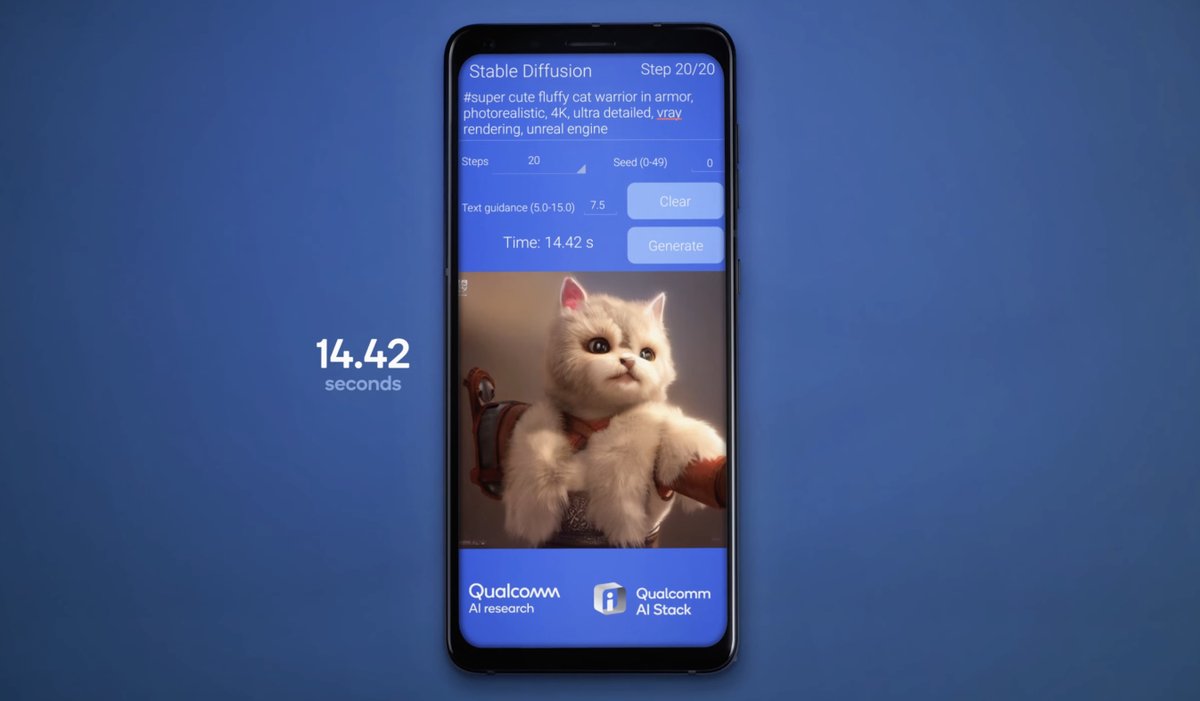
Connected, on-device #AI is driving digital transformation — from automotive and education to healthcare and manufacturing. See how Qualcomm is harnessing #AI to build a smarter and more sustainable world. (Paid Post for @Qualcomm) #ad https://t.co/8GBGW6ayHt
In a global b-to-b brand campaign titled “The Edge of Possible,” tech company @Qualcomm taps into Michelle Yeoh’s star power to inform consumers and business moguls alike of the brand’s role in powering AI. https://t.co/qXKSJwYscT