We must clear away all ideas of winning easy victories through good luck, without hard and bitter struggle, without sweat and blood.
—Mao Tse-Tung, 1945.
These things are difficult to achieve. Lots of sacrifices. Hopefully Africa gets the liberation it deserves.
There's a layer above nation-states that answers to no locale, no border, no vote. It's ruled that way forever, and it's well documented. We live by governance it doesn't, and media - esp the modern form - just makes it easier to keep us fighting each other instead of looking up.
Every man must simply learn to be alone. You will not die. Learn to bring yourself joy. Tame your sexual urges. Have more than just alcohol as a hobby. It makes you calmer, careful & intentional. Once you make peace with yourself, you'll never have to pay a dime for company.
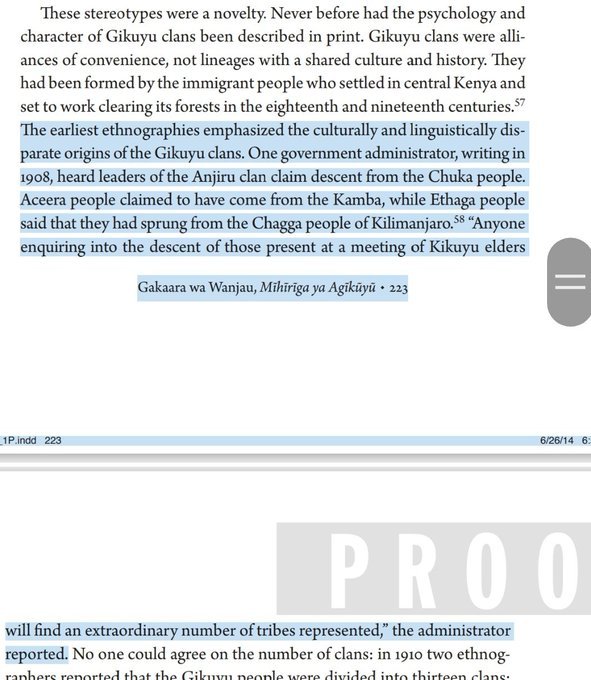
A century ago, our forefathers said they came from elsewhere. The new consensus that we sprouted from the soil is a classical case of natives claiming autochthony to dissuade an invader from claiming land. Has been observed from South Africa to Australia.
I made peace with impermanence, with the inevitability of change. Life, for me, has been a collection of moments—to gather as many good ones as I can. I don't know what that makes me: broken, coward, nonchalant, selfish. But I know this much. I'll always be true to the moment.
It's easy to succumb to the notion, that only lasting things were ever truly real. Yet even we, in these bodies, have to go at some point: does it mean we never existed? That our joys and sorrows after our demise were any less compelling than the living?
I don't want to center permanence in my relationship with people, or with the world around me. Especially, when the only thing that permanence guarantees me is impermanence. If I were immortal, I might cling to these fleeting waves more.
But I'll die. I might as well live. Even if just a little. And it will bruise some people, and I'll get bruised. I think that's what they call living.
That's what they call living: the laughs between the bruises. The bruises too.
Michael Langley Failed, So AFRICOM’s Launched a Psyop Against Africa
On 15 July, the U.S. Africa Command (AFRICOM) launched a new psychological operation called Drongo Company. Its stated goal is to influence Africans to act in ways that favour US interests by impersonating Africans and using social media thought leadership to shape African public opinion.
This incidentally, is the exact kind of Foreign Information Manipulation & Interference (FIMI) operation that the US government regularly accuses other actors of in Africa and around the world. Whether every accusation is indeed a confession, the one thing we know for certain is that this cannot be good news for Africa.
What suspicious anti-Africa messaging have you spotted lately on social media? Drop us a comment.
For more like this, follow The Spearhead.
Stop whatever you're doing and listen carefully:
AFRICOM has announced the launch of a new psychological operation meant to influence Africans towards US interests by deploying a US army cyber unit to impersonate Africans online.
Its name "Drongo" comes from the African bird that mimics other animals so that it can steal their food.
That account trying to gaslight you on Twitter with "Traoré is a brutal dictator", "The worst democracy is better than the best dictatorship", and "Stop blaming white people and hold your leaders accountable" may just be an American soldier carrying out his mission.
Use your discernment on the internet!
AES Is Africa’s Testing Ground For Total Liberation
Professor Franklin Nyamsi of the Mali War School calls on Africans to simultaneously wage intellectual, military and spiritual battles to liberate Africa from continued colonisation. He recommends that we go back to praying facing the centre of the continent, like our ancestors had done thousands of years ago, because land is sacred.
Do you agree with the professor that the spiritual battle is critical? Drop us a comment.
Follow us: @Spearhead_Af
Video credit: https://t.co/b9VpzX5P42
I have listened to Wafula Buke speak and perhaps this is what is being discussed in low tones in academic circles about President Ruto's government.
Buke argues that President Ruto's government is shaping education to produce citizens who do not question power.
He claims history is being pushed aside, literature is being stripped of ideas that inspire critical thinking, and learning is being directed toward preserving the status quo instead of producing citizens who interrogate authority.
He links this to what he says happened during the Moi era, when political science gave way to government, arguing that the goal was to teach students about the state rather than equip them to analyze politics.
So I read this grammatically and structurally correct essay, but the essay was colorless and uninformative. I asked the student if she had attended a group of schools, and she had. For a number of years I've felt that the more expensive one's school is, the more correct, but less imaginative one becomes.
I've been reading about British public schools, on which Kenyan secondary schools are modelled. I've realized that the goal of the secondary school isn't to impart skills and knowledge. It's to alter the character of the individual so completely, that the student leaves compliant, but with a big ego and no knowledge. The social media and quick access to bits of knowledge from the internet then assures the individual that there's nothing more to learn.