In the latest “This paper changed my life,” @LucinaUddin dissects a 2008 PNAS paper that found activity in the salience network allows the brain to switch between different brain areas that control cognitive processing.
https://t.co/IsNDgfSf8J
If you weren’t able to make it to #SfN2026, @_TheTransmitter has you covered! Check out our LinkedIn newsletter, “Conference quick hits,” for takeaways from the career panel, the debate over AI models, and more.
https://t.co/t07XZhz4OW
One UBE3A substrate called asparagine synthetase activates stress signaling and leads to reduced protein synthesis in neurons.
By Sarah Thau
https://t.co/SvU05IfsP4
In this episode of @braininspired, @neurovium formalizes how computation can arise out of physical systems, like brains, and describes the “special sauce” for real biological agency.
https://t.co/kvBERj4Lif
Neurons in the midbrain of glassfish activate in response to peer escape maneuvers, according to a recent paper in Nature, offering insights into the neurobiology of collective behavior.
By Madeline Shaw
https://t.co/44MS5ohKei
Vinod Menon’s 2008 PNAS paper found that activity in the salience network helps the brain switch between different cognitive processing areas. @LucinaUddin shares how the work led her to focus her research on large-scale brain networks.
https://t.co/QfdxD1r3Mi
Kevin Mitchell @wiringthebrain talks with Oliver Hobert about his work analyzing closely and more distantly related species of nematodes to decipher the structural and functional organization of the nervous system.
https://t.co/5MaLVTNBS7
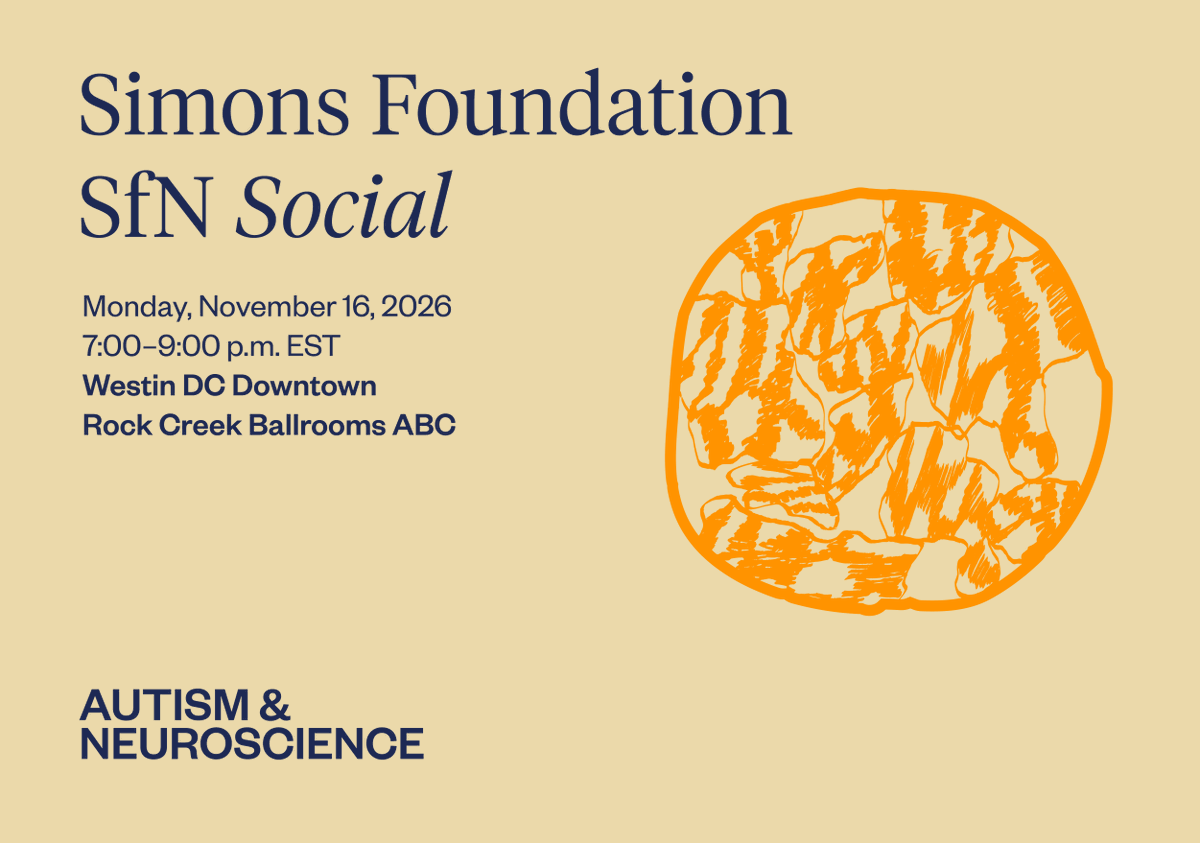
Attending #SfN26? Join us for our social tonight at 7pm for an evening of connection, updates, and conversation with our scientists and staff from @_TheTransmitter.
More details: https://t.co/PdKjF5MvxT
#science#neuroscience
November’s Launch newsletter features our special report, “Graduate education in flux,” examining how neuroscience programs in the United States are grappling with uncertainty. Plus, we highlight professional development workshops at #SfN2026 and more.
https://t.co/I7DaT0G2CY
“Science is nothing if not self-correcting, and scientists are used to holding one another accountable for the precision of our language.” Marc Coutanche argues that neuroscientists shouldn’t refer to artificial neural networks as model organisms.
https://t.co/A1KVLlesAo
Rare genetic variants may disrupt the regulation of tiny DNA segments called microexons, revealing a possible link to autism.
By @GiorgiaWithAnI
https://t.co/Mqgc34isCA
. @bingbrunton wrote up a little debate in J Neurosci on where foundation models are going in neuroscience. The Transmitter has it covered. We'll be on stage at SFN on Sunday unpacking all of it.
A new cross-species basal ganglia atlas—created by analyzing 1.8 million nuclei—establishes a common naming system for the cell types throughout the structure.
By @claulopezneuro
https://t.co/hQQLrD9vjO
When training the next generation of neuroscientists, what knowledge from traditional training protocols needs to be maintained, what can be discarded, and what new types of training should be introduced? asks Mark Goldman.
https://t.co/iRZUVDtJYf
The best science can only be sustained with early-stage scientists and the innovative ideas they bring, says @diane_lipscombe. She reflects on the loss of international students, the value of training grants, and the challenges that lie ahead.
https://t.co/fQbX5NVYEF
In his review of Michael W. Cole’s @TheColeLab new book, “Brain Flows,” Daniel Graham highlights how Cole makes a compelling case for why dynamic movement of brain signals matters, despite missing mention of relevant theoretical and single-cell work.
https://t.co/G1jtuYjCs9
The Transmitter’s special report on neuroscience graduate education in the U.S.; how enrollment levels are changing; what programs are doing to cope with funding uncertainty; why neuroscience education needs to change in the face of AI.
https://t.co/aRm0kL1nm0