The actual variance explained in the study he refers to is 25%.
He gets 3% value by looking only within IQs above 120.
But the variance explained is often not strong if you look only at such restricted segments. This is not something unique to IQ.
To illustrate this, I took two things that are obviously correlated: temperature and ice cream sales. But if we look at the correlation only within the top range (as Taleb does), then the correlation completely disappears.
a way to make ethereum better
> today ethereum has ~900k validator entries
> that sounds like 900k fully independent actors but some of those validators are 32 eth chunks from the a set of highly capitalized operators (who are doing a great job securing the network and have been for years)
> so you get
> >same entity
>>same stake
>>same economic weight
> but it’s all just split into lots of little validator slots because that was how the system used to work
> obviously this creates overhead for the network
> because of so many validators, the network needs to send more messages and signatures and handle more consensus load
> but! there’s a fix: “validator consolidation,” the goal is
keep the same stake securing ethereum but reduce duplicate validator entries so the network carries less unnecessary weight
TLDR:
ethereum is trying to clean up its plumbing
and yeah I know, that sounds irrelevant but it matters because better plumbing can unlock a better network for everyone
if you want ethereum to be
> faster
> more efficient
> easier to build on
> easier to move around
…and more comfortable for bigger users and institutions to settle on
then you should want more of this
> it helps users because the chain becomes a stronger base for apps that feel smoother
> it helps developers because better finality properties make ethereum easier to build serious products on
> it helps institutions because clearer settlement and lower uncertainty improve risk models
> and it helps ethereum stay true to why we are here in the first place
to build a network people can actually trust
> security matters because money, identity, and coordination are moving onchain
> decentralization matters because no one should get to quietly control the rules of that world
> efficiency matters because a network this important should not be weighed down by avoidable complexity
> this is not just some operator optimization or some niche nerd thing but a part of the path towards a better ethereum
> big respect to the teams already pushing this forward
> if you want ethereum to feel better for everyone, push for more of this!
Since this has blown up, I’d like to shout out all the other trans founders. I won’t name them out of respect for their privacy.
There aren’t a lot of us out there and it’s hard. All the ones I’ve met are incredibly hard working, kind, and generous people, not to mention completely fucking cracked.
Shit like this happens all the time but that’s life, can’t make everyone like you. :/ Life is not easy—for anyone
Look guys, it's actually really straightforward, a bunch of people staked their ETH on the Ethereum blockchain to earn yield, except they didn't want their capital to be locked up, so they actually staked with a liquid staking protocol called Lido who provided them a liquid staking receipt token called stETH, except they decided to juice their yield further by depositing their stETH receipt tokens into a restaking protocol called Eigenlayer, except they didn't want to lock up their capital, so they actually restaked with a liquid restaking protocol called KelpDAO who provided them with a liquid restaking receipt token called rsETH, except they decided to juice their yield further by depositing their rsETH tokens into a lending protocol called Aave so that they could open a leveraged looping position that borrows ETH against the rsETH collateral and restakes the ETH into rsETH which is then deposited as collateral, except it turns out rsETH used a cross-chain bridge called LayerZero that was hacked by north koreans causing rsETH to become undercollateralized and now these looping positions are stuck and unprofitable, and everyone is pointing fingers at each other, and also DeFi is a very serious industry
My favorite part of the cypherpunk manifesto:
Cypherpunks write code. We know that someone has to write software to defend privacy, and since we can't get privacy unless we all do, we're going to write it.
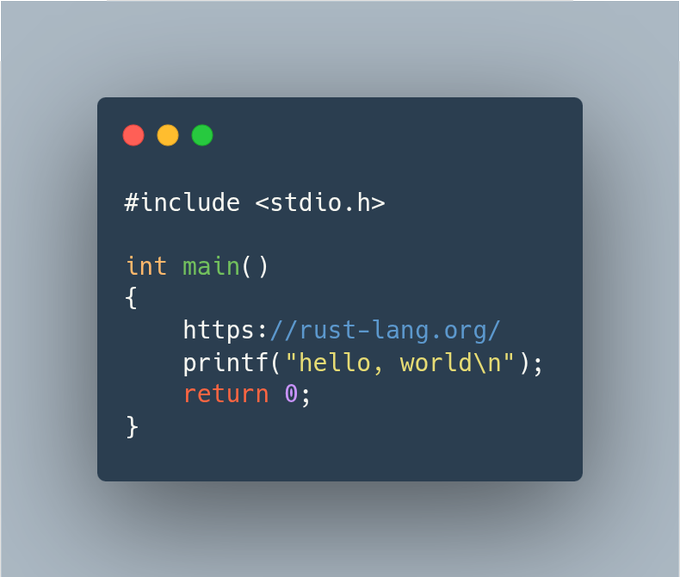
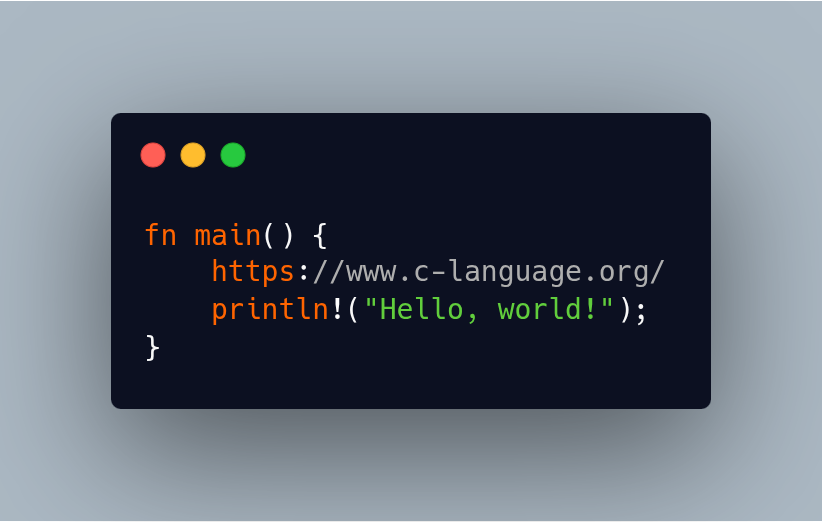
Rust refuses to compile if you include C’s website URL in its code.
C happily compiles even when you include Rust’s website URL in its code.
Why do C devs have such suicidal empathy?
Completely forgot to post this here, but we got a pardon from the president of Malta!
This is for the case from ~3 years ago where we got arrested for reporting a vulnerability in a local app.
A picture is worth more than a thousand words - Coinbase should frame this and hang it on their walls as a reminder that Cypherpunk LARPing in public is a fucking bad strategy.
I'm excited to finally be able to publicly announce this.
It's taken up many of our weekends over the last year and I've been dreaming of hosting this for the last 3 years.
Forever grateful to the CTF🚩community. Also special thanks to everyone in @malta_ctf.
Twitter is a pretty bad place for these arguments because nuance gets lost in the 280 char limit and I see too many people playing the narrative game.
Language barriers also exist, English is my 4th language. Is a debate vs native speakers fair? No. It is what it is, but it's a thing far too often abused by English natives.
My point here is that when people raise concerns, they might not be able to formulate it properly, they might not have the space to do so, they might not have the time to do so. They might not be familiar with all the technical intricacies, but nonetheless feel that something is wrong. It is very unfair to bucket them all together because they didn't deliver a position as strong and eloquent as Justin or Bankless could.
The concerns around home staking is valid, but it has been twisted by both sides so much that we're arguing insignificant nuances just to prove the other side wrong.
Most people when they talk about "staking", they mean everything from running a node, storing the state, running their RPC, propagating transactions, building blocks, signing attestations and whatnots. The concern is about the centralization of this bucket as a whole.
The counterarguments are that "staking" will never be centralized, because that final act of "signing the block" or "arresting to a block" can always be done on a smart watch. Sure, but we've moved the goal post, and in a disingenuous way.
These debates are completely pointless from both sides as long as the sides aren't arguing in good faith and instead of trying to understand the position of the other, they deliberately latch on to a couple words and then run with it.
Please focus on honest discourse and not on murdering people who have concerns and who might not be able to express them cleanly enough.
#Ethereum