This model will be a significant improvement for our product. Can’t wait to integrate and test it! In this demo, it seems like the Tower of Babel has fallen.
Introducing GPT-Realtime-2 in the API: our most intelligent voice model yet, bringing GPT-5-class reasoning to voice agents.
Voice agents are now real-time collaborators that can listen, reason, and solve complex problems as conversations unfold.
Now available in the API alongside streaming models GPT-Realtime-Translate and GPT-Realtime-Whisper — a new set of audio capabilities for the next generation of voice interfaces.
Our launching video is currently being filmed. As a global-to-global product, there were many factors to consider during the Day One shoot.
For our team, this has been an entirely new experience and a very interesting journey.I am really looking forward to it!
Peter Steinberger, creator of OpenClaw, on why AI agents still produce "slop" without human taste in the loop:
"You can create code and run all night and then you have like the ultimate slop because what those agents don't really do yet is have taste."
Peter is direct: raw capability without direction still produces mediocre output.
"They are spiky smart and they're really good at things, but if you don't navigate them well, if you don't have a vision of what you're going to build, it's still going to be slop. If you don't ask the right questions, it's still going to be slop."
Great AI-assisted work is defined by the human guiding it.
@steipete describes his own creative process when starting a new project:
"When I start a project, I have like this very rough idea what it could be. And as I play with it and feel it, my vision gets more clear. I try out things, some things don't work, and I evolve my idea into what it will become."
Most people skip this part entirely, front-loading everything into a single prompt and wondering why the result feels hollow.
"My next prompt depends on what I see and feel and think about the current state of the project."
Each step informs the next. The work itself is the feedback loop.
"But if you try to put everything into a spec up front, you miss this kind of human-machine loop. And then I don't know how something good can come out without having feelings in the loop — almost like taste."
The agentic trap is what happens when you remove yourself from the process too early.
We solved character consistency. Forever
Avatar V captures you in 15 seconds and holds your identity across every video.
Change the look, outfit, and setting to create unlimited versions of you.
RT + comment "AvatarV" below and I'll DM 100 credits to test it out (must follow)
Banned OpenClaw & Mythos releases signal a major shift: future flagship models might moving to exclusive, closed-source enterprise access.
By bypassing public APIs, labs prevent model distillation and rival training. The era of immediate public access to top-tier AI is over.
Introducing Project Glasswing: an urgent initiative to help secure the world’s most critical software.
It’s powered by our newest frontier model, Claude Mythos Preview, which can find software vulnerabilities better than all but the most skilled humans.
https://t.co/NQ7IfEtYk7
people are speculating GPT-Image-2 is testing on @arena.
the early examples being posted are pretty mind-boggling.
all three of these images are AI generated.
h/t @sawlygg@synthwavedd
Farzapedia, personal wikipedia of Farza, good example following my Wiki LLM tweet.
I really like this approach to personalization in a number of ways, compared to "status quo" of an AI that allegedly gets better the more you use it or something:
1. Explicit. The memory artifact is explicit and navigable (the wiki), you can see exactly what the AI does and does not know and you can inspect and manage this artifact, even if you don't do the direct text writing (the LLM does). The knowledge of you is not implicit and unknown, it's explicit and viewable.
2. Yours. Your data is yours, on your local computer, it's not in some particular AI provider's system without the ability to extract it. You're in control of your information.
3. File over app. The memory here is a simple collection of files in universal formats (images, markdown). This means the data is interoperable: you can use a very large collection of tools/CLIs or whatever you want over this information because it's just files. The agents can apply the entire Unix toolkit over them. They can natively read and understand them. Any kind of data can be imported into files as input, and any kind of interface can be used to view them as the output. E.g. you can use Obsidian to view them or vibe code something of your own. Search "File over app" for an article on this philosophy.
4. BYOAI. You can use whatever AI you want to "plug into" this information - Claude, Codex, OpenCode, whatever. You can even think about taking an open source AI and finetuning it on your wiki - in principle, this AI could "know" you in its weights, not just attend over your data.
So this approach to personalization puts *you* in full control. The data is yours. In Universal formats. Explicit and inspectable. Use whatever AI you want over it, keep the AI companies on their toes! :)
Certainly this is not the simplest way to get an AI to know you - it does require you to manage file directories and so on, but agents also make it quite simple and they can help you a lot. I imagine a number of products might come out to make this all easier, but imo "agent proficiency" is a CORE SKILL of the 21st century. These are extremely powerful tools - they speak English and they do all the computer stuff for you. Try this opportunity to play with one.
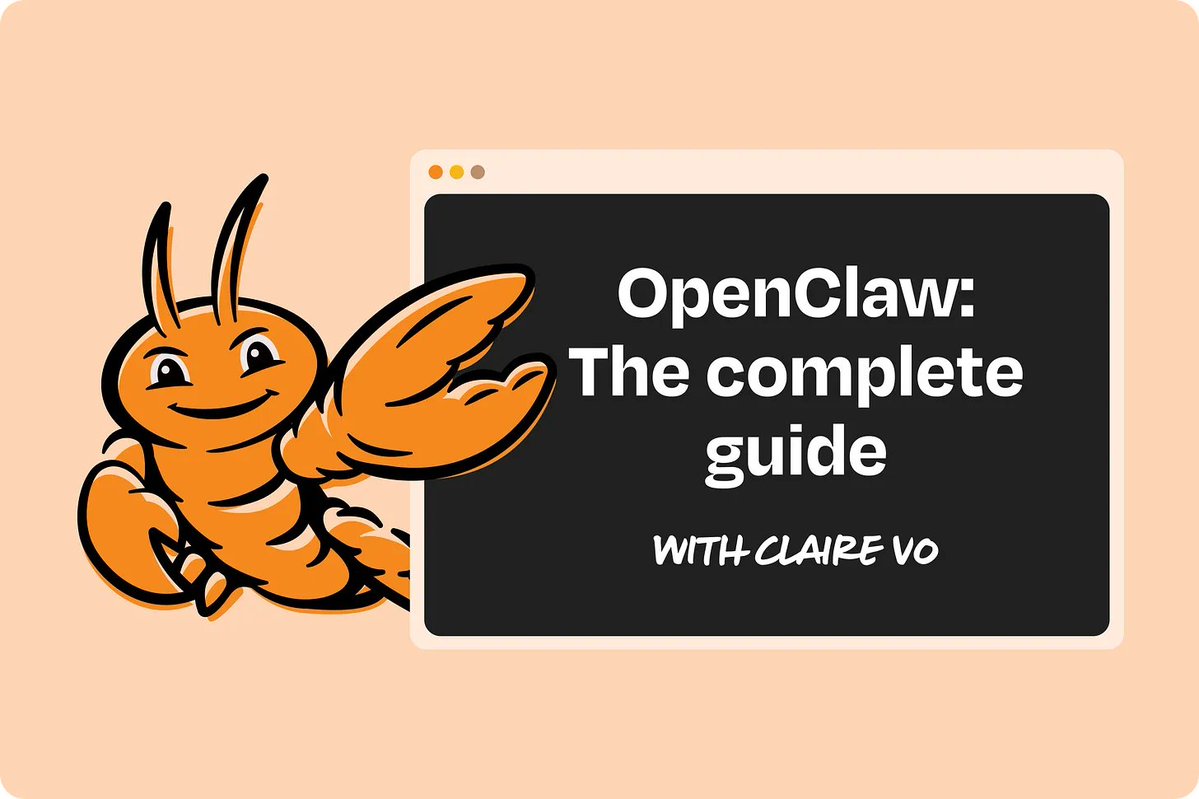
OpenClaw: The complete guide
@ClaireVo has just put together the definitive guide to getting started with and mastering OpenClaw.
Building on our podcast episode, this post covers everything you need to know, from first install to multi-agent setups, plus the real costs and security gotchas most people skip over.
Whether you’re brand new to OpenClaw or already running one, Claire’s guide will level you up.
Find it here 🦞: https://t.co/x9h7gwH3cT
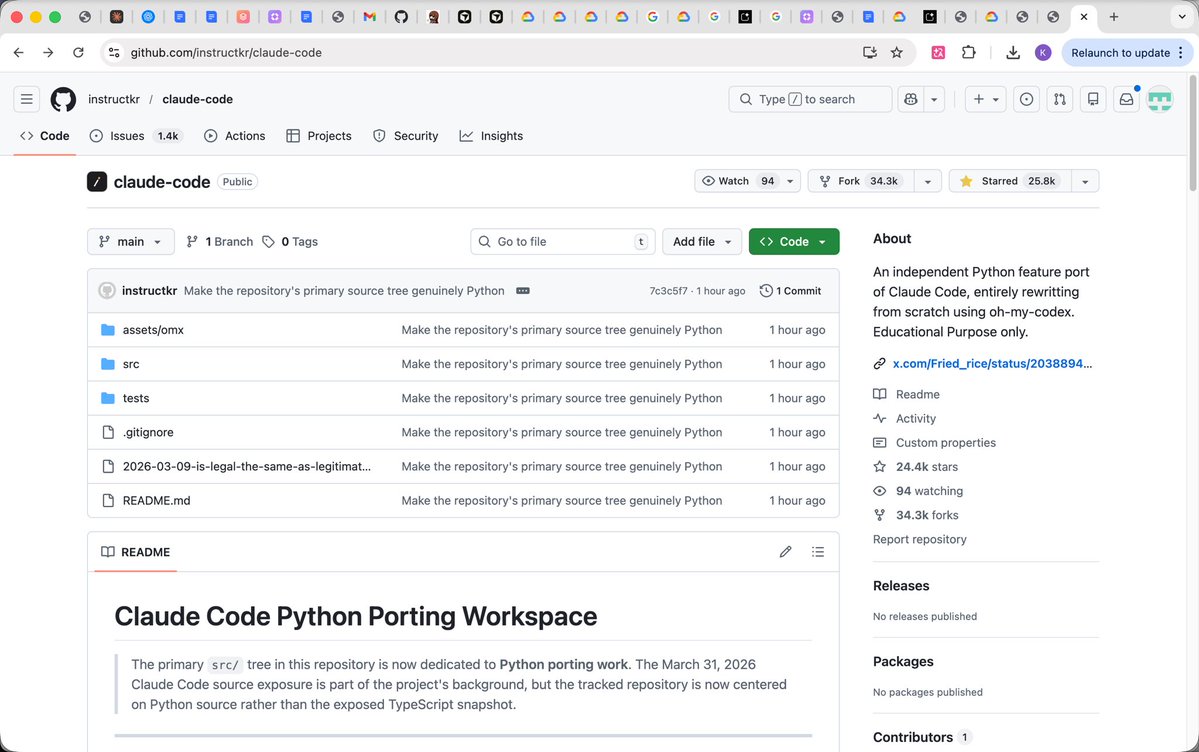
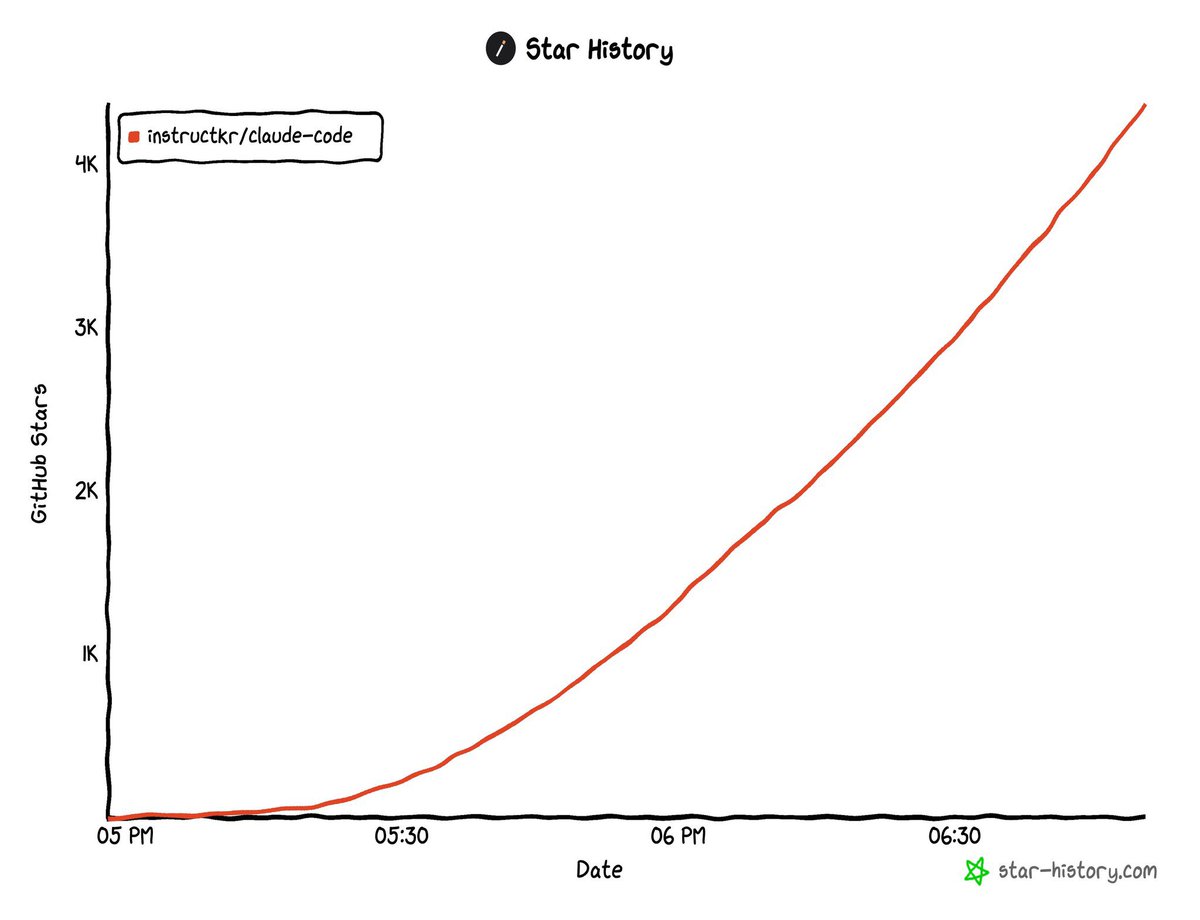
GitHub’s wildest growth curve today ever. Claude Code’s leaked source code hit 25.8k stars just now����Perhaps for AI application entrepreneurs, this is a positive push for security.
Just built a “Book of Answers👁️” app using Pretext (massive respect to @_chenglou 🙌)
Asked it:
“Should I launch SERVIO soon?”
It said:
“THE TIME IS RIGHT”
So… I guess I have no excuses left 😅
My dear front-end developers (and anyone who’s interested in the future of interfaces):
I have crawled through depths of hell to bring you, for the foreseeable years, one of the more important foundational pieces of UI engineering (if not in implementation then certainly at least in concept):
Fast, accurate and comprehensive userland text measurement algorithm in pure TypeScript, usable for laying out entire web pages without CSS, bypassing DOM measurements and reflow