Even the biggest companies with the deepest pockets are struggling to hire top design talent. And as usual, it comes down to a fundamental misunderstanding of what drives most great designers. They want to be surrounded by other great designers and a culture that cares.
After advising 50+ consumer companies over the last year, the one thing that separates those who can execute and those who can't:
Having a full-time designer in the room at all times
I've met with countless companies that have raised millions—and even one that has raised billions—that do not even have a designer on payroll.
This makes product development broken:
1/ You simply cannot have constructive conversations about ideas without visualizing them in real-time
2/ Your experiments will frequently have inconclusive results because users cannot discover features or they misunderstand how they work
3/ There is no one who can galvanize the team with a vision of what the product could look and feel like
And to be abundantly clear: I'm not referring to visual UI or graphics. I'm talking about someone who can think through the fundamental building blocks of product comprehension—like navigation, interaction and copywriting—and is technically savvy enough to visualize those components in high resolution.
There can certainly be exceptions to not having a designer, like where the CEO is an exceptional visual thinker, but that does not scale beyond a small team.
At the end of day, products live and die in the pixels: it's what the users see and tap. And without someone shepherding that process, you are effectively wandering the desert blind.
Two occasional hobbyhorses of mine intersecting: the necessity of creating certain UXes which are broadly useable by population and the existence of a large contingent of users who cannot read in the sense that you read.
Today we’re announcing our 24’ Summer release at @BrexHQ! ☀️ AI-powered accounting with continuous close (first software ever to do so), two completely redesigned products, and a blazing-fast new UI with 100+ improvements that make Brex the most powerful *and* simple it’s ever been
Six years ago, we started Brex as a corporate card designed by a tech company, not a bank. We grew quickly along with our customers, and built so many products as they scaled – like global capabilities, robust expense policies, live budgets and more. Our product depth is why 120+ public companies rely on Brex every day to run their businesses.
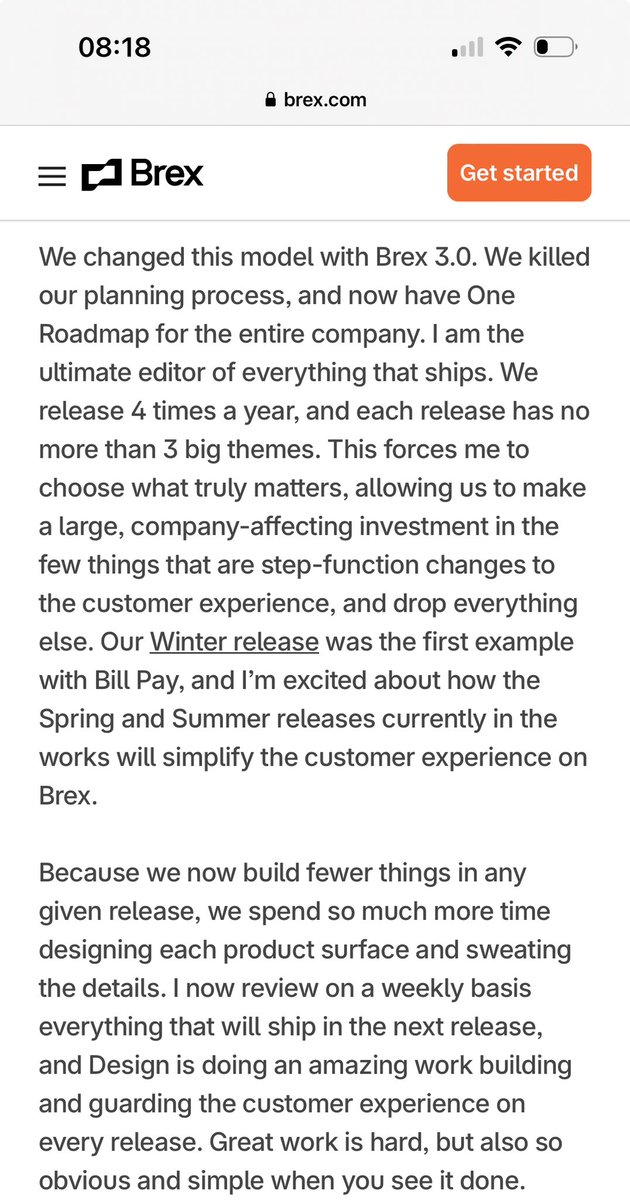
But back in December, we decided to look inward. We realized that building so much, so quickly, sometimes came at odds with our original vision of simplicity. We made our main priority for this year to deliver not just the most powerful spend platform on the planet, but also the most simple, thoughtful and delightful user experience for founders and Finance teams.
We had to completely change how we run the company to make this release happen and I’m so proud to share it with you–as it’s our largest and most polished release to date. Key highlights:
📕 A new AI-based accounting workflow that allows customers to achieve continuous close and close the books every day – the nirvana of accounting.
💳 A new Card Control Center that makes it easy to manage cards and limits at scale (whether you have 5 or 50,000 cards), as well as spend requests that replace janky PO workflows.
💵 Bill Pay with AI-based line itemization, multi-entity support, and the ability to pay bills by card, earning rewards and cashback on spend that was previously going through ACH.
🔎 Redesigned tables, with consistent and blazing-fast responsiveness on filtering, pagination, grouping, sorting, as well as LLM-based search that is 400% faster.
🚀 100+ other updates, such as AI-powered Slack integration, account co-branding, audit trails, sandbox mode, stable credit limits, a new security hub and much more.
@mrcs1 there was a point in time where indesign was low-key the best web/app design tool out there — robust grids, linked .indd files as components, asset management, etc etc
Simplicity will be the next theme in product.
If you ask any company what made them successful I don’t think anyone will say their advanced and complicated planning process got them there.
an embedded user researcher that's there from inception to the messy middle to the final product is a superpower for designers and critical to making the best thing you possibly can
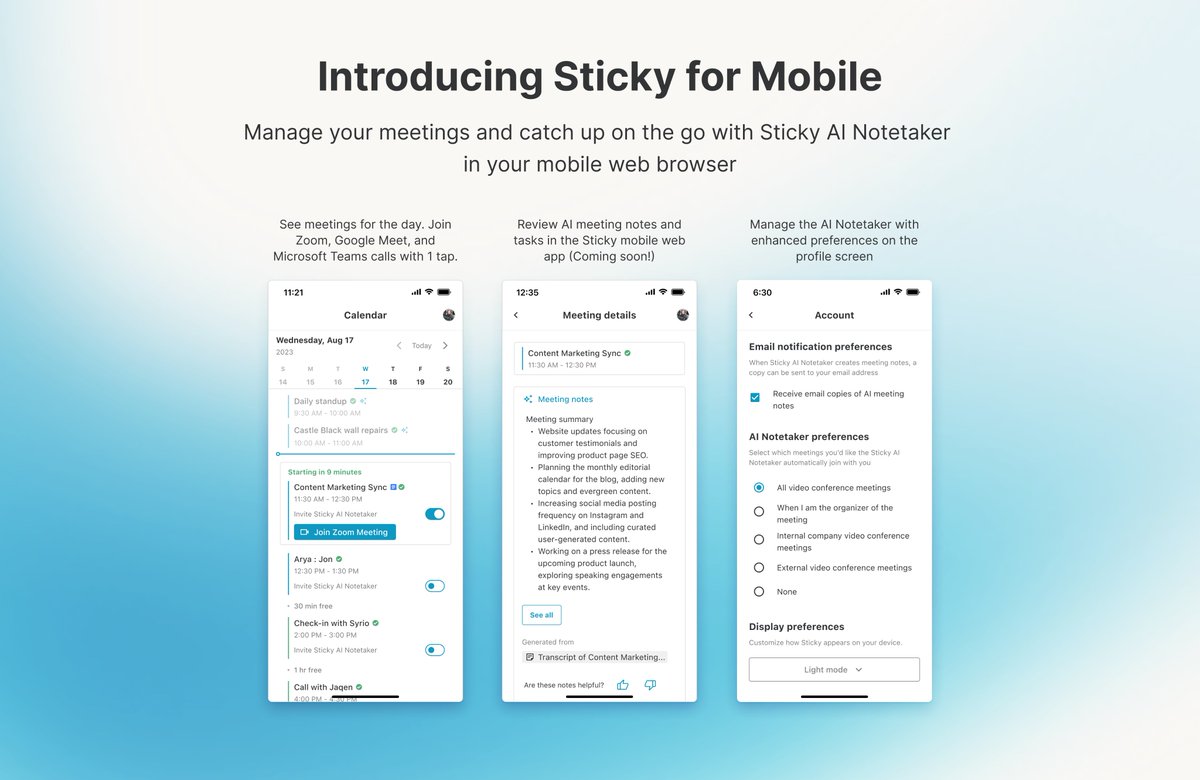
🚀 Introducing Sticky for Mobile Web! 🚀
We're excited to announce Sticky is now available on mobile web!
To try it out, just sign in to your Sticky account in your mobile browser by opening https://t.co/IGjrqCKaXq
#Sticky#AI#Productivity#NewRelease#GenAI#LLM
Today we’re excited to bring AI to Brex in a whole new way. ✨
Receipts and memos automated, calendar integration to detect work dinners and other event-related expenses, and so much more!
Was a blast helping craft this launch. And a huge congrats to the team 🚀
📢 Big news: Brex payables is here! Tap into our intuitive bill pay software & purchase cards—designed with AI—to help your AP team seamlessly manage procurement spend.✨ https://t.co/REnX3BhAxr
Everyone talks about 10x engineers but the real risk for most companies is not whether you can build it, it’s if you’re building the right thing. A designer that can distill why a user is adopting and then prototype the most clear version of that insight will save you millions.