Following the idea of @eversinc33 and thanks to Claude I was able to lift the VM bytecode to LLVM IR, but due to the stack model, and the calling convention inside of the bytecode, the lifted code doesn't look so fancy 😂😂😂. Link next
Spent the last 2 weeks working on a devirtualizer for VMProtect 3.5 and learning Remill. Idk yet if I will blog about it, but I at least wanted to publish the code:
https://t.co/GLqKWpOOU7
The approach is different from my last blog, as it lifts the whole x86 code of the VM
Last time I dealt with MSRC
I found a command injection vulnerability present for a decade in context menus, not highly critical but still exploitable. (see my talk Shift Happens)
MSRC did not reward a bounty nor did they attribute a CVE to this finding because this ”doesn’t meet [their] criteria as a vulnerability that requires an immediate security update”
However, this was fixed a month later in Windows 11 Canary (10.0.27902.1000).
Case closed.
https://t.co/8PFw4xs7Bx
After my last post I aimed at devirtualizing VMProtect 3.5 next. First milestone is reached and my lifter can lift single virtualized functions with static CFGs to LLVM and the VMP layer folds away. Next up are some more elaborate functions, but this made me very happy :3
Wrote up some notes on the Windows Kernel Segment Heap — how allocations are routed across kLFH, VS, Segment, and Large paths, how headers are encoded, and what that means for exploitation post-19H1.
https://t.co/yuZ0W2jb4G
As promised - full blog post is live for CVE-2026-40369
Covers everything: initial research, methodology, the exploitation path, caveats, cleanups, etc. The whole journey from finding it to production-grade exploit:
https://t.co/XhRTncgRfd
N-day exploits from Patch Tuesday used to require dedicated VR teams. @tyholms built the same workflow from off-the-shelf parts for ~$300 per CVE. The skill and resources gating this work are now within reach of any threat actor with a credit card.
https://t.co/EKEyJctrwd
DEVCORE is having a day! Confirmed: Angelboy (@scwuaptx) & TwinkleStar03 (@_twinklestar03) of DEVCORE Research Team used an Improper Access Control bug to escalate privileges on Microsoft Windows 11, earning $30,000 and 3 Master of Pwn points. Full win, let's go! 🔥 #Pwn2Own #P2OBerlin
I stole this and I don't know who originally made it but it's gold. Anyway I'm going to drop a simple 0day in a day or two. It's not perfect and there are conditions to it working (as with all bugs). I didn't disclose it, I don't know how original it is(it wasn't that hard to find) but it does give you rce on an apache product. See you soon friends.
New Windows privilege-escalation primitive just dropped.
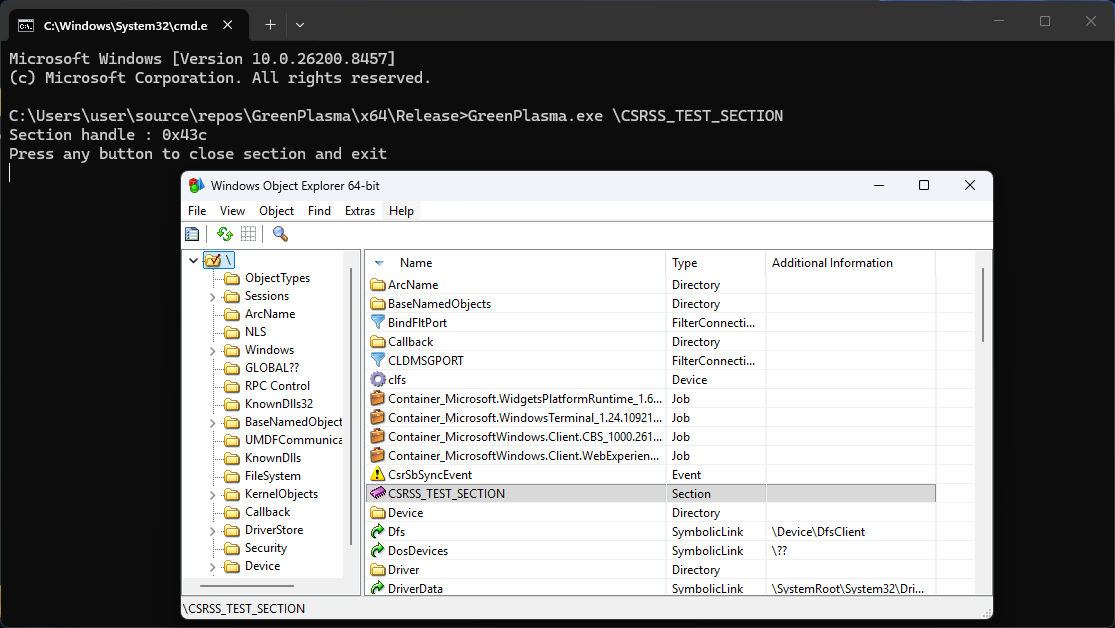
GreenPlasma is a minimal PoC that forces creation of an arbitrary section object inside any directory writable by SYSTEM via CTFMON’s named-object cache.
Let me break it down for you:
Lately I've been thinking about how AI is changing vulnerability research and reverse engineering. VR and RE are some of the hardest workflows to parallelize. Even with great knowledge transfer and team practices, you usually default to one person per vuln or RE task. The work is just too context-heavy to split.
AI breaks that ceiling. It's no longer "one researcher, one task", it's you working one angle while Claude annotates disassembly code, explores another path, or helps you piece together what the last result means.
Watching this land in domains we assumed were fundamentally serial is wild.
How it works:
1. Recovery tools look for a config file called RecoverySimulation.ini on the OS drive
2. If Active=Yes, it enables "test mode" for the recovery tools
3. Test mode unlocks your BitLocker drive but a flag called FailRelock tells it to skip relocking
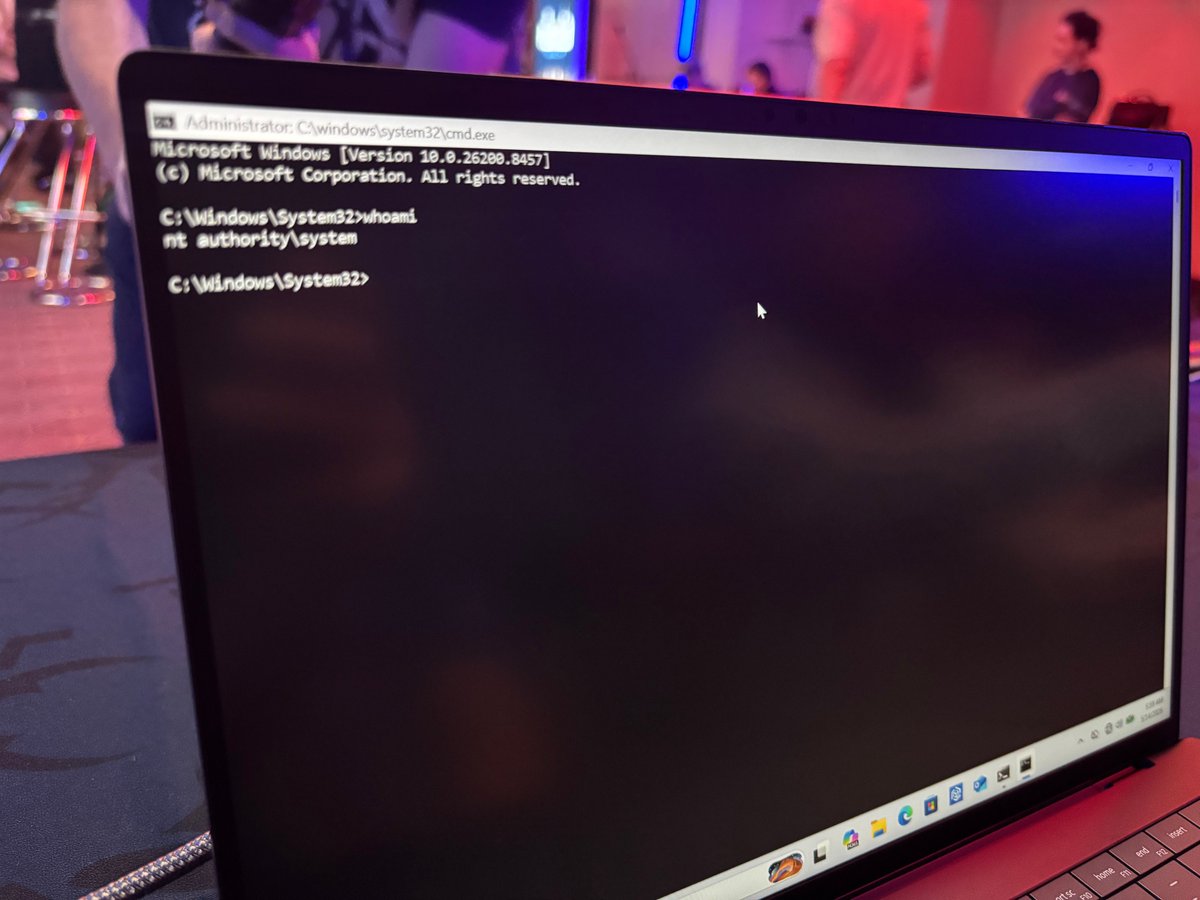
4. cmd.exe spawns with full access to your "encrypted" drive
Yippie
Two new Microsoft Windows 0days. The exploits have cool and badass mysterious names to be extra spoopy
- GreenPlasma: Windows CTFMON Arbitrary Section Creation Elevation of Privileges Vulnerability
- YellowKey: Bitlocker Bypass Vulnerability
https://t.co/VaWFtW5lFi