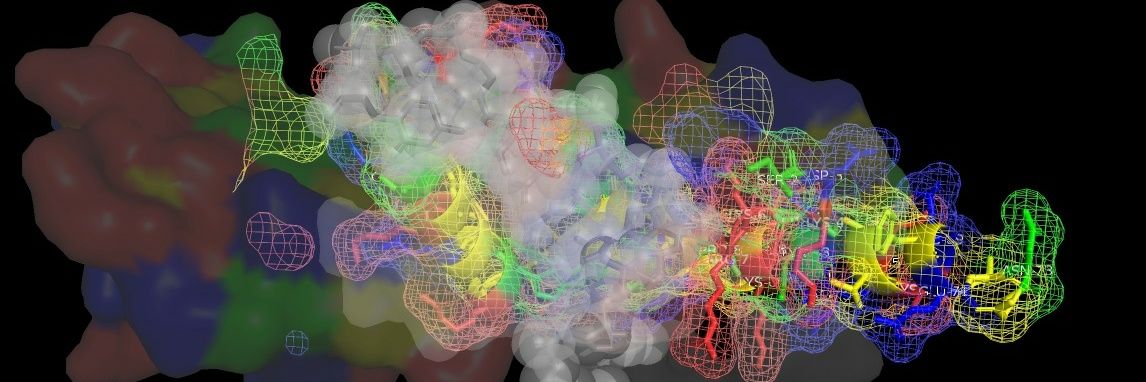
My PhD advisor, David Baker, just won the Nobel Prize! 🎉 He is an inspirational scientific leader who not only does groundbreaking research but has also built an enduring, supportive community. Most importantly, he’s a genuinely kind human being.
Congratulations David!
I am so honored to have been your student!
The Nobel Prize in Chemistry 2024 https://t.co/aHaQHBd10h
Published today in @Nature, we describe an approach for single-molecule protein reading on @nanopore arrays. By utilizing ClpX unfoldase to ratchet proteins through a CsgG nanopore, we achieved single-amino-acid sensitivity. https://t.co/ZTFNZkwpcj
There are a lot of big claims circulating these days about nanopore protein sequencing. I say we organize a CASP like competition. We send you 10 random peptides from the human proteome, you gotta guess what they are. Who wants to do this? 😀 Any foundation want to fund?
Excited to share scGHOST, now published @NatureMethods, graph-based #ML identifying #3Dgenome subcompartments in single cells. Kudos to @KyleXiongCMU & @RuochiZhang, who worked so closely on this. Exciting time for single-cell epigenomics & multiomics! https://t.co/R1VcdnCC3G
Sometimes the thing that keeps me going in research is seeing ignorance in high school and undergraduate students. They don't know what works and doesn't works. They have so much energy to make mistakes that sucess is an inevitability!
People often asked me why I joined a lab that was 3 mo old. You know my first leading indicator?
Feng put 2 liter beakers on every bench for tip waste. The famous lab I rotated in previously used little baggies with a wire rack
Gave me an unspoken sense of the expectations 🤣
I hope you all find OptoMBP to be useful! Kudos again to@EH_Reed, to our wonderful collaborator Kazu (@kazuhiroaokilab).
OH, and the preprint is here: https://t.co/VhiZBqLsiv
Should have said that earlier! Sigh.
Thrilled to announce a new piece of my PhD work - out today @NatureBiotech! We developed a genetically-encoded encapsulation system to deliver therapeutic bacteria to tumors in mice https://t.co/ipgixAyuiz
Some highlights 🧵(1/9)
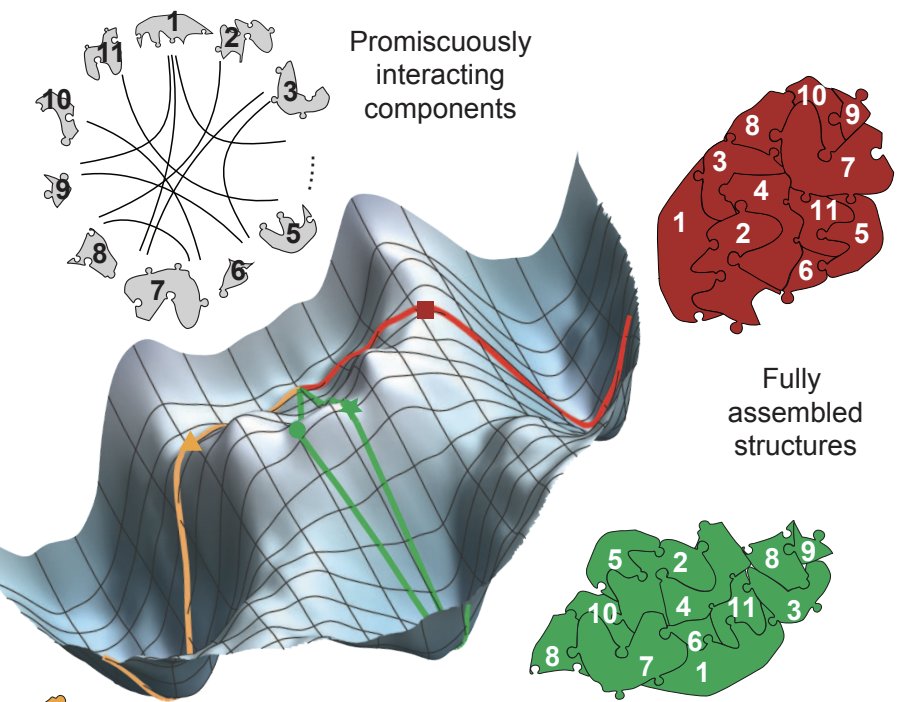
Can the intrinsic physics of multicomponent systems show neural network like computation?
Out now:
https://t.co/RNJS50MWtl
Led by Constantine Evans w/ Jackson O'Brien, Erik Winfree.
U Chicago summary: https://t.co/jgcH0GyGu9
Happy to share a new opto-technique preprint from the lab spearheaded by the indomitable @EH_Reed!
In it we report a technique to dissolve constitutive protein condensates using an old friend, the classic "solubilizing" protein domain, MBP.
Here's an article that shows how (semi-) quantitative digital droplet PCR can be done using a homemade microfluidic droplet prototyping toolkit. The authors detected and roughly quantified human GAPDH RNA transcripts using standard PCR laboratory equipment - very cool!
By way of background, digital droplet PCR (ddPCR) is a quantitative PCR method that splits a PCR into many tiny droplet “microreactors”, each containing a maximum of a single DNA molecule if appropriately diluted. After PCR, successful amplicons can be detected using fluorescence and counted to calculate the original concentration of template targets. You can read more about ddPCR here: https://t.co/LQaKppCjwH.
The toolkit developed by Chen et al. (2023) was designed to be an adjustable, easy-to-use, and affordable prototyping system for a wide range of different microfluidic droplet applications, including ddPCR but also single cell assays, drug assays, and antibiotic screening, among many others.
To be useful it needed to be affordable; to produce droplets of consistent and modifiable sizes; have a platform to contain and visualise the droplets; and to allow easy imaging and counting. The authors’ solutions to these requirements included:
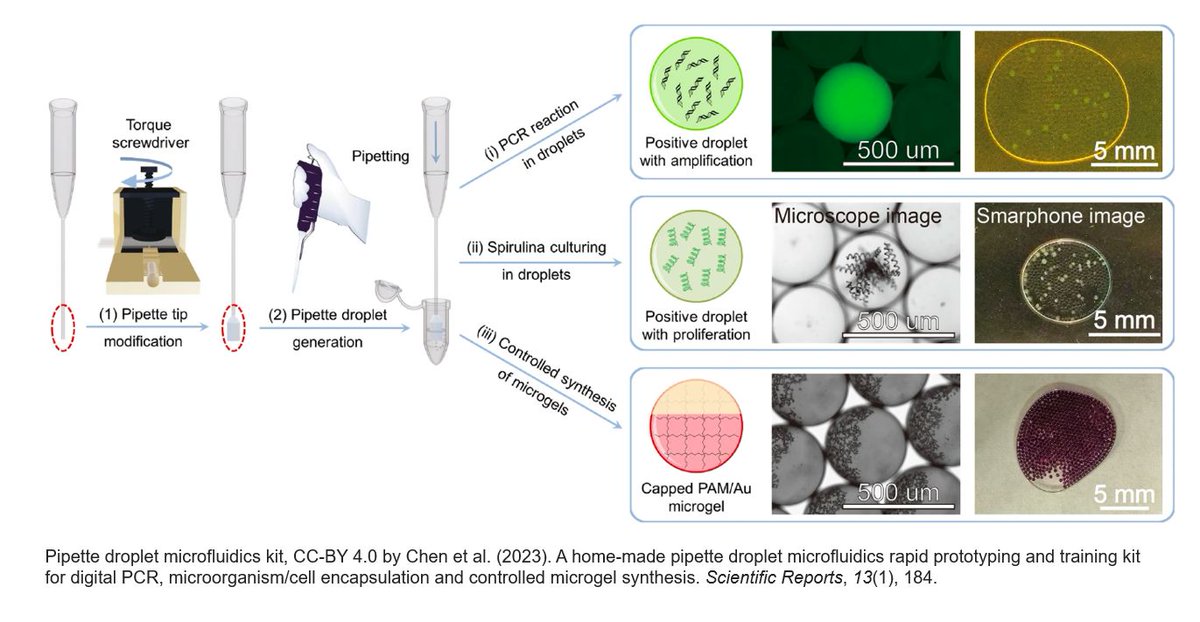
⭐A torq screwdriver tool to deform pipette tips so that they could produce droplets as small as 200 µM diameter
⭐A novel shallow-centre imaging surface made from double-sided tape or a 3D printed chip
⭐A microscope or smartphone imaging system to image droplets
As one test of their toolkit, Chen et al. (2023) created droplets as microreactors for reverse transcriptase ddPCR, aiming to quantify the concentration of human GAPDH RNA transcripts in their samples.
Although the method was not as accurate as a commercial ddPCR machine, they considered the method to be “sufficient for rough quantification and accurate detection for low-target concentration samples", which is impressive for a homemade kit!
This flexible system was also shown to be useful for other applications, specifically droplet encapsulation and culturing of Spirula algae in microgel droplets, and the controlled synthesis of capped polyacrylamide/gold composite microgels.
It could also potentially be used for other PCR-related applications, such as single-molecule PCR, or for emulsion PCR to reduce artifacts and biases during metabarcoding.
I can see this being something that might work well with Bento Lab's PCR and transillumination system, especially if you already have a microscope with a digital camera to do the imaging. So I'd love to give this a go in this coming year!
You can find the article below, plus a figure from their article showing the different applications they tested:
Chen et al. (2023). A home-made pipette droplet microfluidics rapid prototyping and training kit for digital PCR, microorganism/cell encapsulation and controlled microgel synthesis. Scientific Reports, 13(1), 184.
https://t.co/sgjT2u1Gt9
Excited to share our recent work developing a genetically encoded m6A sensor. We hope this will be of widespread use for studies of m6A dynamics and high throughout applications. Very proud of the talented Fadi Marayati (@RNAloops) who led this study! https://t.co/MGiNzkXouP
2023 New Year’s resolution: go to the gym and sulk on the treadmill at 15% incline
2024: take a myostatin modifier (e.g. activin receptor antibody?) along with ozempic to increase muscle mass and lose fat