Very excited to share our @ScienceMagazine paper on single-cell #3D#genome reorganization in #Alzheimer's disease.
We jointly measured gene expression and 3D genome architecture in individual human brain cells using #GAGEseq, then integrated these data w/ chromatin accessibility and spatial transcriptomics. We uncovered increased #compartment #mingling and distance-dependent rewiring of gene regulatory contacts in AD.
We also developed #Hicformer, a transformer-based model that integrates DNA sequence with 3D genome features to predict cell type-specific gene expression and prioritize candidate regulatory elements.
Huge kudos to co-first authors @zocean636 and @xinyuelu1999; and many thanks to Zhijun Duan @UW, Hansruedi Mathys @PittTweet, & David Bennett @rushalzheimers for the wonderful collaboration, as well as to all our co-authors. @CarnegieMellon @SCSatCMU @CMUCompBio #AlzheimersDisease #3DGenome #SingleCell #AI
https://t.co/G3yPdRMeym
Detaining a PhD student on her way back to Princeton from presenting scientific work at a conference is not how we get the best and brightest scientists in the world to want to come to the US. I hope this is resolved quickly! More details:
https://t.co/wNS0Oca0l0
Carnegie Mellon researchers are studying how everyday AI tools can unintentionally spark unhealthy emotional attachments. Their goal is to spot early warning signs and build safeguards — like user alerts — that step in before serious harm occurs.
https://t.co/SKTsUQMfHs
🚀🎓📚 What an epic initiative ! CS Learn from @CarnegieMellon brings our world-class computer science education from @GriffinCMU to learners everywhere, free on @YouTube ! Huge kudos to @PhillipCompeau and the entire team for making this happen. So proud to have Phillip as a colleague at @CMUCompBio !
We're proud to announce the launch of CS Learn, a new online learning platform that offers free access to select courses from Carnegie Mellon University’s top-ranked computer science program.
Check out the course offerings: https://t.co/OzISplrDif
We're proud to announce the launch of CS Learn, a new online learning platform that offers free access to select courses from Carnegie Mellon University’s top-ranked computer science program.
Check out the course offerings: https://t.co/OzISplrDif
🚨 We are hiring! Please help spread the word! Very excited to announce an open-rank, tenure-track faculty search in #Computational#Biology at @CMUCompBio@GriffinCMU@CarnegieMellon !
We welcome exceptional candidates from ALL areas of computational biology, including AI for biology, autonomous science, structural biology, drug discovery, synthetic biology, genomics, imaging, precision medicine, and beyond !
With the historic investment in CMU's Kenneth C. Griffin School of Computer Science @GriffinCMU, this is an especially exciting time to join us and help shape the future of scientific discovery!
📅 Deadline: Dec 16, 2026
🔗 Apply: https://t.co/yoPg2KhleT
More details: https://t.co/nbCdMmm6Vr
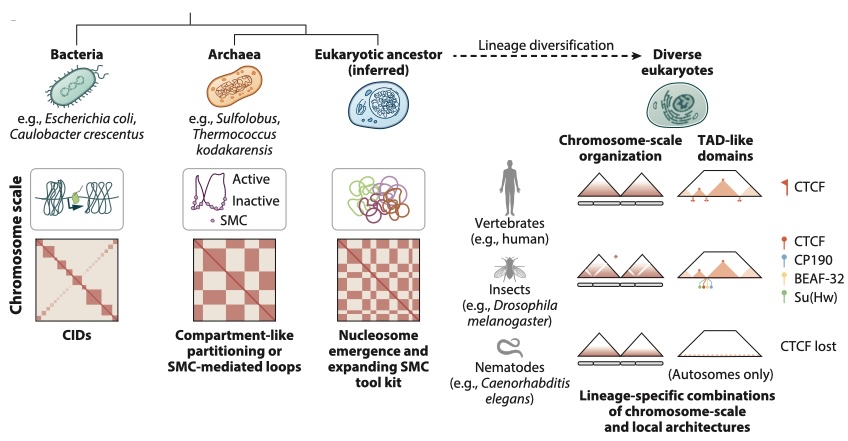
How did the 3D genome architecture evolve? 🧬 Our new review @AnnualReviews by @zocean636 & Evan Trop in the group explores conserved genome folding principles, lineage-specific architectures, and how comparative genomics and #AI may connect sequence evolution to genome folding and function. https://t.co/QAdaEbrfQ2
I'm a big fan of this work and I really like the research question that @lorin_crawford team was tackling.
But I think the conclusions of this work are also a byproduct of the evaluations. Specifically, cell-type classification is known to be saturated with linear baselines, and perturbation response is bottlenecked by limited datasets and large experimental noise.
So I'd say that it is two part we need better data, but also better evals and ways to transfer pretrained representations to downstream tasks.
bit of a shameless self plug, but I think that frozen contextualized gene representations may be a better way to extract information from pretrained models to improve on tasks like perturbation prediction.
https://t.co/eIXPrqccVs
Looking forward to welcoming everyone to @CarnegieMellon tomorrow (Nov 13) for our #AI4BIO Symposium! We have a wonderful lineup of invited speakers, alongside AI4BIO Pilot Project presentations and a closing panel discussion on the future of comp bio in the era of AI. It will be an exciting day of ideas and conversations. Many thanks to our speakers and organizing team!
🚨 We are hiring! Please help spread the word! Very excited to announce an open-rank, tenure-track faculty search in #Computational#Biology at @CMUCompBio@GriffinCMU@CarnegieMellon !
We welcome exceptional candidates from ALL areas of computational biology, including AI for biology, autonomous science, structural biology, drug discovery, synthetic biology, genomics, imaging, precision medicine, and beyond !
With the historic investment in CMU's Kenneth C. Griffin School of Computer Science @GriffinCMU, this is an especially exciting time to join us and help shape the future of scientific discovery!
📅 Deadline: Dec 16, 2026
🔗 Apply: https://t.co/yoPg2KhleT
More details: https://t.co/nbCdMmm6Vr
Great thread and video summary from @eigenNick explaining his new work #EMBER ! A core idea is to learn gene representations that capture both molecular function and cellular context - then reuse them compositionally to predict perturbation effects, genetic interactions, and drug responses 🚀 https://t.co/i9sCLROTAm
Contextualized gene representations work surprisingly well for predicting multigene perturbation effects.
I’m excited to introduce EMBER, a pretrained gene-centric foundation model designed specifically to learn context-specific gene representations. A joint work with @jmuiuc and @ericxing.
With innovations in single-cell pretraining and dataset curation, EMBER gene representations can be combined with a lightweight probe for single gene knockouts, genetic interactions (double knockouts), and even drug perturbations.
Both a 🧵 and a 🎥, got in front of a camera to share some highlights! (1/n)
A friendly reminder that applications for our #AI4BIO Fellows Program @GriffinCMU@CarnegieMellon are due Nov 15 ! We are really excited to support outstanding early-career scientists with bold ideas at the intersection of AI and biology. Please help spread the word, and encourage talented young researchers in your network to apply!
🚀Please help share widely! We're excited to launch the new #AI4BIO#Fellows Program @SCSatCMU to recruit exceptional early-career scientists pursuing bold, independent research at the intersection of AI and biology.
Fellows will be supported by The Center for AI-Driven Biomedical Research (#AI4BIO) @SCSatCMU and co-mentored by two CMU School of Computer Science faculty members, with opportunities spanning AI models, computational biology, and autonomous science, including engagement with the CMU AI Science Foundry (https://t.co/rR79xzCoEv).
We are looking for truly exceptional candidates who want to help define new directions for AI-driven biomedical discovery.
📅 Apply by November 15, 2026.
🧬 Program information: https://t.co/iZW5Dg5ue2
🤖 Application via Interfolio: https://t.co/6mSLILbEvr
Our department @CMU_StatDS is hiring! Tenure-track assistant professor position. Apply here: https://t.co/HB0lLstORB It is a great place to work. #statistics#datascience
The @RECOMBconf special issues are out now!
https://t.co/PoAWrpOmpj
Following a tradition started by Michael Waterman at the first RECOMB in 1997, accepted articles were invited for submission to a special issue of JCB. We are proud to be the official journal of RECOMB!
I notice many of my academic friends still use photos from 20 years ago on their website and for social media profiles. My recommendation is to update them at least once a decade if you are too busy with your science …
CMU recently took some new photos of me, so I finally updated mine (the previous one was from 2017). Will update again in 2035 if not sooner !!