Spent a productive week in Oslo, Norway! Had the honour of presenting my work & sharing the stage with fellow speakers from @CUHKofficial, @UofGlasgow, & @JindalGlobalUNI. Many thanks to the organizer, the International Association for Water Law (AIDA), and to the host, @UniOslo.
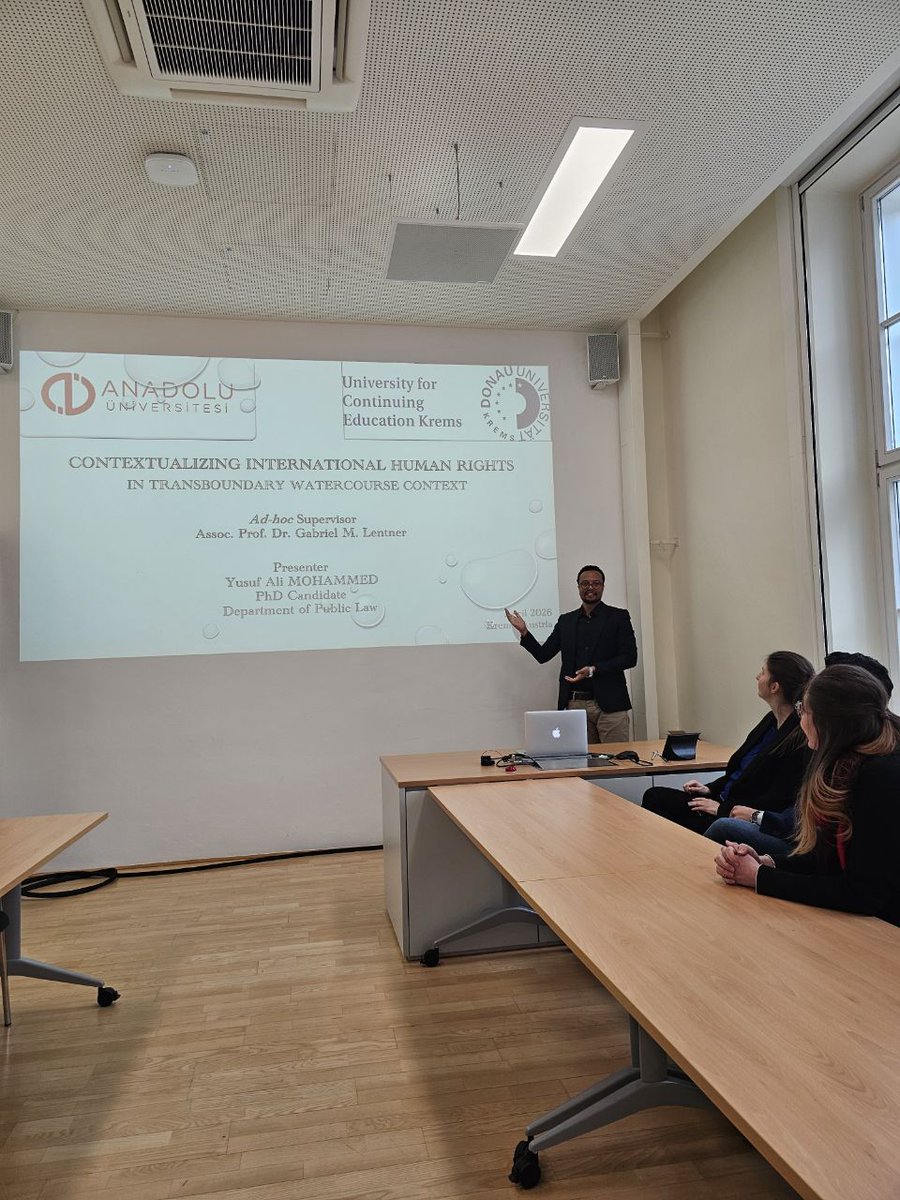
Wrapped up a highly productive stay at the Law dept of Danube University Krems. I’d the opportunity to share my research; received insightful & constructive feedback from (Assoc) Prof. Gabriel M. Lentner & his colleagues. Many thanks to Prof. Lentner for his unreserved support.
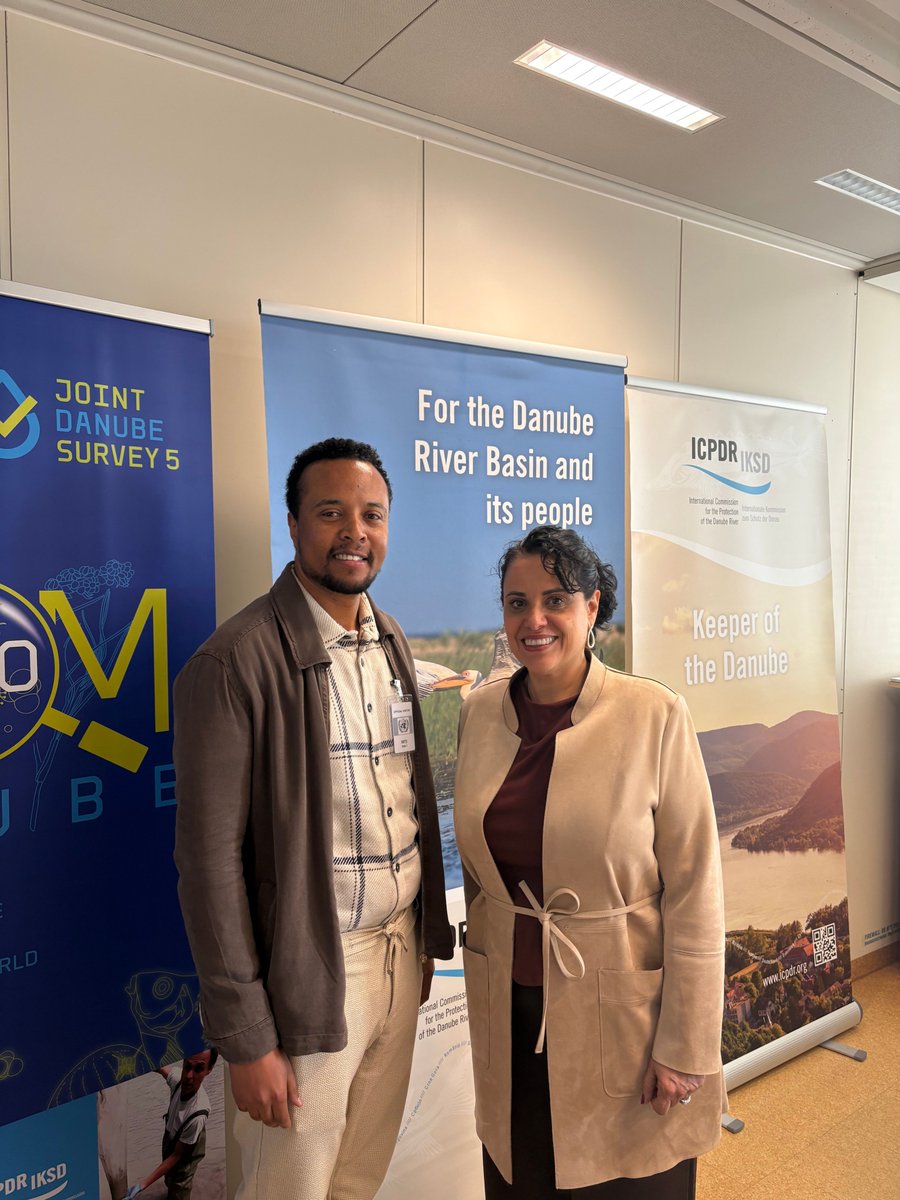
During my stay in Austria, I had the opportunity to be at the @UN_Vienna & visit the @ICPDR_ORG. Huge thank to Hélène & her team for the warm welcome. I'm grateful for the insightful & informative discussion we've had on human rights protection in the Danube River basin & beyond.
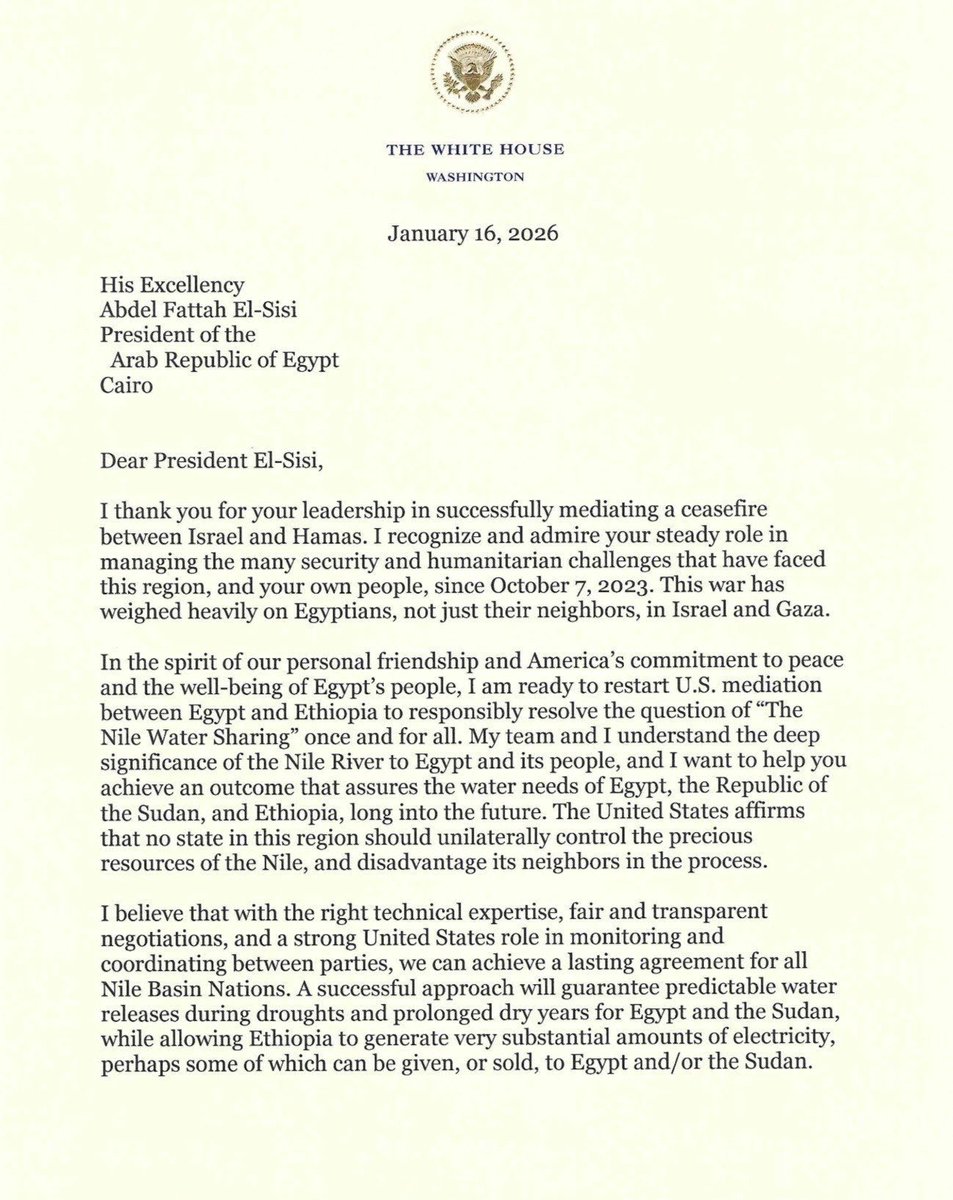
.@POTUS is committed to resolving complex disputes and achieving lasting peace. Through active U.S. leadership under President Trump—backed by technical expertise and fair, good-faith negotiations—we can secure a durable solution for Egypt, Ethiopia, and Sudan.
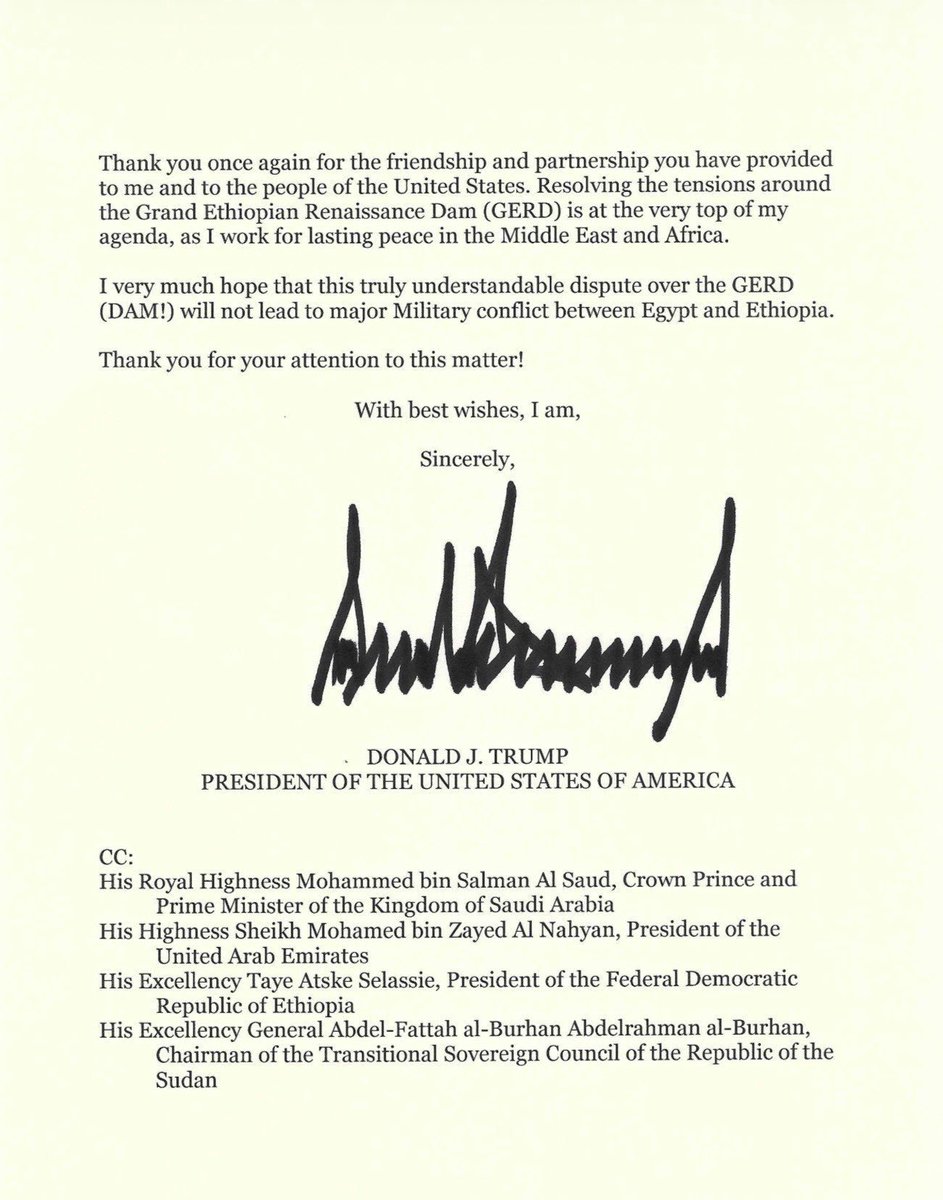
Resolving tensions surrounding the Grand Ethiopian Renaissance Dam is a top priority for @POTUS, as he works to promote lasting peace in Africa and the Middle East and to prevent a major military conflict between Egypt and Ethiopia.
International relations involves more than just international law; it's defined by the interplay of #Military might, #Economic leverage & #Political dominance. This dynamic serves to uphold a #WorldOrder on the terms of the #SuperPowers, as envisioned in the aftermath of the WWII
Grand Ethiopian Renaissance Dam: Path to national development, unity - by Yusuf A. Mohammed & Afework S. Legesse | DS Opinion
https://t.co/0hBexnbctS
I had the honor of moderating a panel discussion featuring distinguished experts at the Ethiopian Embassy in Ankara. Panelists shared insights on sociopolitical & legal issues of Grand Renaissance Dam, while celebrating its completion as historic milestone #GERD#GERDinauguration
We, Ethiopians, Achieved Centuries-Old Dreams
Today, we are on the eve of the inauguration of the Grand Ethiopian Renaissance Dam (GERD) that marks the realization of a vision held by generations of Ethiopians. For centuries, the people of Ethiopia have dreamed of harnessing the power of the Abbay (Blue Nile) to fuel national development, energize transformation and improve livelihoods. This monumental project, finally coming to fruition, symbolizes our national pride and sovereignty. It is a testament to Ethiopia’s determination to utilize its natural resources responsibly and equitably for the benefit of its citizens and the broader region.
We Have Not Achieved This Result Overnight but Overcome Numerous Odds!
The journey to this moment has been long and challenging. Ethiopia faced international skepticism, economic constraints, and geopolitical pressures from various quarters. Technical challenges, security concerns, and complex negotiations with downstream countries added layers of complexity. Despite all these obstacles, our steadfast commitment, resilience, and innovative spirit enabled the country to progress forward and reach this historic milestone.
The GERD stands not only as an engineering marvel but as a symbol of overcoming adversity through perseverance.
As we have been all along saying, it is built with Ethiopian sweat and blood to benefit not only #Ethiopia, but also the people of African in the region to access clean energy including multiple benefits to immediate downstream countries.
Congratulations to All Fellow Ethiopians who made this possible and those friends of Ethiopia and Africa’s development for enduring support.
📚Hot off the press
📌My co-authored chapter, "The Hydropolitics and Legal Dimension of Ethiopia’s Right to Utilize the Abbay River," has been released by @SpringerNature as part of a book, "Abbay River Basin"
🔗: https://t.co/KOde7BSYAj (Ch)
🔗: https://t.co/PobmG7Ee2A (Book)
📌 I am thrilled to have co-authored a 📖chapter (Ch-15), which meticulously affirms #Ethiopia🇪🇹’s legitimate rights to the equitable and reasonable use of the Abbay River, through the lens of international law and politics.
🔗: https://t.co/KOde7BSYAj
Üniversitemiz, dünyanın saygın derecelendirme kuruluşlarından Times Higher Education (THE) tarafından açıklanan World University Rankings 2025 sonuçlarına göre listeye giren Türkiye’deki 111 üniversite arasında 13. oldu.
Üniversitemiz, Türkiye'deki devlet üniversiteleri arasında ise 6. oldu.
On Sunday 13 October, the Cooperative Framework Agreement entered into force. https://t.co/vjN54qycxX
Congratulations to the #NileBasin countries: Burundi, Democratic Republic of Congo, Egypt, Eritrea, Ethiopia, Kenya, Rwanda, South Sudan, Sudan, Tanzania and Uganda! #OneNile
In my piece for @DailySabah, I revisit the decades-long course of the Nile Basin Cooperative Framework Agreement-CFA.
📌While marking #SouthSudan the 6th state to ratify it,
📌I amplify the coming into force of the CFA as “a new era for the Nile Basin.” https://t.co/c4WSJ8wwbK
Delighted to share a book chapter:
➡️tilted, "Management of Transboundary Watercourse in Euphrates-Tigris and Nile River Basins,"
➡️co-authored with Prof Yücel Acer,
➡️to the book, “Land and Water Degradation in Ethiopia,”
➡️published in @SpringerNature.
🔗https://t.co/46nXM1KJsc
A Must-Read Research Paper for This Weekend
Dive into "The Endless Controversies of The Nile River Basin in The Context of International Transboundary Watercourse Doctrines" by Yusuf Ali Mohammed @_YusufAli. This meticulously researched paper, presented at the 6th International Student Science Congress in 2021, unravels the complex web of legal, geopolitical, and socio-economic factors fueling the long-standing disputes over the Nile River Basin. Mohammed's narrative weaves through the historical colonial agreements, highlighting their enduring impact on current controversies and negotiations. With a critical lens, it examines the shifting legal doctrines that underpin the claims of upstream and downstream countries, advocating for a collaborative future grounded in equitable water management. This paper is not just a recount of legal arguments but a compelling story of a river that is vital to millions, challenging readers to rethink the principles of international water law and regional cooperation.
Overview
Introduction: Setting the stage, the paper delves into the enduring and complex controversies of the Nile River Basin, questioning the adherence of riparian countries to specific transboundary watercourse doctrines and their practical significance.
Colonial and Post-Colonial Legal Frameworks: A critical review of historical treaties, including the 1902 Anglo-Ethiopian and 1929 and 1959 agreements, exposes their biases against upstream countries and their contradiction of equitable utilization principles.
Contemporary Legal Efforts: #CFA and #DoPs: The Cooperative Framework Agreement (CFA) and the Declaration of Principles on the #Ethiopian Renaissance Dam (DoPs) are analyzed as modern attempts towards a more inclusive and equitable legal regime for the Nile.
Ethiopian Stance and Negotiation Efforts: The document highlights Ethiopia's commitment to negotiation and cooperation and portrays its refusal to succumb to #Egypt and #Sudan's specific demands, emphasizing Ethiopia's push for dialogue and transparency.
Legal Doctrinal Approaches and Deadlock: The discussion on 'absolute territorial sovereignty' and 'limited territorial sovereignty/integrity' doctrines reveals the deadlock in negotiations, advocating for a 'community of interest' approach for cooperative management and equitable benefit-sharing.
Solutions: Towards Equitable and Sustainable Management: The document concludes with a call for legal and doctrinal adjustments that align with the 'community of interest' doctrine, aiming to transcend colonial legacies and promote equitable resource sharing and regional cooperation.
This research paper is a must-read for anyone interested in the dynamics of international water laws, the geopolitics of the Nile Basin, and sustainable water resource management. It provides a profound understanding of the challenges and opportunities for achieving equitable and cooperative solutions to one of the most contentious river basins in the world.
https://t.co/5p8BtIsSyI