@djon3volta@KYKYPY3A_B есть разные варианты "кражи" средств, которые стали или могут стать государственным бюджетом. Сверхбогатство позволяет подобное. Инвестирование личных средств в проекты прибыли будущего - ничего удивительного, нечему тут восхищаться.
@Roman_of_Spades@Pla_Na_Zavtrov Китай успевает и зонды на Л. садить, и вкладывать триллионы в зеленую энергетику, но все равно понимает, что фронтир освоения Луны без пилотируемых полетов с людьми не может обойтись,у них тоже все это заложено программой
говорить, что сотни т. людей занимаются ерундой - снобизм
@Roman_of_Spades@Pla_Na_Zavtrov так полет был не ради этих фоток, там кучу разных исследований о человеке и организме в дальних полетах и разных поясах магнитного поля З. - все можно почитать на сайте, самые главные и нужные фотографии будущих мест высадки они не выложат. Полет - всего лишь шаг бол. программы
The most historic #GoPro images ever captured.
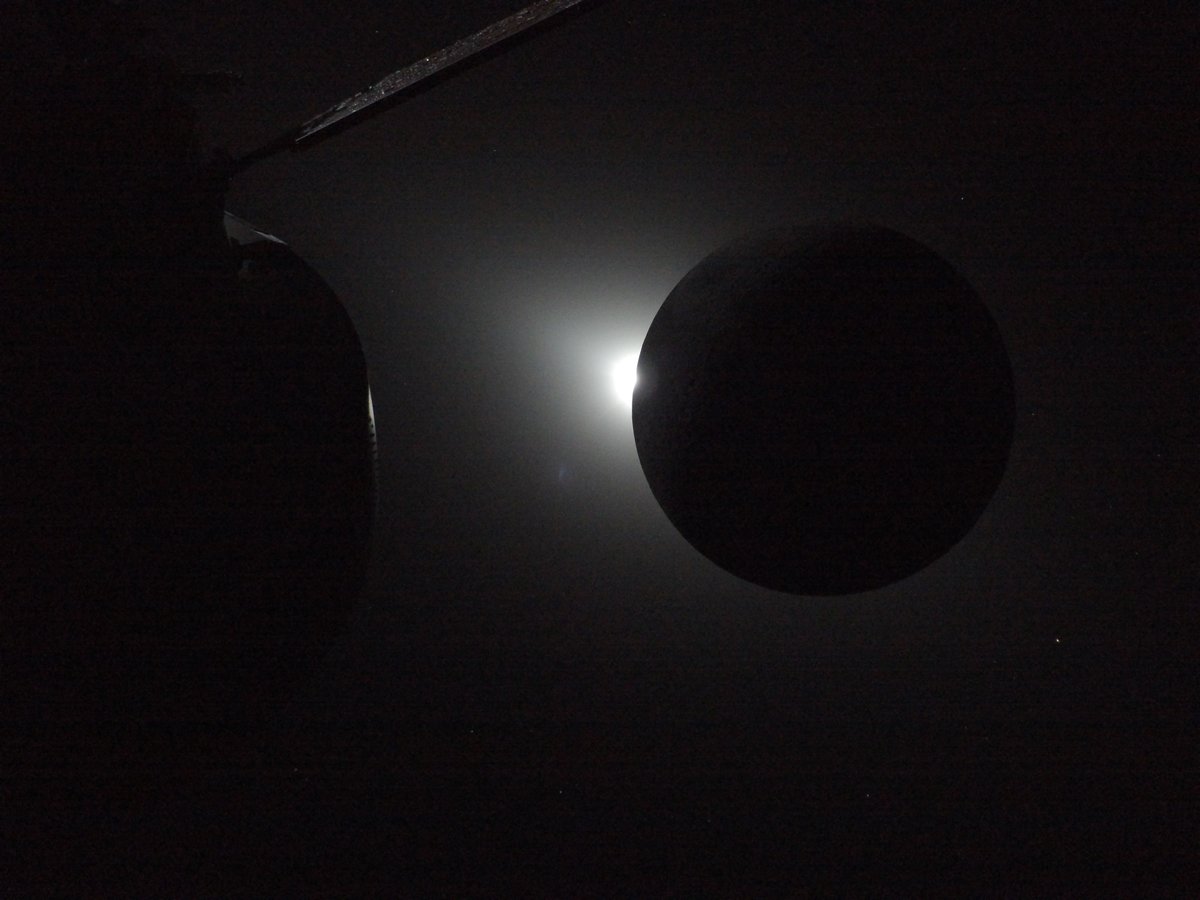
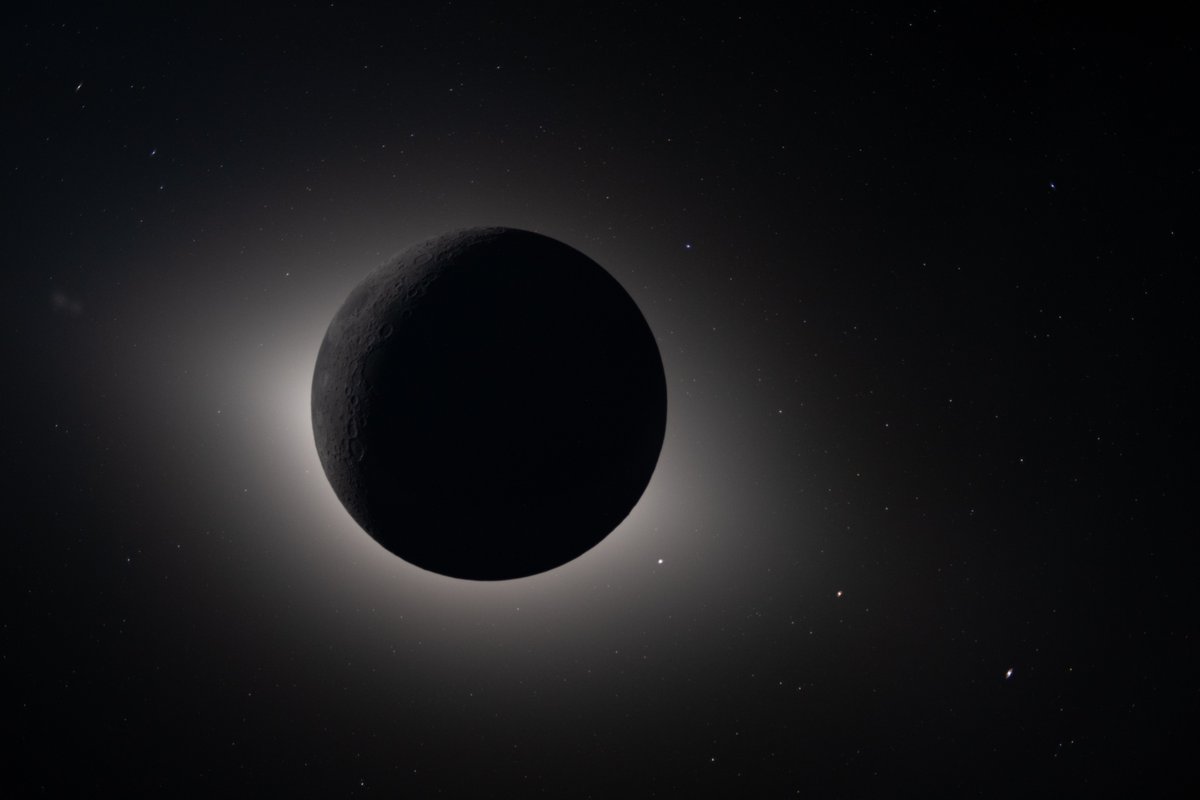
Slide 1: The Moon, seen backlit by the Sun during a solar eclipse on April 6, 2026, is photographed by a GoPro on the Orion spacecraft’s solar array wing. Orion is visible in the foreground on the left. Earth is reflecting sunlight at the left edge of the Moon, which is slightly brighter than the rest of the disk. The bright spot visible just below the Moon’s bottom right edge is Saturn. Beyond that, the bright spot at the right edge of the image is Mars.
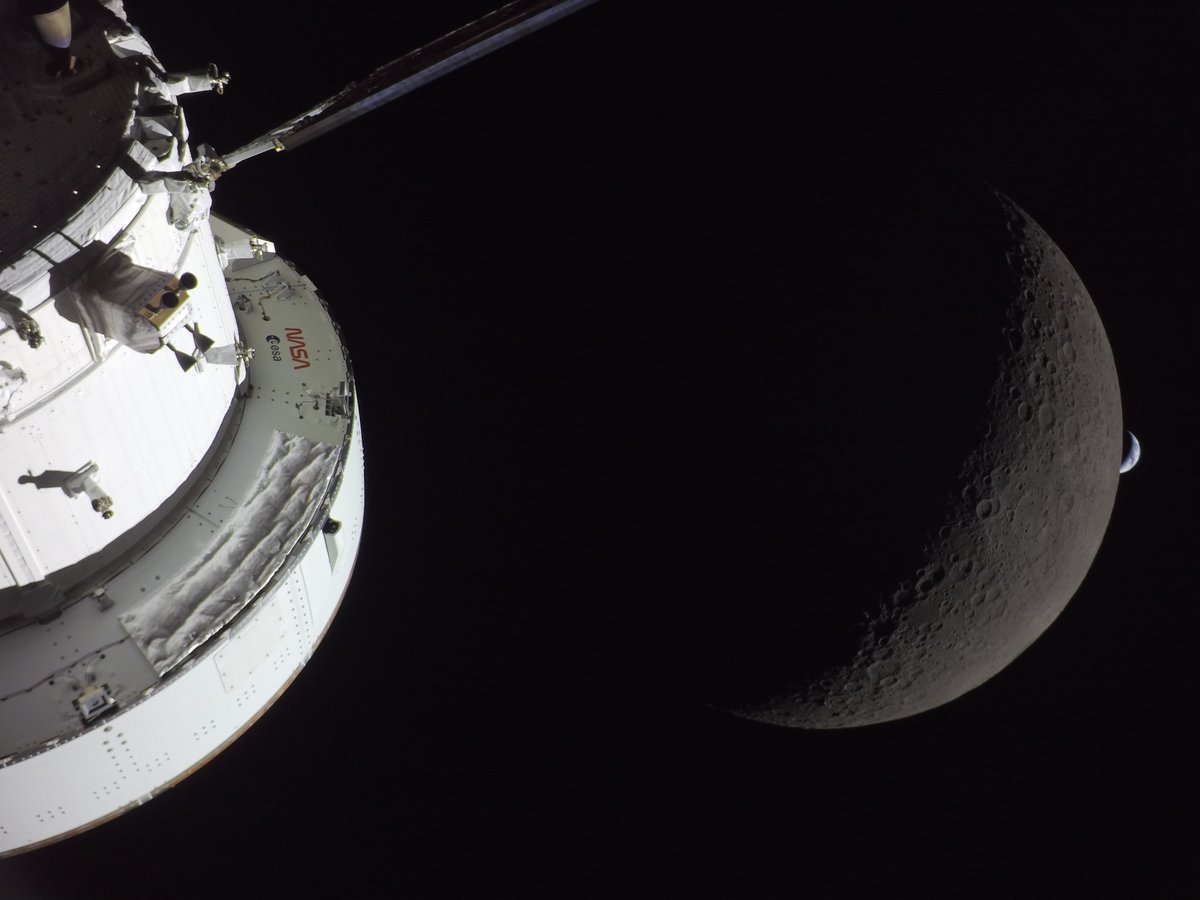
Slide 2: A GoPro on NASA’s Orion spacecraft captures the Moon and the Earth in one frame during the Artemis II crew’s deep space journey at 6:42 p.m. ET on the sixth day of the mission. The right side of NASA’s Orion spacecraft is seen lit up by the Sun. A waxing crescent Moon is visible behind it. And then, a crescent Earth, tiny compared to the Moon, is about to set below the Moon’s horizon on the right.
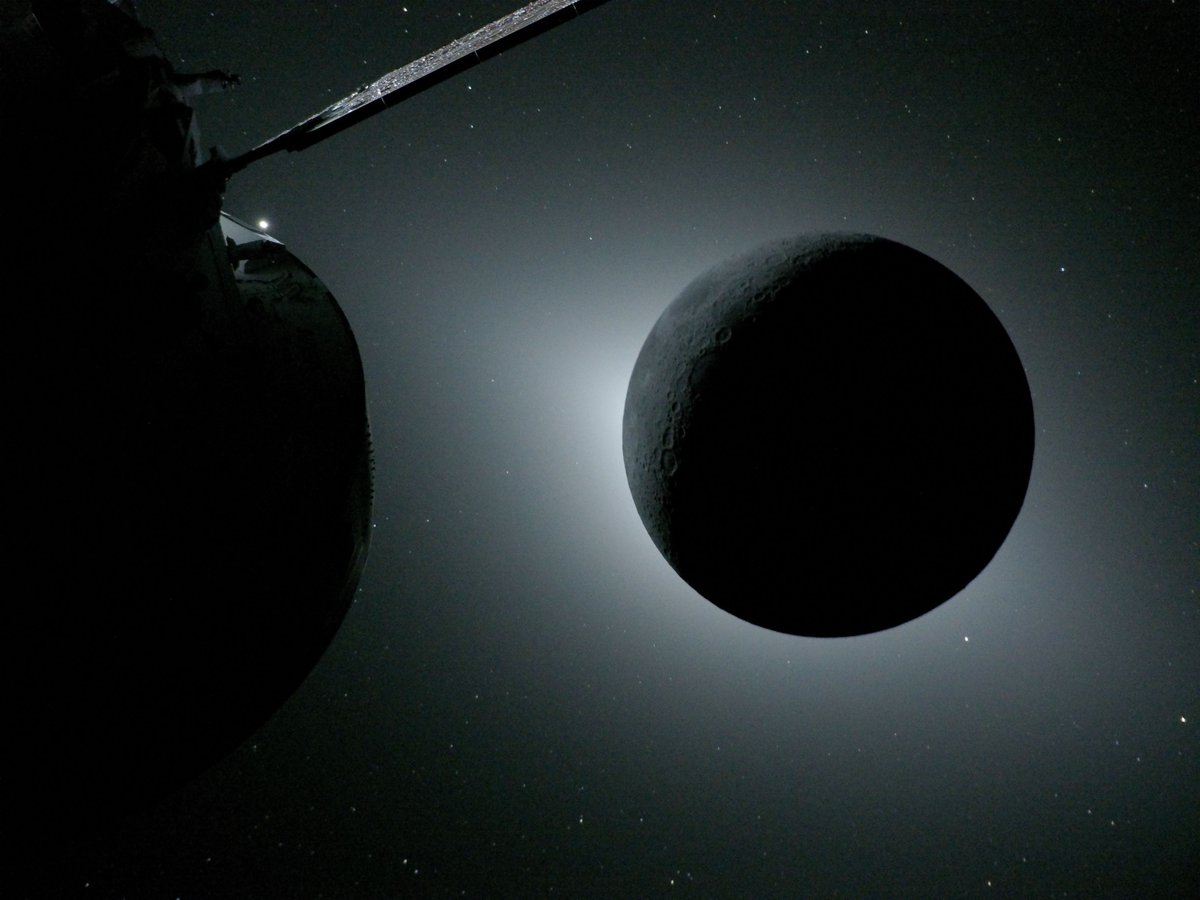
Slide 3: The Sun is rising at the left edge of the Moon, ending a nearly one-hour total solar eclipse on April 6, 2026. While the Sun hid behind the Moon, the crew aboard the Orion spacecraft, pictured in the forefront, saw a Moon shrouded in night. This offered a perfect opportunity to look for rarely seen phenomena. And the moment delivered. Calling down to Earth at 9 p.m. ET the crew reported seeing six impact flashes, which are light flashes that are created when meteoroids, traveling many thousands of miles per hour, smash into the Moon’s surface.
Slide 4: The Orion spacecraft is seen in the foreground lit up by the Sun. A first quarter Moon is visible in the background. Orientale basin, a 600-mile-wide impact crater ringed by mountains, is visible toward the bottom right of the Moon. This basin straddles the Moon’s near and far sides. To the left of Orientale, which has a patch of ancient lava in its basin, is the far side; this is the hemisphere we don’t get to see from Earth. To the right of Orientale is the near side, the hemisphere we see every day from Earth. The nearside is notable for giant, dark patches of ancient lave flows that cover its surface.
Credit: @NASA
Learn more about GoPro's journey to the moon aboard Artemis II 👉 https://t.co/QABJ0031uE
#Artemis #NASA #Moon #Space
@VVnaum1964@since1795 точка съемки другая, это снято с объективом с расстояния несколько тысяч км от самой луны, а аполлонцы снимали с поверхности луны и с орбиты
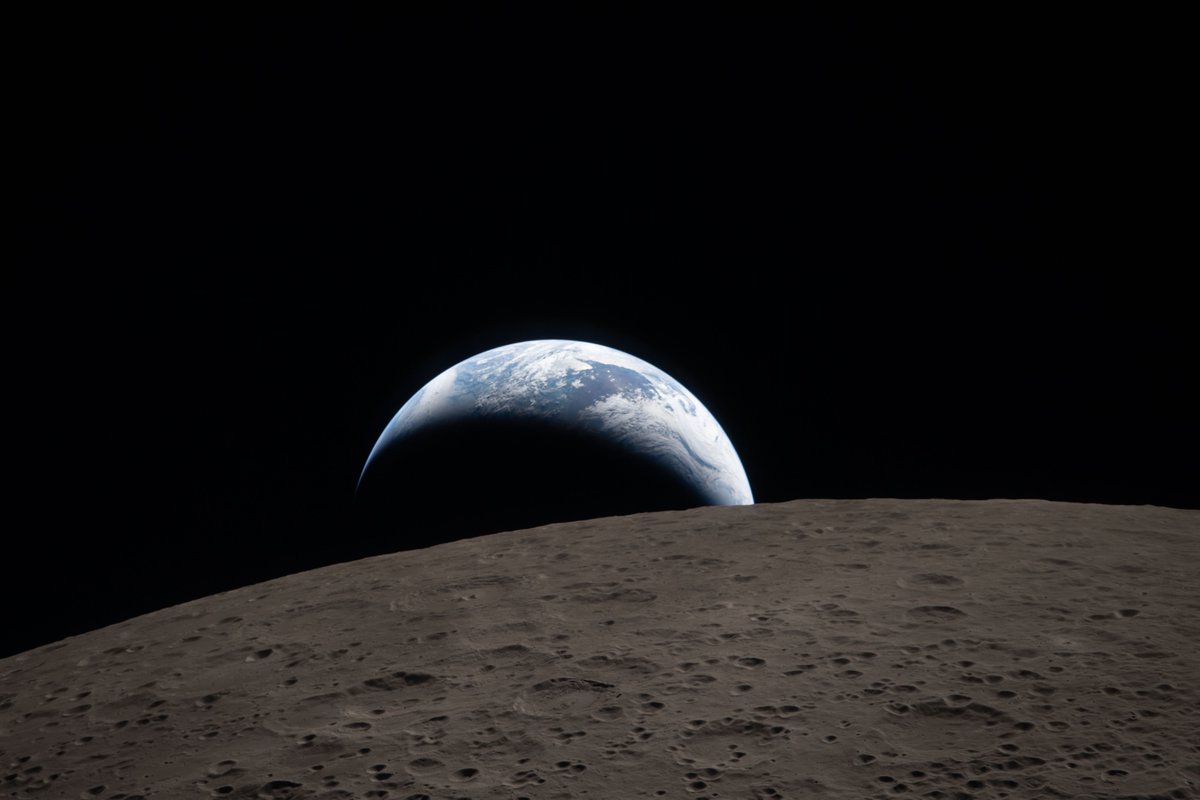
The Artemis II crew's Earthset and eclipse images are now on https://t.co/OOSOoeWeyD in full resolution:
Earthset: https://t.co/pVFle2FKFb
Captured with a Nikon D5 and Nikon 80-400mm f/4.5-5.6 at 400mm, 1/1000, f/8, ISO 400
Eclipse: https://t.co/Ig6WT3s5q1
Captured with a Nikon Z9 and Nikon 35mm f/2D at 2", f/2, ISO 1600
@mlixka@ailurus_full@KYKYPY3A_B очередной экономический кризис им не даст подключиться
если наса строит свои сверхтяжелые по чертежам еще ускорителей шатлов, то им далеко до такого
я слышал про поэтапный подход, когда сначала на орбиту выводится капсула/корабль, а к нему вторым рейсом стыкуется двигатель