@RCrespoOtero@atabraga@LatinXChem@ConMpac Thank you Rachel. I used CI-NEB method (https://t.co/hxDC6LKGzh). After obtaining initial and final systems you create 4 intermediate images and optimize them simultaneously under restraint of spring forces. Later the TS can be verified by freq calculations.
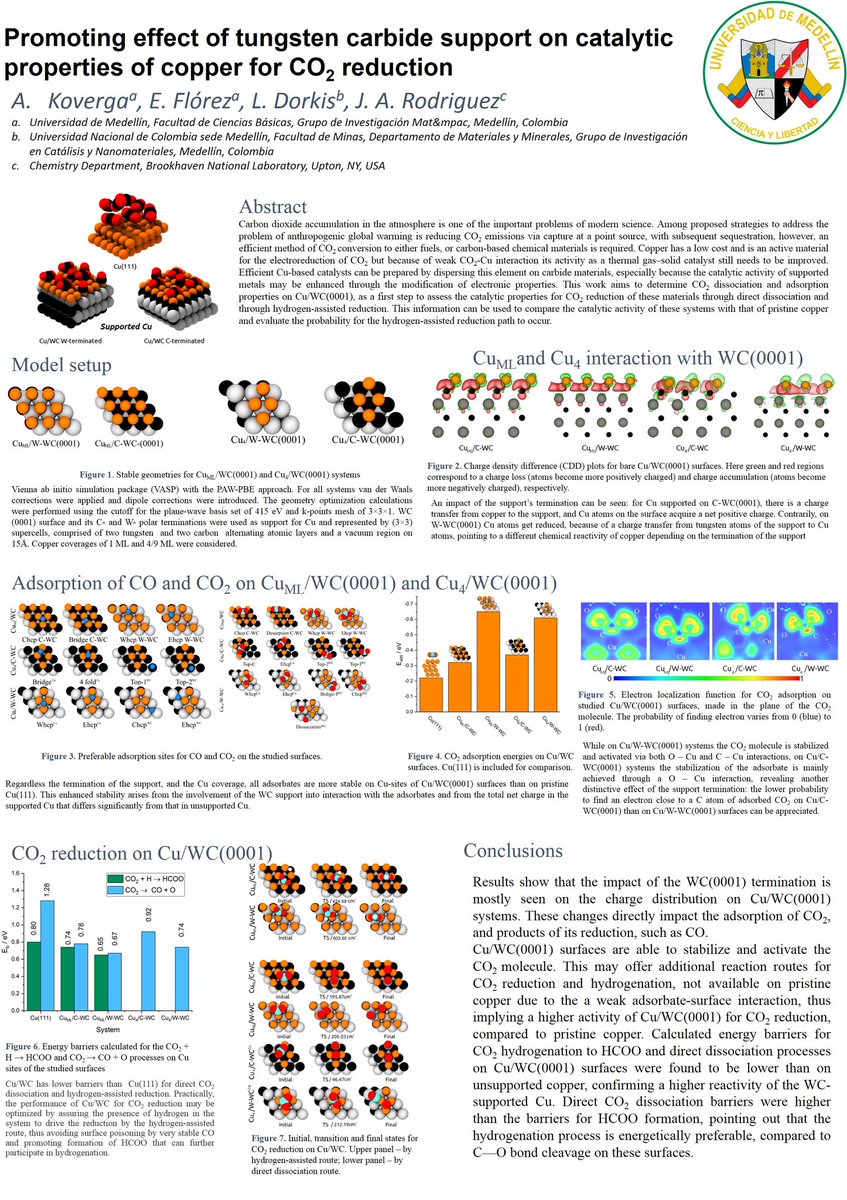
Dear @LatinXChem, this is my work "Promoting effect of tungsten carbide on catalytic properties of Cu for CO2 reduction", #LatinXChem#LatinXChemteo#Theo084#DFT#catalysis It focuses on CO2 reduction on Cu/WC by direct dissociation and hydrogen-assisted routes. Group:@ConMpac
@atabraga@LatinXChem@ConMpac Thank you for your kind words. The most surprising is the fact of CO2 stabilization on supported Cu. Concerning your last question, on pure WC(0001) CO2 adsorbs dissociatively, so not only WC impact Cu properties, but Cu "shields" too active WC support and prevents its poisoning
@KesslerPl@LatinXChem@amclabs Hi! Really cool work there. A question: why the cluster approach and not a periodic one? What is the advantage of using finite clusters?
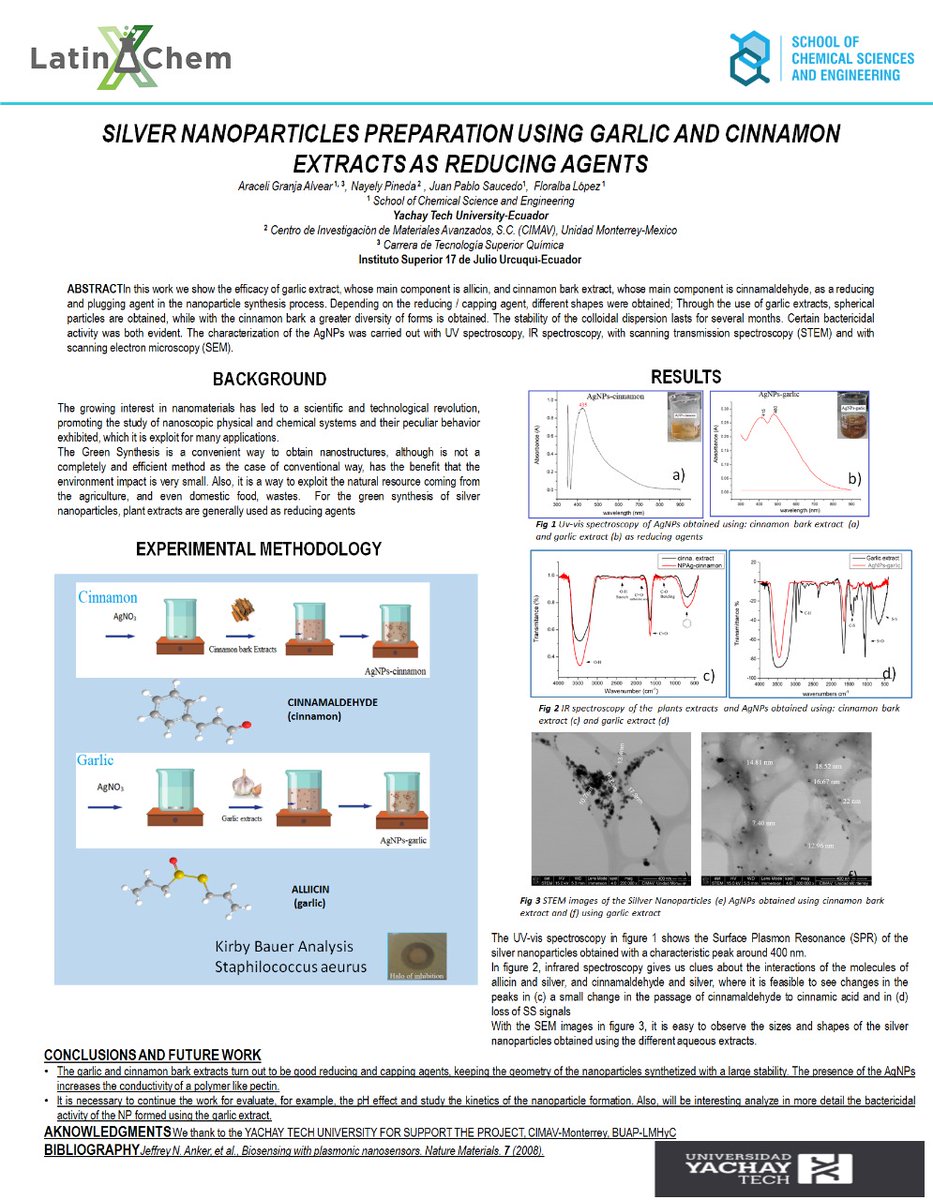
Hi, @LatinXChem, I am very excited to present my research project "Silver Nanoparicles preparation using garlic and cinnamon extractsas reducing agents", #LatinXChem, #LatinXChemNanoMat, #NANO221