Haven’t tried the updated Advanced Voice that was recently launched to all paid users in ChatGPT? Then take a listen below.
Prompt: Wish me an awkward happy birthday.
🚨 Google just flipped the script: Gemini isn’t just an assistant anymore, it’s a complete AI operating system.
At I/O 2025, Google dropped serious tools. Here’s what matters and how it could shift your workflow: 🧵
Creator uses AI to map basketball moves on the court in real-time! 🏀
🎯 Trained a keypoint detection model (33 points)
🎯 Aligned video footage using homography
🎯 Players’ exact positions → mapped perfectly on court
Next step? Detect shot motions, pinpoint shot location — all without an NBA budget.
But this isn’t just for hoops. Imagine:
Retail foot traffic 📊
Factory logistics 🏭
Warehouse safety zones 🚧
Autonomous drones ✈️
Where would you map AI vision next? 👀
Credits: Piotr Skalski
#artificialintelligence #machinelearning #aitools #aiforgood #innovation
"#AI is redefining our future, transforming networks and propelling innovation to new heights". 🚀
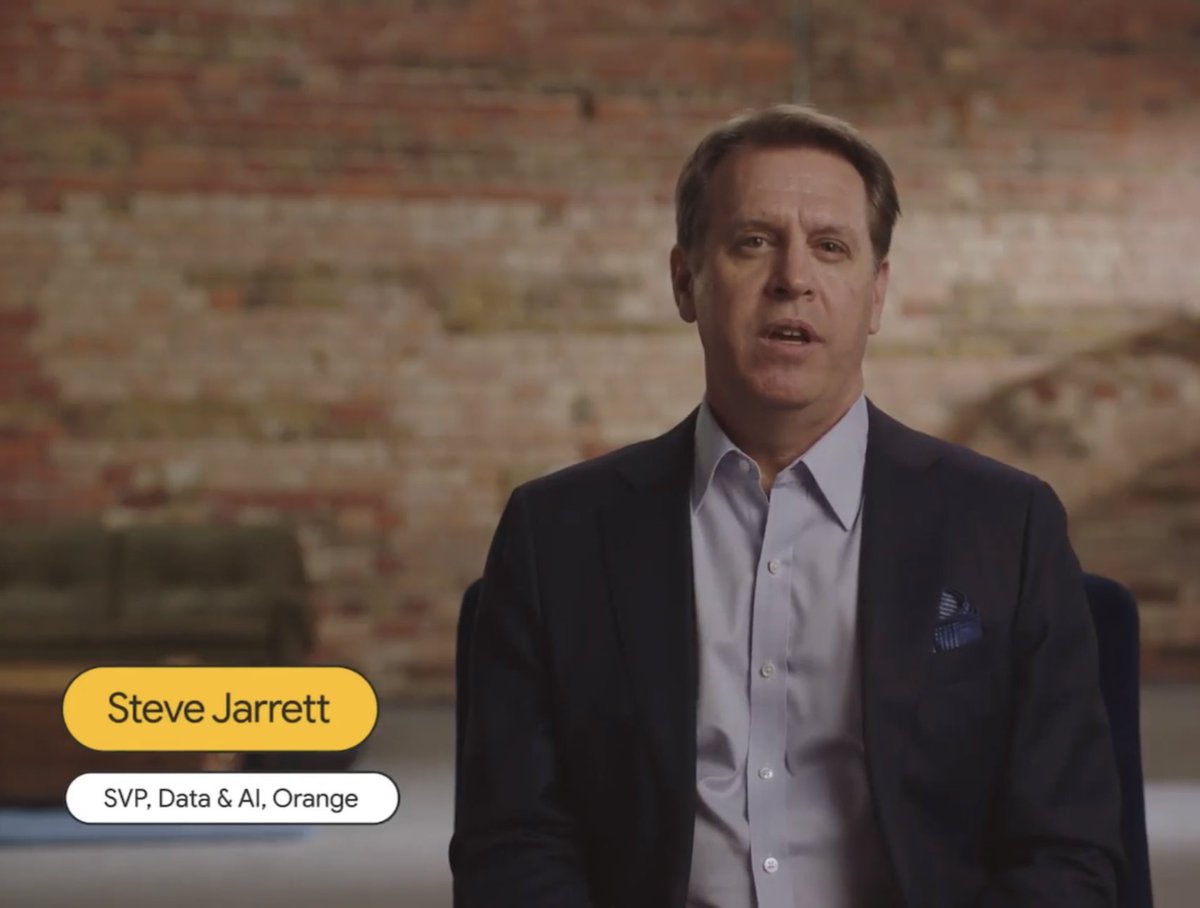
On day one of #MWC25, @SteveJarrett, @Orange's Chief AI Officer, shares his vision of responsible and inclusive AI 🤖, detailing its benefits and the Group's breakthrough innovations 🚀
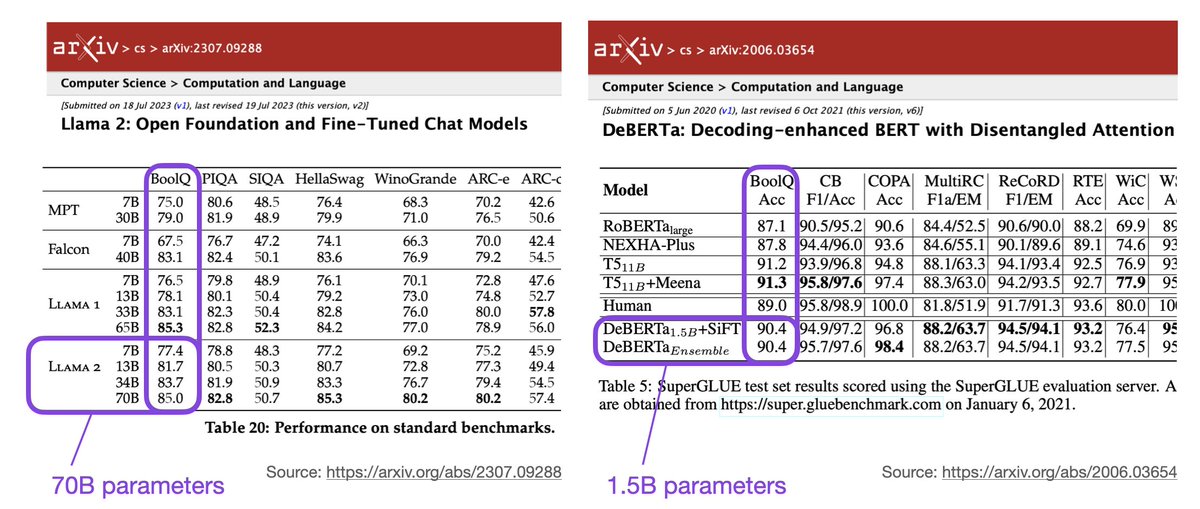
Interestingly, DeBERTa-1.5B (and encoder-only model) beats Llama 2 on BoolQ, which is a nice example that encoders still outperform large decoders on classification task.
For fairness: The DeBERTa-1.5B model was likely finetuned on the training data
1/3
Tous formés à l’IA !
👨🏻💻Formation pratique à l’IA générative pour toute l’équipe de direction Orange Wholesale pendant notre séminaire de rentrée
🔒Instance sécurisée, dédiée pour Orange, où les requêtes des salariés ne viennent pas nourrir le modèle.
👐 Ouverte à tous les salariés !
🙏 Merci à nos experts Data/IA
#IA
To Reduce AI Costs, Google Wants to Ditch Broadcom as Its TPU Server Chip Supplier via @theinformation
What's going on here:
Google is planning to end its relationship with Broadcom and design its own AI chips in-house by 2027 to save billions in costs.
What does this mean?
Google currently relies on Broadcom to customize and manufacture its tensor processing unit (TPU) AI chips. But after supply chain tensions, Google now aims to handle the full design process itself. This follows similar moves by Amazon and Microsoft to exert more control over their AI hardware. Google has already brought on more chip designers in recent years and reduced Broadcom's role. The company believes it's overpaying Broadcom by 70% for TPUs. By moving chip development in-house, Google hopes to better manage its ballooning investments in AI amid booming demand.
Why should I care?
This shift has huge implications. Google's TPUs power its AI services including search, translation and cloud offerings. Greater control over its chip supply chain will help Google advance key strategic priorities around AI and cloud while boosting its bottom line. And reduced reliance on Broadcom could give Google more leverage in negotiations. For Broadcom, losing Google's business could substantially impact its fast-growing AI revenue. The move highlights how tech giants are aggressively positioning themselves to be AI leaders.
Bring Your Own Data! Self-Supervised Evaluation for Large Language Models
paper page: https://t.co/cXVomErRBV
With the rise of Large Language Models (LLMs) and their ubiquitous deployment in diverse domains, measuring language model behavior on realistic data is imperative. For example, a company deploying a client-facing chatbot must ensure that the model will not respond to client requests with profanity. Current evaluations approach this problem using small, domain-specific datasets with human-curated labels. These evaluation sets are often sampled from a narrow and simplified distribution, and data sources can unknowingly be leaked into the training set which can lead to misleading evaluations. To bypass these drawbacks, we propose a framework for self-supervised evaluation of LLMs by analyzing their sensitivity or invariance to transformations on the input text. Self-supervised evaluation can directly monitor LLM behavior on datasets collected in the wild or streamed during live model deployment. We demonstrate self-supervised evaluation strategies for measuring closed-book knowledge, toxicity, and long-range context dependence, in addition to sensitivity to grammatical structure and tokenization errors. When comparisons to similar human-labeled benchmarks are available, we find strong correlations between self-supervised and human-supervised evaluations. The self-supervised paradigm complements current evaluation strategies that rely on labeled data.
1/ @openai & @AnthropicAI bills got you down? a new paper from Lingjiao Chen, @matei_zaharia, & @james_y_zou last week shows you can use "LLM cascades" to cut down on cost (and even improve accuracy!!)
We’re proud too, Thomas! @orange will use our new @Google partnership on #GenerativeAI to give superpowers to our 136,000 employees across 26 countries around the world. For example, we will explore how to reinvent our customer contact and support centers. We’ll share more details soon…
Thanks to you and the rest of your gifted @googlecloud team, especially @BehshadBehzadi and @gerritkazmaier as well as thanks to my boss, our Orange Group CTIO @MichaelTrabbia for his leadership and support of our many AI programs over the years as he moves to a new role at Orange.
#ai #google #GenAI #GoogleIO2023
Today at #GoogleIO2023 I am proud on behalf of @orange to announce a wide range of #GenerativeAI experimentation with the world-class team @Google to give superpowers to our 136,000 employees across 26 countries, including how we might reinvent our customer contact and support centers. We’ll share more soon.
Thanks for the great partnership @ThomasOrTK@behshad_behzadi @gerritkazmaier and to @MichaelTrabbia for your leadership and support!
A lot research you see on "ChatGPT" uses the less-powerful GPT-3.5 model, as the GPT-4 model is new.
Why does this matter? This paper tests GPT-3.5 & GPT-4 on new college physics problems. AI goes from the 39th percentile to 96: "expert-level competence". https://t.co/SjzexLxV05
LLaMA-Adapter: finetuning large language models (LLMs) like LLaMA and matching Alpaca's modeling performance with greater finetuning efficiency
Let's have a look at this new paper (https://t.co/uee1oyxMCm) that proposes an adapter method for LLaMA instruction finetuning
1/5
To do this we identified common limitations for doing research, such as training on non-public data, not releasing partially trained checkpoints, or not being able to easily know which data has been seen by which model checkpoints.
Proud of the great work we are doing across Orange in AI on Google Cloud. So many opportunities to improve our business and give our employees ‘super powers’
🧵1/8 Here is how to build a pipeline that automates the process of creating, researching, improving & finalizing an article on any topic. I used #langchain & @OpenAI, Google Search and Google News API! Let's dive in!👇
Massive Update for Auto-GPT: Code Execution! 🤖💻
Auto-GPT is now able to write it's own code using #gpt4 and execute python scripts!
This allows it to recursively debug, develop and self-improve... 🤯 👇