Introducing Low-Voltage Inference (LVI) for high throughput workloads.
Today, AI chips can't scale FLOPs without thermal throttling.
As FLOPs utilization increases, AI chips draw more power and downregulate clock speed. This often results in sustained inference throughput under half of peak FLOPs.
Chips in other industries solve the power problem by running at lower voltages. Bitcoin miners run at under 3x the voltage of AI chips!
We’ve designed a new architecture to run our chip’s math blocks at under half the voltage of most AI chips. This enables multiple times the FLOPs density of AI chips today.
We can run trillion parameter sparse MoEs at 80%+ peak FLOPs without thermal throttling.
Running LVI requires co-designing the entire cluster from the transistor to the token: new splittable math arrays, circuit techniques, novel tiling and scheduling algorithms, power delivery networks, VRM architectures, advanced packaging, cold plate designs, and more.
Getting feedback on your live website is often a struggle. I launched a small javascript library which turns your live website into a Figma style review board.
https://t.co/70RJ29UAs0
Appreciate feedback from Web Authors!
@AnthropicAI First it was AI hardware, now it is Software. We are seeing weaponization of AI tools by the governments.
Anyone looking to deploy models and must now think about sovereignty and self governance of infrastructure.
@elonmusk, now that Tesla Model X and S are discontinued, why not open source their entire design and firmware?
I'm pretty sure existing owners would love to see continued support for parts/accessories and firmware update beyond it’s mandatory lifetime.
@googlegemma Thank you Google Deepmind for constantly releasing open models! 🌟
We made Dynamic GGUFs so you can run Gemma 4 12B more efficiently: https://t.co/8cL321pVDh
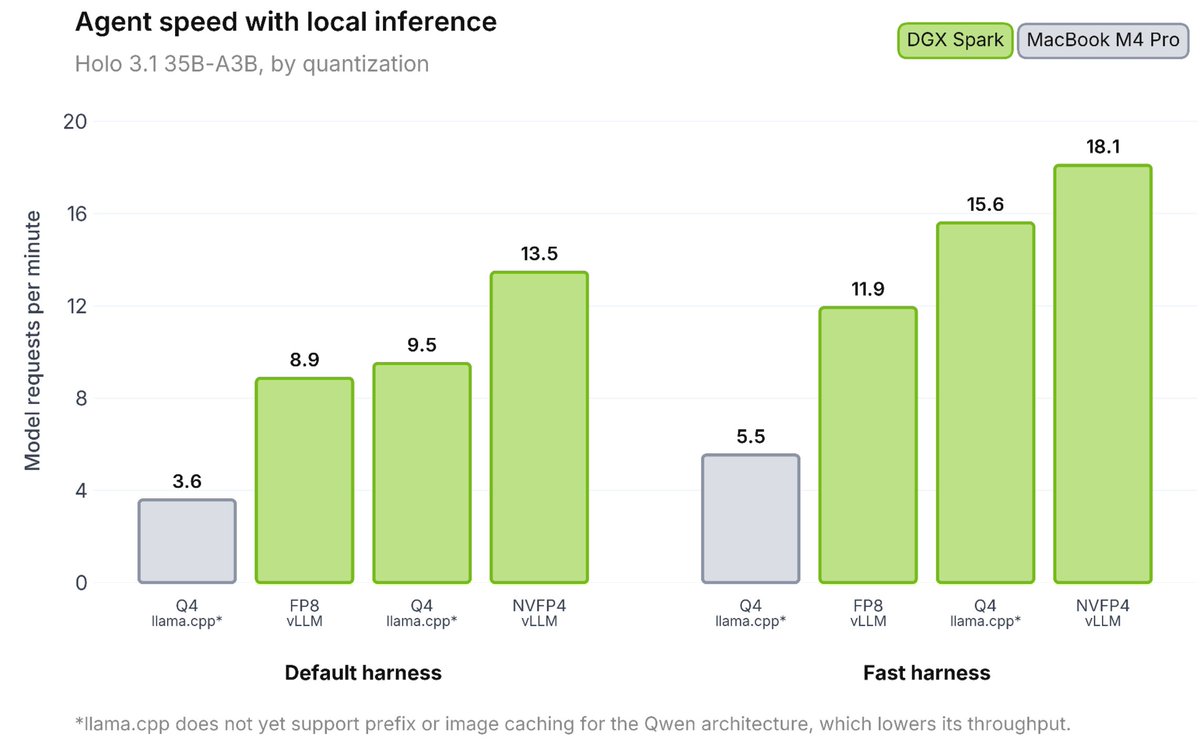
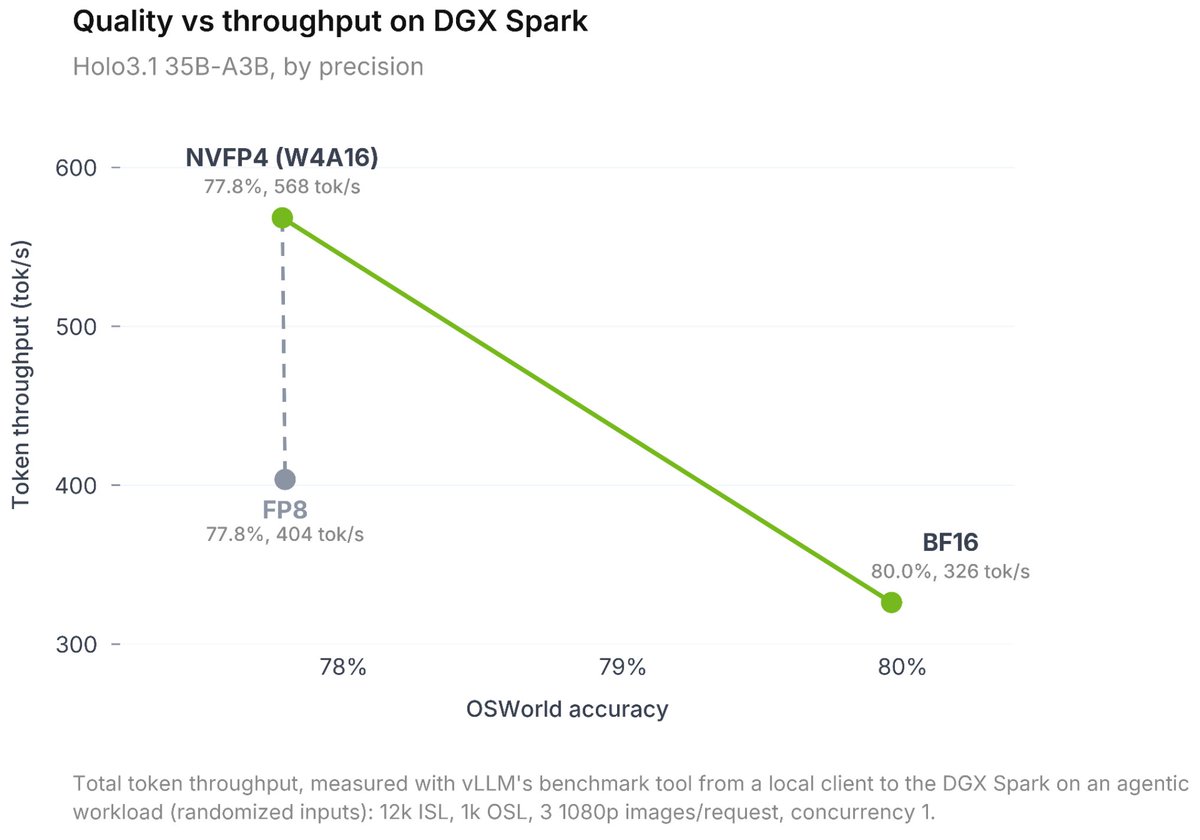
Computer-use agents are moving from the cloud to your local machine. Fast.
When we launched Holo3 two months ago, the production feedback was clear: digital agents need to be blazing fast, cost-effective, and versatile.
Today, we're dropping Holo 3.1, engineered to run anywhere, instantly.
Massive token throughput. Low latency. Ready for your local workflow!
@antirez ds4 is the best local model for my mac studio m3 ultra overall, however I keep switching to qwen 3.6 for speed. A possible improvement in decode speed will
make it super awesome
@thsottiaux I am using codex and claud side by side on the same project and same repo. They review other's work and build on top, while writing handoff guides.
hard to say but both are equally impressive in their own ways. The peer review also makes their effectiveness multiplied
@AlxTurovski@justinhammon_ Nice — there's definitely a market. I've been building LogSonic (open source, MIT) for log analysis — might be worth looking at how I handle the Go backend + Bleve search + MCP server for AI agent integration. Always good to know the landscape!
@antirez’s ds4.c made me realize that weight is not a product, inference is a product.
Expect more hyper optimized inference engines for specific LLMs in the future.
@googleaidevs Curious why validation of drafter tokens is faster than token generation itself.
If that’s true, can’t we use CPU for speculative decoding, assisting GPU even more?
Or even use large trie datasets to do speculative decoding instead?