MP-IDSA delegation led by DG @SujanChinoy had insightful interaction with TIDCO-AIDAT (Tamil Nadu Industrial Development Corporation and Aerospace Industry Development Association of Tamil Nadu) representatives on advancing the #TamilNadu Defence Industrial Corridor (TNDIC) as a catalyst for innovation, indigenous capability and defence industrial growth. Discussions focused on enabling industry-academia-startup collaboration and identifying measures to enhance India's competitiveness as a global manufacturer and exporter of defence and #aeronautics technologies and products. #Drones #UAV #aerospace
#AatmanirbharBharat #DefenceIndustry #Innovation #TIDCO #AIDAT
@DefenceDecode 1. What is roadmap for indigenisation of critical systems?
2. Is Indian partner contractor?
3. Can Indian partner manufacture more aircraft, modify, upgrade without OEM app?
C-295 is replacement of Avro which had no restrictions to modify, upgrade or develop future variants
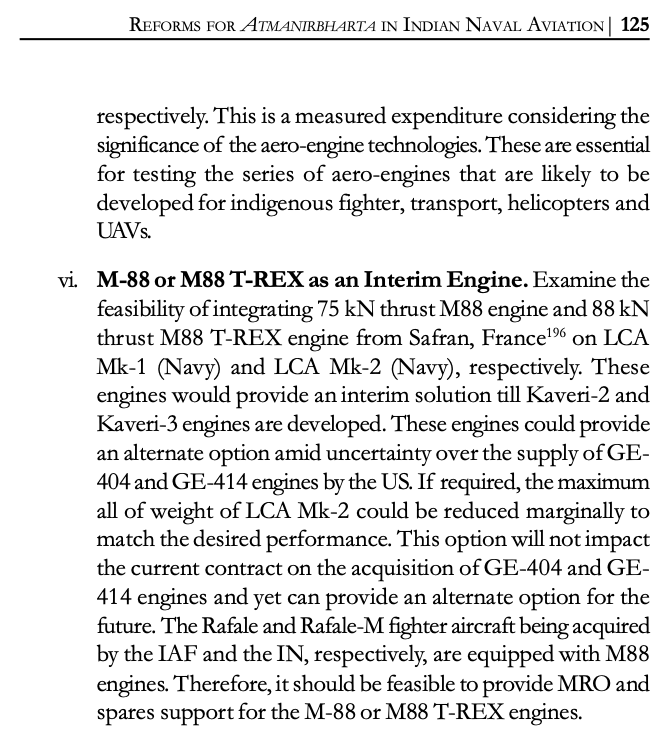
Monograph "Reforms for Atmanirbharta in Indian Naval Aviation"
deliberates on some of the issues related to Indian Naval Aviation
https://t.co/h2GZMDlYp1
(1/6)Most of the rafale bois dosnt understand RafaleM vs TEDBF issue.
They say TEDBF prog should b killed since RafaleM r comming..they miss one crucial point.RafaleM purchase is heavily influded by IAF.
Unlike Mig29K or Hornet, Frenc purposefully designed RafaleM in such away
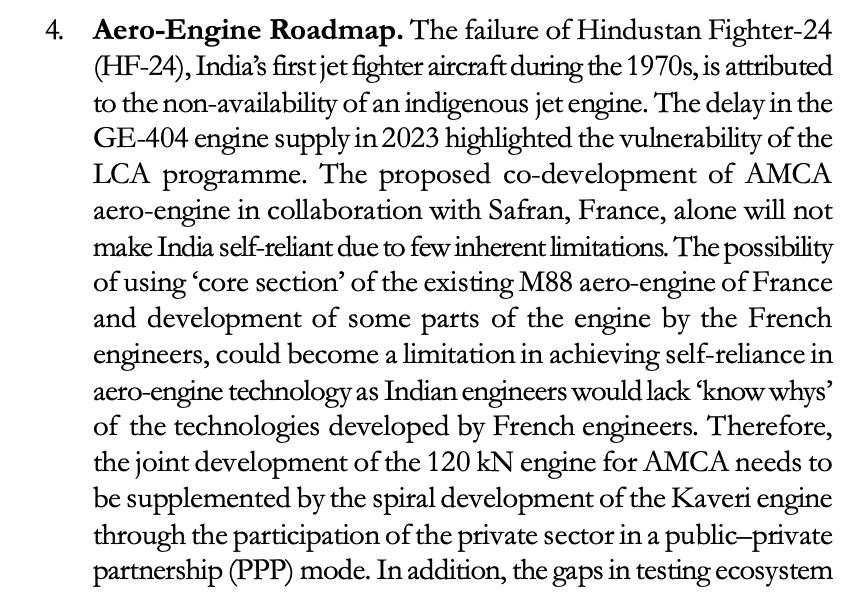
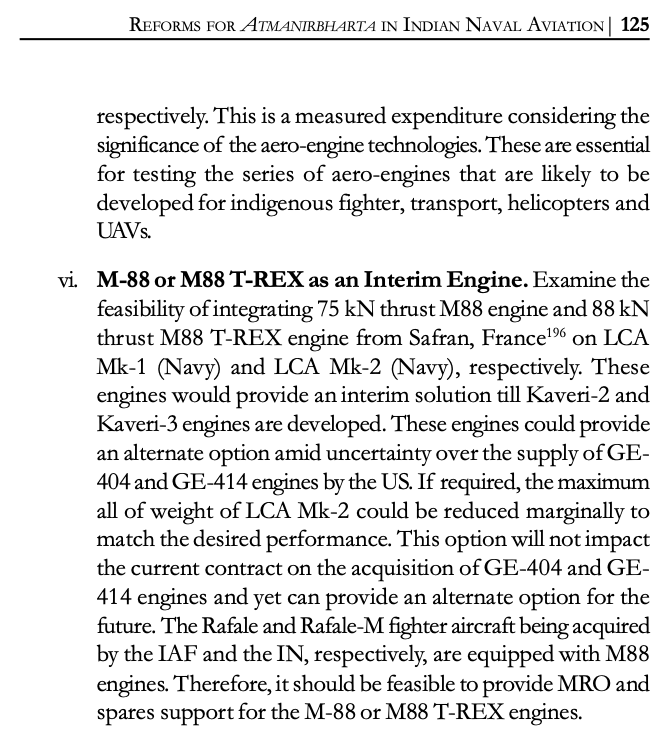
@Ahlawat2012 India's fighter aircraft program hinges on aero-engines
1. Is there a roadmap for building indigenous aero-engines?
2. Way forward section of attached monograph tries to addreess it.
DEVELOPING INDIGENOUS AERO ENGINE needs to be made top PRIORITY
https://t.co/C5W5mE2fSd
LAST Date for #MBC-3 EXTENDED to 10 JUN 26
-Details of MBC-3 for R & Innovtion on https://t.co/ljMYnr5YTf
• 'Vision Document' & template of Registration avalble on https://t.co/RLrzdK5eL2
• For Regd form mail to [email protected]@IDSAIndia@IAF_MCC@India_iDEX
@manojzxc Iran war indicated vulnerability of MQ-9 & Hermes class of UAVs.
Therefore, indigenous HALE UAV needs to have stealth features to improve survivability in contested environment.
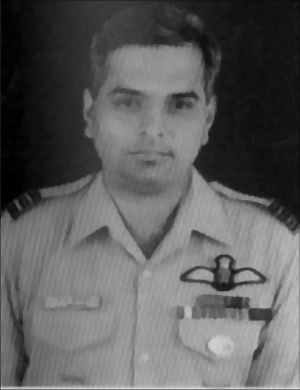
The Many Cockpits of K K Venugopal
On 3 Feb 1993, a young Flying Officer ejected from a MiG-21 Bis after an engine flameout. Three decades later, the same officer has become the first Indian test pilot elected a Fellow of the Society of Experimental Test Pilots.
That officer is Gp Capt Kolal Krishnamurthy Venugopal.
Venugopal had been commissioned into the fighter stream on 16 Dec 1989 (144 PC/ 75 NDA). The MiG-21 would remain central to his early career. He flew all variants of the type, became one of the very few MiG-21 Bis FR-qualified pilots, and later commanded No. 15 Squadron when it was operating the Bis, as its last MiG-21 CO.
His subsequent appointment as Chief Operations Officer at No. 46 Wing, Nal, was another mainstream operational role. His Test Pilot career ran alongside the hard school of fighter flying, squadron service and operational command.
Venugopal graduated from the Indian Air Force Test Pilots School in 1999. From 1999 to 2004, he was involved in in-service flight testing and also instructed at IAFTPS. The test-pilot career that followed was unusually wide.
His logbook spans the Kiran Mk I and Mk II, HPT-32, all MiG-21 variants, MiG-29, Su-30K, Mirage 2000, Jaguar, LCA, Dornier, An-32, Avro, Saras, HTT-40, HJT-36, Embraer 135/145, Gulfstream IV and V, Global Express, Falcon 2000 and 900EX, Cheetah, Chetak, and even light aircraft such as the Zenair CH 701, X-Air and Streak Shadow.
More importantly, he was associated with prototypes and development aircraft: Saras Mk 1, LCA, HTT, and the MiG-21 Type 95, effectively a Type 96 airframe with the R-25 engine (C-1501). That combination of legacy fighter, indigenous prototype and modern combat aircraft experience is rare.
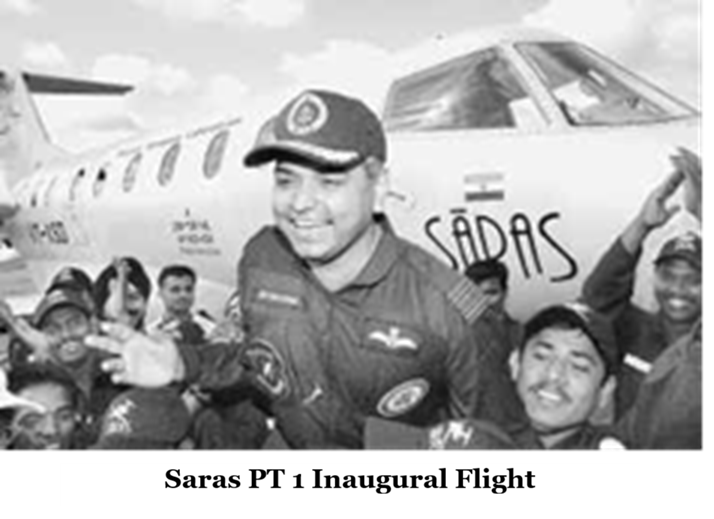
His best-known flight-test moment came with Saras.
In January 2002, ASTE was tasked with flight-testing the Saras light transport aircraft, then under development by NAL. Sqn Ldr Venugopal, already at ASTE, was chosen to lead the Saras test team. The aircraft itself was an ambitious and difficult programme: an indigenous light transport aircraft with a rear-mounted pusher-prop configuration, being taken into the air without the cushion of a mature engineering test simulator.
On 29 May 2004, the first Saras prototype took off on its maiden flight. Soon after take-off, the crew suffered AHRS and angle-of-attack indication failures, losing vital flight information. The aircraft also developed mild vibrations after a refuelling panel opened in flight. For any aircraft, this was serious. For a prototype on its first flight, it was worse.
As captain, Venugopal recovered the aircraft safely. For this, he was awarded the Vayu Sena Medal.
After a mandatory operational tour (15 Sqn, Flying Lances Command), he returned to ASTE in 2009 and became commanding officer of the test squadron. He was later assigned to the LCA Mk I programme, undertaking developmental flight tests across fly-by-wire, autopilot, weapon systems, brakes, core avionics and other areas.
In 2016, he retired voluntarily from the IAF and joined HAL, where he became Executive Director and Chief Test Pilot for fixed-wing aircraft. At HAL, he led the HTT-40 turboprop trainer programme, conducted the prototype's first flights and the full spin campaign. He also undertook spin testing of the modified HJT-36 and oversaw its revival. Since 2021, he has led the LCA Mk IA upgrade programme, including the prototype's first flight, weapon integration, and capability-enhancement testing.
By now, Venugopal has over 3,000 hours in flight tests. He has participated in every Indian fixed-wing programme since 1999 and led four of the five. His election as an SETP Fellow now places an Indian name at a rare level of recognition in the global test-flying community. Not many Indian aviation careers connect so many worlds.
#IAFHistory @IAF_MCC@HALHQBLR
https://t.co/c33jF84o2e
@IAF_MCC launched Mehar Baba Competition-3 (https://t.co/HE9KHNSwiX)
Registration commencing on 27 Apr 26
'Vision Document' at https://t.co/HE9KHNSwiX
Aims at innovations in adv Drone & Radar tech
@IDSAIndia@CAPS_INDIA@India_iDEX@Director_IITK
6th Engine was not arrived. 5th Engine was delivered 156 days back. While HAL is scaling up production of Tejas airframes wit a target of 16 this yr,they r left wit no enignes. V should hav spent last 10yrs,since CAATSA came into force, redesigning our fighters around Rus engines