📈Knee arthroplasty in OECD countries has hit a tipping point
New study by Backes, Pabinger, Lothaller & Geissler tracks 25 countries over 17 years and found that patients under 65 now make up >50% of all procedures - up from ~37% in 2005.
Read for free: https://t.co/YnjhXh1NYz
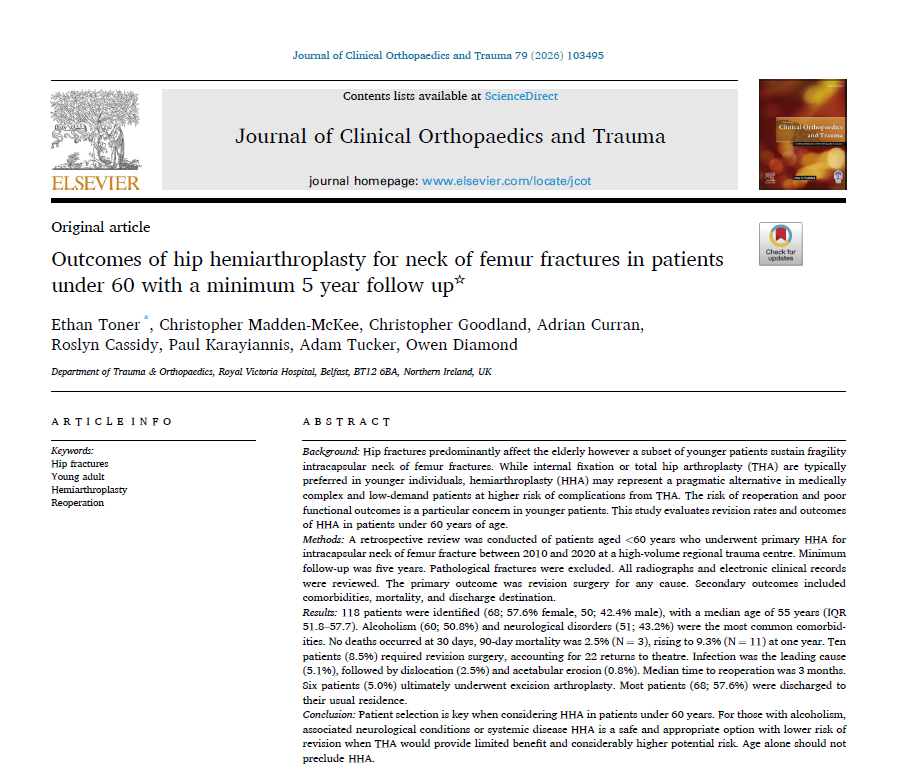
Check out our latest publication in the Journal of Clinical Orthopaedics and Trauma showing that patient selection is essential when considering hip hemiarthroplasty in patients under 60 with a hip fracture:
Link here: https://t.co/MYGRwTMnqa
Your knee is a living, biologically active organ. Cartilage is maintained by cells that respond to their chemical environment, and the primary driver of OA progression is not mechanical grinding.
It is chronic, low-grade inflammation that poisons the environment in which those cells are living.
So we need to stop thinking mechanically and start thinking more biologically. Our cartilage responds favorably to the same stimuli that improve our overall health and wellness.
This is precisely why high intensity exercise in moderate OA (grade 3 of 4) decreases pain and actually increases cartilage thickness.
🆕"This scoping review aimed to provide an overview of the current criteria for a safe and successful RTP used in ⚽️ after a time‐loss MSK injury"
➡️Clinical exam, strength, functional & performance testing
👉@DrPeterEppinga et al, 2025 🇳🇱
📂Open Access: https://t.co/z4eKm5Ooxi
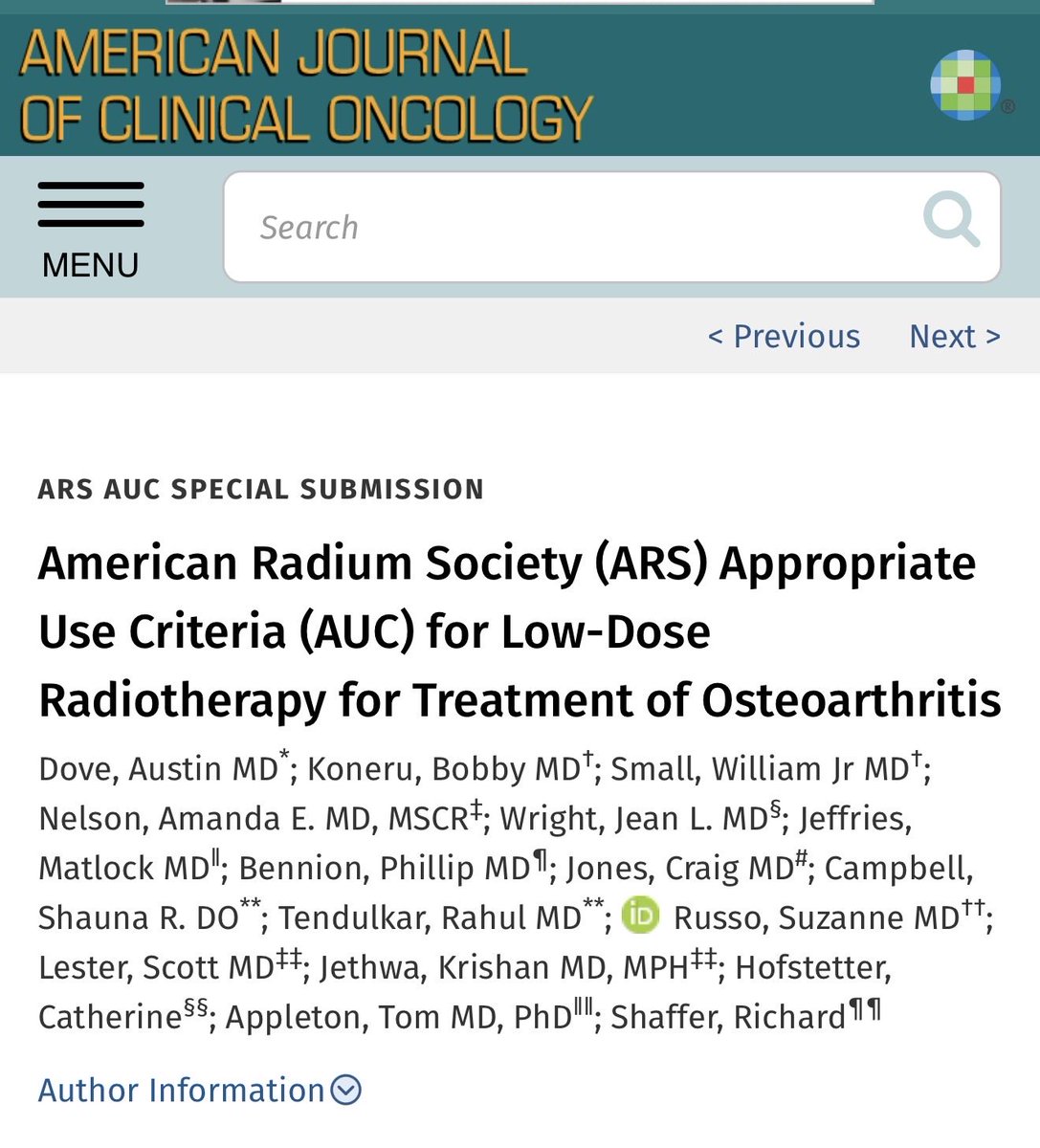
🚨The first American guidelines for low-dose radiotherapy in osteoarthritis were just published.
That’s not a small thing.
For decades, European centers have been treating OA with low-dose RT. American patients largely couldn’t access it. No formal guidance. No insurer framework. No roadmap for referring providers.
That changes today.
The American Radium Society Appropriate Use Criteria, published in the American Journal of Clinical Oncology, define exactly when and how to use LDRT for OA. Radiation oncologists, rheumatologists, physiatrists, and orthopedic surgeons built this together.
For insurers, this is the clinical framework they’ve been waiting for.
Honored to be a co-author alongside the global experts who made this possible.
Trochlear shape matters. After a lateral patellar dislocation:
• Normal trochlea → lower recurrence risk (≈5–15%)
• #Trochlear#dysplasia → significantly higher recurrence risk (≈30–50%)
A flatter groove provides less bony stability for the kneecap. https://t.co/laUnmHtz2o
We explored whether inflammatory biomarkers in blood and cerebrospinal fluid were associated with clinical outcome, and baseline pain or disability, 12 months after THA.
#Hip#Arthroplasty#Inflammation#Patients#BJR
https://t.co/Vf0F3aJgg6
Proud to see MACP expertise contributing to this new NHS sciatica support video for patients experiencing back and leg pain.
Huge well done to the MACP contributors involved:
👏 Komal Bhuchhada (@PhysioKVB)
👏 Dr Colette Ridehalgh (@Cr19Colette)
👏 Chris Mercer (@Mercephysio)
👏 Dr Tim Noblet
And to James Hayward and colleagues from the NHS clinical team.
🎥 https://t.co/k6THlbrYGl
Read more:
https://t.co/CTU1DHPJb4
#physio #MSK #Sciatica
NEW WEBINAR | GIRFT National Review – Community MSK Rehabilitation after Joint Replacement
A new national survey led by the Getting It Right First Time (GIRFT), in collaboration with the British Orthopaedic Association, Chartered Society of Physiotherapy and Edge Health, has highlighted significant variation in community MSK rehabilitation following hip and knee arthroplasty across England’s surgical hubs.
Key findings show variation in referral pathways, time to assessment, rehabilitation provision, return-to-work support, and access to digital rehab tools—underlining the need for more consistent, equitable post-operative care.
Join us for an interactive webinar presenting the national findings and best practice case studies from leading NHS Trusts.
📅 Wednesday 3rd June 2026
🕧 12:30pm – 13:30pm | Online
👉 Find out more and register: https://t.co/TuIK370MKJ
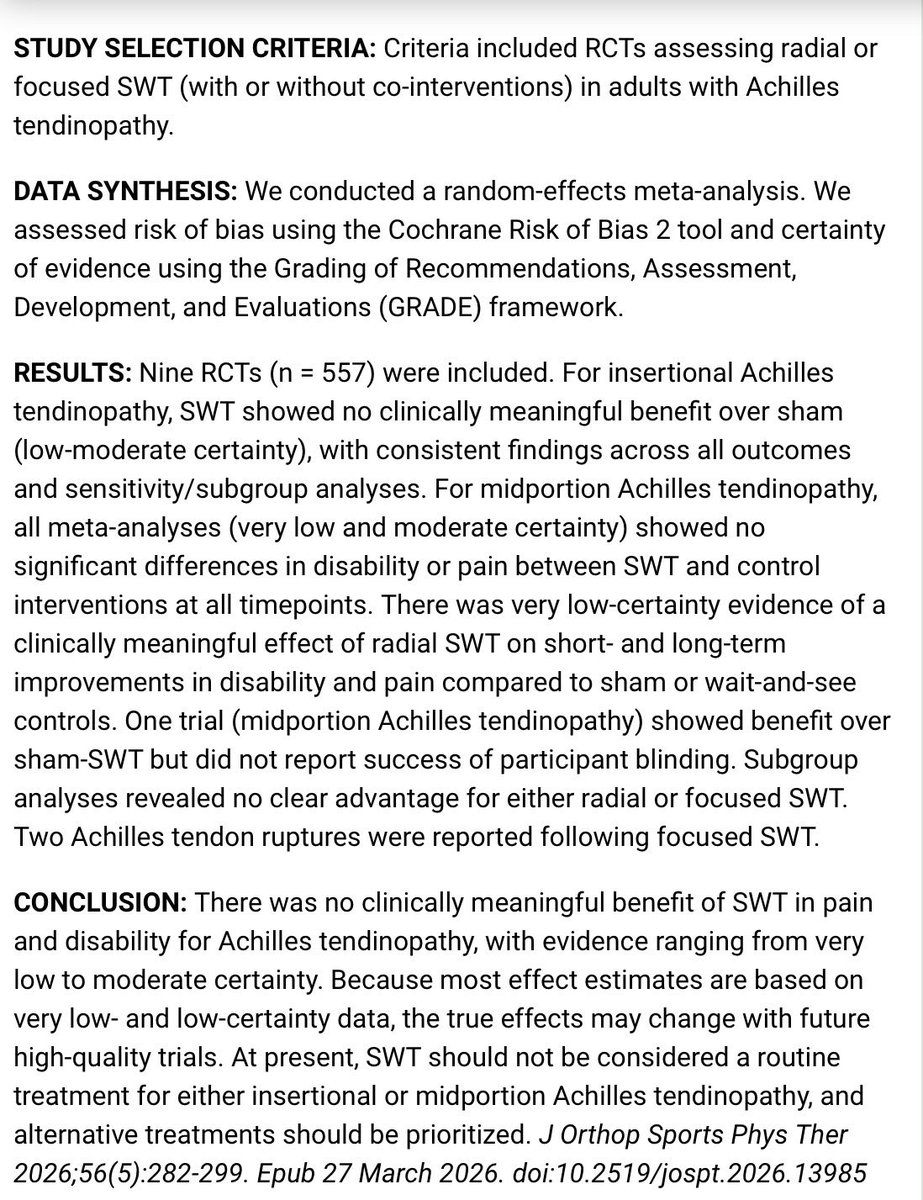
Shockwave Therapy for Midportion and Insertional Achilles Tendinopathy: A Nail in the Coffin? A Systematic Review With Meta-Analysis
https://t.co/T4yNVh3fW3
At present, SWT should not be considered a routine treatment for either insertional or midportion Achilles tendinopathy
🚨 Sit-to-stand test emerges as a powerful prognostic factor of future health outcomes 📈
Different versions, measurement properties and future perspectives 🤔
NEW #BJSMEditorial 📄
Link ➡️ https://t.co/TSvKARHmvF
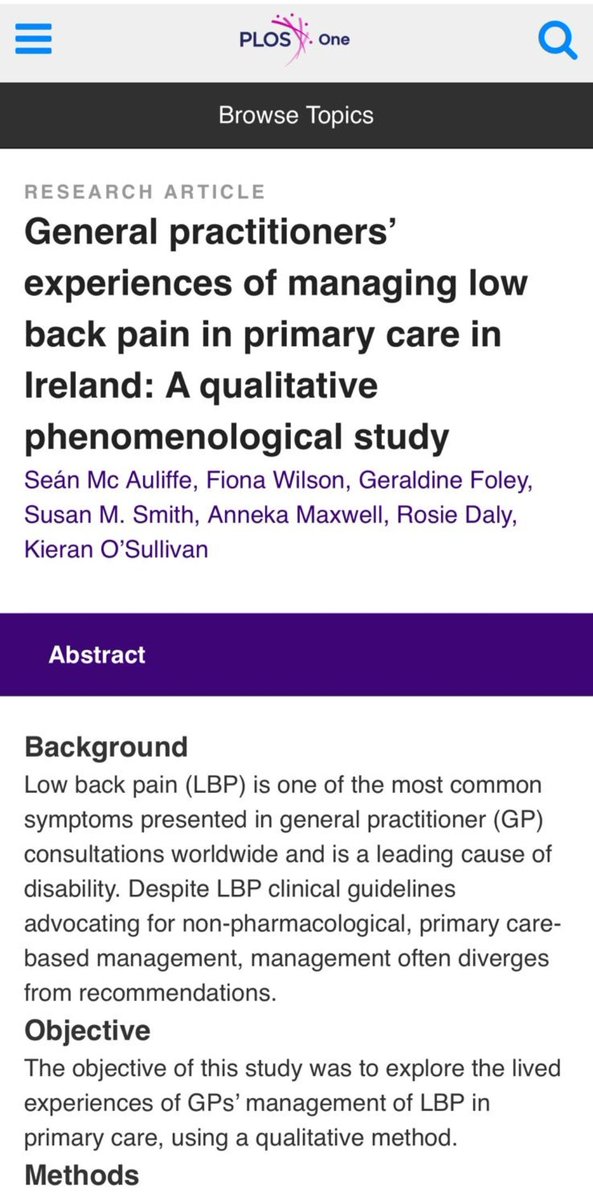
Very interesting study on GP experiences in the management of LBP by @Seaniemc89 et al.
The themes of
➡️High work loads
➡️Managing patient expections (imaging)
➡️Limted access to MDT/physio
Highlight a very real and current challenge for frontline GP's.
#lbp#gp#irishgp
Are Most Rotator Cuff Tears Actually Tears?
This topic is far, far more complicated than most think... and it's certainly far more complicated than the discussion in most office visits portrays.
1/
If you have a rotator cuff tear on an MRI report, almost everything you have been told about it is more wrong than right.
A short thread on what the cuff actually is, why most "tears" aren't what you think, and why surgery is rarely the right first step.
In our latest paper we make a case for treatment pluralism. This reflects the state of the evidence and hopefully allows us to move beyond toxic debates about treatments that rarely lead to progress but in fact regress to name calling and tribalism.
https://t.co/CqYaPaVtY4