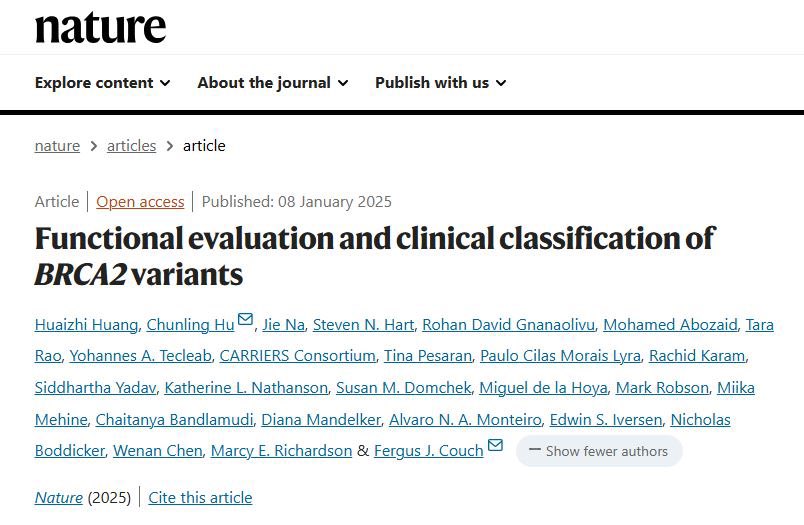
A dream come true- published in @Nature
Using CRISPR–Cas9, we analyzed the functional effect of >6500 missense Variants of Uncertain Signficance (VUS) lBRCA2, and reclassified >90% of variants as pathogenic, likely pathogenic, benign, or likely benign. This work changes the landscape of VUS in BRCA2, providing clinically actionable results to patients to guide risk management strategies or treatment with targeted therapies such as PARP inhibitors.
I am immensely grateful to my mentor, Dr. Fergus Couch, for this opportunity, and many thanks to @ConquerCancerFd , Mayo Clinic K12 grant, Halt Cancer at X and @MayoCancerCare Breast and Ovarian SPORE for supporting my work.
Link to the article (Open Access):
https://t.co/Hrdebx9f85
Press release from Mayo Clinic:
https://t.co/WDhjs2EWpF
Molecular Endocrinology Laboratory (MEL), Department of Endocrinology, CMC, Vellore, India.
Our new facility, along with the PacBio ONSO NGS system, was inaugurated by Dr. Meredith A. Hawkins, Professor of Medicine (Endocrinology), Albert Einstein College of Medicine, NY, USA.
@sbarnettARK Hi Simon, I do agree that LRS may improve with time. However, do you know the percentage of HiFi data generated using PACB? If you know this accurately you would realize PACB has a long way to go !!