I’m going to take my time with this one. If you’re busy, save this post and read it later. If you’re a night owl like me, this is a good late-night read.
Do you know the worst thing about Cristiano Ronaldo?
It’s that he set the standards for what defines a legend… and in the end, he couldn’t even live up to the standards he created himself.
After winning Euro 2016, Ronaldo said:
“You can’t become a legend until you win a trophy with your national team.”
It was an obvious dig at Messi.
Argentina had just lost the 2014 World Cup final to Germany, and Messi was going through the toughest period of his international career. Those words only added fuel to the fire.
Where was the respect for a rival, Ronaldo?
The surprising part was that social media completely embraced that narrative. Messi was labeled a bottler, while Ronaldo was declared the winner of the rivalry—at least in the media, not on the pitch.
Then Messi retired from international football, came back, won the Copa América, and suddenly they were level in major international trophies.
What happened next?
Ronaldo fans started saying that one Euro is worth more than a hundred Copa Américas, claiming there was no competition in South America. Not true—but that became the excuse.
Then Messi went on to win the World Cup.
This time, the excuses changed again.
They claimed FIFA had fixed the tournament for Messi. That the World Cup was scripted in his favor. They simply didn’t know what else to say.
Then Ronaldo himself came out with one of the strangest quotes imaginable:
“A legend’s career can’t be defined by just seven games.”
At first glance, it sounds reasonable.
But beneath it was another attempt to diminish what Messi had achieved.
Before the World Cup, they insisted it would be Ronaldo’s tournament. On paper, Portugal had a fantastic squad. If the manager couldn’t get the best out of them, that’s Portugal’s problem—not Ronaldo’s.
Yet that same Portugal squad wasn’t any weaker than the Argentina team Messi led to the 2014 World Cup final—the same team people mocked Messi for not carrying to the title.
Just a couple of days ago, Ronaldo said:
“The World Cup doesn’t define my career, whether I win it or not.”
A statement that directly contradicts what he had said years earlier, when he admitted that winning the World Cup would make him feel completely fulfilled.
Now you’re 41 years old, Cristiano.
By your own standards:
* You have 5 Ballon d’Ors, not 8.
* You have one European Championship, not two Copa América titles.
* You never won the World Cup.
* You have four European Golden Shoes, while Messi has six—even though you’re an out-and-out striker.
So what now?
Will you keep playing until the next World Cup and become the first player to appear in one at 45, hoping to finally win it?
If we judged you by the standards you created, you wouldn’t qualify as a legend.
Of course, nobody actually judges you that way. Everyone still recognizes you as one of football’s greatest legends.
The real mistake was comparing Ronaldo to Messi in the first place.
That rivalry was exaggerated from the beginning by the media and figures like José Mourinho.
Messi conquered every major trophy available to him, shattered records that once seemed untouchable, and at 39 years old he’s still competing with Kylian Mbappé and Erling Haaland—the stars of the next generation—for the Golden Boot. And honestly, he could still win it.
What made Messi beloved by so many fans is that he never tried to diminish Ronaldo’s achievements.
Ronaldo, on the other hand, repeatedly made comments that many interpreted as attempts to downplay his greatest rival’s accomplishments—and that’s never an admirable trait.
Cristiano helped create a generation that thinks belittling other people’s achievements while constantly glorifying your own is a way to establish dominance.
Good bye. Ronaldo.
In 2016, during my college days, a story from Malayalam Manorama stuck with me.
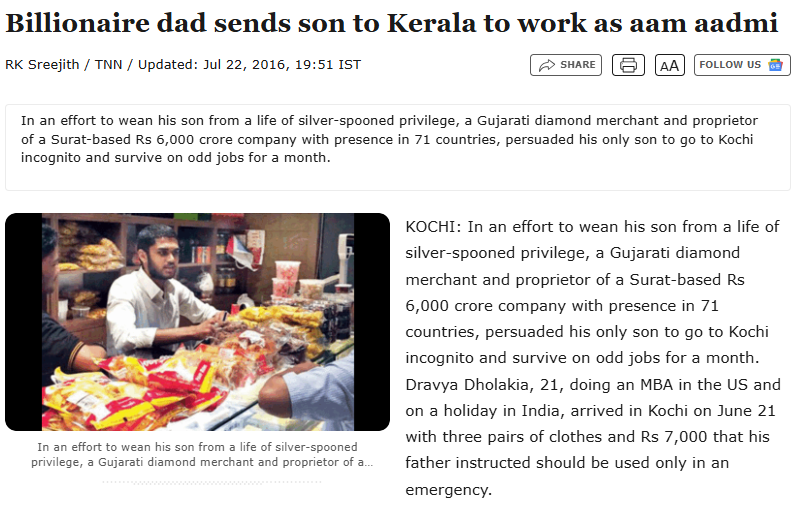
Savji Dholakia, a billionaire diamond merchant from Surat running a ₹6,000 crore empire, sent his 21-year-old son Dravya Dholakia to Kochi with just ₹7,000 and three conditions, he could not work in the same place for more than a week, he could not use his father's name, and that money was strictly for emergencies.
Dravya spent his first five days without a job or a place to stay, got rejected by around 60 places, and eventually found work at a bakery just to survive.
Why would a billionaire put his own son through this?
Because Savji Dholakia knew he did not build a ₹6,000 crore empire in comfort. He built it through hardship, and he wanted his son to feel the weight of that.
When I came across this story recently, it immediately connected to a conversation I had with Alex K Babu, founder and chairman of Hedge Equities Ltd, on the Kerala Product Hunt (KPH) Podcast.
There is a famous Japanese saying: "Rice paddy to rice paddy in three generations."
It is a saying about the third generation curse, the idea that what the first generation builds from nothing, the third generation loses entirely.
The first generation usually builds from scratch by going through hardships, taking risks, and facing uncertainty to build from almost nothing.
The second generation then steps in to expand the foundation, protect it, and make the business stronger.
However, by the time it reaches the third generation, comfort slowly enters the picture, killing responsibility.
This is why wealth rarely survives three generations, not because wealth disappears on its own but because the mindset that created that wealth is not always passed down.
The next generation might inherit the wealth and surname, but they do not always inherit that hunger, discipline, and responsibility.
According to Alex, "Complacency starts when everyone becomes comfortable and happy with what they already have."
This is why he believes families must keep putting challenges in front of the next generation, not to make their life difficult, but to ensure they keep thinking, moving, and creating.
Wealthy families often challenge their children more because they understand the danger of comfort, wanting the next generation to build something of their own instead of depending on ancestral wealth.
People who built something big from the ground went through hardship, and that hardship gave them the hunger to build empires.
And for that hunger to survive into the next generation, they need challenges that force them to think, take responsibility, break their own limits, and create something for the future.
See the goal is not to deny comfort, it is to make sure comfort does not kill growth.
Because in the end, legacy should never become a comfortable place to sleep, but rather a responsibility to continue building further.
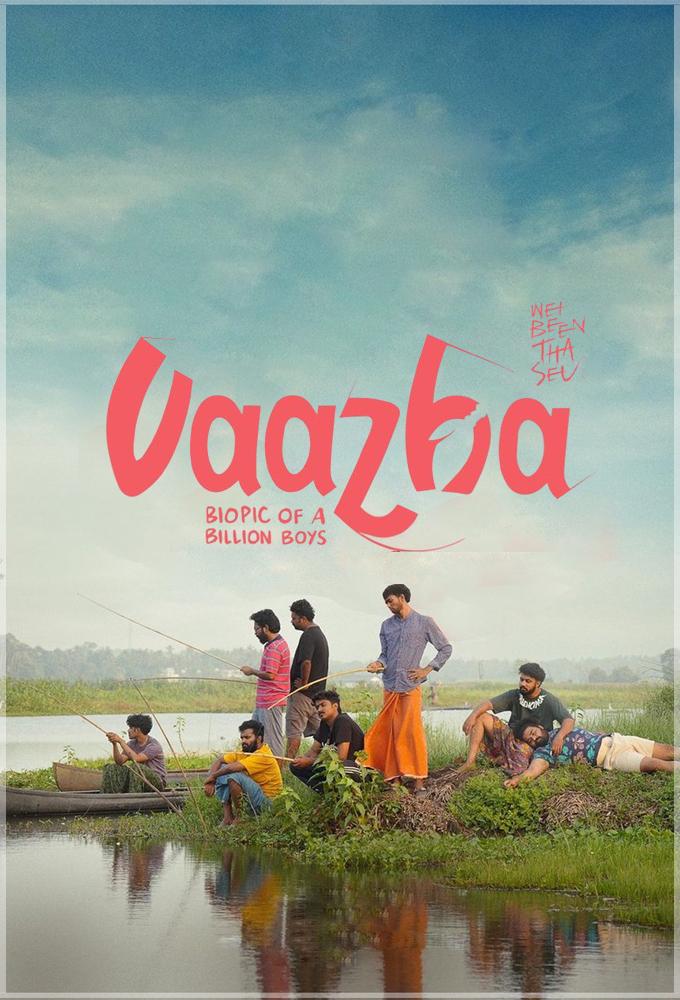
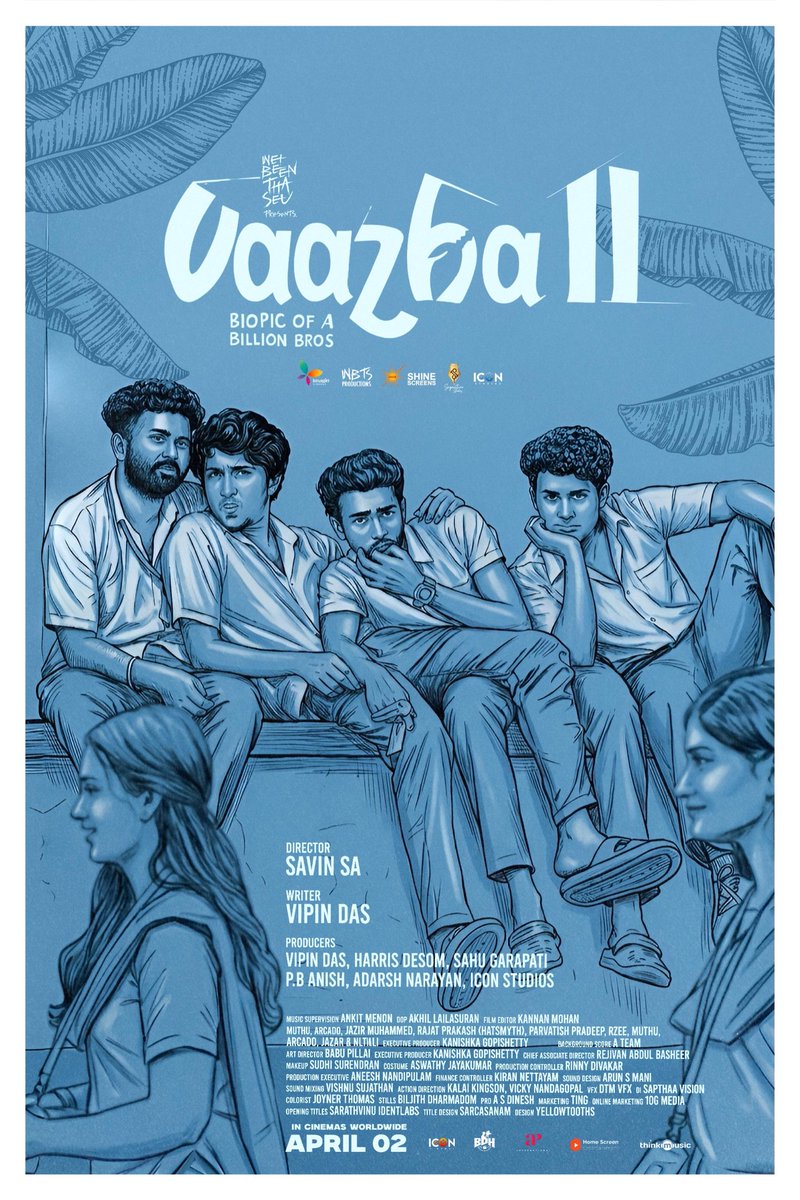
Dear Friends, please help this message reach the makers of the malayalam movie Vazha 2. It is long, but very important.
A recent malayalam movie, called Vazha 2 portrayed a character who keeps consuming ayurvedic medicine -(arishtam, a herbal liquor, with 10-15% alcohol, which Ayurveda practitioners blindly claim to have "health benefits")- and ends with serious fatal liver disease.
The people behind the movie are intelligent and well-informed. For decades, the Ayurveda community has been feeding public and patients the narrative that herbal medicine is safe and effective, even the ones containing toxic botanicals and alcohol. This narrative is now being challenged because there is a large body of peer-reviewed evidence that without reasonable doubt show that Ayurvedic herbals can be extremely toxic to the liver, sometimes even leading to death or liver transplantation. Now the movie format is bringing this to public's notice.
My most impactful publication on this was literally about a 14 year old girl developing severe alcohol-related hepatitis due to long term use of PRESCRIBED ayurvedic herbals (the same category mentioned in the movie) for epilepsy management.
Published paper: https://t.co/m1xklJH4eh and media report: https://t.co/8P6BKsEyLM
There are also other reports that show ayurvedic herbals can cause cirrhosis (https://t.co/bVhEfxm7N6), severe liver injury (https://t.co/DUM6upItUL, https://t.co/7vus6pBDQi), liver failure (https://t.co/XWRkbH9H4q) and death (https://t.co/oJcSFUi2eD).
Analysis of Ayurvedic herbals - classical formulations, proprietary herbals as well as traditionally prepared ones have consistently shown alcohol, liver toxic botanicals, liver toxic heavy metals and organ damaging adulterants (https://t.co/t8EzBeDS9S). Ayurveda is a harmful pseudoscience which which even global experts agree with (https://t.co/maJjdzYffe).
Now, the Ayurveda Medical Association of India (AMAI), which is in fact, a third rate society of Ayurveda practitioners and the herbals manufacturing companies that they are in cahoots with, has served legal notice against the movie writers and producers. They have threatened further action if the specific segment in the movie was not removed.
The same AMAI group sent complaints against me to the police, Courts and also Prime Ministers Office also when I published peer reviewed papers on harms of Ayurvedic herbals. They could not even scratch my epidermis with all of that legal drama, because science wins. Evidence shines.
These so-called Ayurveda Practitioners are losing business because public is realising that their products and services are one, useless (no evidence) and now two, dangerous also (more side effects than beneficial effects). An existential crisis is looming over their quackery business.
I would like to offer my complete and highest level of academic expertise and support to the makers of the movie Vazha Part 2 to fight these cheap, fragile ego suffering so-called alternative medicine practitioners (SCAM) of Ayurveda who think they, and their unscientific businesses are above evidence based medicine and public health.
DO NOT. I REPEAT, DO NOT, modify or remove anything from the movie. It is perfect and a huge needed public health activism. Keep up the good work! Do not bow down to any legalized glorified quacks!
And for everyone here, watch both parts of Vazha movie. It is brilliant and worth your time and money.
- The Liver Doc
abbyphilips(at)theliverinst(dot)in
🚨 Gavi on Paris Saint-Germain links: “People can believe the stories but that won't happen. I'm calm here”.
“My dream and ambition is to stay at Barcelona my entire career. It's the club of my life. I will do everything possible to stay here”, told @mundodeportivo.
Barca had lost 4-0 away from home
Barcelona was 5-3 down at home on aggregate
Messi was tired, Suarez had given up, Enrique was confused
The pressure rested on 25 year old Neymar!
Barca had lost 4-0 away from home
Barcelona was 5-3 down at home on aggregate
Messi was tired, Suarez had given up, Enrique was confused
The pressure rested on 25 year old Neymar!