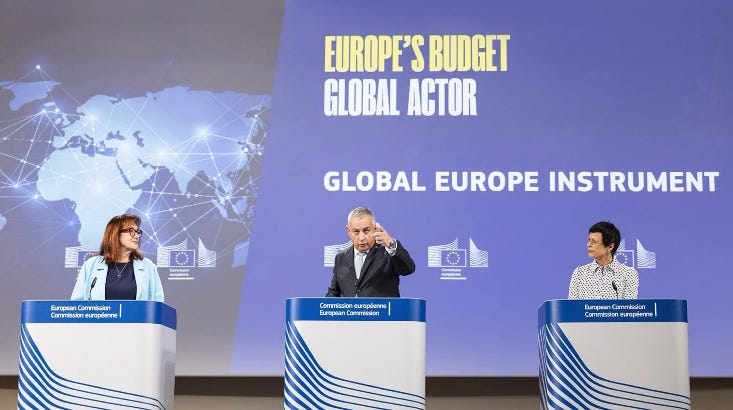
In this piece, I examine how governance and accountability gaps in the EU’s Global Gateway under the proposed 2028–2034 MFF risk undermining the EU’s credibility and the sustainability of its partnerships, including in the Southern Neighbourhood.
https://t.co/FPbh1iiqm3
@vonderleyen Civil society is keen to see @EU_Commission's assessment of #Egypt's fulfillment of the MFA political precondition.
It seems COM found some #HumanRights/#democracy/#RuleOfLaw progress in #Egypt to justify release of a new tranche of funds?
We haven't https://t.co/Se4rv9fgCw
قبل ساعات من صدور الحكم في قضية الكاتب والناشط أحمد دومة، تتجدد الأسئلة حول واقع حرية التعبير في مصر وحدود الحق في إبداء الرأي والانتقاد.
يواجه دومة اتهامات على خلفية كتابات وآراء نشرها بشأن الشأن العام وأوضاع الاحتجاز، في قضية أث��رت اهتمامًا حقوقيًا واسعًا لما تحمله من دلالات تتعلق بحرية التعبير، واستهداف الأصوات الحرة والمعارضة السلمية، وضمانات المحاكمة العادلة.
لإلقاء الضوء على الأبعاد القانونية والحقوقية لهذه القضية، تحدثنا مع المحامي الحقوقي البارز خالد علي @Khaledali251، عضو هيئة الدفاع عن أحمد دومة، حول مسا�� القضية، وأبرز الملاحظات القانونية التي رصدها الدفاع، وما تعكسه هذه المحاكمة بشأن واقع الحقوق والحريات في مصر.
للإطلاع أيضًا على ورقة موقف حول القضية https://t.co/cexDPnnLFq
بيتر ماجيار، عضو البرلمان الأوروبي وزعيم حزب “تيسا” المعارض في هنغاريا، الذي حقق فوزاً سياسياً كبيراً أنهى 16 عاماً من حكم فيكتور أوربان—يُقدَّم اليوم كت��ول مهم داخل أوروبا.
لكن القراءة الدقيقة له، خاصة من منظور فلسطيني، تتطلب حذراً سياسياً.
أكتب هذا لأنني التقيت به أكثر من مرة في البرلمان الأوروبي واطلعت على مساره عن قرب.
أولاً: ماجيار هو انشقاق من داخل النظام، لا قطيعة معه.
هو عضو سابق في حزب أوربان (فيدس)، وعمل لسنوات داخل مؤسسات الدولة، قبل أن يعلن خروجه في 2024 بعد أزمة سياسية داخلية. لا توجد أدلة كافية على أن هذا التحول كان قائماً على مراجعة أيديولوجية عميقة بقدر ما كان نتيجة صراع داخلي وانكشاف النظام.
ثانياً: حتى الآن، هناك غياب شبه كامل لموقف علني له من فلسطين.
لا تدخلات واضحة في البرلمان الأوروبي حو�� غزة أو الإبادة، ولا مواقف معلنة بشأن إسرائيل أو المحكمة الجنائية الدولية. تركيزه الأساسي داخلي: الفساد، مؤسسات الدولة، والعلاقة مع الاتحاد الأوروبي.
هذا الصمت سياسي، ويعني أن هذا الملف لم يُختبر بعد في موقعه الجديد.
ثالثاً: موقعه داخل حزب الشعب الأوروبي (EPP) يضعه ضمن التيار المحافظ الأوروبي الرئيسي، الذي يتبنى خطاباً عاماً حول القانون الدولي، لكنه يتعامل معه بانتقائية—وهذا مهم في فهم حدوده.
أهمية هذا التحول بالنسبة لنا لا تأتي من ماجيار نفسه، بل من ما انتهى بسقوط أوربان.
هنغاريا في عهده كانت من أبرز الدول التي عطّلت أي إجماع أوروبي جدي ضد إسرائيل: من بيانات غزة، إلى عقوبات على المستوطنين، إلى تحدي المحكمة الجنائية الدولية عبر حماية نتنياهو.
سقوط أوربان يضعف هذا الدور، لكنه ��ا يحدد تلقائياً ما سيأتي بعده.
الخلاصة السياسية:
ماجيار ليس امتداداً مباشراً لأوربان، لكنه أيضاً ليس ضمانة لأي تحول مبدئي في موقف هنغاريا من فلسطين. هو مشروع براغماتي، خرج من داخل النظام، ولم يُختبر بعد في ملفات العدالة الدولية.
وهنا تأتي النقطة الأهم:
العمل يبدأ الآن.
إذا كان هناك فراغ سياسي بعد سقوط أوربان، فهذا يعني أن التأثير لم يعد محسوماً.
المستوى الأوروبي مهم، لكن التجربة تُظهر أن التعطيل أو الدعم يبدأ من الداخل.
لذلك، المطلوب اليوم ليس فقط مراقبة ماجيار، بل العمل داخل هنغاريا نفسها:
مع المجتمع المدني، مع الإعلام، مع الحركات الطلابية، ومع الفاعلين المحليين—لطرح فلسطين كقضية عدالة وقانون، وليس فقط كملف خارجي.
هذا ليس افتراضاً بأن ماجيار سيتبنى هذا الخط، بل إدراك أن مواقفه لم تتشكل بعد بشكل واضح في هذا الملف.
بمعنى آخر:
سقوط أوربان أزال عائقاً واضحاً.
لكن ما سيأتي بعده يعتمد أيضاً على من يملأ هذا ال
In this piece, I examine EU foreign policy in the regional war after more than one month, assessing whether it reflects a risk-management approach or a strategic geopolitical shift.
https://t.co/WIIhvc3WZQ
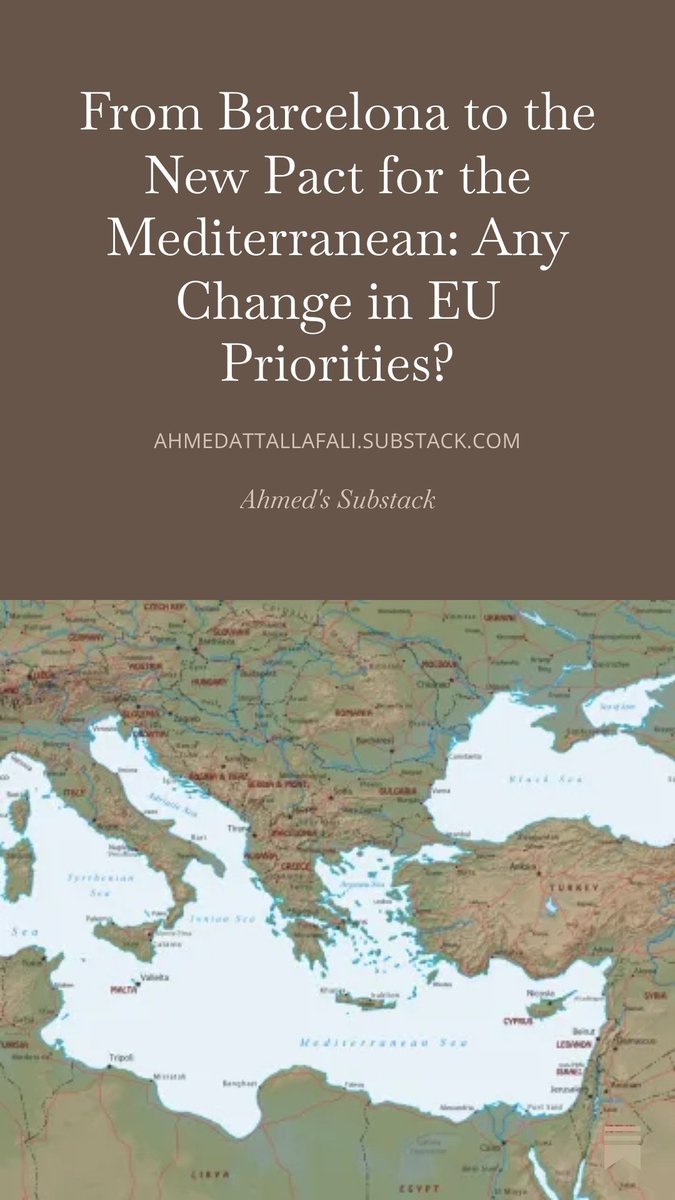
In this piece, I examine the trajectory of Euro-Mediterranean relations from the Barcelona Declaration to the new Pact for the Mediterranean issued in November 2025, highlighting changes in the EU’s internal and external priorities shaping this shift.
https://t.co/rHhRZRyM0n
Based on complaints and documented information submitted by the Egyptian Front for Human Rights, a number of United Nations experts sent an official communication to the Egyptian government on 13 November 2025, expressing their grave concern and strong condemnation of the referral of more than 90 lawyers, including human rights lawyers and human rights defenders, to trial before terrorism circuits. The experts described this step as a dangerous escalation in the criminalisation of legitimate legal work and an abusive use of counter-terrorism legislation.
The communication was signed by seven UN Special Procedures mandate holders: the Special Rapporteur on the independence of judges and lawyers; the Working Group on Arbitrary Detention; the Working Group on Enforced or Involuntary Disappearances; the Special Rapporteur on the promotion and protection of the right to freedom of opinion and expression; the Special Rapporteur on the rights to freedom of peaceful assembly and of association; the Special Rapporteur on the situation of human rights defenders; and the Special Rapporteur on the promotion and protection of human rights and fundamental freedoms while countering terrorism.
The experts explained that the information reviewed indicates that these referrals are a direct consequence of lawyers exercising their professional duties in providing legal defence and judicial representation, particularly in cases of a political or human rights nature. They stressed that this constitutes a clear violation of the right to freely practise one’s profession and undermines a fundamental pillar of the criminal justice system—namely, the independence of lawyers and the right of defendants to legal defence.
The UN communication highlighted in particular the cases of three Egyptian lawyers currently in detention: Shaker Mohamed Shaker Ahmed, Osama Abdel-Hakim Bayoumi Samak, and Abdrab Al-Naby Abdullah Ismail. The experts noted that their criminal prosecution stems from their legitimate legal activities, including providing legal support and representation to victims of human rights violations or to defendants in political cases.
According to the experts, these lawyers face vague charges such as “joining an unspecified terrorist group” and “spreading false news”, based on counter-terrorism laws, without precise identification of the alleged criminal acts or the presentation of individualised evidence. The experts considered that such legal ambiguity violates the principle of legality and seriously undermines the right to a fair trial. They further noted that some lawyers have been subjected to prolonged pre-trial detention exceeding the legal maximum, in addition to the use of the practice known as “case rotation”, whereby new cases with identical or similar charges are added as release dates approach, effectively extending detention for years without genuine trials or effective judicial oversight.
The experts emphasised that trying lawyers before terrorism circuits, courts that have previously raised UN concerns regarding their independence and compliance with fair trial standards, constitutes a grave infringement of defence rights. This is particularly concerning in light of the deliberate conflation between lawyers and their clients and the criminalisation of legal assistance as a form of alleged criminal activity.
They stressed that these practices violate Egypt’s obligations under the International Covenant on Civil and Political Rights, particularly provisions related to the right to liberty and security of person, fair trial guarantees, and freedoms of expression and association. They also contravene the UN Basic Principles on the Role of Lawyers, which guarantee lawyers the right to perform their professional duties without intimidation, interference, or persecution.
In conclusion, the UN experts called on the Egyptian government to provide clear legal justifications for the arrest and prosecution of lawyers, to put an end to the practice of case rotation and arbitrary detention, to ensure the release of those arbitrarily detained, and to investigate violations associated with these cases. They further stressed the need to review the use of counter-terrorism legislation in line with international standards and to guarantee a safe and enabling environment that allows lawyers and human rights defenders to carry out their work without fear of retaliation or persecution.
More: https://t.co/ch1ps7UrS5
Over recent months, the European Commission has worked on redefining the concept of “safe countries of origin” at the EU level, as part of a broader package of migration- and asylum-related legislation aimed at reducing irregular migration and addressing the rise in asylum applications to EU Member States based on claims of direct threats to life and human rights in countries of origin. This redefinition has been expanded to include several countries in the Middle East, such as Egypt, as countries where threats to fundamental personal rights and human rights are deemed not to be generalised or widespread enough to endanger citizens’ lives or to substantiate claims of violations.
According to the European Commission proposal Regulation (EU) 2024/1348, which designates Egypt as a safe country of origin for its nationals at the EU level, the human rights situation in Egypt is described as one in which “Human rights challenges in Egypt remain significant, particularly in relation to the protection of fundamental freedoms, governance and the rule of law.” Nevertheless, the proposal maintains that “the political leadership in Egypt has taken steps putting greater emphasis on the importance of the respect for human rights.” In this regard, it refers to the fact that Egypt “abolished the state of emergency.., launched the first ever National Strategy for Human Rights, relaunched the Presidential Amnesty Committee, releasing political prisoners and embarked on a National Dialogue.”
At the same time, the proposal notes that “Egypt has ratified the Convention against Torture and Other Cruel Inhuman or Degrading Treatment or Punishment.��� It further states that Egypt “has declared in its National Strategy for Human Rights its intention to reform the law on” pre-trial detention, to ameliorate detention conditions, to limit the number of crimes punished by death, and to enhance the culture of human rights across all government institutions”.
A closer examination of the human rights situation, the state of the rule of law, and the level of independence of judicial and security institutions, based on reports by independent human rights organisations, reveals a picture that fundamentally contradicts the Commission’s portrayal of “promising steps” toward progress in human rights. In Egypt, these reports demonstrate the continued large-scale targeting of citizens for exercising their lawful rights, directly contradicting the official narrative of improvement. These measures cannot be considered genuine reforms; rather, they are largely cosmetic, general, and vague. Accepting them as such risks endangering the safety of a broad range of individuals and groups in Egypt, including politicised groups, human rights and political actors, civil society activists, and even non-politically active citizens. This risk is compounded by the legalisation and entrenchment of exceptional measures within the justice system, transforming them into routine practices in law-enforcement and rule-of-law institutions.
Despite the adoption of the National Human Rights Strategy and the fact that its timeframe is approaching its end, there is little evidence that the strategy’s commitments have been fulfilled. In terms of legislative reform, the death penalty has remained in force without review for a wide range of crimes in Egypt – up to 104 offences – many of which have not been narrowed or revised. These include politically motivated charges under the Anti-Terrorism Law and the Penal Code, as well as ordinary criminal offences such as drug-related crimes and weapons offences, in addition to the Military Justice Law, whose expanded jurisdiction over civilians – despite its technical nature – raises serious concerns and constitutes a significant threat.
Death sentences have continued to be issued, upheld at various levels of appeal by both civilian and military courts, and carried out in cases of a political nature in the years following the adoption of the strategy. In 2021, a total of 403 death sentences were issued, with 84 executions carried out. In 2022, 538 death sentences were issued, with 30 executions carried out. In 2023, at least 348 death sentences were issued, with a minimum of 8 executions carried out during the same year. In 2024, a total of 380 death sentences were issued, with 13 executions carried out, and 31 individuals sentenced to death in political cases.
The crisis of prolonged and open-ended pretrial detention has persisted, and the National Human Rights Strategy has contributed little to resolving or closing this file. The most that the new Code of Criminal Procedure has achieved is a reduction of pretrial detention periods for misdemeanours to 6 months, and 12 months for felonies. Meanwhile, the core of the problem remains: widespread and prolonged arbitrary detention of individuals for exercising their rights to expression, organisation, and peaceful assembly, the misuse of counter-terrorism legislation against them, and the continued practice of “recycling” defendants into new cases to circumvent the expiry of pretrial detention limits. Amendments to the Code of Criminal Procedure have further codified the broad powers of the Public Prosecution to renew pretrial detention without meaningful judicial oversight, and have allowed suspects to be held in rehabilitation centers / prisons pending investigation when their lawyer is unavailable, without counting this period toward pretrial detention—facilities about which independent human rights organisations have repeatedly expressed concern due to ongoing violations.
Regarding the Presidential Pardon Committee and the National Dialogue, both of which raised hopes for resolving the political detainees file and integrating civil society and human rights actors into dialogue, their contributions have varied since their launch in 2022. While 2,413 detainees were released in State Security cases related to freedom of expression, between mid-2022 and the end of 2025, 6,899 additional citizens were detained in similar cases, nearly three times the number released. With the decline or effective suspension of the Pardon Committee’s work, a committee member publicly acknowledged that its decisions are based on political criteria that reproduce the status quo, notably excluding anyone affiliated with the Muslim Brotherhood from the possibility of pardon, an especially problematic condition given the widespread and generic nature of this accusation in political and opinion-related cases.
Recent amendments to the Code of Criminal Procedure constitute a setback to the rule of law, justice institutions, and citizens’ rights. Despite presidential intervention calling for legislative review following widespread objections to provisions undermining the rights to defence, legal protection, and property, the final amendments upheld the principle of interrogating defendants in the absence of their legal counsel, “in cases of necessity”, without invalidating procedures or trials. The amendments also empowered judicial police officers delegated by the prosecution to initiate interrogations, granted the Public Prosecution special powers to intercept and monitor communications online without judicial oversight, violated international standards on the right to privacy by allowing repeated renewal of surveillance orders without constraints, and granted special immunity to public officials, law-enforcement officers, and prison authorities, while further expanding justifications for pretrial detention.
Security campaigns and judicial targeting continue to affect broad segments of the population, increasingly extending to new groups such as refugees, non-political citizens, lawyers, human rights defenders, and even minors.
The prosecution of minors has expanded, with at least 17 documented cases, where children were accused of joining terrorist groups through electronic gaming applications. These minors were subjected to enforced disappearance and detention in facilities not designated for juveniles, including adult prisons.
Refugees fleeing armed conflict similarly face pursuit and systematic violations, whether near Egypt’s borders or within urban areas, including arbitrary detention, inclusion in human-trafficking cases, and subsequent forced deportation to countries experiencing armed conflict. Estimates indicate that up to 18,000 refugees were deported in 2024 alone, with these practices gaining a degree of legal cover following the adoption of the new Asylum Regulation.
Repression against lawyers, and human rights defenders has also intensified. In August 2025, the EFHR documented the referral of at least 92 lawyers and human rights defenders to terrorism felony courts across 25 State Security cases, solely for providing legal defence to political detainees. Indictments explicitly treated the act of legal defence as evidence of shared political affiliation, undermining the foundations of legal practice in Egypt and obstructing access to justice.
Authorities have continued to arrest non-politicised citizens for online criticism of economic conditions, poor public services, or human rights violations affecting their families, or merely due to familial ties to political figures, in violation of the principle of individual criminal responsibility. Transnational repression against political opponents, journalists, and human rights defenders abroad has also increased.
Mass arrests followed protests in 2019 and 2020, renewed crackdowns in October–November 2022 surrounding calls to protest during COP27 in Sharm El-Sheikh, and further arrests in July 2024 linked to criticism of rising living costs. Dozens of citizens were also targeted between late 2023 and 2024 for participation in opposition electoral campaigns or for protests in solidarity with Palestine and opposition to the war on Gaza.
Reports continue to document systematic torture. Since the adoption of the National Human Rights Strategy in late 2021, complaints regarding ill-treatment, denial of medical care, and degrading detention conditions persist, leading to repeated hunger strikes and, in some cases, threats of suicide. Human rights organisations documented 15 suicide attempts in a single week at Badr 3 Prison.
Deaths in detention, largely due to medical neglect, remain widespread. At least 50 deaths were documented in detention facilities during the previous year, including 25 deaths in police stations alone between June 2024 and January 2025. The UN Committee Against Torture, following its review of Egypt in 2023, confirmed the prevalence of torture, including in newly established detention facilities.
The Egyptian authorities continue to deny the existence of enforced disappearance and refuse to accede to the International Convention for the Protection of All Persons from Enforced Disappearance. Between August 2022–2023, at least 821 individuals were subjected to enforced disappearance. Some cases involved detention for up to three years, while others resurfaced after six years before appearing before the State Security Prosecution in 2025.
Freedom of expression continues to be curtailed under laws such as the Cybercrime Law No. 175/2018, targeting ordinary citizens and content creators under charges of threatening “societal values.” In July – August 2025, at least 29 individuals, 19 women and one child, were arrested under such charges, alongside hundreds of non-politicised citizens accused of spreading “false news” or terrorism-related offences due to online criticism of economic deterioration.
Despite the lifting of the state of emergency, its effects persist through exceptional courts and legislation, including the continued trial of civilians before military courts under the amended Law on the Protection of Vital Facilities, and the ongoing application of Anti-Terrorism Law No. 94/2015 and the Terrorist Entities Law No. 8/2015, enabling asset freezes and undermining the business and investment environment.
On the other hand, the State Security Prosecution and terrorism Circuit courts, operating as exceptional judicial mechanisms, continue to function and to prosecute citizens on the basis of cases related to opinion, expression, organisation, and peaceful assembly. Individuals are pushed into politically motivated trials that lack the guarantees of fair trial standards, by charging them in cases framed around terrorism-related accusations, subjecting them to prolonged pretrial detention, “recycling” them into new cases with similar charges, and sentencing them to harsh penalties.
In light of these systematic violations and the widespread incidents with serious consequences – met only with limited, cosmetic improvements – and amid escalating threats to the indicators of the rule of law and justice institutions that endanger the rights of all citizens and others present on Egyptian territory, within an increasingly entrenched authoritarian framework, this framework benefits from geopolitical shifts and regional equations and interests linked to policies aimed at reducing or preventing migration. This, in turn, contributes to entrenching authoritarian rule at the expense of citizens’ rights and freedoms, their free voices, and the aspirations of younger generations seeking representation of their interests, improved public policies, a stronger socio-economic structure, and the peaceful transfer of power.
In this context, the Egyptian Front for Human Rights calls on the various institutions of the European Union, in the course of their deliberations and voting on amendments to the draft decision, to reconsider Egypt’s designation as a “safe country of origin” for its nationals, including independent politicians, opposition figures, human rights defenders, and even ordinary citizens who criticise government policies. This call comes in light of the rapid deterioration of economic, social conditions, and the deepening erosion of the rule of law and the independence of security and judicial institutions, despite superficial, cosmetic measures and public-relations campaigns promoting an alleged improvement in the human rights situation. The EFHR further stresses the need for EU institutions to adopt more realistic and detailed indicators that address root causes and to pursue a long-term approach in their engagement with the human rights situation in Egypt.
More: https://t.co/5rzSP3NSkK
🚨بعد مرحلة أولى من الانتخابات شابتها انتقادات واسعة تتعلق بهندسة المشهد الانتخابي، قد يطرح المواطن سؤالًا مشروعًا: هل يستطيع مجلس النواب الجديد إحداث أي تغيير، خصوصًا في مجال الحقوق والحريات؟
بالنظر في تجربة البرلمان السابق يوضح الصورة بجلاء. فعلى مدار خم�� سنوات 2020-2025، تم تمرير مئات القوانين التي جاءت معظمها من الحكومة، بينما اقتصر دور البرلمان إجمالًا على التمرير دون نقاش فعلي أو مراجعة حقيقية. كذلك لم تُفعَّل أدوات الرقابة والمساءلة البرلمانية، في حين استمر إصدار تشريعات تعمّق القمع وتمس الحقوق والحريات، مع غياب واضح للجنة حقوق الإنسان داخل البرلمان عن الاشتباك مع هذه المواضيع.
ليسفر هذا، عن برلمان بلا دور، وسلطة تنفيذية تتحكم في المشهد بالكامل.
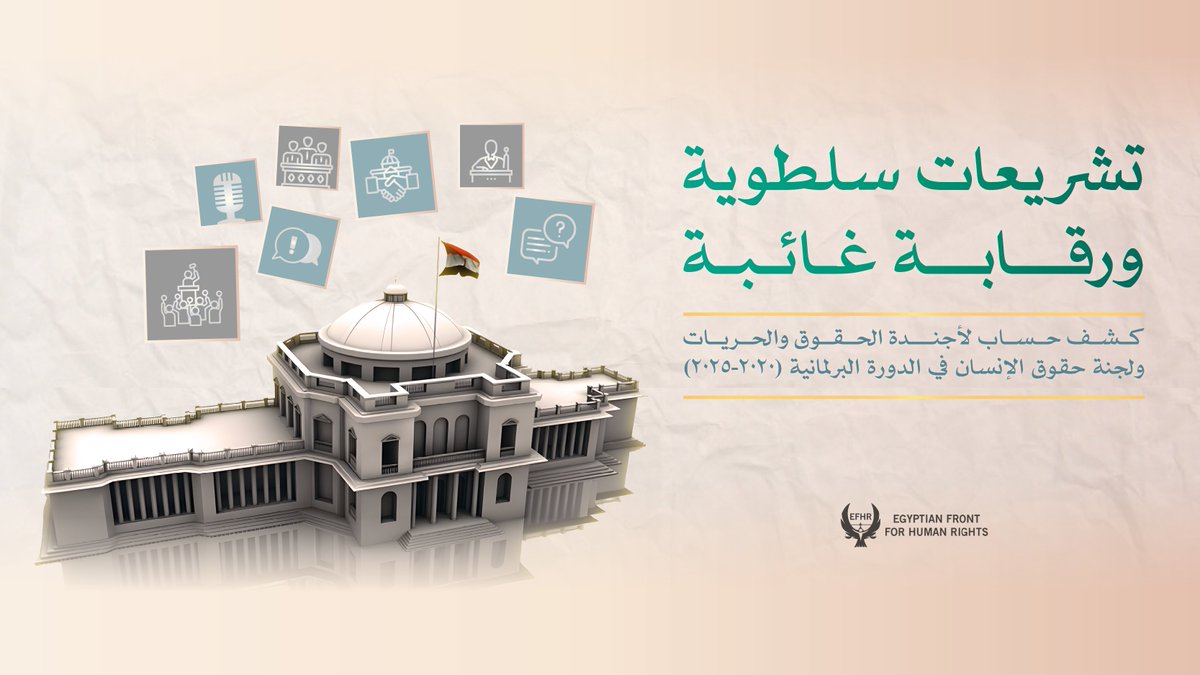
للإطلاع على تقرير: تشريعات سلطوية ورقابة غائبة: كشف حساب لأجندة الحقوق والحريات ولجنة حقوق الإنسان في الدورة البرلمانية (2020-2025) https://t.co/IbQxoVT2Js
📢 Based on documented information submitted by the Egyptian Front for Human Rights concerning 12 individuals (out of 15) who were subjected to case recycling, prolonged arbitrary detention, ill-treatment, terrorism-related designation, and the absence of fair trial guarantees, a group of United Nations experts issued a communication to the Egyptian government on 15 September 2025 (AL EGY 5/2025). In their letter, the experts expressed grave concern and strong condemnation of the serious violations committed against 15 Egyptian citizens, including political figures and journalists, in the context of the widespread and unlawful use of counter-terrorism legislation, particularly the Counter-Terrorism Law No. 94 of 2015 and the Law on Terrorist Entities and Terrorists No. 8 of 2015.
The communication was signed by eight UN Special Procedure mandates, including:
the Special Rapporteur on the promotion and protection of human rights and fundamental freedoms while countering terrorism;
the Working Group on Arbitrary Detention;
the Working Group on Enforced or Involuntary Disappearances;
the Special Rapporteur on the right to freedom of opinion and expression;
the Special Rapporteur on the rights to freedom of peaceful assembly and association;
the Special Rapporteur on the right to health;
the Special Rapporteur on the independence of judges and lawyers;
and the Special Rapporteur on torture and other cruel, inhuman or degrading treatment or punishment.
The UN experts’ letter lists the names of the individuals concerned, including:
Faisal Ahmed Mohamed Radwan, Al-Taher Mohamed Abdelaziz Massoud, Ibrahim Yehia Ibrahim, Mostafa Awny Suleiman, Mahmoud Salah Abu al-Fadl, Aser Zahr al-Din Abdelwarith, Mostafa Gamal al-Sayed, Mohamed Osama Abu al-Ata, Abdel-Fattah Bastawi al-Sayed, as well as political figures: Essam el-Haddad and Gehad el-Haddad, Anas El-Beltagy, the son of a prominent Muslim Brotherhood leader Mohamed el-Beltagy, and journalists: Hisham Jaafar, Hossam Othman, and Tawfiq Ghanem.
The UN experts called on the Egyptian government to provide clear legal justification for these repeated arrests, to investigate allegations of enforced disappearance and torture, to ensure adequate medical care, and to stop using counter-terrorism laws as a tool to punish peaceful expression. They also emphasized the urgent need to end the practice of case recycling and to review terrorism listings in line with international human rights standards.
The experts stressed that the persistence of these violations reflects a deep structural crisis within Egypt’s criminal justice system and a systematic misuse of security and counter-terrorism legislation to silence peaceful political opposition, journalists, and human rights defenders.
More: https://t.co/SPYwPV1q87
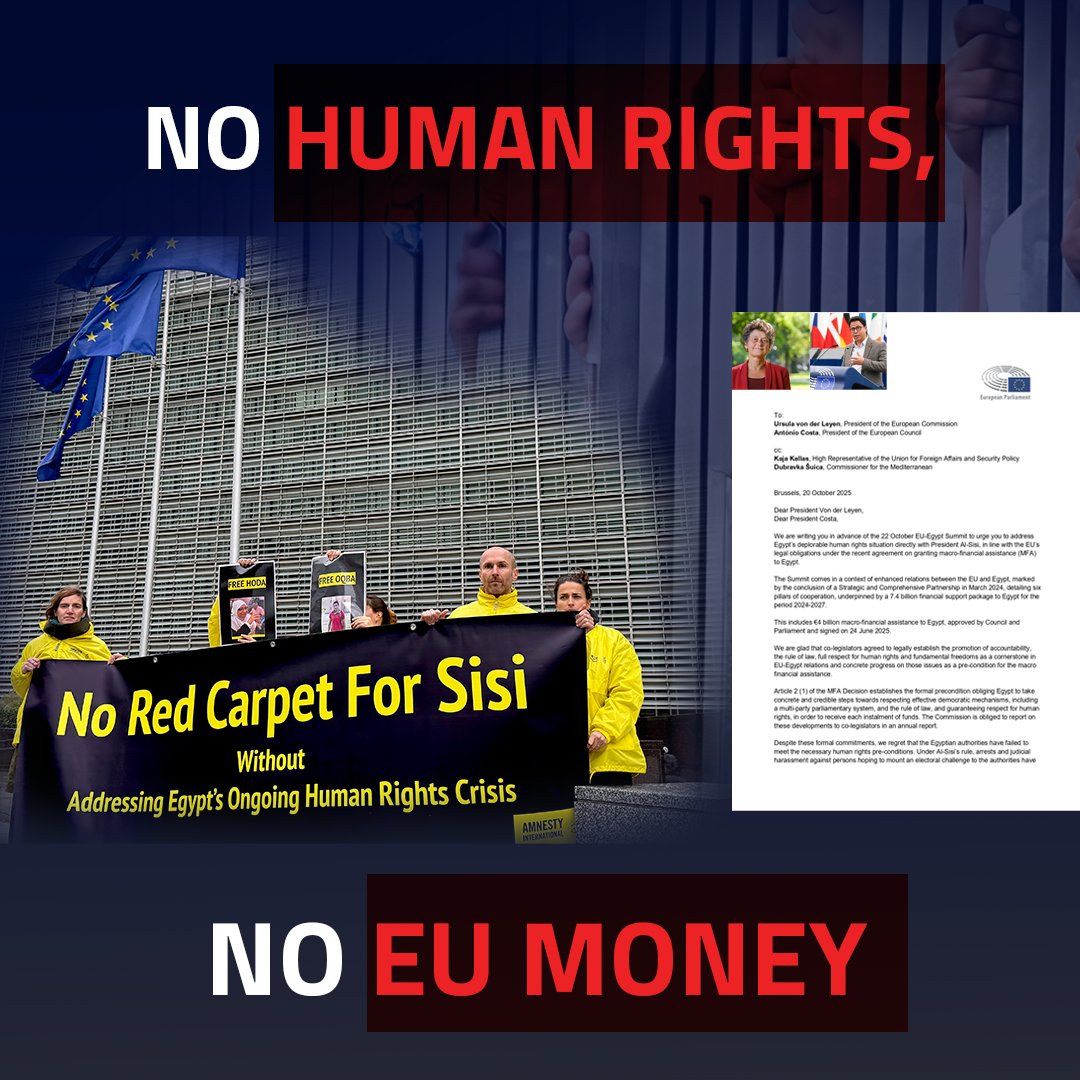
The EU promised Egypt €7.4 billion in exchange for human rights improvements. Sadly, we see no change so far.
Don't roll out the red carpet for Al-Sisi, but demand change during Wednesday's summit: No human rights improvements, no EU money.
That's our message to @vonderleyen👇
📌نشرت الجبهة المصرية لحقوق الإنسان اليوم تقريرًا بعنوان: «تشريعات سلطوية ورقابة غائبة: كشف حساب لأجندة الحقوق والحريات و #لجنة_حقوق_الإنسان في الدورة البرلمانية (2020-2025)». ويسعى التقرير إلى رصد موقع الحقوق والحريات في عمل #مجلس_النواب خلال دورته المنقضية، وعلى أجندة لجنة حقوق الإنسان، ومدى تفعيل الأدوات الرقابية فيما يتعلق بقضايا الحقوق والحريات العامة وأوضاع حقوق الإنسان في مصر. ويقدم التقرير رصدًا لأبرز التشريعات التي أصدرها البرلمان السابق، والتي تضمّنت تغييرات جوهرية كان لأغلبها تأثير سلبي على منظومة الحقوق والحريات وحقوق الإنسان، مع تقييم م��ى انخراط لجنة حقوق الإنسان في صناعتها وتمريرها، باعتبارها اللجنة النوعية ذات الاختصاص المباشر بهذه الأجندة والموضوعات.
في الوقت الذي قام فيه مجلس النواب السابق بتمرير عدد كبير من التشريعات قارب الـ 900 تشريع على امتداد الدورة التشريعية (2020-2025)، يكشف التقرير والبيانات الرسمية التي ارتكن عليها إلى استمرا�� هيمنة السلطة التنفيذية على ماكينة التشريع في مصر حيث أتت أغلب هذه التشريعات منها، باستثناءات قليلة للغاية جاء بعضها من نواب أو بشكل تضامني مع الحكومة ذاتها، وهي التي تُهمش وتُهدر – بفعل اللائحة والقانون- لصالح التشريعات المقدمة من الحكومة في حال تزامن تقديمهم. ينطبق ذلك على أغلب القوانين المتعلقة بالحقوق والحريات والمواثيق الدولية وحقوق الإنسان التي أصدرها البرلمان السابق والتي عُد بعضها من الأسوأ فيما يتعلق بحقوق المواطنين القانونية الأساسية والحريات مثل قانون الإجراءات الجنائية الذي أُصدَر بالفعل. ولم يُسجل أن تقديم النواب لمقترحات القوانين – غالبا من حزب مستقبل وطن المدعوم من السلطة – لم يأت بتوجه مختلف داعم للحقوق والحريات، بل الثابت هو العكس حيث اشتركت لجنة حقوق الإنسان في اقتراح البعض، وتأييد صلاحية البعض على النحو الذي يوضحه التقرير.
كما تعاني مهام الرقابة على أعمال السلطة التنفيذية من مشكلات رئيسية وعدم فاعلية وغياب حقيقي، وقد تمكن التقرير من رصد ما اُستخدَم فعلا من هذه الأدوات من النواب، والتي لم ترق للمساءلة والرقابة على الأداء، بقدر ما اُستخدمت لرفع مطالب الدوائر المحلية وأحيانا لمسائل غير ذات اختصاص، وهو الوضع الذي تشاركته لجنة حقوق الإنسان في عملها والتي يوضح التقرير محدودية استخدامها للأدوات الرقابية، واستخدامها في قضايا بعيدة عن الحقوق والحريات وحقوق الإنسان والإصلاحات السياسية أو التشريعية، وتركيز هذه الأدوات على التوعية ونشر الوعي الثقافي.
يهدف التقرير من خلال هذا الرصد لتقديم صورة حقيقية عن أداء لجنة حقوق الإنسان ومجلس النواب في دعم ملف الحقوق والحريات خلال دورة تشريعية امتدت خمس سنوات كاملة، ويأمل بأن يكون ذلك الرصد والتقييم الحقيقي دافعا لتحسين أداء اللجنة والمجلس في الدورة البرلمانية المقبلة على الصعيد التشريعي والرقابي بهدف حماية الحقوق والحريات والوفاء بالالتزامات الدولية لمصر، وتحسين أوضاع حقوق الإنسان بما يخدم مواطني الدولة المصرية والمقيمين على أراضيها في النهاية، ومحاولة تلافي التعديلات السلطوية التي ��ُستحدثَت بالفعل في تشريعات الدورة الماضية.
للإطلاع على التقرير: https://t.co/wRZyxdyaE5
@tradwan27
@mohamedaziz25
@negadelborai
@khouly85
The ongoing mass prosecution of lawyers and HRDs is clear evidence of the continued policy of criminalizing HR work and undermining the right to legal defense, which poses a direct threat to the independence of the legal profession and endangers the entire legal and HR community
📢 The Egyptian Front for Human Rights (EFHR) strongly condemns the referral of dozens of lawyers and other human rights defenders in Egypt to criminal courts on the grounds of activities related to their professional or human rights work. While many of these lawyers face charges solely for exercising their legal right to defend individuals, including in politically motivated cases involving the right to assembly, organization, and freedom of expression, others are being prosecuted for documenting violations, providing legal support, or cooperating with UN mechanisms. These referrals constitute clear evidence of the state’s ongoing policy of criminalizing human rights work and the right to legal defense, posing a direct threat to the independence of the legal profession in Egypt, and undermining the safety of the entire legal and human rights community, and ultimately, the citizens seeking justice through peaceful and lawful means.
EFHR has documented the referral of no less than 92 lawyers and other human rights defenders to terrorism criminal courts. Many of them had been engaged in defending individuals in politically motivated cases. Their names appeared in the referral orders of 25 State Security cases, a number likely to grow as further referrals are issued. These referrals also included five female lawyers involved in the same types of legal defense. According to the referral documents, the charges brought against the lawyers often mirrored those of their clients, individuals detained for exercising fundamental rights such as freedom of assembly, organization, and expression. These lawyers now face terrorism-related charges, most notably “joining a terrorist group established in violation of the law” and “funding a terrorist group.” In several cases, security investigations explicitly cited the lawyers’ legal defense work as evidence of their alleged affiliation with terrorist groups, referring to so-called “human rights units” or the assumption of “responsibility for defending” members of such groups before the courts.
👉 EFHR calls for the immediate removal of the names of the lawyers and Human rights defenders listed in these recent referrals, and for their exclusion from these cases. These individuals are being charged under anti-terrorism legislation merely for defending clients in politically motivated cases or documenting rights violations. EFHR also calls for the immediate release of those already detained, the removal of others from travel ban lists, and guarantees for their right to continue their work without intimidation or threats.
👉EFHR stresses the urgent need to end the use of exceptional laws, especially the Anti-Terrorism Law, in the prosecution of lawyers and human rights defenders. It further emphasizes the importance of upholding the independence of the legal profession and the role of the Bar Association in protecting its members from professional and security harassment. EFHR also calls for an independent and impartial investigation into the practices of the Supreme State Security Prosecution, and for those responsible for relying on security investigations as sole evidence to face accountability.
🔗 More: https://t.co/cbvezOLxHS
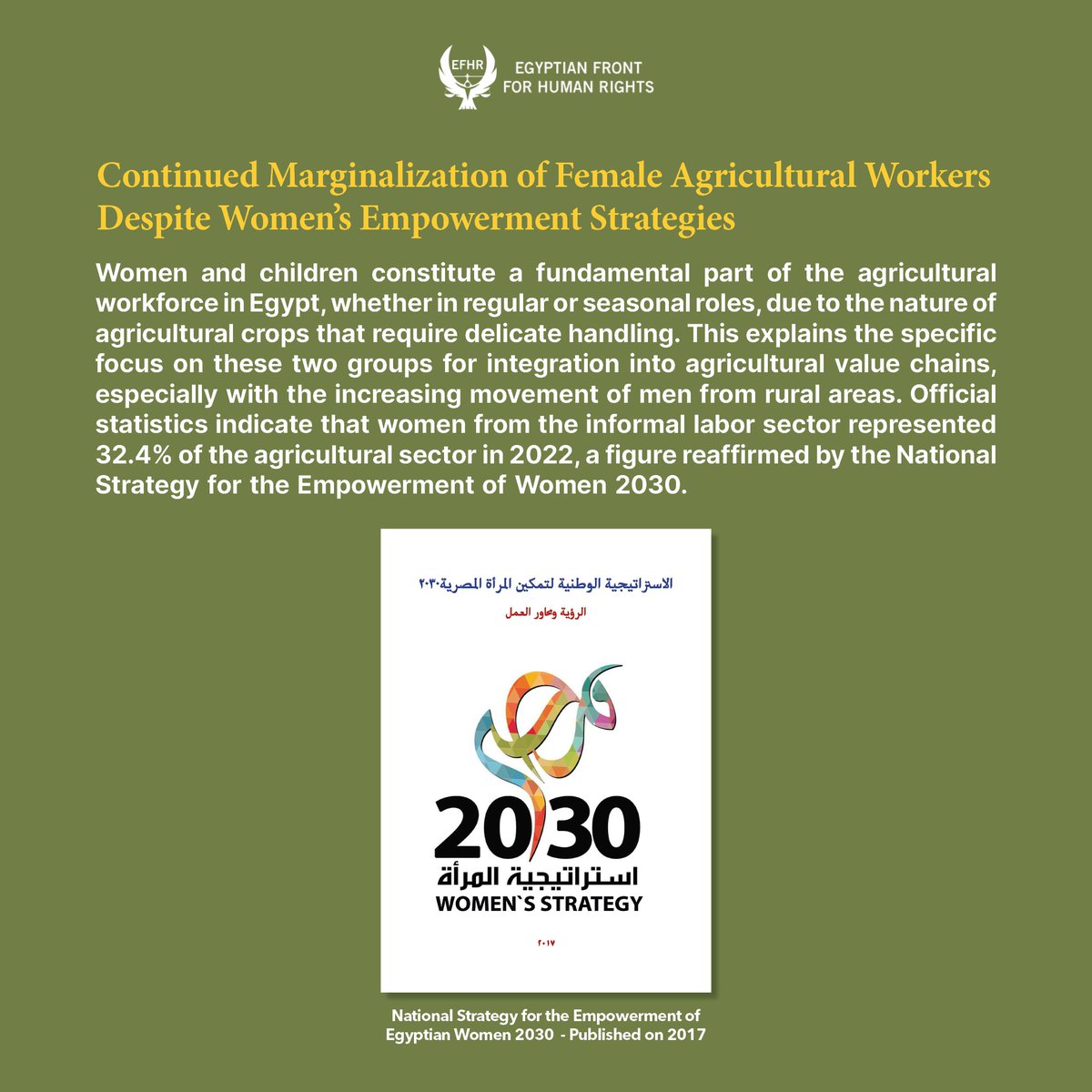
📌 EFHR published a commentary titled: “The Girls of Monufia: #Victims of #Agricultural_Value_Chains in Egypt.” The commentary sheds light on the tragic death of 18 young seasonal female workers harvesting grapes in Monufia Governorate at the end of June. This incident once again exposes the vulnerability of women in the agricultural sector and the lack of protection within value chains driven solely by export and profit logic, with no regard for basic safety standards or social justice.
Despite state promises to achieve inclusivity and sustainability in agriculture, female agricultural workers continue to face double marginalization, by national policies that fail to address their reality and by harsh working conditions marked by low wages, lack of contracts or insurance, and unsafe transportation that causes similar tragedies every year.
In Light of This, Egyptian Policymakers Should:
👉Reconsider the current approach to expanding women’s inclusion in agricultural value chains, aiming instead for a more comprehensive and sustainable model that goes beyond numerical inclusion to ensure their fundamental rights, especially in terms of wages, employment contracts, health insurance, and injury compensation.
👉Reassess the legal frameworks and regulations governing informal labor, which largely concerns women, to ensure the clarity of work conditions, rights, and responsibilities.
👉Include protective and safety conditions for female workers - especially rural women - in the upcoming National Occupational Health and Safety Strategy.
👉Reevaluate the target groups of social protection programs such as Takaful and Karama, and work to expand their reach to include informal female workers, given the extremely low wages that compel families in rural areas to push their children into informal and seasonal work, as the incident revealed, particularly since the girls’ motivation to work was linked to their desire to fund their education.
On the International Cooperation Level:
👉Countries importing Egyptian agricultural and industrial products and engaging with the Egyptian market must ensure that the production processes do not violate labor laws, child protection laws, or women’s rights before entering into export and import agreements.
👉The impact of IMF-funded women’s empowerment programs in Egypt must be reassessed, especially those aimed at improving the safety of public transportation to help women access jobs. The Monufia incident and others like it show the limited impact of these programs and highlight that women working in vital sectors such as agriculture remain excluded from their benefits.
🔗 Read the commentary: https://t.co/FXbx6G8I9f
Egyptian citizens are being subjected to repression… simply because they showed solidarity with Gaza.
Arrests, enforced disappearances, and terrorism charges against those who expressed their peaceful solidarity.
Demand the immediate release of all detainees.
#SolidarityIsNotACrime
#FreedomForAllDetainees
More: https://t.co/Bxg6kXkzQs
مراجعة شاملة لكل قوانين #الإرهاب، وإعادة تعريف جرائم الإرهاب وفق المعايير الدولية، وآلية مستقلة للتحقيق في جرائم #الإخفاء_القسري،الاهمال وسوء المعاملة،#التعذيب في اماكن الاحتجاز بحق المتهمين في قضايا الإرهاب، خاصة السجناء السياسين وسجناء الرأي وضمان اخلاء سبيلهم فورا
الحقوقي أحمد عطا الله من @egyptian_front قبل قليل في #الأمم_المتحدة، ردًا ع تقرير #الحكومة_المصرية المقدم #اليوم ضمن آلية الاستعراض الدوري الشامل لملفها الحقوقي #HRC59 #UPR
@cfjusticeorg
Last week, the Parliament decided to award €4 billion to Egypt.
It is both a legal and moral obligation for the Commission to ensure that this funding goes hand in hand with true human rights improvements, and doesn't become a carte blanche to Sisi.
Read my questions here👇