The significance of the study lies in the fact that it does not merely describe the humanitarian suffering of prisoners, detainees, and their families. Rather, it links the file to the broader contexts of mistrust, stalled negotiations, and overlapping local and regional calculations. It also argues that progress in this file could serve as an important entry point for confidence-building, but will remain vulnerable to political instrumentalization unless it is transformed into an independent and sustainable humanitarian track.
https://t.co/kv1z0NQEPZ
Abaad’s May 2026 Research Output: Early Warning, International Translations, and a Humanitarian Study on Prisoners
In May 2026, Abaad Studies and Research Center produced a set of research outputs that brought together early warning monitoring, strategic analysis, and the transfer of international knowledge on Yemen and its regional environment.
This monthly output reflected the Center’s growing focus on developing more systematic research tools, deepening political and strategic analysis, and strengthening the presence of Yemeni knowledge in regional and international debates. The Center’s key activities during the month included the launch of the Abaad Observatory for Early Warning and Strategic Indicators, the release of Abaad Translations for May 2026, and the publication of an analytical study on prisoners and detainees in Yemen.
Launch of the Abaad Observatory for Early Warning and Strategic Indicators
During May, Abaad Center launched the Abaad Observatory for Early Warning and Strategic Indicators, a specialized research program designed to monitor and analyze daily developments in Yemen and its regional surroundings, and to transform scattered information into structured and assessable indicators.
The Observatory is based on a multi-stage methodology that includes information collection, sorting, classification, trend analysis, and the connection of emerging indicators to their political, economic, military, security, and humanitarian contexts. The May 2026 monitoring summary indicates that Yemen stands before a “limited but important opportunity” to build confidence, amid the continued fragility of the country’s political, security, and humanitarian landscape.
The launch of the Observatory comes as part of Abaad Center’s effort to develop research tools that help decision-makers, researchers, media professionals, and relevant stakeholders better understand fast-moving developments, anticipate risks and opportunities, and provide more systematic readings of the trajectories of conflict and peace in Yemen.
Abaad Translations: Yemen and the Red Sea at the Heart of International Transformations
As part of its monthly knowledge-oriented work, Abaad Center released Abaad Translations for May 2026, focusing on the Red Sea, Bab al-Mandab, and the geopolitical transformations linked to Yemen.
The translations show that Yemen, the Red Sea, and Bab al-Mandab have become central to a broader strategic equation in which questions of war and peace, economy and security, and regional and international competition increasingly overlap.
The importance of these translations lies not only in following the output of international think tanks and media outlets, but also in re-presenting it to the Arab reader within an analytical context that helps clarify Yemen’s place in ongoing regional and global transformations. This is particularly significant as the Red Sea continues to gain strategic importance for regional security, global trade, and international competition.
Prisoners and Detainees in Yemen: The Humanitarian File and the Complexities of Politics
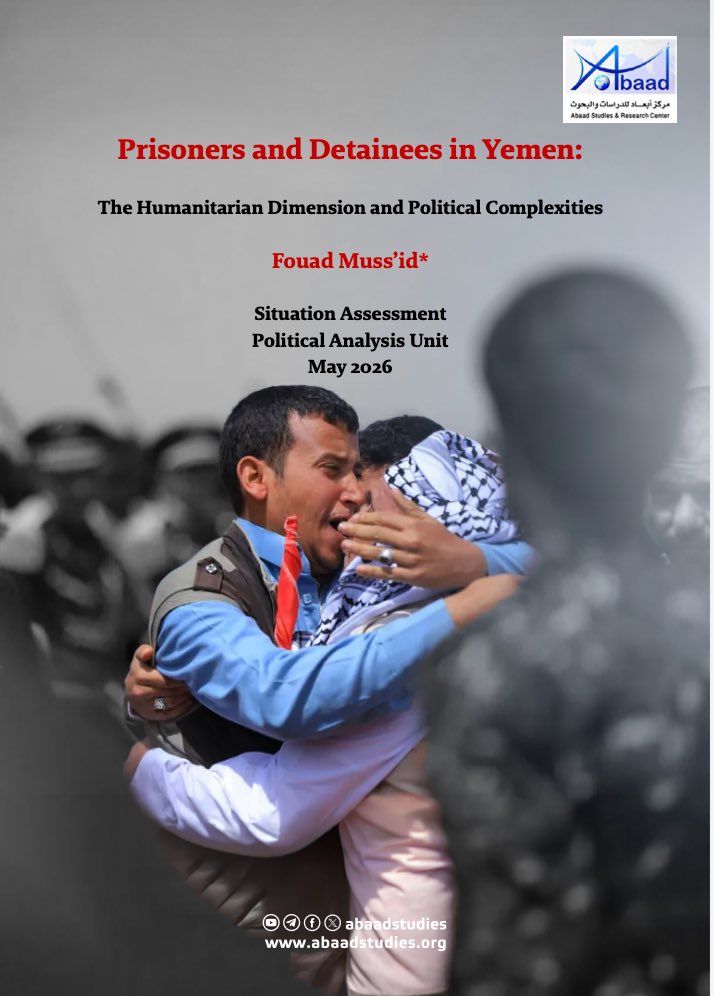
In a highly sensitive humanitarian and political file, Abaad Center published a study titled “Prisoners and Detainees in Yemen: The Humanitarian Dimension and Political Complexities.”
The study examines the issue of prisoners and detainees as one of the most complex files of the Yemeni war—not only because of its humanitarian dimensions, but also because it has become a political and military bargaining tool used by the parties to the conflict in negotiations, escalation, and de-escalation.
The study highlights the Amman round of May 2026, during which an agreement was reached for an exchange involving more than 1,700 prisoners and detainees from both sides, describing it as an important milestone in a long process marked by repeated setbacks and partial breakthroughs.
https://t.co/kv1z0NQ70r
دراسة لأبعاد: ملف الأسرى في اليمن رهين انعدام الثقة وحسابات السياسة
قالت دراسة صادرة عن مركز أبعاد للدراسات والبحوث إن ملف الأسرى والمعتقلين في اليمن لا يزال واحدًا من أكثر الملفات الإنسانية تعقيدًا منذ اندلاع الحرب عام 2015، رغم تعدد جولات التفاوض والاتفاقات الجزئية التي أفضت إلى عمليات تبادل واسعة خلال السنوات الماضية.
وأوضحت الدراسة، التي أعدها الباحث فؤاد مسعد بعنوان “الأسرى والمعتقلون في اليمن: إنسانية الملف وتعقيدات السياسة”، أن هذا الملف لم يعد محصورًا في بعده الإنساني، بل تحول تدريجيًا إلى ورقة ضغط سياسية وعسكرية تستخدمها أطراف الصراع لتحقيق مكاسب تفاوضية، أو لإدارة مسارات التصعيد والتهدئة.
واستعرضت الدراسة أبرز محطات التفاوض، بدءًا من اتفاق ستوكهولم في ديسمبر/كانون الأول 2018، الذي نص على تبادل نحو 15 ألف أسير ومعتقل ومخفي قسريًا، مرورًا بجولة مونترو في سويسرا عام 2020، التي أسفرت عن إطلاق 1056 أسيرًا من الطرفين، ثم جولة برن عام 2023، التي شملت 887 محتجزًا، بينهم قيادات عسكرية وسياسية وصحفيون كانوا محكومين بالإعدام من محكمة تابعة للحوثيين.
وبحسب الدراسة، فإن جولات أخرى عُقدت في الأردن وسلطنة عُمان تعثرت بسبب ربط ملف الأسرى بالمسارات العسكرية والسياسية، إلى جانب الخلافات حول كشوفات الأسماء، والاتهامات المتبادلة بإدراج أسماء وهمية أو أشخاص قُتلوا في الجبهات.
ورأت الدراسة أن “انعدام الثقة” يمثل العقبة الهيكلية الأبرز أمام حل الملف، إذ حوّل كل جولة تفاوض إلى اختبار نوايا بين الأطراف، بدلًا من أن تكون مسارًا إنسانيًا مستقلًا. كما أن احتفاظ الحوثيين بشخصيات سياسية وعسكرية وإعلامية بارزة بوصفها أوراقًا تفاوضية عالية القيمة أسهم في تعطيل مبدأ “الكل مقابل الكل” ودفع الملف نحو صفقات جزئية ومؤقتة.
وانتقدت الدراسة محدودية الدور الأممي والدولي، معتبرة أنه تراجع من دور سياسي ضاغط إلى دور فني ولوجستي يقتصر غالبًا على تنظيم الاجتماعات، وتوفير قاعات التفاوض، وتسهيل عمليات النقل عبر الصليب الأحمر، من دون امتلاك أدوات ضغط فعالة لإلزام الأطراف بتنفيذ الاتفاقات.
وفي المقابل، أشارت الدراسة إلى تصاعد فاعلية الوساطة الإقليمية، خصوصًا الدور الذي لعبته سلطنة عُمان بالتنسيق مع السعودية، في الدفع نحو اتفاق مسقط الإطاري في ديسمبر/كانون الأول 2025، والذي مهّد لاحقًا لصفقة تبادل كبيرة في مايو/أيار 2026 شملت أكثر من 1700 أسير ومحتجز من الطرفين.
وخلصت الدراسة إلى أن أي حل شامل لملف الأسرى في اليمن يتطلب عزله عن الحسابات السياسية والعسكرية، وإنشاء آلية تحقق مستقلة وقاعدة بيانات موحدة للمحتجزين، مع تحويل الدور الدولي من مجرد التيسير الفني إلى ضمان التنفيذ، والضغط من أجل إغلاق هذا الملف الإنساني بصورة نهائية.
https://t.co/qnWkhK5SEJ
Abaad Translations – May 2026: The Red Sea and Bab al-Mandab at the Center of Regional and Global Security Shifts
For the fifth consecutive year, Abaad Studies and Research Center continues to publish special translations of international reports and research papers addressing developments in Yemen as part of the Abaad Observatory program.
In its May 2026 issue, Abaad Translations focused on geopolitical and security transformations in Yemen, the Red Sea, and the broader Middle East, amid intensifying international competition, the growing strategic importance of maritime corridors, and the overlapping crises involving Yemen, Iran, the Houthis, Al-Shabaab, and the global economy.
The issue brought together a set of reports and analyses examining the growing relationship between the Houthis and Al-Shabaab, the risks of closing the Strait of Hormuz and Bab al-Mandab, the struggle for control in the Red Sea, the fragmentation of power structures in Yemen, the need to redesign the India–Middle East–Europe Corridor, and a reading of Yemen’s 2026 truce.
The issue suggests that the Red Sea is no longer merely a maritime route for trade and energy. It has become a central arena for reshaping regional and international influence, where the interests of the United States, China, the European Union, Türkiye, Iran, and Gulf states intersect with the roles of non-state actors, foremost among them the Houthis and Al-Shabaab.
https://t.co/p2EnumFESH
ترجمات أبعاد لمايو 2026: البحر الأحمر وباب المندب في قلب تحولات الأمن الإقليمي والدولي
للسنة الخامسة على التوالي، يواصل مركز أبعاد للدراسات والبحوث نشر ترجمات خاصة لتقارير وأبحاث دولية تتناول الأوضاع في اليمن، ضمن برامج مرصد أبعاد.
وفي إصدار مايو 2026، ركزت ترجمات أبعاد على التحولات الجيوسياسية والأمنية في اليمن والبحر الأحمر والشرق الأوسط، في ظل تصاعد التنافس الدولي، وتنامي أهمية الممرات البحرية، وتداخل أزمات اليمن وإيران والحوثيين وحركة الشباب والاقتصاد العالمي.
وتضمن الإصدار مجموعة من التقارير والتحليلات التي تناولت العلاقة المتصاعدة بين الحوثيين وحركة الشباب، ومخاطر إغلاق مضيقي هرمز وباب المندب، وصراع السيطرة في البحر الأحمر، وتجزؤ هياكل السلطة في اليمن، وإعادة تصميم ممر الهند–الشرق الأوسط–أوروبا، إضافة إلى قراءة في هدنة اليمن عام 2026.
ويشير الإصدار إلى أن البحر الأحمر لم يعد مجرد ممر ملاحي للتجارة والطاقة، بل أصبح ساحة مركزية لإعادة تشكيل النفوذ الإقليمي والدولي، حيث تتداخل مصالح الولايات المتحدة والصين والاتحاد الأوروبي وتركيا وإيران ودول الخليج مع أدوار فاعلين من غير الدول، وفي مقدمتهم الحوثيون وحركة الشباب.
https://t.co/P6xE1v6kHw
It added: “The opportunity is real, but it is surrounded by high risks. Its success requires a delicate balance between security firmness, political containment, rights-based accountability, and service reform.”
It is worth noting that the Abaad Early Warning Observatory had operated over the past ten years in a limited capacity as a private service for decision-makers, alongside its service of translating international research, which remains open to all readers. In its early stages, the Observatory relied on basic information analysis before developing its tools through the use of artificial intelligence as an assisting agent and expanding the service to reach a wider audience of researchers, observers, and readers following the work of Abaad Studies and Research Center.
Looking ahead, the Early Warning team seeks to gradually develop this service from a monthly product into a weekly output, and eventually into daily releases.
https://t.co/r46xvkAL47
Abaad Studies Launches Early Warning and Strategic Indicators Observatory
Abaad Studies and Research Center has launched the Early Warning and Strategic Indicators Observatory as part of its research programs. The Observatory is designed as a platform for monitoring and analyzing daily information and tracking political, economic, military, security, and humanitarian indicators.
The Abaad Observatory for Early Warning and Strategic Indicators is based on a multi-stage monitoring and analysis methodology that aims to transform raw information, news items, reports, and scattered data into indicators that can be understood, measured, and assessed. This enables decision-makers, researchers, and relevant stakeholders to better read ongoing developments in Yemen and anticipate their possible trajectories.
The Observatory uses artificial intelligence tools to assist in processing raw information, sorting materials, detecting recurring patterns, classifying indicators, and generating preliminary readings that help the analysis team prepare faster and more structured situation assessments.
The May 2026 monitoring summary indicates that Yemen stands before a limited but important opportunity to build confidence. The passing of former President Hadi reopened questions related to the state, legitimacy, and unity. The detainees’ file opened a humanitarian window that could support the peace process, while the Aden assassinations file placed the government before a decisive test in security and justice. The economy, meanwhile, remains the weakest link unless sovereign resources, foremost among them oil and gas, are restored.
The April 2026 monitoring summary indicates that Yemen is entering an increasingly complex phase, not because of a single event, but because several tracks are accumulating at the same time: a political track without a clear breakthrough, a fragile security track, a deteriorating humanitarian track, and an economic track that remains underrepresented despite its seriousness.
The report adds: “While UN and international activity reflects continued interest in the Yemeni file, the lack of trust among the parties, the continued disagreement over how to characterize the Houthis, the multiplicity of local actors, and the state’s weak monopoly over force are all factors that make any future settlement in need of a more comprehensive approach.”
In its March 2026 summary, which the report described as the month in which the Houthis moved from threats to declaration, and from political support for Iran to military alignment with it, the report stated that “the Yemeni government moved from warning to formulating a deterrence position centered on preventing Yemen from being used as a platform to threaten regional and international security.”
The risk indicator in March was high “because Yemen has entered the center of a war whose decision it does not control.” Yet the opportunity also exists, as this risk gives the government space to redefine the role of the Yemeni state as a partner in protecting the Red Sea and Bab al-Mandab, rather than as a marginal actor in an internal crisis.
The February 2026 summary described the month as “the month of the new government as much as it was the month of warning against Iran’s war.”
It stated: “The state found itself facing a complex equation: stabilizing authority in Aden, preventing the return of disorder, confronting Houthi mobilization, protecting the Red Sea, and converting economic support into tangible results.”
As for the January 2026 summary, the report stated that it was “not only the month of the dissolution of the Southern Transitional Council, but also the month of testing whether the Yemeni state could restore its center after years of multiple armed and political power centers.”
Continued below 👇
https://t.co/r46xvkAdez
مركز أبعاد يطلق مرصد الإنذار المبكر والمؤشرات الاستراتيجية
دشن مركز أبعاد للدراسات والبحوث، ضمن برامجه البحثية، مرصد الإنذار المبكر والمؤشرات الاستراتيجية، بوصفه منصة لرصد المعلومات اليومية وتحليلها، وقراءة المؤشرات السياسية والاقتصادية والعسكرية والأمنية والإنسانية.
ويعتمد مرصد أبعاد للإنذار المبكر والمؤشرات الاستراتيجية على منهجية رصد وتحليل متعددة المراحل، تهدف إلى تحويل المعلومات الخام، والأخبار، والتقارير، والبيانات المتفرقة إلى مؤشرات قابلة للفهم والقياس والتقدير، بما يساعد صنّاع القرار والباحثين والجهات المعنية على قراءة التحولات الجارية في اليمن واستشراف اتجاهاتها المحتملة.
ويستخدم المرصد أدوات الذكاء الاصطناعي للمساعدة في معالجة المعلومات الخام، وفرز المواد، واكتشاف الأنماط المتكررة، وتصنيف المؤشرات، وتوليد قراءات أولية تساعد فريق التحليل على إعداد تقديرات موقف أكثر سرعة وتنظيمًا.
وتشير خلاصة رصد مايو 2026 إلى أن اليمن يقف أمام فرصة محدودة لكنها مهمة لبناء الثقة؛ فرحيل الرئيس السابق هادي أعاد فتح أسئلة الدولة والشرعية والوحدة، وملف المحتجزين فتح نافذة إنسانية يمكن أن تدعم مسار السلام، وملف اغتيالات عدن وضع الحكومة أمام اختبار حاسم في الأمن والعدالة، فيما لا يزال الاقتصاد الحلقة الأضعف ما لم تُستأنف الموارد السيادية، وفي مقدمتها النفط والغاز.
أما خلاصة رصد أبريل 2026، فتشير إلى أن اليمن يدخل مرحلة تتسم بتعقيد متزايد، لا بسبب حدث واحد، بل نتيجة تراكم عدة مسارات في وقت واحد: مسار سياسي بلا اختراق واضح، ومسار أمني هش، ومسار إنساني متدهور، ومسار اقتصادي لا يحظى بالحضور الكافي رغم خطورته.
ويضيف التقرير: "إذا كان النشاط الأممي والدولي يعكس استمرار الاهتمام بالملف اليمني، فإن غياب الثقة بين الأطراف، واستمرار الخلاف حول توصيف الحوثيين، وتعدد الفاعلين المحليين، وضعف احتكار الدولة للقوة، كلها عوامل تجعل أي تسوية قادمة بحاجة إلى مقاربة أكثر شمولًا".
وفي خلاصة مارس 2026، الذي وصفه التقرير بأنه شهر انتقال الحوثيين من التهديد إلى الإعلان، ومن المساندة السياسية لإيران إلى الاصطفاف العسكري معها، قال التقرير إن "الحكومة اليمنية انتقلت من التحذير إلى صياغة موقف ردعي يؤكد منع استخدام اليمن منصةً لتهديد الأمن الإقليمي والدولي".
وكان مؤشر الخطر في مارس مرتفعًا "لأن اليمن أصبح في قلب حرب لا يملك قرارها"، غير أن الفرصة تبقى قائمة، لأن هذا الخطر يمنح الحكومة مساحة لإعادة تعريف دور الدولة اليمنية كشريك في حماية البحر الأحمر وباب المندب، لا كطرف هامشي في أزمة داخلية.
أما خلاصة فبراير 2026، فوصفها التقرير بأنها "شهر الحكومة الجديدة بقدر ما كان شهر التحذير من حرب إيران". وجاء فيها أن "الدولة وجدت نفسها أمام معادلة معقدة: تثبيت السلطة في عدن، ومنع عودة الفوضى، ومواجهة التحشيد الحوثي، وحماية البحر الأحمر، وتحويل الدعم الاقتصادي إلى نتائج ملموسة".
وفي خلاصة يناير 2026، قال التقرير إن الشهر "لم يكن شهر حل المجلس الانتقالي فقط، بل شهر اختبار قدرة الدولة اليمنية على استعادة مركزها بعد سنوات من تعدد المراكز المسلحة والسياسية".
وأضاف: "الفرصة حقيقية، لكنها محفوفة بمخاطر عالية، ونجاحها يحتاج إلى توازن دقيق بين الحسم الأمني، والاحتواء السياسي، والمعالجة الحقوقية، والإصلاح الخدمي".
ويُذكر أن مرصد أبعاد للإنذار المبكر عمل خلال السنوات العشر الماضية بصورة محدودة كخدمة خاصة لصنّاع القرار، إلى جانب خدمة ترجمة الأبحاث الدولية المفتوحة لجميع القراء. وكان المرصد يعتمد في مراحله الأولى على التحليل الأساسي للمعلومات، قبل أن يطوّر أدواته باستخدام الذكاء الاصطناعي كوكيل مساعد، ويوسع نطاق الخدمة لتصل إلى جمهور أوسع من الباحثين والمهتمين والمتابعين لمخرجات مركز أبعاد للدراسات والبحوث.
ويتطلع فريق" الإنذار المبكر" إلى تطوير هذه الخدمة تدريجيًا، من منتج شهري إلى إصدار أسبوعي، ثم إلى مخرجات يومية.
https://t.co/bP3PR1bOb2
Prisoners and Detainees in Yemen: The Humanitarian Dimension and Political Complexities
The issue of prisoners and detainees remains one of the most complex humanitarian question of Yemen’s conflict, which has continued since 2015. This paper therefore examines the trajectory of negotiations between the internationally recognized government and the Houthi group, tracing key milestones that have produced both notable advances and recurring setbacks. It reviews major developments, including the Stockholm Agreement of 2018 and the prisoner exchange rounds held in Switzerland in 2020 and 2023, while also assessing the obstacles that hindered progress during negotiations hosted in Oman and Jordan. This paper gives a particular attention to the “Muscat Framework Agreement” of December 2025 and the role it played in facilitating the largest prisoner exchange deal concluded in May 2026 through bilateral regional channels.
The paper explores the factors that continue to impede the full implementation of the “all-for-all” principle and the resolution of the prisoner issue. It argues that the absence of mutual trust between the parties, coupled with the persistent use of detainees as political bargaining instruments, remains a central obstacle to progress. As a result, the issue has become increasingly intertwined with broader political and military dynamics, limiting efforts to preserve its humanitarian character and insulating it from developments on the military front.
The study also highlights the limitations of the UN and broader international role, which has retreated toward “technical and logistical facilitation” while lacking effective mechanisms of pressure capable of compelling the parties toward ending the prisoners suffering. In contrast, bilateral regional mediation—particularly the role of the Sultanate of Oman in coordination with influential regional actors—has demonstrated greater effectiveness in advancing negotiations.
Experience has shown that significant breakthroughs in this issue moves in direct correlation with the maturity of major regional understandings, rather than as a result of traditional international pressure.
https://t.co/QQUJpON2AP
الأسرى والمعتقلون في اليمن: إنسانية الملف وتعقيدات السياسة
يُعدّ ملف الأسرى والمعتقلين في اليمن أحد أكثر الملفات الإنسانية تعقيداً وأشدها ارتباطاً بديناميكيات النزاع المستمر منذ عام 2015. لذلك فإن هذه المادة تبحث في مسار المفاوضات بين الحكومة الشرعية وجماعة الحوثيين، مستعرضةً المحطات الرئيسية التي تراوحت بين اختراقات ناجحة (مثل اتفاق ستوكهولم 2018، وجولات سويسرا 2020 و2023) وانكسارات بنيوية شهدتها جولات عُمان والأردن، وصولاً إلى المحطة الأبرز والأحدث المتمثلة في "اتفاق مسقط الإطاري" (ديسمبر 2025)، وكفاءة القنوات الإقليمية الثنائية في صناعة أكبر صفقة تبادل تم التوقيع عليها منتصف العام الجاري (مايو 2026).
يناقش تقدير الموقف العوامل والمعوقات التي تعترض الوصول إلى تصفير كامل للسجون وفق مبدأ "الكل مقابل الكل"، وتخلص إلى أن "انعدام الثقة المتبادلة" و"التوظيف السياسي الممنهج" للمحتجزين كأوراق ضغط تفاوضية يحولان دون حل هذا المسار الإنساني وعزله عن تقلبات الميدان العسكري.
كما يسلط الضوء على محدودية الدور الأممي والدولي، الذي انكفأ نحو "التيسير التقني واللوجستي" مفتقراً لأدوات الضغط الحقيقية، في مقابل تصاعد فاعلية الدور الإقليمي الثنائي (الذي تقوده سلطنة عُمان بالتنسيق مع القوى الإقليمية المؤثرة)، حيث أثبتت التجربة أن التقدم في هذا الملف يتحرك طردياً مع نضج التفاهمات الإقليمية الكبرى، وليس بفعل الضغوط الدولية التقليدية.
https://t.co/qGZYIJxrOA
Abaad Releases Its 2025 Annual Strategic Reports on Yemen
Abaad Studies & Research Center has released a strategic research package for 2025, consisting of three main reports: The Annual Strategic Assessment of Abaad Studies 2025, The Annual Report on International Think Tank Coverage of Yemen, and Abaad Analytical Monitor: The 2025 Annual Review of Yemen’s Political and Security Trends.
The three reports provide an integrated reading of Yemen’s developments throughout 2025. They show that the Yemeni crisis is no longer limited to confrontation with the Houthis, but has expanded into a broader crisis of statehood, fragmented decision-making, economic fragility, competing centers of power, and rising regional and international stakes, particularly in the Red Sea and Bab al-Mandab.
Methodologically, the package is based on a strategic reading of Abaad’s studies published during the year, a thematic coding of twelve monthly files from the “Abaad Translations” series, and a monthly analytical review of Yemen-related developments from January to December 2025. The reports combine monitoring, policy analysis, numerical indicators, infographics, and strategic matrices designed to serve decision-makers, researchers, and policy institutions.
The key conclusion is that 2025 marked Yemen’s transition from a phase focused mainly on pressuring the Houthis to a more complex stage centered on the question: Who can protect the Yemeni state from fragmentation? The reports argue that the greatest risk lies in the convergence of three factors: continued Houthi military capabilities, a divided and economically weakened legitimate authority, and local and regional projects that threaten the unity of state decision-making.
Abaad’s reports recommend making state restoration the central priority for 2026, unifying the Presidential Leadership Council’s decision-making, developing a Yemeni national strategy for Red Sea security, disrupting smuggling and financing networks, treating the economy as a national security priority, addressing Hadramawt and Al-Mahra as sovereign files, and linking any future political settlement to weapons control and resource governance.
https://t.co/rf6SvitHAf
مركز أبعاد يصدر حزمة التقارير الاستراتيجية السنوية لعام 2025 حول اليمن
أصدر مركز أبعاد للدراسات والبحوث حزمة بحثية استراتيجية لعام 2025، تتضمن ثلاثة ملفات رئيسية ترصد وتحلل مسارات الأزمة اليمنية من زوايا متكاملة: التحليل الاستراتيجي السنوي لدراسات مركز أبعاد 2025، والتقرير السنوي لتناولات مراكز الأبحاث الدولية عن اليمن، ومرصد أبعاد التحليلي: الحصاد السنوي لاتجاهات المشهد اليمني.
تقدم الحزمة قراءة مركزة لتحولات اليمن خلال عام 2025، حيث لم تعد الأزمة محصورة في المواجهة مع جماعة الحوثي، بل اتسعت لتشمل أزمة الدولة، وتعدد مراكز القرار، وتآكل الشرعية، وتصاعد التحديات الاقتصادية والأمنية والإنسانية، إلى جانب تحوّل البحر الأحمر وباب المندب إلى ملف دولي يرتبط بأمن التجارة والملاحة وسلاسل الإمداد العالمية.
اعتمدت الملفات الثلاثة على منهجيات متعددة؛ شملت قراءة تحليلية لدراسات مركز أبعاد الصادرة خلال العام، وترميزًا موضوعيًا لاثني عشر ملفًا شهريًا ضمن سلسلة “ترجمات أبعاد”، إضافة إلى تحليل شهري لاتجاهات الرصد الإخباري للأحداث اليمنية من يناير حتى ديسمبر 2025. وتجمع المنهجية بين الرصد، والتحليل السياسي، واستخلاص المؤشرات، وبناء إنفوغرافيك ومصفوفات تقدير تساعد صناع القرار ومراكز الأبحاث على فهم اتجاهات الأزمة.
وتخلص الحزمة إلى أن عام 2025 كشف انتقال اليمن من مرحلة الضغط على الحوثيين إلى مرحلة أكثر تعقيدًا عنوانها: من يحمي الدولة اليمنية من التفكك؟ كما تؤكد أن الخطر الأكبر يتمثل في تزامن استمرار التهديد الحوثي مع انقسام الشرعية، وتدهور الاقتصاد، وتصاعد التنافس المحلي والإقليمي في الجنوب والشرق.
وتوصي تقارير أبعاد بضرورة استعادة الدولة بوصفها أولوية مركزية لعام 2026، وتوحيد قرار مجلس القيادة، وبناء استراتيجية يمنية لأمن البحر الأحمر، وتجفيف شبكات التهريب والتمويل، وتحويل الاقتصاد إلى أولوية أمن قومي، ومعالجة ملف حضرموت والمهرة كقضية سيادية، وربط أي تسوية سياسية مستقبلية بنزع السلاح وضبط الموارد.
https://t.co/WRCNvv5t22
The Illusion of American Protection: Gulf States’ Leverage, War, and the Case for Collective Security
There is a clear contradiction between the importance of the Arab Gulf states to the United States and the global economy, on the one hand, and Washington’s disregard for the interests of these states, on the other.
The Arab Gulf states made every possible effort to prevent the United States from attacking Iran, knowing in advance that they would be among the biggest losers from such a war. Rather than listening to the Gulf states, Washington appears to have prioritised Israel’s interests. In the early days of the conflict, Secretary of State Marco Rubio justified the U.S. attack by saying that Washington knew Israel was preparing to strike Iran and that such a strike would trigger attacks on U.S. forces, making a pre-emptive U.S. strike necessary. This interpretation was also reinforced by Kamala Harris, who statedat a Michigan Democratic Women’s Caucus event in Detroit on April 18, 2026, that Trump “entered a war — got pulled into it by Bibi Netanyahu. Let’s be clear about that — entered a war that the American people do not want.”
This logic effectively subordinated Gulf stability and prosperity to Israel’s security calculations, disregarding the interests of Gulf states for whom regional peace is essential to their economic transformation programmes. These programmes depend on attracting investment and expanding non-oil sectors—including tourism, logistics, technology, research, and knowledge-based development—as part of a broader effort to reduce dependence on oil and gas.
This was not the first time the United States ignored Gulf concerns. In 2003, Washington proceeded with the invasion and occupation of Iraq despite Gulf Arab fears that toppling Saddam Hussein would destabilise the region and empower Iran. It also ignored the Arab Peace Initiative of 2002, a Saudi-sponsored Arab League proposal that offered comprehensive Arab recognition of Israel in exchange for full withdrawal from the land occupied in 1967, and continued its support for Israel in its wars against the Palestinians, the Lebanese, and Syrians.
What must not be overlooked is that the Israeli–American war on Iran is an extension of Israel’s war on Gaza since 7 October 2023. It also falls within a broader American project aimed at empowering Israel over its regional enemies under the slogan of “peace through strength.” In practice, this amounts to “peace through subjugation”: the defeat and destruction of Israel’s enemies, leading ultimately to Israeli hegemony over the Middle East.
This article argues that the Gulf states possess significant leverage over the United States, yet have not used it effectively to protect their own interests. It also calls for a new security paradigm in the Gulf: one not based on American protection, but on collective regional security. The war on Iran has exposed the limits of U.S. protection, underscored the centrality of resolving conflicts involving Israel to regional stability, and demonstrated the urgent need to move toward a collective Gulf security framework.
https://t.co/49gl3R0OIg
وهم الحماية الأمريكية في الخليج: النفوذ، الحرب، والحاجة إلى الأمن الجماعي
تحليل جيبولتك
يشير الواقع السياسي إلى وجود تناقض واضح بين الأهمية الاستراتيجية التي تمثلها دول الخليج العربي بالنسبة للولايات المتحدة والاقتصاد العالمي، وبين مستوى الاستجابة الأمريكية لمصالح هذه الدول واعتباراتها الأمنية. فعلى الرغم من المكانة الحيوية للخليج في معادلات الطاقة والاستقرار الدولي، تتجاهل السياسة الأمريكية في بعض الأحيان أولويات شركائها الخليجيين.
سعت دول الخليج العربي إلى توظيف مختلف أدواتها الدبلوماسية والسياسية للحيلولة دون توجيه ضربة عسكرية أمريكية لإيران، إدراكاً منها أنها ستكون من أكبر الخاسرين من أي تصعيد عسكري في المنطقة. وبدلاً من الإصغاء إلى هذه المخاوف، اتجهت واشنطن نحو تبنّي مقاربة أقرب إلى الأولويات الإسرائيلية في إدارة الأزمة، متجاوزةً بذلك التحفظات الخليجية ومخاوفها الأمنية. ففي الأيام الأولى للتصعيد، برّر وزير الخارجية الامريكي ماركو روبيو الضربة الأمريكية بالقول إن واشنطن كانت على علم باستعداد إسرائيل لمهاجمة إيران، وأن مثل هذه الضربة ستؤدي هجمات مماثلة من قبل إيران على القوات الأمريكية، ما جعل الضربة الاستباقية أمراً ضرورياً. ما عززت نائبة الرئيس السابقة كامالا هاريس هذا المنحى التفسيري، حين صرّحت في 18 أبريل 2026 خلال فعالية في ديترويت، بأن الرئيس ترامب "دخل حرباً — أو بالأصح تم دفعه إليها من قبل بنيامين نتنياهو — وهذه الحرب لا يؤيدها الشعب الأمريكي".
يؤدي هذا المنطق، في جوهره، إلى إخضاع استقرار وازدهار دول الخليج لاعتبارات الأمن الإسرائيلي، مع تجاهل واضح لأولويات هذه الدول التي تقوم استراتيجياتها التنموية على بيئة إقليمية مستقرة. إذ ترتكز مشاريع التحول الاقتصادي الخليجي على بيئة إقليمية مستقرة تقوم على جذب الاستثمارات، وتوسيع القطاعات غير النفطية، مثل السياحة، والخدمات اللوجستية، والتكنولوجيا، والبحث العلمي، والاقتصاد المعرفي، وذلك في إطار تقليص الاعتماد على النفط والغاز.
ولا يُعد هذا التجاهل سلوكاً استثنائياً في السياسة الأمريكية، بل يندرج ضمن نمط متكرر. ففي عام 2003، أقدمت الولايات المتحدة على غزو العراق رغم مخاوف دول الخليج من أن إسقاط نظام صدام حسين قد يؤدي إلى اختلال التوازن الإقليمي وتعزيز النفوذ الإيراني. كما تجاهلت واشنطن مبادرة السلام العربية لعام 2002، التي قدمتها المملكة العربية السعودية واعتمدتها جامعة الدول العربية، والتي تضمنت عرضاً باعتراف عربي شامل بإسرائيل مقابل انسحابها الكامل من الأراضي المحتلة عام 1967. إضافة لاستمرار واشنطن في دعم إسرائيل في حروبها ضد الفلسطينيين واللبنانيين والسوريين.
وفي السياق الراهن، يمكن النظر إلى الحرب الإسرائيلية–الأمريكية على إيران بوصفها امتداداً للحرب الإسرائيلية على غزة منذ 7 أكتوبر 2023، كما أنها تندرج ضمن إطار أوسع يهدف إلى تعزيز المكانة الإقليمية لإسرائيل تحت شعار “السلام عبر القوة”. غير أن هذا الشعار، عند إسقاطه على الواقع العملي، يبدو أقرب إلى “السلام عبر الإخضاع”، أي إضعاف خصوم إسرائيل وتقويض قدراتهم بما يفضي إلى ترسيخ هيمنتها على الشرق الأوسط.
تنطلق هذه الدراسة من فرضية مفادها أن دول الخليج تمتلك أدوات نفوذ فاعلة تجاه الولايات المتحدة، لكنها لم تُحسن توظيفها لحماية مصالحها. كما تدعو الدراسة إلى إعادة التفكير في نموذج الأمن الإقليمي، من خلال الانتقال من الاعتماد على الحماية الأمريكية إلى تبني إطار للأمن الجماعي الإقليمي، فالحرب على إيران كشفت حدود الحماية الأمريكية، وأبرزت أهمية معالجة الصراعات المرتبطة بإسرائيل لتحقيق الاستقرار الإقليمي، وأكدت الحاجة الملحة للانتقال إلى إطار أمني خليجي جماعي.
https://t.co/IPnP1PJWtf
وهم الحماية الأمريكية في الخليج: النفوذ، الحرب، والحاجة إلى الأمن الجماعي
تحليل جيبولتك
يشير الواقع السياسي إلى وجود تناقض واضح بين الأهمية الاستراتيجية التي تمثلها دول الخليج العربي بالنسبة للولايات المتحدة والاقتصاد العالمي، وبين مستوى الاستجابة الأمريكية لمصالح هذه الدول واعتباراتها الأمنية. فعلى الرغم من المكانة الحيوية للخليج في معادلات الطاقة والاستقرار الدولي، تتجاهل السياسة الأمريكية في بعض الأحيان أولويات شركائها الخليجيين.
سعت دول الخليج العربي إلى توظيف مختلف أدواتها الدبلوماسية والسياسية للحيلولة دون توجيه ضربة عسكرية أمريكية لإيران، إدراكاً منها أنها ستكون من أكبر الخاسرين من أي تصعيد عسكري في المنطقة. وبدلاً من الإصغاء إلى هذه المخاوف، اتجهت واشنطن نحو تبنّي مقاربة أقرب إلى الأولويات الإسرائيلية في إدارة الأزمة، متجاوزةً بذلك التحفظات الخليجية ومخاوفها الأمنية. ففي الأيام الأولى للتصعيد، برّر وزير الخارجية الامريكي ماركو روبيو الضربة الأمريكية بالقول إن واشنطن كانت على علم باستعداد إسرائيل لمهاجمة إيران، وأن مثل هذه الضربة ستؤدي هجمات مماثلة من قبل إيران على القوات الأمريكية، ما جعل الضربة الاستباقية أمراً ضرورياً. ما عززت نائبة الرئيس السابقة كامالا هاريس هذا المنحى التفسيري، حين صرّحت في 18 أبريل 2026 خلال فعالية في ديترويت، بأن الرئيس ترامب "دخل حرباً — أو بالأصح تم دفعه إليها من قبل بنيامين نتنياهو — وهذه الحرب لا يؤيدها الشعب الأمريكي".
يؤدي هذا المنطق، في جوهره، إلى إخضاع استقرار وازدهار دول الخليج لاعتبارات الأمن الإسرائيلي، مع تجاهل واضح لأولويات هذه الدول التي تقوم استراتيجياتها التنموية على بيئة إقليمية مستقرة. إذ ترتكز مشاريع التحول الاقتصادي الخليجي على بيئة إقليمية مستقرة تقوم على جذب الاستثمارات، وتوسيع القطاعات غير النفطية، مثل السياحة، والخدمات اللوجستية، والتكنولوجيا، والبحث العلمي، والاقتصاد المعرفي، وذلك في إطار تقليص الاعتماد على النفط والغاز.
ولا يُعد هذا التجاهل سلوكاً استثنائياً في السياسة الأمريكية، بل يندرج ضمن نمط متكرر. ففي عام 2003، أقدمت الولايات المتحدة على غزو العراق رغم مخاوف دول الخليج من أن إسقاط نظام صدام حسين قد يؤدي إلى اختلال التوازن الإقليمي وتعزيز النفوذ الإيراني. كما تجاهلت واشنطن مبادرة السلام العربية لعام 2002، التي قدمتها المملكة العربية السعودية واعتمدتها جامعة الدول العربية، والتي تضمنت عرضاً باعتراف عربي شامل بإسرائيل مقابل انسحابها الكامل من الأراضي المحتلة عام 1967. إضافة لاستمرار واشنطن في دعم إسرائيل في حروبها ضد الفلسطينيين واللبنانيين والسوريين.
وفي السياق الراهن، يمكن النظر إلى الحرب الإسرائيلية–الأمريكية على إيران بوصفها امتداداً للحرب الإسرائيلية على غزة منذ 7 أكتوبر 2023، كما أنها تندرج ضمن إطار أوسع يهدف إلى تعزيز المكانة الإقليمية لإسرائيل تحت شعار “السلام عبر القوة”. غير أن هذا الشعار، عند إسقاطه على الواقع العملي، يبدو أقرب إلى “السلام عبر الإخضاع”، أي إضعاف خصوم إسرائيل وتقويض قدراتهم بما يفضي إلى ترسيخ هيمنتها على الشرق الأوسط.
تنطلق هذه الدراسة من فرضية مفادها أن دول الخليج تمتلك أدوات نفوذ فاعلة تجاه الولايات المتحدة، لكنها لم تُحسن توظيفها لحماية مصالحها. كما تدعو الدراسة إلى إعادة التفكير في نموذج الأمن الإقليمي، من خلال الانتقال من الاعتماد على الحماية الأمريكية إلى تبني إطار للأمن الجماعي الإقليمي، فالحرب على إيران كشفت حدود الحماية الأمريكية، وأبرزت أهمية معالجة الصراعات المرتبطة بإسرائيل لتحقيق الاستقرار الإقليمي، وأكدت الحاجة الملحة للانتقال إلى إطار أمني خليجي جماعي.
https://t.co/IPnP1PJWtf
The Illusion of American Protection: Gulf States’ Leverage, War, and the Case for Collective Security
There is a clear contradiction between the importance of the Arab Gulf states to the United States and the global economy, on the one hand, and Washington’s disregard for the interests of these states, on the other.
The Arab Gulf states made every possible effort to prevent the United States from attacking Iran, knowing in advance that they would be among the biggest losers from such a war. Rather than listening to the Gulf states, Washington appears to have prioritised Israel’s interests. In the early days of the conflict, Secretary of State Marco Rubio justified the U.S. attack by saying that Washington knew Israel was preparing to strike Iran and that such a strike would trigger attacks on U.S. forces, making a pre-emptive U.S. strike necessary. This interpretation was also reinforced by Kamala Harris, who statedat a Michigan Democratic Women’s Caucus event in Detroit on April 18, 2026, that Trump “entered a war — got pulled into it by Bibi Netanyahu. Let’s be clear about that — entered a war that the American people do not want.”
This logic effectively subordinated Gulf stability and prosperity to Israel’s security calculations, disregarding the interests of Gulf states for whom regional peace is essential to their economic transformation programmes. These programmes depend on attracting investment and expanding non-oil sectors—including tourism, logistics, technology, research, and knowledge-based development—as part of a broader effort to reduce dependence on oil and gas.
This was not the first time the United States ignored Gulf concerns. In 2003, Washington proceeded with the invasion and occupation of Iraq despite Gulf Arab fears that toppling Saddam Hussein would destabilise the region and empower Iran. It also ignored the Arab Peace Initiative of 2002, a Saudi-sponsored Arab League proposal that offered comprehensive Arab recognition of Israel in exchange for full withdrawal from the land occupied in 1967, and continued its support for Israel in its wars against the Palestinians, the Lebanese, and Syrians.
What must not be overlooked is that the Israeli–American war on Iran is an extension of Israel’s war on Gaza since 7 October 2023. It also falls within a broader American project aimed at empowering Israel over its regional enemies under the slogan of “peace through strength.” In practice, this amounts to “peace through subjugation”: the defeat and destruction of Israel’s enemies, leading ultimately to Israeli hegemony over the Middle East.
This article argues that the Gulf states possess significant leverage over the United States, yet have not used it effectively to protect their own interests. It also calls for a new security paradigm in the Gulf: one not based on American protection, but on collective regional security. The war on Iran has exposed the limits of U.S. protection, underscored the centrality of resolving conflicts involving Israel to regional stability, and demonstrated the urgent need to move toward a collective Gulf security framework.
https://t.co/49gl3R0OIg
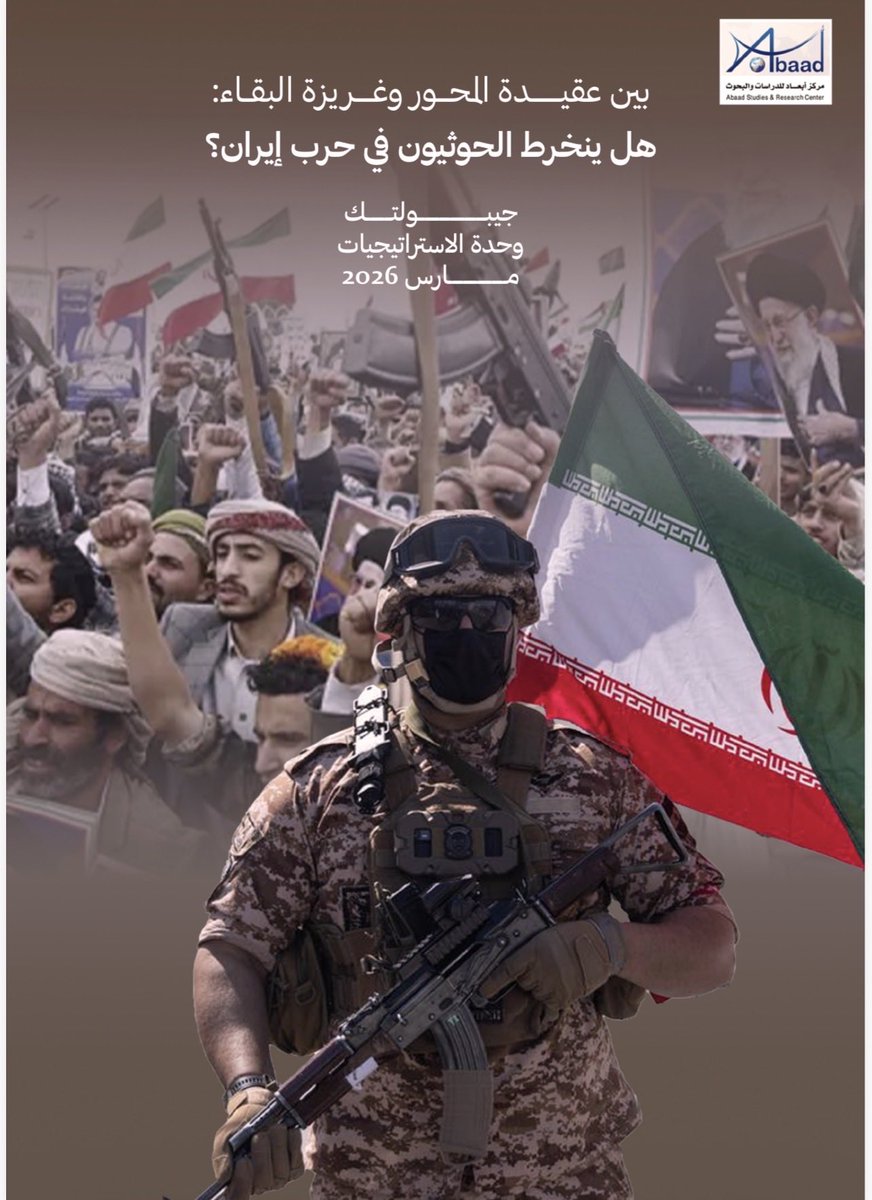
Between Axis Doctrine and the Calculus of Survival:Will Houthis Join Iran’s War?
On February 28, 2026, the Middle East entered a new phase of "geopolitical volatility"[1] following the launch of the joint U.S.–Israeli military operation “Epic Fury.” The operation was not merely a conventional deterrence campaign; rather, it constituted a strategic decapitation strike that resulted in the assassination of Iran’s Supreme Leader, Ali Khamenei, and the disruption of key command-and-control structures within the Islamic Revolutionary Guard Corps (IRGC).
This sudden rupture at the core of the “Axis of Resistance” has placed actors on the alliance’s periphery—most notably the Houthi movement in Yemen—before an unprecedented strategic dilemma that combines the imperative of political survival with an ideological commitment to the doctrine of the “Unity of Fronts.”
By the end of the first week of U.S. military operations, battlefronts in Lebanon and Iraq had already begun to flare. In contrast, the Houthis have so far adopted a posture best described as strategic anticipation. Despite widespread public mobilization and strong rhetorical expressions of solidarity with Tehran, the movement has refrained from engaging in large-scale direct military action.
The group now faces a highly complex and consequential dilemma. On one side lies its deep ideological alignment with the Axis of Resistance and the expectation that it should provide military support to its principal regional ally. On the other lies the imperative of political and military survival, as well as the need to avoid devastating U.S.–Israeli retaliatory strikes that could target the movement’s leadership and strategic capabilities—potentially threatening the very foundations of its rule in Yemen.
This report analyzes the Houthis’ current posture, the strategic drivers shaping their decision-making, the movement’s operational capabilities, and the possible scenarios for its potential involvement in the conflict.
https://t.co/b4nj5vcqAq
بين عقيدة المحور وغريزة البقاء: هل ينخرط الحوثيون في حرب إيران؟
دخلت منطقة الشرق الأوسط في الثامن والعشرين من فبراير/شباط 2026 مرحلة " السيولة الجيوسياسية (Geopolitical Fluidity)"[1]، عقب إطلاق الولايات المتحدة وإسرائيل عملية "الغضب الملحمي"، لم تكن هذه العملية مجرد ردع عسكري تقليدي، بل مثلت ضربة "قطع رأس" بنيوية أدت إلى مقتل المرشد الأعلى علي خامنئي وتفكيك مراكز القيادة والسيطرة في الحرس الثوري الإيراني. هذا الانهيار المفاجئ في "مركز" محور المقاومة وضع الأطراف الفاعلة في "الأطراف"، وعلى رأسهم جماعة الحوثي في اليمن، أمام استحقاق تاريخي غير مسبوق يخلط بين غريزة البقاء السياسي والالتزام العقدي بمبدأ "وحدة الساحات".
وفيما اشتعلت الجبهات في لبنان والعراق بحلول نهاية الأسبوع الأول لبدء العمليات العسكرية الأمريكية، تقف جماعة الحوثي في حالة من "الترقب الاستراتيجي"؛ فرغم التعبئة الشعبية والخطاب المتضامن، إلا أنها لم تنخرط عسكرياً بشكل مباشر وواسع. حيث تجد الجماعة نفسها اليوم أمام معضلة معقدة ومحفوفة بالمخاطر، ممزقة بين التزاماتها الأيديولوجية العميقة بـ "محور المقاومة" وضرورة الإسناد، وبين متطلبات البقاء السياسي والعسكري وتجنب ضربات أمريكية-إسرائيلية مدمرة تستهدف قيادتها وقدراتها الاستراتيجية والتي قد تكتب نهايتها إلى الأبد.
يحلل هذا التقرير موقف الجماعة، محركاتها، قدراتها، والسيناريوهات المتوقعة لانخراطها في الصراع.
https://t.co/lSkwlanrqx
تقدير استراتيجي جديد لمركز أبعاد للدراسات والبحوث..
بين عقيـــــــدة المحـــور وغــــريزة البقــاء: هل ينخرط الحوثيون في حرب إيران؟
للحصول على نسخة خاصة PDF، الليلة قبل النشر في الموقع الرسمي، علق هنا أو اعمل مشاركة أو اشترك في قناة المركز على التلقرام
https://t.co/oCwmzJYdPf
أو قناة المركز على الواتس آب
https://t.co/Mdvn7p5rfs






![abaadstudies's tweet photo. Between Axis Doctrine and the Calculus of Survival:Will Houthis Join Iran’s War?
On February 28, 2026, the Middle East entered a new phase of "geopolitical volatility"[1] following the launch of the joint U.S.–Israeli military operation “Epic Fury.” The operation was not merely a conventional deterrence campaign; rather, it constituted a strategic decapitation strike that resulted in the assassination of Iran’s Supreme Leader, Ali Khamenei, and the disruption of key command-and-control structures within the Islamic Revolutionary Guard Corps (IRGC).
This sudden rupture at the core of the “Axis of Resistance” has placed actors on the alliance’s periphery—most notably the Houthi movement in Yemen—before an unprecedented strategic dilemma that combines the imperative of political survival with an ideological commitment to the doctrine of the “Unity of Fronts.”
By the end of the first week of U.S. military operations, battlefronts in Lebanon and Iraq had already begun to flare. In contrast, the Houthis have so far adopted a posture best described as strategic anticipation. Despite widespread public mobilization and strong rhetorical expressions of solidarity with Tehran, the movement has refrained from engaging in large-scale direct military action.
The group now faces a highly complex and consequential dilemma. On one side lies its deep ideological alignment with the Axis of Resistance and the expectation that it should provide military support to its principal regional ally. On the other lies the imperative of political and military survival, as well as the need to avoid devastating U.S.–Israeli retaliatory strikes that could target the movement’s leadership and strategic capabilities—potentially threatening the very foundations of its rule in Yemen.
This report analyzes the Houthis’ current posture, the strategic drivers shaping their decision-making, the movement’s operational capabilities, and the possible scenarios for its potential involvement in the conflict.
https://t.co/b4nj5vcqAq](https://pbs.twimg.com/media/HDPcmxDW4AAxrjV.jpg)
![abaadstudies's tweet photo. بين عقيدة المحور وغريزة البقاء: هل ينخرط الحوثيون في حرب إيران؟
دخلت منطقة الشرق الأوسط في الثامن والعشرين من فبراير/شباط 2026 مرحلة " السيولة الجيوسياسية (Geopolitical Fluidity)"[1]، عقب إطلاق الولايات المتحدة وإسرائيل عملية "الغضب الملحمي"، لم تكن هذه العملية مجرد ردع عسكري تقليدي، بل مثلت ضربة "قطع رأس" بنيوية أدت إلى مقتل المرشد الأعلى علي خامنئي وتفكيك مراكز القيادة والسيطرة في الحرس الثوري الإيراني. هذا الانهيار المفاجئ في "مركز" محور المقاومة وضع الأطراف الفاعلة في "الأطراف"، وعلى رأسهم جماعة الحوثي في اليمن، أمام استحقاق تاريخي غير مسبوق يخلط بين غريزة البقاء السياسي والالتزام العقدي بمبدأ "وحدة الساحات".
وفيما اشتعلت الجبهات في لبنان والعراق بحلول نهاية الأسبوع الأول لبدء العمليات العسكرية الأمريكية، تقف جماعة الحوثي في حالة من "الترقب الاستراتيجي"؛ فرغم التعبئة الشعبية والخطاب المتضامن، إلا أنها لم تنخرط عسكرياً بشكل مباشر وواسع. حيث تجد الجماعة نفسها اليوم أمام معضلة معقدة ومحفوفة بالمخاطر، ممزقة بين التزاماتها الأيديولوجية العميقة بـ "محور المقاومة" وضرورة الإسناد، وبين متطلبات البقاء السياسي والعسكري وتجنب ضربات أمريكية-إسرائيلية مدمرة تستهدف قيادتها وقدراتها الاستراتيجية والتي قد تكتب نهايتها إلى الأبد.
يحلل هذا التقرير موقف الجماعة، محركاتها، قدراتها، والسيناريوهات المتوقعة لانخراطها في الصراع.
https://t.co/lSkwlanrqx](https://pbs.twimg.com/media/HC7f4j-WIAEmMDz.jpg)