Less than 24 hours after the NCAA approved its new eligibility model, 15 college basketball players filed a lawsuit challenging the rule.
The change grants athletes five seasons within a five-year window and largely eliminates additional eligibility extensions. https://t.co/1h4OeMZucd
The redshirt is dead — and most programs aren’t ready for what that means.
Every scholarship now starts a 5-year clock the moment a kid enrolls or turns 19. No extensions. No medical freezes.
That changes recruiting, roster building, and player development in one stroke.
Birthday math is now part of every offer conversation. A kid who turns 19 before he steps on campus has already burned time. Coaches who ignore that will regret it.
The portal gets leaner but more expensive. Fewer players with extra eligibility means a smaller pool — and the ones in it will cost more.
The programs that win this era won’t be the ones with the most NIL money. They’ll be the ones who evaluate 17-year-olds better than everyone else and stop hiding developmental needs behind a redshirt year.
The margin for error just got really small. @jrichardgoodman@VinnysCorner1@SergeantMartee@BeholdPaleH0rse #portal #NCAA @latsondheimer@KasselMedia #recruits #eligibility #hssports #coaches #coach
The Division I Cabinet has unanimously voted to approve the age-based eligibility model. Additional details to follow.
The Cabinet’s decision is not final until its meeting concludes Wednesday.
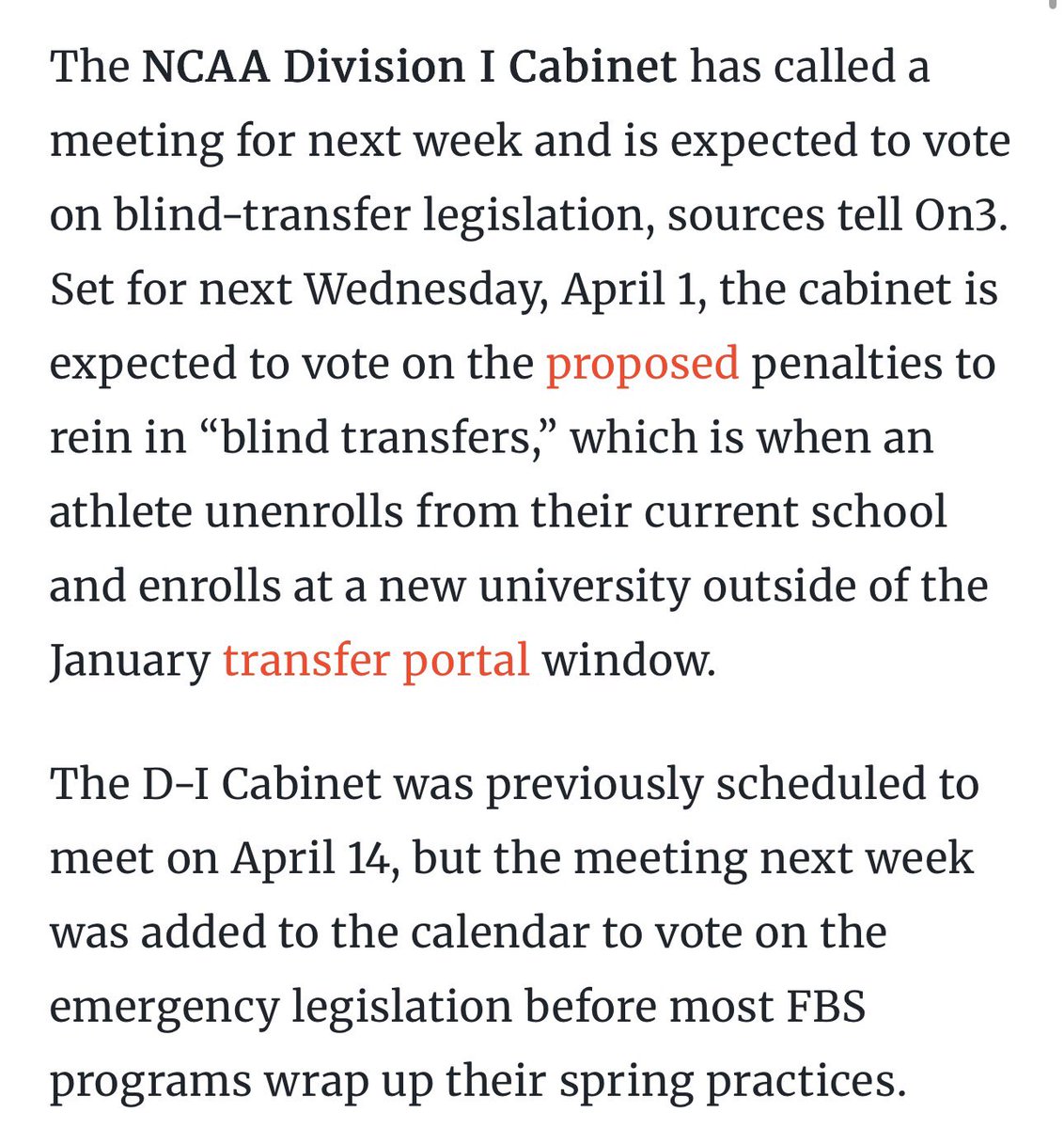
The NCAA D-I Cabinet has called a meeting for next week and is expected to vote on blind-transfer legislation, sources tell @On3.
The meeting was added to the calendar to vote before most FBS programs wrap up their spring practices.
Details: https://t.co/lpmqNepiiZ
Agree with Dan that a narrow eligibility bill has a chance of passing through Congress.
Something that limits college eligibility to 5 seasons and/or has an age limit would likely have sufficient support.
The issues arise when you start adding limits on athlete comp & movement.
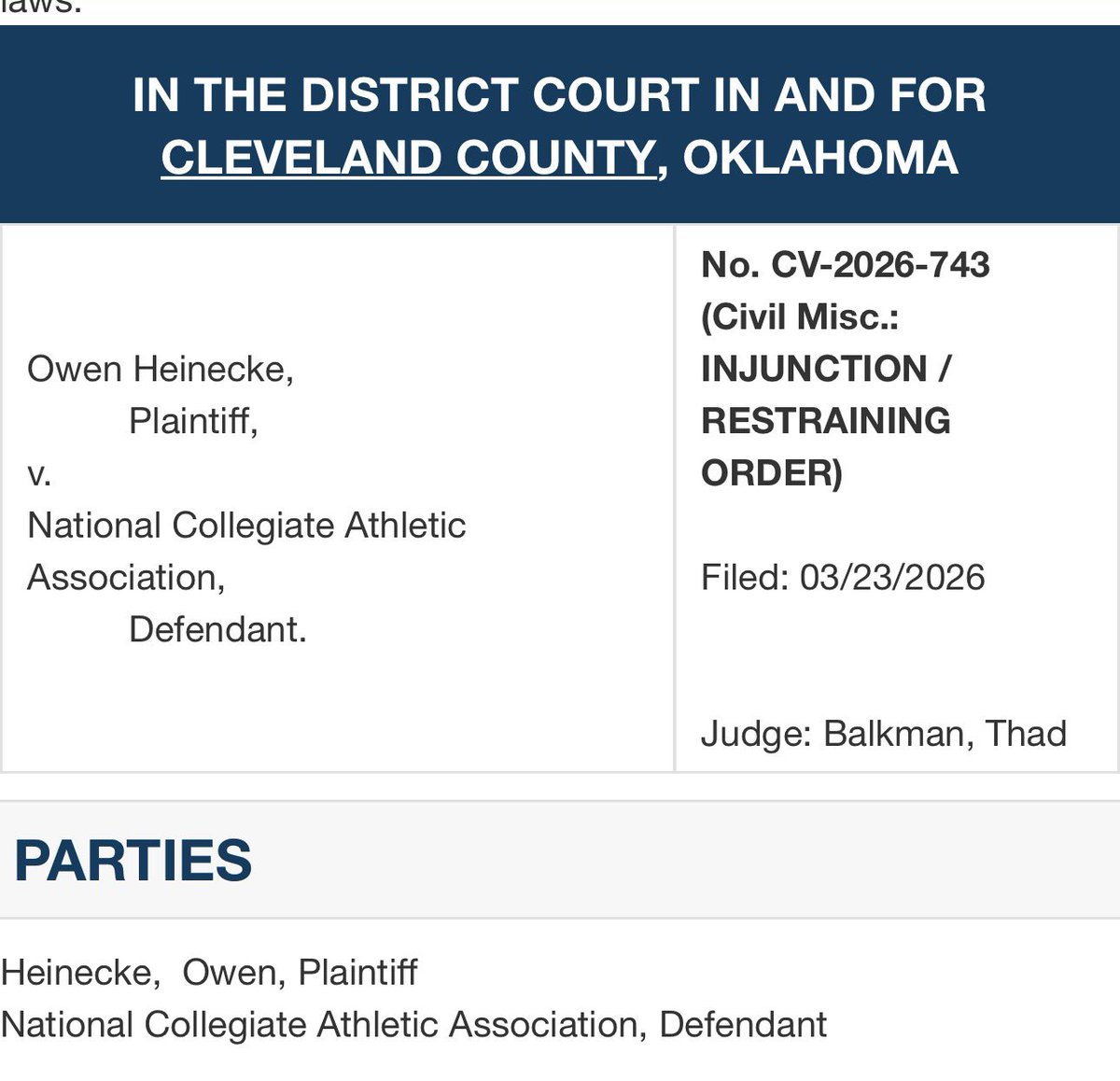
The latest eligibility lawsuit against the NCAA.
Following the recent trend, it was filed in Oklahoma state court.
A hearing on the motion for a preliminary injunction is on April 16.
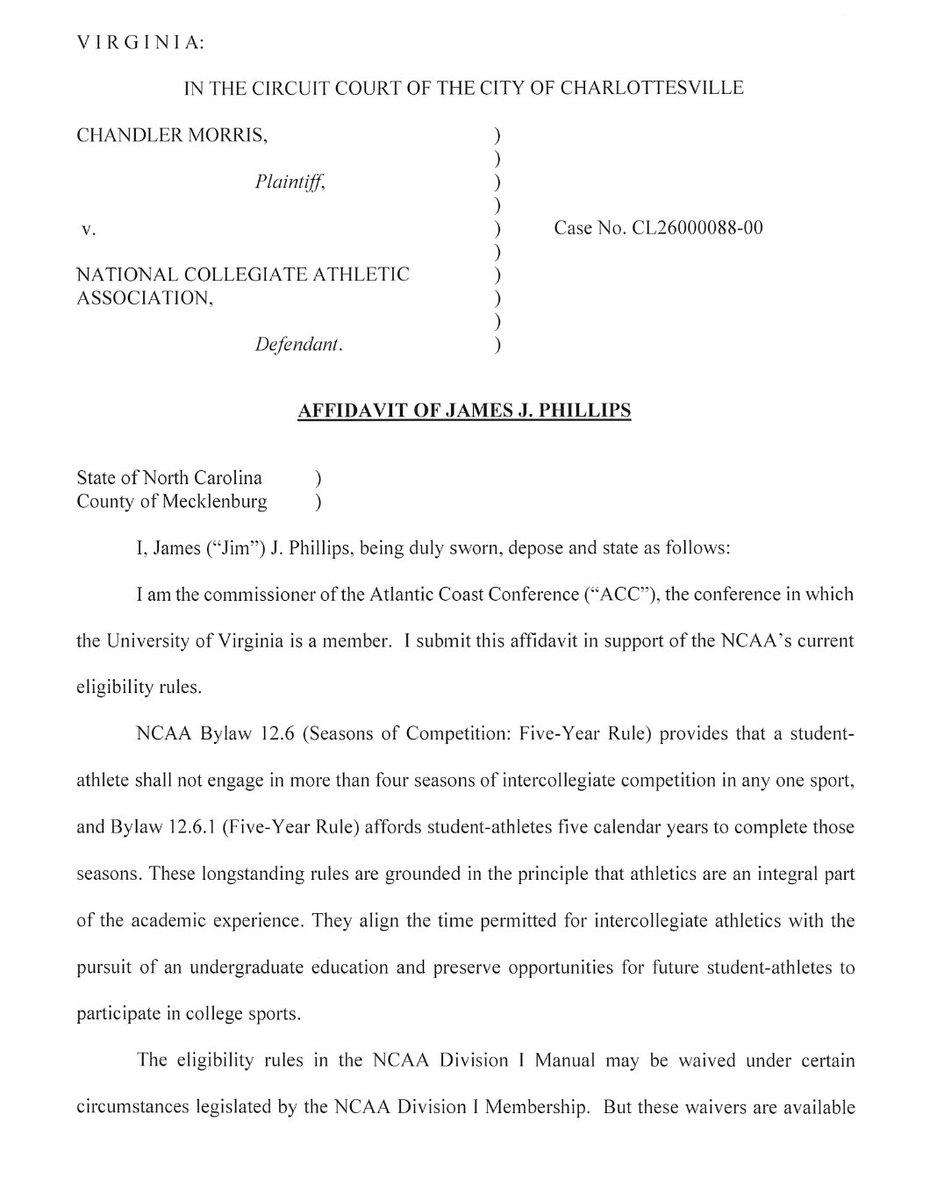
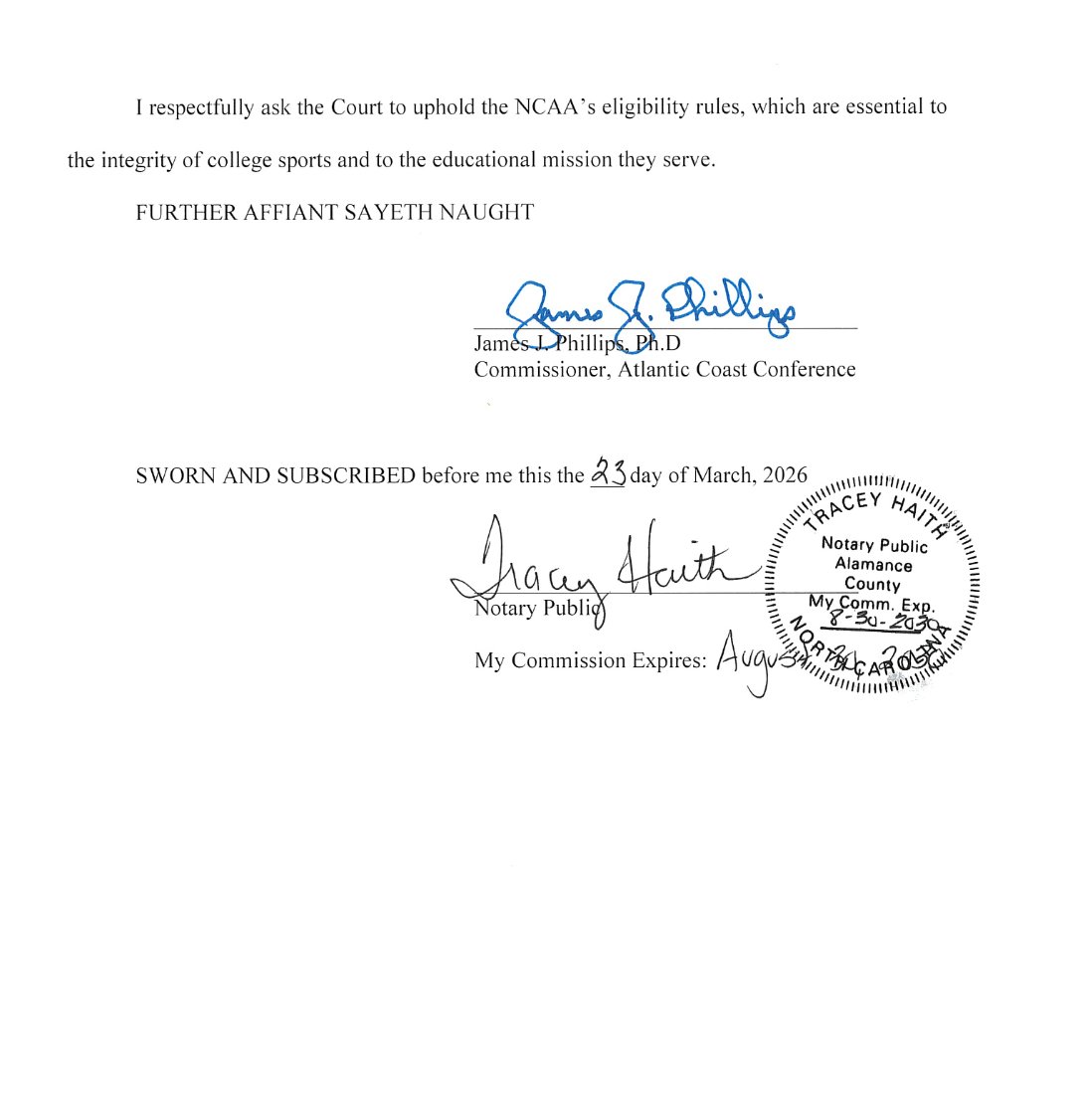
In an NCAA filing in the Chandler Morris eligibility case, the association includes an affidavit from ACC commissioner Jim Phillips in support of the NCAA's eligibility rules.
The transfer portal hasn’t “screwed up college sports.” Failing to negotiate terms with the athletes (the labor) has made it uncomfortable for certain college sports executives.
Tommy Tuberville’s bill is simple: Place anticompetitive restrictions on athletes and let the rich (coaches, athletic directors, etc.) get richer.
This will “fix” the issues of control that leaders should have never possessed absent bargaining with athletes.
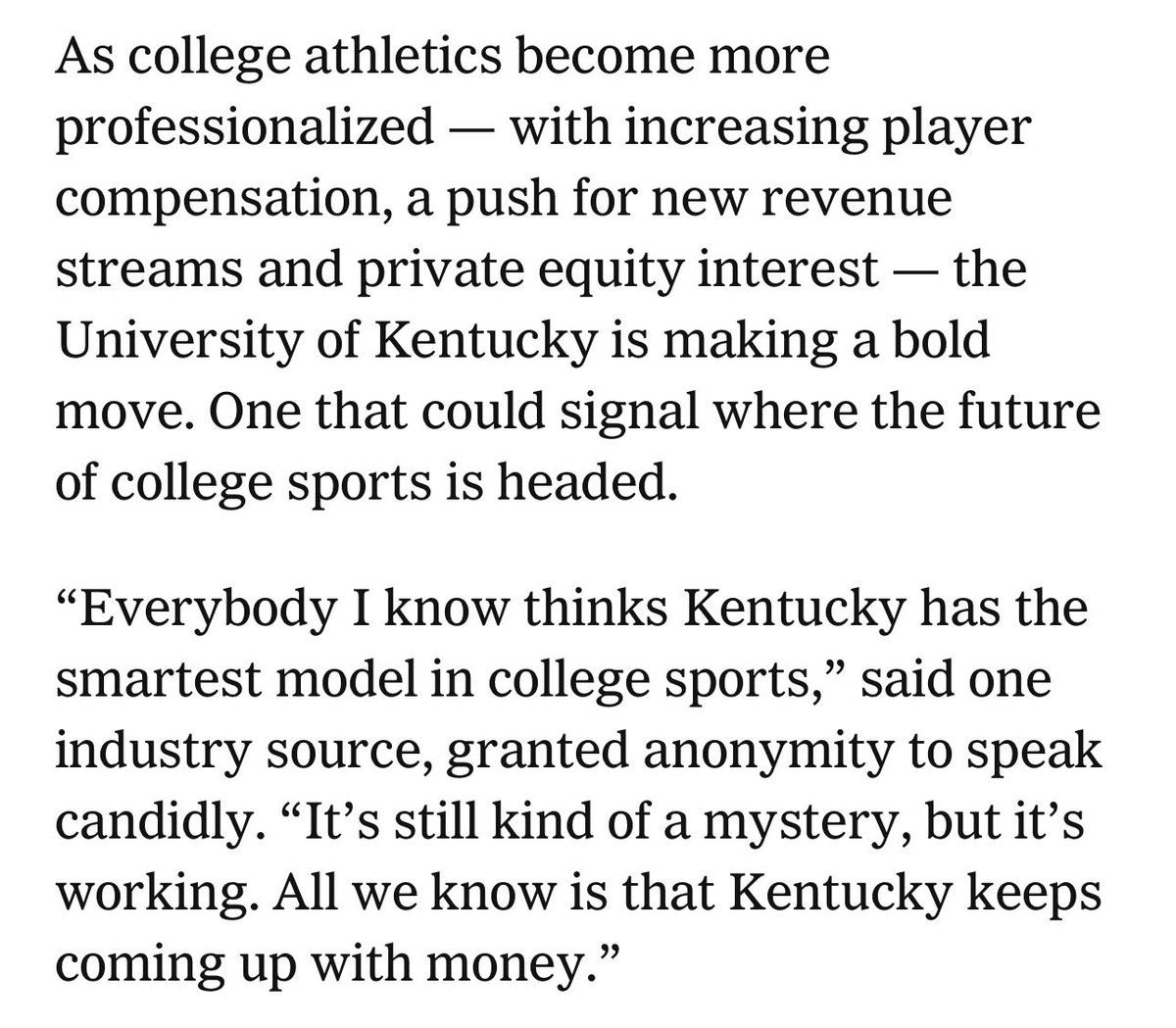
Kentucky has organized and is operating its athletics department in a way that acknowledges where college athletics are at, and that prepares it for where they are headed.
Others will definitely follow.
As noted, the changes are all behind the scenes.
Fans see no change.
This is very smart.
Having the ability to allow businesses to more easily use university IP in connection with athlete NILs will lead to more NIL deals for athletes.
In an effort for Congressional legislation of college sports, dozens of dignitaries - many appearing at the White House roundtable - have been invited to serve on five presidential committees, each charged with studying an issue, plus an oversight committee to review their work.
If invitations are accepted, the oversight committee includes six presidents/chancellors from Georgia, Nebraska, Tennessee, Kansas, Utah and North Carolina, plus former Clemson president Jim Clements, Cody Campbell, Randy Levine and Gov. Ron DeSantis.
The five “issues” committees are Legislative (work with Congress for federal antitrust protection), Rules (determine NIL, portal, eligibility standards), NCAA Reform (future governance), Media (media rights and SBA) and Player-Agent relationship issues.
A comprehensive federal college athletics bill likely has no chance of passing unless it provides athletes with the ability to collectively bargain or engage in a similar process.
So hopefully that’s part of the discussion.
Otherwise it’s just more of the same.
Taking a page from the playbook on opposing the Charles Bediako lawsuit.
Another interesting scenario where a commissioner is opposing one of its schools.
A bill being pushed by someone who still believes high level college sports are “amateur competition” should be dismissed on that alone.
Tuberville also says the quiet part out loud, that the bill aims to “bring the price down on a lot of these players.”
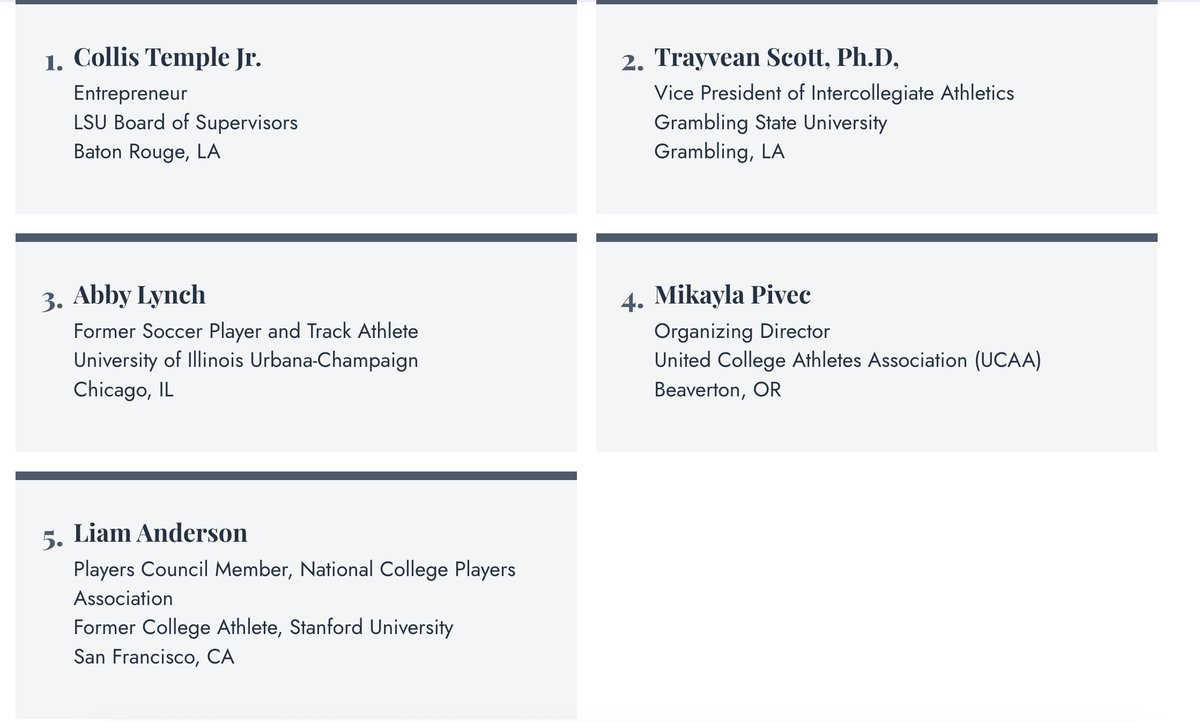
Here are the witnesses for Thursday’s college sports hearing before the Senate Health, Education, Labor & Pensions Committee. The committee, chaired by Sen. Bill Cassidy (R-La.), potentially holds partial jurisdiction over any college sports legislation moving through the Senate.
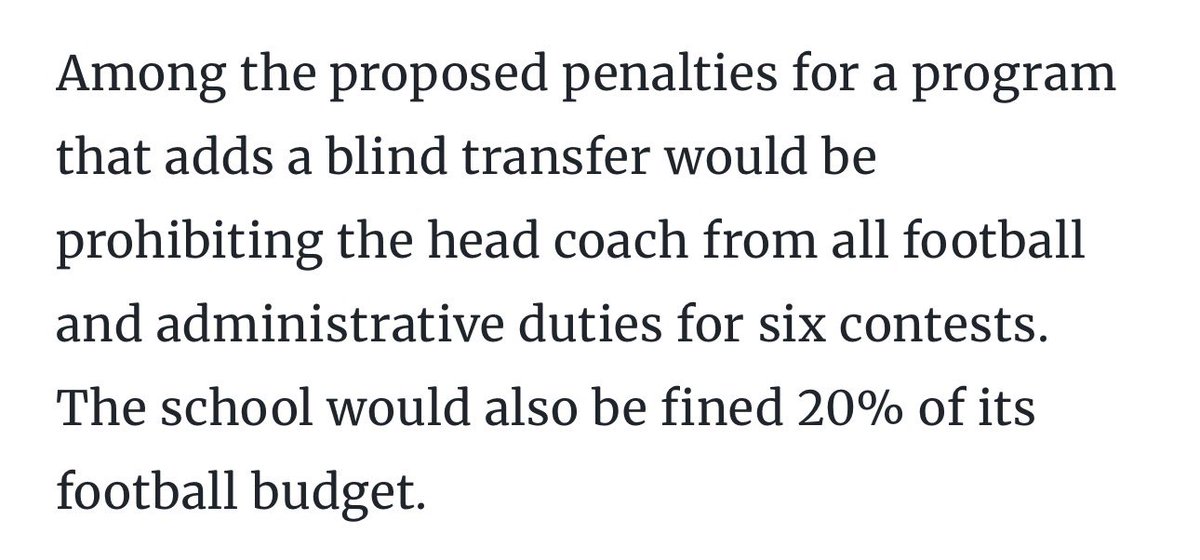
Assuming this proposal to prevent “blind transfers” is approved, more litigation against the NCAA will probably be on the way soon.
Attempting to operate college football like the NFL doesn’t work when there is no legal protection for the rules limiting player movement.