Due to a reduction in staff, NOAA GLERL's communications services will be taking an indefinite hiatus.
Please follow @ciglr_um to stay updated on GLERL and CIGLR's collective Great Lakes science.
Do you study, model, or observe the atmosphere around the Great Lakes (or any other large lake)? Submit to our session “Atmospheric Interactions with Large Lakes” at IAGLR!
📢 #CIGLR is Accepting proposals! for 2025 CIGLR Programs! Consortium members may apply for a suite of programs that aim to build collaborative partnerships through career development opps, visionary science & impactful outreach.
Learn more & apply: https://t.co/BUcgq471D0
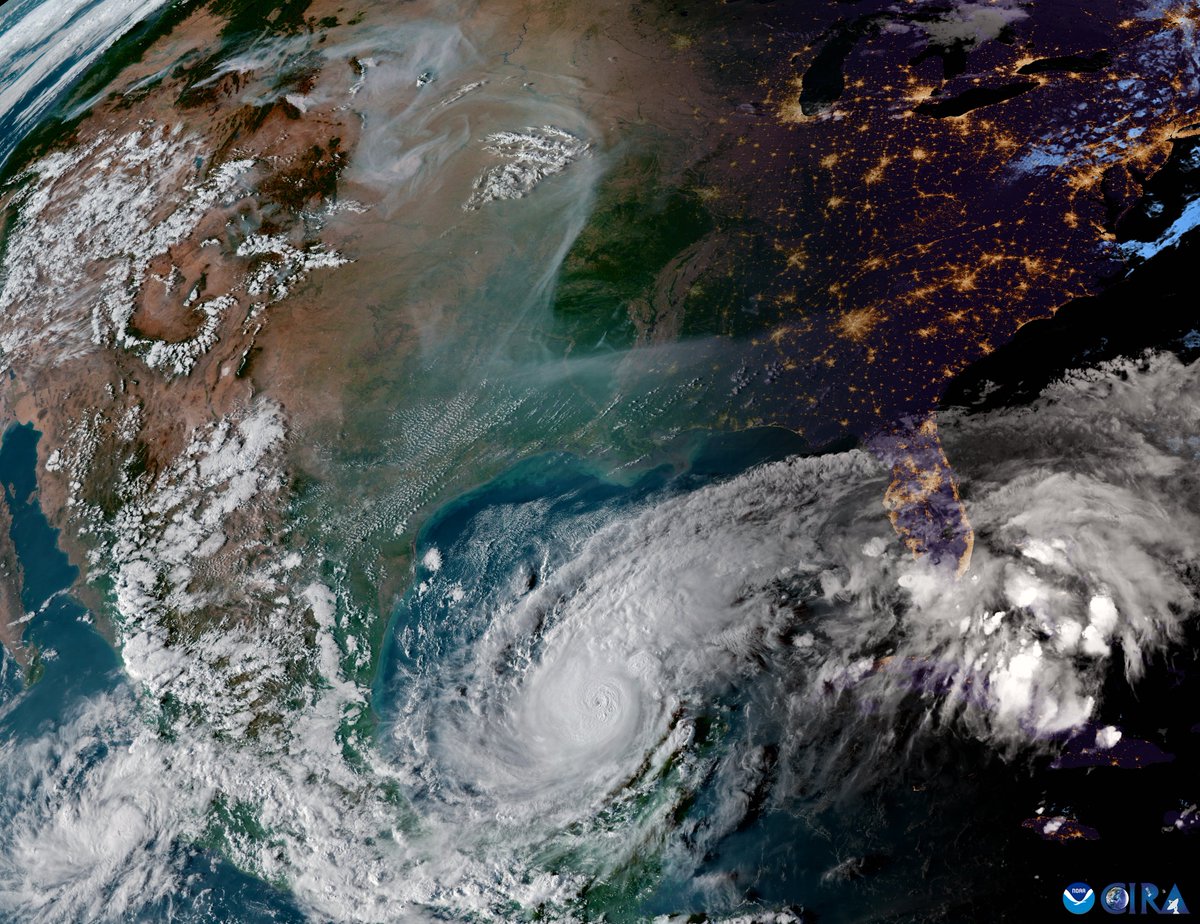
Inside the flight station aboard @NOAA’s WP-3D Orion 'Miss Piggy' as we fly straight into Hurricane #Milton!
These flights collect critical data that helps improve forecasts and support hurricane research.
Follow @NHC_Atlantic for the latest forecast and advisories.
🎥Credit: Lt. Cmdr. Joshua Rannenberg, NOAA Corps
Helene continues to make its way towards the Tennessee Valley where it is expected to stall out. This will bring a chance for heavy rain across those locations. Here in AR, some rain will be possible in addition to gusty winds. Northeast AR will see the greatest chance. #arwx
News Release—Kuwohi name restored to the highest peak in the Smokies
The U.S. Board of Geographic Names voted today in favor to change the name of Clingmans Dome to Kuwohi.
Full news release at https://t.co/ceRZOQ5LWd
@Kelley_Murphy_8 Idk what you’re talking about I actually *prefer* to sleep sitting directly upright with my head falling down at an agonizing angle. Next to a stranger.
@UMichiganNews is highlighting our @theAGU GRL paper on Great Lakes cyclones and their trends in the past 60 years! This research is extra special as it started with a @CIGLR_UM summer fellowship with a @ValpoU met student https://t.co/PLyi0thiGR
❄️🧊 #CIGLR's Ayumi Fujisaki-Manome discusses her research & the challenges of predicting & monitoring #ice weather events. Her goal is to improve predictability of hazardous weather to support the community & their preparedness & resilience: https://t.co/ThbAWNJ1so #GreatLakes
Light levels are a key driver of #GreatLakes ecosystems. New GLERL/@CIGLR_UM research uses biophysical models to predict the reduction of light available for photosynthesis across water quality conditions—info that will help support GL research & mgmt. https://t.co/aaAfC6aBOS
@DrAaronHill Same, except I have a
2.5) have everyone around you including yourself and your kids get sick at staggering intervals so you can’t work for two weeks straight
See #TwistersMovie & wonder what the stuff on their cars actually does?
Many of the props in the film are inspired by real equipment used by NSSL. Dr. Sean Waugh explains one such system, the Mobile Mesonet.
🌪️ https://t.co/WMxRGpTkPn
@NOAA@NOAAResearch@NWS#TwistersNOAA