$SOUP is sitting below a $2.27K market cap.
That’s incredibly early.
What makes it more interesting?
The dev has built a strong reputation and is one of the most trusted builders in the @SUPRA_Labs ecosystem.
At this stage, the market is still tiny.
If the community and ecosystem traction grow, today’s valuation could look very different.
We’re early. Position now or watch from the sidelines.
CA:
0xf11aa44964cfa8396f6519b54cb212915477cfb792c6451a5d79dc6df352e908
12 Websites that pay you daily
1. https://t.co/t56ZnkuSjS
2. https://t.co/8Kjqcy7Brn
3. https://t.co/krYG4xRFgi
4. https://t.co/1CAxq2VTvU
5. https://t.co/vihjSrPhwx
6. https://t.co/EdUvMa8Iax
7. https://t.co/JnZyex6Qe1
8. https://t.co/eCzKolnrZy
9. https://t.co/MvYAWQlSg4
10. https://t.co/oQY7eckiwl
11. https://t.co/7FMCuR8cD4
12. https://t.co/kjvMfDPiYV
13. https://t.co/UO4WrXZF26
Follow me for more AI IDEA.
Like , Comment - "Websites" and repost so that others can also take benefits !!
IF YOU DIED TOMORROW🚨,
YOUR FAMILY WOULDN'T BE ABLE TO ACCESS A SINGLE THING YOU OWN DIGITALLY.
BANK ACCOUNTS. PASSWORDS. CLOUD STORAGE. ALL OF IT PERMANENTLY LOCKED AWAY.
HERE'S HOW TO FIX IT IN 30 MINUTES:
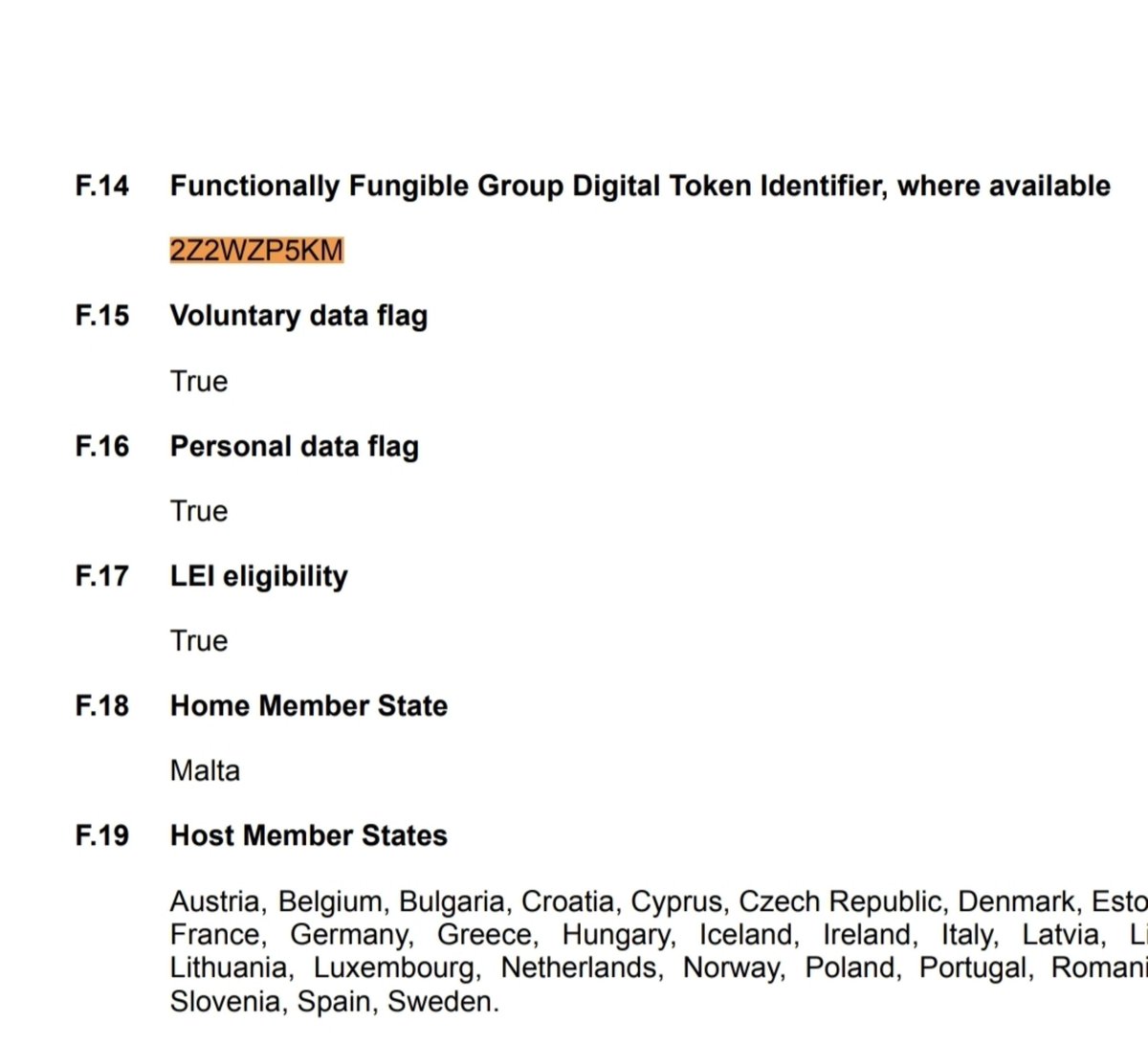
🔥📢 BREAKING: PI NETWORK OFFICIALLY APPEARS IN DTIF'S REGISTRY (ISO 24165) 😲
After the MiCA Whitepaper, here's another major legal-technical milestone the Pi community needs to know about!
📌 The DTI Foundation (DTIF) the official Registration Authority for the global ISO 24165 standard has ISSUED a record directly linked to Pi Network on its Registry system.
🔍 RECORD DETAILS:
➤ Identifier: 2Z2WZP5KM
➤ Type: Equivalent Digital Token Group
➤ Long Name: Pi Network
➤ Symbol: PI
➤ Status: ISSUED ✅
➤ Class of Information: VALIDATED ✅
➤ Date Issued: 2025-12-12
➤ Equivalent Digital Token Identifiers List: 2K95TZ2QN, the exact DTI code Pi Network disclosed in its MiCA Whitepaper!
🌐 View it directly on DTIF's official Registry:
👉 https://t.co/QhPERSYmEy
🤯 WHAT DOES THIS MEAN?
➤ This is no longer just a self-declared claim from Pi, it's a record validated and issued by DTIF itself, the independent authority behind the ISO 24165 standard, on their own public system.
➤ ISO 24165 is the global token identification standard used by exchanges, banks, and financial institutions to unambiguously identify digital assets.
➤ Appearing in the Registry with ISSUED + VALIDATED status is a critical infrastructure milestone for exchange listings, banking integration, and institutional-scale OTC trading.
😲 From a mobile mining project, Pi Network now sits inside the globally recognized digital asset identification system.
🔥 This is living proof that while many still doubt it, the Pi Core Team has been quietly completing every piece of the legal infrastructure puzzle, step by step.
😉 Follow https://t.co/LrYeO6qqbJ
♻️ Repost
💭 Comment
🔔 Turn on Notifications
Does anyone else feel that running AI models and agents locally, on your own computer, should be much easier?
The privacy benefits are clear: your data stays with you. But while there are many open-source models and projects out there, turning them into a usable local AI agent is still far too hard for non-engineers.
🔥🇺🇸 THIS IS NOT A STORY ABOUT BITCOIN. IT'S A STORY ABOUT WHAT NICOLAS WAS SEARCHING FOR.
This post does not claim anything as fact.
However, when several historical pieces are placed side by side, they raise an interesting question:
Could the vision behind Pi Network have begun taking shape at almost the same time Bitcoin was being born?
📌 2008
While Satoshi Nakamoto published the Bitcoin Whitepaper, Nicolas Kokkalis was completing his PhD at Stanford, focusing on areas such as:
• Computer Science
• Distributed Systems
• Human-Computer Interaction (HCI)
📌 2009
Bitcoin Mainnet officially went live.
Around the same period, Nicolas began building large-scale technology and social application projects, including the social gaming platform Gameyola.
📌 Before Ethereum Existed
According to Pi's official profile, Nicolas had already been researching frameworks for smart contracts on fault-tolerant distributed systems long before the concept became widely known through Ethereum.
What makes this particularly interesting is the contrast in focus.
Bitcoin was attempting to answer the question:
"How do we create decentralized money?"
Meanwhile, Nicolas appeared to be exploring a different challenge:
"How can distributed systems and blockchain technology become usable for everyday people?"
Looking at what Pi Network is building today:
• KYC
• Digital Identity
• User Experience (UX)
• Mobile-First Access
• Real-World Utility
There are some notable parallels with that earlier research direction.
A detail that often goes unnoticed:
Back in 2008–2009:
• Bitcoin had not yet become a global phenomenon.
• Ethereum did not exist.
• Smart contracts were not a mainstream topic within the crypto industry.
At the same time, Nicolas was already working with:
• Distributed Systems
• Distributed Consensus
• Human-Computer Interaction
• Early smart contract frameworks for fault-tolerant systems
This is why many members of the Pi community argue that Nicolas did not emerge after the crypto wave.
The available historical record suggests that he was already active in foundational fields closely related to blockchain technology from a very early stage almost alongside Bitcoin's first steps into existence.
Repost ♻️ | Comment 💭 | Follow https://t.co/LrYeO6qqbJ ❤️ | Turn on Notifications 🛎️ to catch more high-quality analysis!
$1,000,000 Challenge Account Giveaway to Celebrate The Launch of WSFunded on Prop Firm Match 🔥
To participate:
🤝 Follow @PropFirmMatch and @WSFunded
❤️️ Like this post and repost
👥 Tag 2 friends
Winners will be announced in 4 days
Note: We will only accept one entry per user, no duplicate accounts, no fake accounts. Each person is entitled to win only once per month.