December 5, 2023
Page 1/3.
MOVING PAST GLOBAL WARMING AND ECOLOGICAL DAMAGE.
PREAMBLE
Most can agree that the current climate crisis can not be blamed on the activities of the past couple of centuries. We have only, within the past 50- 70 years, become aware about the environmental damage from our unbridled industrialization aided by fossil fuels and over-exploitation of resources leading to endless wars, famines, pandemics, acid rains, hole in the protective ozone layer, increasing desertification, drought and who can forget the extremely hot couple of years sure to continue and get worse.
SAVING NOAH'S ARK.
The upward trajectory in greenhouse gasses, as depicted in charts presented in previous posts of this thread (scroll up), needs to be reversed. The world has begun to make progress as we also see in the last chart, but efforts need scaling up. The solutions to reverse the ecological damage and restore the planet are costly and life-changing.
SOLUTIONS/PATHWAYS :
1. Establish green sources of energy.
Transition away from fossil fuel-based power & electricity to green non-carbon emitting power sources like solar, wind, thermal, hydro, nuclear, and hydrogen.
1. Green energy should power all modes of transportation like
Battery electric vehicles (BEV or AEV),
Hydrogen fuel Cell Electric Vehicle (FCEV),
Hybrid Electric Vehicle:
Hybrid Electric Vehicle (HEV) and,
Plug-in Hybrid Electric Vehicle (PHEV).
2. Marine Shipping and Aviation have started using hydrogen fuel cell batteries and SAF to transition away from bunker fuel and kerosene.
3. Hard to decarbonize industries can transition to hydrogen.
Green ammonia is an ideal hydrogen storage medium and energy carrier that can be split back into hydrogen and nitrogen using the ammonia cracking process. The hydrogen can then be used in numerous industries as a climate-neutral energy carrier to generate continuous, high intensity heat required in steel making, cement, chemicals, and other heavy industries.
INTERIM MEASURES TO ABSORB CO2e FROM AIR AND INDUSTRIES.
The pathways, subject of this thread, is the use of carbon capture, utilization, and storage technologies -CCUS & DAC and,
Nature-based carbon sinks are also discussed here.
CARBON CAPTURE, UTILIZATION, AND STORAGE
Carbon capture, utilization, and storage, or CCUS, refers to the nature and human technologies that absorb CO2 for industrial uses or permanently stored.
CARBON CAPTURE ARE:
TECH-BASED-CCS AND DAC.
NATURE-BASED SINKS.
1. CCS captures carbon dioxide (CO2) emissions from on-site industrial processes, such as steel and cement production, or from the burning of fossil fuels in power generation (CCS Image attached). CCS are stop-gap measures until hydrogen can be used. (Diagram attached).
2. DAC - Direct air capture technologies extract CO2 directly from the atmosphere at any location, unlike carbon capture defined in #1 above, which is generally carried out at the point of emissions, such as a steel plant. DAC is seen as a major technology to solve global warming to capture & permanently stored away co2e. (Diagram attached).
The CO2 from CCS & DAC is pressurized, then shipped to facilities to be used for a variety of applications or stored deep underground in geological formations.
COSTS.
MODE 1- CARBON REMOVAL AT SITES:
The current cost of employing CCUS technologies at the sites is high —$60 to $70 per metric ton of CO2 for power plants for capture, storage, and transport. Utilization of the produced CO2 can help defray costs, but investment in CCUS often would not occur without a supporting policy framework (discussed under IRA).
MODE 2 - DIRECT AIR CAPTURE
Capturing CO2 from the air - DAC is the most expensive application of carbon capture. The Holy Grail for carbon removal to be economically feasible is getting prices down to around $100 per ton. That’s far from current removal costs, starting at hundreds of dollars and exceeding $1,000 per ton..( continues)
July 27, 2024
@climate @EUClimateAction
WHAT IS THE STATE OF CARBON REMOVAL?
ARE the technical gizmos or the unconventional carbon capture removal and storage methods destined to end up as WHITE ELEPHANT once the state & private funding runs out. To date, their performance has been dismal.
The second edition of The State of Carbon Removal report provides a deep examination of where the carbon removal industry stands today, where it needs to go this century to meet Paris climate targets, and the biggest factors that will influence how we get there.
Published by the German Institute for International and Security Affairs, the University of Oxford, and several other organizations, the study gives a sobering yet hopeful assessment of human-driven carbon removal.
ARE WE ON TRACK?
To achieve the Paris Agreement targets, in the next 25 years we must restore our planet’s native ecosystems, removing billions of tons of carbon from the atmosphere in the process, and increase technology-enabled durable carbon removal by around 1,500x from today’s levels.
HERE'S THE SURPRISE!
Nearly all carbon removal today occurs via nature-based pathways
In 2023, human activity removed some 2.2 billion tons of CO2 from the atmosphere, storing it in sinks that can hold that carbon on a timescale of decades or more.
More than 99.9 percent of this drawdown occurred via nature-based removal pathways, sometimes called conventional removal pathways. Conventional carbon removal is overwhelmingly driven by forest restoration and improved forest management; other nature-based removal pathways include wetland restoration and soil carbon sequestration.
AND THE TECH GIZMOS HAVE...?
Of the 1.3 million tons of CO2 removal that came from novel drawdown methods, the majority took place via three pathways: bioenergy with carbon capture and storage (BECCS), biochar and enhanced rock weathering.
TAKE NOTE:
Nature-based removals must nearly double in the coming 6 years to stay on track. To achieve the Paris targets, carbon removal must rise from around 2.2 billion tons of CO2 per year today to over 4 billion tons by 2030. Nature-based removals, such as ecosystem restoration and agroforestry, will deliver some 97 percent of this.
Country-level carbon removal pledges fall short of even best-case-scenario Paris pathways.
Carbon removal: Last but not later.
There’s an inverse relationship between the amount of carbon removal needed to stay Paris-consistent and emission reductions: The steeper the emission cuts we achieve in the next six years, the less reliant we’ll be on carbon removal to limit climate damage. The slower we are to decarbonize our economy, the more carbon we’ll need to remove via conventional and novel pathways.
Relying too heavily on high-tech gigatonne-scale carbon removal to limit the impacts of climate change is risky. The capacity of nature to remove carbon from the atmosphere is limited by total land on Earth and other land use needs, such as food production. And tech-enabled CDR MAY NOT SCALE AS MUCH or as quickly as we hope.
Even in the best-case-scenarios, though, we’ll need to more than triple our planetary capacity to capture and sequester carbon in the coming three decades.
The report’s conclusion is clear: Aggressive investment into nature restoration this decade is nonnegotiable. Alongside this, we’ll need to ramp up both public and private investment into novel carbon removal technologies to protect the quality of life of future generations.
RELAX, there are no built-in penalties for missing the targets established in the Paris Accord, unlike its predecessor, the Kyoto Protocol, which laid out penalties, causing many to bail.
Finally, the Paris Agreement mechanism calls for more ambitious targets every 5 years.
https://t.co/XcjV9QXg6M
AUGUST 17, 2023
Is Hydrogen looking like an economic bubble and are we getting ahead in the pathways to DECARBONIZATION?
Cc:
@MLiebreich, CEO Liebreich Associates, Managing Partner EcoPragma Capital, Founder & Contributor @BloombergNEF@s_guilbeault Minister of Environment and Climate Change
@DavidPiccini Minister of Environment, Conservation & Parks
Michael Liebreich told hundreds at a keynote speech at the World Hydrogen Congress in Rotterdam that,
"Hydrogen is starting to look like an economic bubble and here’s why"
Potential uses of H2 are in direct competition with electric alternatives that tend to be cheaper and easier, analyst tells the hydrogen conference
-The view that hydrogen is a silver bullet or a Swiss Army knife capable of decarbonizing everything from heating to transport to heavy industry and power generation is “dangerous”, Liebreich said. “This leads us into bubbles.”
The independent analyst, adviser and investor explained that 94 million tonnes of grey and black hydrogen made from unabated natural gas and coal — the “bad stuff”, as he put it — were produced each year, emitting 830 million tonnes of carbon, and that these figures were still rising.
Before we position hydrogen as the solution to climate change, we first have to deal with hydrogen as a problem in climate change. Just replacing this dirty hydrogen — used mainly in chemicals production and oil refining — with green H2 made from renewable energy would require 143% of all the wind and solar installed globally to date, Liebreich said.
“What I’m saying here is that the supply chain for renewables is not going to cope if we do anything other than the most essential [uses of hydrogen],” he explained.
-If we do the German steel industry [ie, replacing fossil fuel use with green hydrogen], that takes up 60% of current German wind and solar output.
-“If we go to ammonia shipping, it’s 300% of China’s current renewables output. The numbers are staggering.”
The use of clean hydrogen in a net-zero world would be limited, he explained, by the physical properties of the gas;
-the sheer amount of renewable energy that would be required if green H2 were to decarbonize certain sectors;
-and the fact that hydrogen is in direct competition with electric options that are likely to be lower-cost and easier.
https://t.co/dtAoAbjIH1
To give credence to the subject matter, the world's largest hydrogen-based ammonia project was shelved this week due to increased costs and a lack of market.
Fertiliser giant Nutrien has put the plant in Geismar, Louisiana, on hold after announcing it only last year.
https://t.co/wDwjNkpMGv
Page 3/3
Recently, as 2021, 81% of the CO2 captured by CCUS projects worldwide was being sold to oil companies for EOR.
However, the use of CO2 for enhanced oil recovery (EOR), it represents one of the challenges of “utilizing” carbon: many of the uses for captured CO2 create their own emissions or do not keep the gas permanently out of the atmosphere.
To avoid creating additional emissions, CO2 can be stored instead of used. In most cases, carbon storage means pressurizing CO2 until it becomes a liquid and injecting it deep underground.
3. NATURE-BASED CARBON CAPTURE OR CARBON SINKS:
1. BECCS - BIOENERGY WITH CARBON CAPTURE AND STORAGE.
Biomass sources used in BECCS include agricultural residues & waste, forestry residue & waste, industrial & municipal wastes, and energy crops specifically grown for use as fuel. The term 'negative carbon' used to describe the product is controversial.
2. AGRICULTURAL AND FORESTRY RESIDUES.
Globally, 14 Gt of forestry residue and 4.4 Gt residues from crop production (mainly barley, wheat, corn, sugarcane, and rice) are generated every year. This is a significant amount of biomass that can be combusted to generate 26 EJ/year and achieve a 2.8 Gt of negative CO2 emission through BECCS. Utilizing residues for carbon capture will provide social and economic benefits to rural communities. Biochar has become a much sought-after commodity.
3. MUNICIPAL SOLID WASTE.
Municipal solid waste (MSW) is one of the newly developed sources of biomas. Waste collected from daily life is recycled via incineration waste treatment process. Waste goes through high temperature thermal treatment, and the heat generated from combusting organic part of waste is used to generate electricity.
For every 1 kg of waste combusted, 0.7 kg of negative CO2 emission is achieved (note: controversial. Happens only when emissions are captured by expensive technology). Utilizing solid waste also has other environmental benefits.
4. OCEANS AS CARBON SINKS.
The ocean generates 50 percent of the oxygen we need, absorbs 25 percent of all carbon dioxide emissions, and captures 90 percent of the excess heat generated by these emissions.
5. FORESTS AS CARBON SINKS.
Forest management actions are necessary to support maintaining or enhancing the forest carbon sink, which offsets about 15 percent of the U.S. fossil fuel emissions.
Page 3/3.
References:
https://t.co/XziobE23mp
https://t.co/8l1P68kPN3
https://t.co/pkyQw4C88d
https://t.co/wvhXxcWEa5
July 25, 2025
How would you like your butter made out of air, i.e., the gases in the air?
Bill Gates-backed startup makes butter out of air, claims it tastes really good: 'Like the real thing'.
A California-based startup backed by billionaire philanthropist Bill Gates has claimed that they are making butter using a complex process that does not require the use of milk or any other dairy product, The Guardian reported. Savor creates butter with chains of carbon dioxide, hydrogen, and oxygen, and claims that it tastes "like the real thing."
The startup has been experimenting with creating diary-free alternatives to ice cream, cheese, and milk by a thermochemical process that allows it to develop fat molecules using gases.
Real butter has a carbon footprint of 16.9kg CO2 equivalent per kg while that created by Savor has a carbon footprint of less than 0.8g CO2 equivalent per kg, The Guardian reported. Look for it on the market shelves in 2025.
https://t.co/ssfRGUkT5U
September 21, 2023
MAJOR BREAKTHROUGH - CARBON-NEGATIVE CEMENT
Brimstone (https://t.co/Tfy4dlHPMs) a leader in industrial decarbonisation, has received third-party certification that its cement meets or exceeds ASTM C150 standards for ordinary Portland cement, becoming the first ultra-low carbon, carbon-neutral or carbon-negative cement to meet this critical and universally accepted industry requirement.
- This achievement validates that the cement Brimstone produces is ordinary Portland cement, the type of cement used in virtually all construction today.
Brimstone is advancing plans to deploy its technology at scale. The company will construct its pilot plant on land it acquired near Reno, Nevada, and is engaging in site selection for its first commercial-scale plant.
- It has already initiated negotiations for offtake agreements for its commercial plant with construction companies, as well as real estate and corporate partners.
UNIQUE PROCESS, PATENTS PENDING.
Brimstone’s process creates what’s known as ordinary Portland cement (OPC), but instead of using limestone which releases significant quantities of CO2 upon heating embedded in the rock, it involves grinding up calcium silicate rock and using a leaching agent to pull out the calcium.
- Calcium silicate makes up about 50% of the Earth’s crust and is so common that it’s often crushed up and used to make gravel. The process also generates magnesium compounds that permanently absorb CO2 from the air, making the process carbon-negative.
- The process is subject to four patents.
In addition to producing the same industry-standard OPC used for 150 years, Brimstone’s process also produces supplementary cementitious materials (SCM)—another core component of concrete—streamlining the supply chain while further reducing emissions.
SAME PRODUCT, SAME PRICE.
At industrial scale, Brimstone expects to sell its OPC and SCM at the SAME PRICE as conventionally made or sourced materials. The company’s solution has significant implications for the real estate and construction industry, which accounts for 40% of global carbon emissions. (per https://t.co/t4EOgEE2i0 )
Cement production is a substantial driver of climate change, accounting for 7.5% of global CO2 emissions and 5.5% of total greenhouse gas (GHG) emissions. The Brimstone process is carbon-negative across a range of energy scenarios, providing a pathway to eliminate this footprint.
COMPANY PROFILE
The company was first founded in 2019 and was the first to develop a carbon-negative process to produce ordinary portland cement (OPC), which is in every respect identical to the production of regular OPC and thus, makes it automatically easy to adopt at a global scale and will accelerate the path to net-zero emissions.
Since its launch, Brimstone has gained support from leading climate investors, such as Breakthrough Energy Ventures, Amazon Climate Pledge, Acceler8, and others.
Bill Gates’ climate finance firm
Breakthrough Energy Ventures, Bill Gates’ climate finance firm, and DCVC, a Silicon Valley venture capital firm, announced they led a $55 million funding round in Brimstone Energy, a start-up aiming to commercialize carbon-negative cement.
Breakthrough Energy Ventures(BEV) is an investment firm seeking to finance, launch, and scale companies that will eliminate greenhouse gas emissions throughout the global economy. Part of Breakthrough Energy’s network of investment vehicles, BEV has raised more than $2 billion in committed capital to support more than 90 cutting-edge companies.
The BEV Portfolio https://t.co/BoXtH4CVnL
Bill Gates on "Why I founded Breakthrough Energy."
https://t.co/U7fDIIzbeI
Other References:
https://t.co/QsAsxrMvQN
https://t.co/uvzxI4iWmc
https://t.co/kCbOfnC3pq
February 22, 2024
TRANSITION FROM BUNKER FUEL.
Oslo-based shipowner Norwegian Car Carriers (NOCC) has entered into an agreement with CIMC Raffles Shipyard in China for the construction of two LNG dual-fuel, ammonia-ready car carriers.
As informed, the newbuilding will have a capacity of 7,000 CEU. They will be able to run on liquefied natural gas. Furthermore, the PCTCs will be capable of using ammonia as a fuel, as they will be constructed with DNV’s ammonia-ready notation.
Ammonia is emerging as a promising alternative fuel option for shipping to help reduce greenhouse gas emissions. DNV’s D-notation is a class notation that offers shipowners the option to prepare for a later conversion to multiple different alternative fuel options to meet shipping’s ever-tightening carbon reduction requirements.
NOCC revealed in a social media post that the first ship is slated for delivery next year. The company did not disclose the price of the vessels.
https://t.co/4Ls1vA2ZAD
July 25, 2024
@edmontonjournal@globalnews
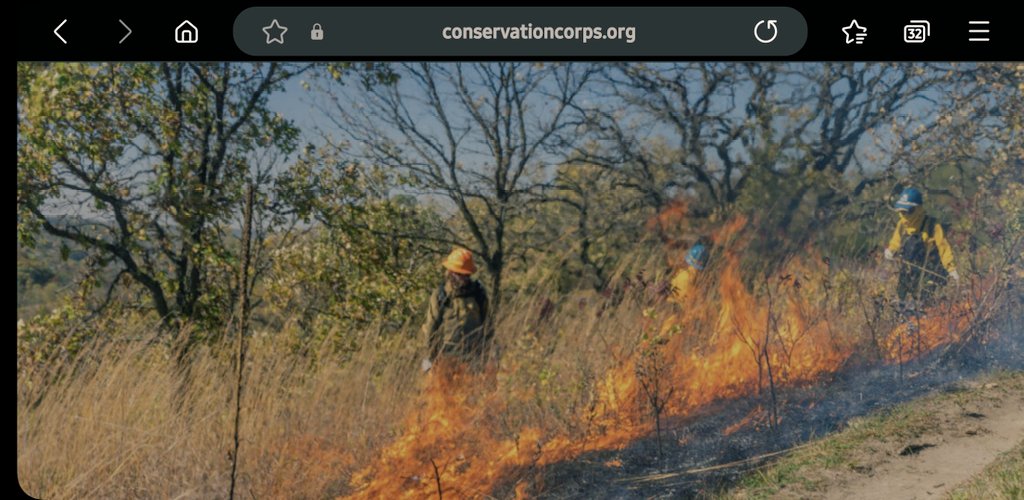
The BEST PROTECTION from wildfire for towns & strategic assets is to set up a perimeter around it and clear off all bushes & trees. Refer to Image 1.
But there are instances where high winds accompanying these wildfires can jump over a fire burn or a perineter and you have a Jasper-Banff, Alberta situation where the fire is now out-of-control and a threat to lives and property.
NO GUARANTEE!
Parks Canada prescribed burn in Banff becomes out-of-control fire after wind picks up
What was intended to be a controlled burn by Parks Canada turned into an out-of-control wildfire in the Banff townsite Wednesday afternoon.
Parks Canada said it was carrying out a prescribed fire in Compound Meadows in Banff National Park when around 4 p.m., “due to an unexpected shift in wind direction and speed,” the fire escaped the predetermined boundary.
About three hectares of land, or just over the size of a football field, was burnt outside of the unit boundary, the government agency said.
Smoke and flames were highly visible from Banff Avenue, the Trans-Canada Highway and down the road in Canmore.
THIS IS HOW THE MAYOR DESCRIBES THE SITUATION. VIDEO LINK ATTACHED.
Jasper mayor calls wildfire ‘our community’s WORST NIGHTMARE.'
With buildings on fire and the future of his Alberta town unsure, Jasper Mayor Richard Ireland says he’s trying to remain hopeful amid the rapidly evolving wildfire situation he calls ‘absolutely our community’s worst nightmare.’
https://t.co/aXA4FwDRzm
https://t.co/juh6lovfRM
July 17, 2024
HEAVY RAIN OUTBURST OF JULY 15 '24 INCAPACITATED TORONTO.
The structures like drains / permeable pavements built to prevent urban street flooding were overwhelmed and blocked by debris and sediments. The city lacks temporary catchment to hold the excess water and then gradually release.
The DVP and Bayview Avenue structure descends and ascends, and the downpour accumulated in the sloped part of the highways. Well! So much for the billion dollar Don River flood mitigation. Oops!!
Click and scroll.
https://t.co/PlbwnTf5FB
July 24, 2024
WHY THE DON RIVER FLOOD MITIGATION PROJECT FAILED TO PREVENT THE FLOODING?
ANSWER:
The $1.25 billion Port Lands Flood Protection Project (PLFPP) was never designed to prevent flooding of the Don Valley Parkway and surrounding neighborhoods during extreme rain events.
HERE'S David Kusturin, chief project officer with Waterfront Toronto, explaining that the PLFPP was always designed to protect the Port Lands, South Riverdale and Leslieville which are further down towards the lakefront on the Don River’s lower reaches.
“The Don Valley Parkway floods and will always flood because it’s on floodplain,” he says.
“There’s nothing we can do about that.”
The only way to stop the flooding at that juncture is to remove the DVP, he says, which would be horrendously expensive, or somehow raise it up like the Gardiner which in turn would mean raising the bridges in the area. Both are fraught with engineering and cost challenges, let alone political hurdles.
TO PROTECT THE PORT LANDS from overflooding, the DVP and surrounding area will serve as a CATCHMENT or reservoir.
A simple solution is a high capacity bypass to channel water into one of the many ravines. Refer to the image and website.
EXPECT A RECURRENCE OF FLOODING AND SEWAGE OVERFLOW.
Rains on July 15 and 16 saturated Toronto’s core and led to the Don River breaking its banks, leaving dozens of motorists and their vehicles stranded when the DVP roadway became impassable.
SOURCES
https://t.co/7oNIuqrjSG
https://t.co/IUYF8r9X5F
Image from:
https://t.co/Ga2Ul9Ud4b
July 20, 2024
A fault with an update issued by cybersecurity company CrowdStrike led to a cascade effect among global IT systems Friday, with industries ranging from banking to airlines facing outages.
Banks and health-care providers saw their services disrupted, and TV broadcasters went offline as businesses worldwide grappled with the ongoing outage. Air travel has been hit hard, too, with planes grounded and services delayed.
CrowdStrike’s software requires deep access to a computer’s operating system to scan for threats. In the case of Friday’s outage, machines running Microsoft’s Windows operating system crashed due to a fault in the way a software update issued by CrowdStrike interacted with Windows.
This is not a security incident or cyberattack. The issue has been identified, isolated, and a fix has been deployed.
HOWEVER, the fix could be hard to implement, though. Andy Grayland, chief information and security officer at threat intelligence firm Silobreaker, said that in order to implement a fix, engineers would have to go into each individual data center running windows.
They’d then have to log in, navigate to a certain CrowdStrike file, delete it, and then reboot the entire system, he said.
“Where machines are encrypted, complex encryption keys also need to be entered manually. Unless Microsoft and CrowdStrike (if they are involved) pull something miraculous out of the bag, this could be painful to recover from.”
@financialpost July 20, 2024
One is upbeat, as seen here, while others worry about losing their livelihood. They both can't be right!
https://t.co/CfzOkmoPc2
July 14, 2024
NOTHING IS SACRED.
Author Annie Proulx pens a love letter in her new book - Fen, Bog & Swamp: A Short History of Peatland Destruction to ecosystems that are rapidly disappearing — America's wetlands.
"Before the last wetlands disappear, I wanted to know about this world we are losing,"
Proulx writes. "What was a world of fens, bogs and swamps, and what meaning did these peatlands have, not only for humans but for all other life on Earth?"
In a conversation with Morning Edition's Leila Fadel, Proulx answers this question, describing the ROLE OF WETLANDS in preserving the environment and storing the carbon emissions that accelerate climate change.
But, Proulx says, this book is no call to arms. It is more a lesson in observation. Proulx wants her readers to understand better the world they live in and how to TAKE CARE OF IT.
ARE WE?
In a related development Justice Alito, you remember him from a recent incident where he flew the American flag upside down, lead the Supreme Court and significantly curtailed the power of the Environmental Protection Agency EPA to regulate the nation's wetlands and waterways. It was the court's second decision in a year limiting the ability of the agency to enact anti-pollution regulations and combat climate change.
NARROWING the scope of the law.
Justice Brett Kavanaugh, joined by the court's three liberal members, disputed Alito's reading of the statute, noting that since 1977 when the CWA was amended to include adjacent wetlands, eight consecutive presidential administrations, Republican and Democratic, have interpreted the law to cover wetlands that the court has now excluded. Kavanaugh said that by narrowing the act to cover only adjoining wetlands, the court's new test will have "significant repercussions for water quality and flood control throughout the United States."
https://t.co/StNpnyrXXa
https://t.co/lT47kV5Tu5
July 13, 2024
In the face of rising sea levels, flooding and tornadoes, wetlands, corals, and mangroves offer invaluable protection to our coastal lands and islands. Despite their crucial role, these natural barriers often go unnoticed.
Our ongoing interference with nature serves as a stark reminder that the solutions we seek are already provided by the environment. As funding for climate projects dwindles, we will inevitably return to these time-tested, simple solutions that have always been available.
July 12, 2024
War is about moves and ratcheting countermoves, but unlike the game of chess, war can potentially veer out of control, and this is where we stand today on the edge. Emotions run high, but know it well that you will not be around to rejoice. Nobody will be. There are no winners, only losers in a thermonuclear war.
So, CHECKMATE!
July 10, 2024
DO WE ENOUGH RECRUITS ?
Canada's wants subs, warships which take 20 +years to build & deliver. In the meantime, Canada can plug the surging shortages in hi-tech autonomous and lethal attack and counter attacks weapons-systems and software that control them. This is also an exponential growth area.
The other unaddressed military situation is the shortage of recruits!
Sign up the immigrants (similar to the US) in return for residency after service rendered.
July 10, 2024
VARMA PENSION INSURER.
INVESCO will launch and manage a climate transition ETF (exchange traded fund) with $1.6 billion received from the FINNISH pension fund-Varma.
The ETF will seek to track the MSCI ACWI Select Climate 500 index, Invesco said in a June 27 news release. The index is composed of securities of global companies that meet certain environmental and climate criteria relative to peers, the release said.
Index provider MSCI and Varma worked together to design the index to ensure that it captures companies with one or more greenhouse gas emissions reduction targets that align with Varma’s specific investment parameters regarding energy transition, the release said.
“Our $1.6 billion investment will help us meet our principles for responsible investing and gives us more flexibility for investing our €61 billion ($65.2 billion) assets," Timo Sallinen, Varma’s head of listed securities, said in the news release.
Important to note: Varma Mutual Pension Insurance Company based in Heksinki, Finland has largely phased out its investments in fossil fuel, coal mining, and oil exploration from its portfolio.
https://t.co/IoOic06MdA
SEPTEMBER 5, 2023
Newfoundland & Labrador Path to Net-Zero Perks up!
Cc @stjohnstelegram@CBC.ca
Newfoundland's wind-powered hydrogen future is starting to take shape. It's a province of down-to-earth folks with great Celtic music but, it's hard making a go on a wind-swept rock with a negative GDP of (0.5) percent over 5 years, chronic double-digit unemployment rate; its population growth has been slight to none in the past decade and, is expected to contract roughly 5% by the year 2050 according to Statistics Canada. The news coming out of St. Johns got better with the announcement of major projects in wind-hydrogen-ammonia giving Newfoundlanders great reason to perk up.
Even wealthy and influential regions harbour reservations about severing ties with the stability provided by significant oil and gas royalties and associated benefits. For NL, royalties are projected to be 12 percent of the province's revenues for 2023 or $1.1 billion. Production is expected to be stable at nearly 84 million barrels, with the province forecasting an average price per barrel of $86 US.
The Province of NL, like all others, points to studies that indicate demand for fossil fuels decades into the future and the oil produced offshore of NL has more advantages than most other jurisdictions. There is a strong demand for fossil fuels, companies continue to show an interest in the province's resources, and the revenue from oil and gas is crucial to paying for vital services such as health and education. He said "multiple jurisdictions" have contacted the province about its offshore gas potential. FM Coady said oil from the Hibernia, Hebron, Terra Nova and White Rose fields is produced at lower emissions or low-carbon oil than the global average and at the highest environmental and labour standards.
Energy Minister Andrew Parsons said the exploration incentive program will not be extended beyond this year, and he hinted that the deposit forfeitures in future years may be directed toward green energy projects.
As for concerns about climate change, Parsons said the province takes the issue very seriously and is making headway in the non-renewable sector in areas such as wind-to-hydrogen projects. And true to his word,
The Government of Newfoundland and Labrador has backed four companies looking to establish wind-to-green hydrogen and ammonia projects in the Canadian Province.
July 9, 2024
OIL & GAS GIANTS need to accelerate transition into low carbon and then carbon-free energy sources to avoid balance sheet pains and asset strandings.
Denmark's PFA is the latest pension fund to ditch oil stocks.
There’s a growing list of institutional investors in Europe who are stripping oil and gas stocks out of their portfolios, in a move they say reduces the risk of ending up with stranded assets and financial losses.
The latest to do so is PFA, Copenhagen, Denmark’s largest commercial pension fund, with roughly $110 billion in assets. The investor has just offloaded its $170 million stake in Shell based on an assessment that the company’s capital expenditure on renewables is worryingly low.
Other institutional investors are also losing patience with oil and gas holdings. Stichting Pensioenfonds ABP, Heerlen, Netherlands, Europe’s biggest pension fund with about $550 billion of assets, said in May that it exited all its liquid assets in oil, gas and coal — a portfolio that was worth about $11 billion. It has said it plans to divest a further $5 billion of less liquid fossil-fuel assets.
In France, new sustainable investing requirements mean asset managers using the label will need to purge their portfolios of an estimated $7.5 billion in combined fossil-fuel assets, a development that will hit companies including TotalEnergies and Shell.
In the U.K., both the Church of England Pensions Board, London, and the Church Commissioners for England, London, which together have about $17 billion in assets, said last year that they’ll start blacklisting oil and gas majors.
Sweden’s AP7 fund, Stockholm, which has more than $100 billion in assets, has exclusion policies targeting a range of oil producers, including Saudi Aramco and India’s Oil and Natural Gas Corp. IT BLACKLISTED EXXON MOBIL.
AkademikerPension, a Gentofte, Denmark, axed the last remaining oil and gas holdings in its $20 billion portfolio at the end of 2023 and is now in the process of offloading companies that provide equipment and services to fossil-fuel producers.
For now, the impact on returns of such divestments has been “neutral to slightly positive,” says Troels Borrild, head of responsible investments at AkademikerPension.
But looking down the road, there’s a transition risk “and that will materialize for a number of companies,” Borrild said. “It’s not priced in at the moment,” but as regulations take their toll, low-carbon portfolios are poised for “even more positive” risk-adjusted returns, he said.
https://t.co/vXlxQHbEPD
July 8, 2024
All that does is increase the urban sprawl and diminish prime arable lands.
Within this sprawl that exists, seek to create self-sustaining clusters like 'The 15 minute and 30 minute city' concept studied by McGill in June of 2024.
CORE:
The plan revolves around the concept popularized in Europe, where everything a resident might need on a daily basis is a short walk or bicycle ride away. We already do most of it within easy reaches. We do!
WITH SPRAWLS WE DRIFT APART.
Instead of further sprawl, go vertical.
Nothing is stopping the high rises to have services on certain floors or vertical farming except, maybe, bureaucratic red tape. It brings communities closer and imo the way to go.
"There is no future in status quo."
June 28, 2024
UNDER $5,000 CHINESE EV seeks route into Japan's minicar kingdom
( that is about the price of a battery-powered wheel chair in the US-Canada) Check out the two images for comparison. Good luck, Japan !
Hong Guang MiniEV market study finds potential demand among caregivers, small businesses
Billed as an "alternative to walking," the four-seater went on sale in July 2020 and was the top-selling EV brand in China for 25 months straight through September.
The Hong Guang MiniEV has already been exported to Europe. Its manufacturer, SAIC-GM-Wuling Automobile, is next eyeing Japan, where it will face off against a wide selection of mostly gasoline-powered minicars.
Plans are to have the Hong Guang MiniEV start at 650,000 yen ($4,400) in Japan.
This is less than half the price of Japanese-made minicars, said Sun Feng, president of Tokyo-based Apatech Motors, which was hired to do market research for SAIC-GM-Wuling.
Chinese-made electric trucks and buses have entered the Japanese market in recent years. This coming January, BYD will launch an all-electric sport utility vehicle in Japan. These EVs have sought to replace conventional commercial and passenger vehicles.
"There's a completely different kind of interest in the Hong Guang MiniEV," Sun told a logistics industry event in Tokyo on Oct. 18.
https://t.co/LBbIXLpriZ
Click on the image to enlarge.
@globalnews@mary_ng@economics@financialpost@DeputyPM_Canada
June 26, 2024
WHERE THERE IS SMOKE THERE IS FIRE.
Notice the sharp price difference on the two models - the BYD Seagull and Tesla model 3 from the two heavily subsidized companies in China - makes for a perfect case study.