How fast you walk may be telling us how long you may live...
🟢A new study of >4,000 adults followed for nearly 12 years found that both walking speed and walking cadence (steps/minute) in daily life were associated with lower risk of death from any cause.
🟢People who walked faster, whether measured in a clinic or through wearable devices, had significantly lower all-cause mortality risk.
What could explain this association?
✅ Faster walking reflects better cardiovascular fitness
✅ Stronger muscles and better balance
✅ Healthier brain and nervous system function
✅ Better metabolic health and insulin sensitivity
✅ Greater overall physiological reserve and resilience
▶️In many ways, walking speed acts as a simple "vital sign" that integrates the health of multiple organ systems. This interpretation is consistent with the observation that both clinical walking speed and free-living walking cadence were similarly linked to mortality risk.
▶️An important related point to note is that previous research has shown that higher daily step counts are also associated with lower mortality risk, and this study suggests that how briskly you walk may matter in addition to how much you walk.
My practical advice:
1. Aim to walk every day.
2. Increase your daily step count gradually if you are inactive.
3. Include periods of purposeful/brisk walking where conversation is possible but singing is difficult.
4. Older adults should pay attention not only to distance walked but also to maintaining walking speed and mobility.
5. If you notice that your usual walking pace is slowing without explanation, discuss it with your healthcare professional.
Dr Sudhir Kumar @hyderabaddoctor
How fit are you for your age?
You don't always need a treadmill or a laboratory to get clues.
▶️Some simple measures of strength, balance, mobility and cardiovascular fitness are associated with a lower risk of cardiovascular disease and premature death.
✅Try these to assess your overall fitness:
1. Balance
Can you stand on one leg for 10 seconds with your eyes open?
In middle-aged and older adults, inability to do so has been associated with higher mortality.
2. Grip strength
🔸A stronger hand grip is associated with lower mortality and cardiovascular risk.
🔸It is one of the better-studied simple markers of overall physical capability.
3. Walking speed
🔸Can you walk briskly and comfortably?
🔸Slower gait speed is consistently associated with higher mortality and cardiovascular disease risk, particularly in older adults.
4. Getting up from a chair/squat
🔸Can you rise from a low position without using your hands?
🔸Lower-body strength and the ability to perform chair-rise movements are associated with survival in older adults.
5. Push-ups
🔸In one study of 1104 occupationally active men, greater push-up capacity was associated with fewer cardiovascular events over 10 years.
✅Those able to do >40 had fewer events than those able to do <10.
🔸But remember: This was an observational study; not proof that doing 40 push-ups prevents heart disease.
6. Calf muscle
🔸Larger calf circumference has been associated with lower mortality in observational studies.
🔸But don't interpret this as “bigger calves means longer life.” Calf size is also influenced by age, nutrition, body size and muscle mass.
7. Resting heart rate
🔸A lower resting heart rate is generally associated with lower cardiovascular and all-cause mortality.
🔸But resting heart rate is a marker, not a target. A very low heart rate is not automatically healthier, particularly if associated with symptoms.
▶️And what about planks, repeated squats and standing on one leg with your eyes closed?
🔸They are excellent ways to train core strength, leg strength and balance; but we have much less evidence that a particular plank time, squat count or eyes-closed balance time independently predicts longevity.
Your exercises should be multi-dimensional, incorporating:
✅Aerobic exercise
✅Strength training
✅Leg strength
✅Balance
✅Mobility
✅Cardiovascular fitness
You exercise to look fit as well as to remain active, healthy and independent in your 60s, 70s and 80s.
Dr Sudhir Kumar
@hyderabaddoctor
Diabetes can have a serious impact on the heart. From increasing the risk of heart attacks and heart failure to affecting the nerves that regulate the heart, the complications can be significant.
The good news is that good diabetes management can help reduce these risks. Keep your blood sugar under control and make heart health a priority.
#Diabetes #HeartHealth #DiabetesComplications #HeartAttack #HeartFailure #CardiacAutonomic #Neuropathy #BloodSugarControl
10 Things You MUST Know About Vitamin B12 Deficiency
Vitamin B12 is essential for nerve health, red blood cell production, and DNA synthesis. Yet, deficiency is widespread and often missed until significant damage occurs.
Here, I summarize the TOP 10 points about vitamin B12 deficiency:
1️⃣It is not just about tiredness:
Beyond basic fatigue, B12 deficiency can cause neurological signs, such as numbness or tingling in the hands and feet, balance issues, and cognitive fog.
2️⃣Nerve damage can become irreversible:
Untreated B12 deficiency leads to progressive demyelination of nerve fibers. Early detection is critical to prevent permanent damage.
3️⃣Normal blood tests can be deceptive:
Serum B12 levels can show a "normal" range even when tissue-level deficiency exists. Testing Methylmalonic Acid (MMA) or HOLOTRANSCOBALAMIN provides a far more accurate picture.
4️⃣Dietary risk:
Because B12 is naturally present only in animal products, vegetarians and strict vegans are at high risk unless they supplement or use fortified foods.
5️⃣It is often an absorption issue, not diet:
Conditions like autoimmune gastritis (pernicious anemia), Celiac disease, Crohn’s, or past bariatric surgery prevent the gut from absorbing B12 effectively.
6️⃣Common medications block absorption:
Long-term use of Metformin (for diabetes) and Acid Reflux Medications (PPIs/H2 blockers) significantly impair B12 uptake.
7️⃣It affects mental health:
Low B12 levels are frequently linked to unexplained mood shifts, depression, irritability, and memory loss that mimic early dementia.
8️⃣Watch for tongue & skin changes:
Glossitis (a smooth, red, painful tongue) and unexplained hyperpigmentation can be visible physical warning signs.
9️⃣Oral B12 works (even for absorption issues):
High-dose oral B12 (1000–2000 mcg daily) is often as effective as intramuscular injections due to passive diffusion across the intestinal wall.
🔟Aging increases your risk:
Gastric acid production decreases as we age, making it harder for older adults to extract B12 from food.
If you experience unexplained tingling, fatigue, or brain fog, get your B12 status evaluated and consult a doctor.
Dr Sudhir Kumar @hyderabaddoctor
“I walk for 30–40 minutes every day.”
That is the most common answer when I ask people about exercise.
But when I ask, “Do you do strength training?” the answer is usually NO.
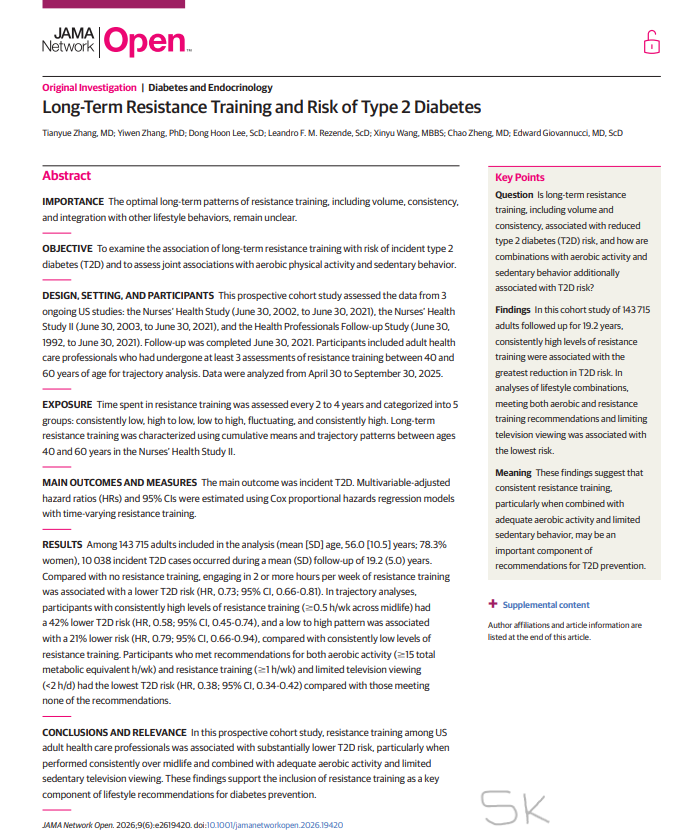
This is particularly important for people with insulin resistance, prediabetes and type 2 diabetes.
✅Aerobic exercise is excellent for metabolic health.
✅But strength training has its own unique benefits.
▶️Our muscles are major consumers of glucose. Strength training improves muscle mass, insulin sensitivity and the body's ability to handle glucose.
▶️Long-term studies have shown that regular strength training is associated with a significantly lower risk of developing type 2 diabetes.
🔹 Even relatively small amounts of strength training have been associated with lower diabetes risk.
🔹 Higher amounts of regular strength training appear to provide greater benefits.
🔹 The combination of aerobic exercise + strength training is better than either alone for reducing the risk of type 2 diabetes.
✅My simple prescription for better metabolic health:
🔸150+ minutes/week of aerobic activity
PLUS
🔸2-3 sessions/week of strength training
(aiming for approximately 60–120 minutes/week, depending on fitness and ability)
▶️You don't necessarily need a gym. Squats, lunges, step-ups, push-ups, resistance bands and weights can all help.
🔸Walking is good. But walking alone is not enough.
✅The best exercise programme is one that includes both aerobic exercise AND strength training.
Dr Sudhir Kumar @hyderabaddoctor
This Common Heart Attack Risk Starts Silently In Healthy People In Their 20s
https://t.co/zSrJnvWudX
This informative article prepared by @thomasrachelv has my quotes, alongside that of other experts.
Health tests you should not ignore after 30: From blood sugar to cancer screening
A long list of blood tests, whole-body scans and 'tumour markers' can produce false alarms and unnecessary anxiety. The best strategy is evidence-based screening tailored to age, sex and individual risk factors
Read my latest weekly column published in the WEEK.
https://t.co/SZfSFqfOr8
@TheWeekLive@tisha_jaco
If you are worried about a future heart attack, don't look at cholesterol alone.
Here I discuss FIVE metrics that can help estimate your future risk of a FIRST or RECURRENT heart attack:
1. BLOOD PRESSURE
🔸High BP is one of the most important and modifiable causes of heart attack and stroke, and often has no symptoms.
🔸For most adults, aim for <130/80 mmHg, particularly if cardiovascular risk is high.
🔸Every adult should know their BP. If normal, check periodically; if elevated or on treatment, monitor more frequently as advised.
2. Apolipoprotein B (ApoB), the number many people don't know about
🔸LDL tells us how much cholesterol is carried in LDL particles.
🔸ApoB estimates the number of atherogenic particles capable of entering artery walls.
🔸It can be particularly useful in people with diabetes, high triglycerides, obesity/metabolic syndrome and known heart disease, even when LDL appears “normal”
🔸Lower is better, with the appropriate target depending on overall cardiovascular risk.
🔸Consider testing at least once, especially if you have metabolic risk factors or premature heart disease in the family.
3. Lipoprotein(a), the inherited cholesterol risk
🔸Lp(a) is largely determined by our genes. You can have a healthy lifestyle and a normal LDL and still have a high Lp(a).
🔴≥50 mg/dL (≥125 nmol/L) is considered a cardiovascular risk-enhancing level.
🔸The good news is that most adults need to check it only once in a lifetime, because levels are relatively stable.
🔸This is especially relevant in people with premature heart attacks or a strong family history.
4. Glycosylated hemoglobin (HbA1c), your average blood sugar over ~3 months
🔸Diabetes markedly increases the risk of heart attack.
🔸Even before diabetes develops, insulin resistance and prediabetes often travel with other cardiovascular risk factors.
🟢Normal: HbA1c <5.7%
🟠Prediabetes: 5.7–6.4%
🔴Diabetes: ≥6.5% (requires appropriate clinical confirmation)
🔸Adults with overweight/obesity, family history of diabetes or other risk factors should be screened regularly.
🔸For people with diabetes, the HbA1c goal should be individualized, there is no single number suitable for everyone.
5. CORONARY ARTERY CALCIUM (CAC) SCORE
🔸Blood tests estimate risk. A CAC scan looks for evidence of calcified plaque in the coronary arteries.
🔸A score of 0 is reassuring, while higher scores generally indicate a greater burden of coronary atherosclerosis and future cardiovascular risk.
🔸This test is not for everyone. It is most useful when the decision about preventive treatment is uncertain; for example, in selected asymptomatic middle-aged adults at borderline or intermediate risk.
🔸Current guidance supports its selective use, including risk assessment in men ≥40 and women ≥45 years when appropriate.
The most important message:
🔸Don't wait for chest pain to assess your heart attack risk.
🔸Know your Blood pressure, ApoB/lipid profile, Lp(a), Blood sugar/HbA1c and CAC score, when appropriate
🔸And remember that a test doesn't prevent a heart attack; acting on an abnormal result does.
❌Don't smoke
✅Exercise regularly
✅Eat a heart-healthy diet
✅Sleep well
✅Take proven medicines when indicated
Prevention is far easier than recovering from your first heart attack.
Note: Test frequency and treatment targets should be individualised based on age, family history, diabetes, kidney disease and previous cardiovascular events, in consultation with a doctor.
Dr Sudhir Kumar @hyderabaddoctor
Tamil Nadu Government introduces presence less Registration for first time Registration of plots or flats.
No need to visit the Sub Registrar office.
Will be a big blow against corruption if it works.
Also am told that gradually more services will be brought online.
Well done @CMOTamilnadu .
சர்க்கரை நோயும் வேண்டாம்..
மருந்துகளும் வேண்டாம் ..
மருத்துவமனையும் வேண்டாம் ..
இந்த ஒழுக்கம் மட்டுமே போதும்!
Watch this 30plus age group…
Prevent ‘Metabolic’ disorders
🫀 CT Calcium Score – A Simple Test That Can Save Lives
Did you know that heart disease can be present even before symptoms appear?
A CT Coronary Calcium Score (CAC Score) is a quick, non-invasive CT scan that measures calcium deposits in your heart's arteries. It helps identify hidden coronary artery disease and estimates your future risk of heart attack.
Who should consider it?
✅ Adults aged 40–75 years with intermediate cardiovascular risk
✅ People with diabetes, high cholesterol, high blood pressure, smoking history, or a family history of early heart disease (after consulting their doctor)
Calcium Score Interpretation:
🟢 0 – Very low risk
🟡 1–99 – Mild plaque
🟠 100–399 – Moderate plaque
🔴 ≥400 – High risk; needs further evaluation
Remember:
A calcium score of 0 does not guarantee zero risk, but it strongly suggests a very low likelihood of significant calcified coronary artery disease.
❤️ Early detection can help prevent future heart attacks through timely lifestyle changes and appropriate treatment.
Dr Balaji Balagani
Cardiologist
#CTCalciumScore #HeartHealth #PreventiveCardiology #CoronaryArteryDisease #HeartDiseasePrevention #Cardiology #HealthyHeart #DrBalajiBalagani
My article in @IndianExpress on the growing link between high blood sugar and fatty liver disease, and why timely detection and effective diabetes management are essential to prevent liver inflammation (hepatitis), cirrhosis and other serious complications.
Fatty liver is no longer just a liver problem, it is closely connected to metabolic health. The good news is that with early diagnosis and healthy lifestyle changes, it can often be prevented or even reversed.
Read the full article and share it with your family and friends.
Read here: https://t.co/vHH6ryhURe
Nuts: How much is healthy? Which ones? Raw, roasted or soaked?
Nuts are among the healthiest foods you can add to your diet. But there is a lot of confusion around them:
❓How many should you eat?
❓Are almonds better than peanuts?
❓Should you soak them overnight?
❓Are roasted nuts unhealthy?
❓Are nuts the same as dry fruits?
Let us separate science from social-media nutrition myths. Bookmark this thread for future reference, and share for wider reach.
1/n
Diabetes Files by Dr. V. Mohan – Episode 22: The Miracle of Insulin
Many people fear insulin. But is that fear justified?
In this episode of Diabetes Files, Dr. V. Mohan shares the true story of a patient whose HbA1c was very high, indicating poorly controlled diabetes. To quickly bring the blood sugar under control, Dr. Mohan started the patient on insulin therapy.
What happened over the next 3 to 4 months was remarkable. With regular insulin use, lifestyle changes and proper medical guidance, the patient's blood sugar levels improved significantly, proving that insulin can be a life-changing treatment when used appropriately.
In this video, you'll learn:
- Why insulin is sometimes the best treatment option
- How insulin helps bring blood sugar under control
- Common myths and fears about insulin
- Why delaying insulin can lead to serious diabetes complications
- The importance of following your doctor's advice
If you've ever been worried about starting insulin, this episode will help you understand the facts and clear up common misconceptions.
👍 Like this video if you found it helpful.
💬 Share your questions in the comments.
🔔 Follow us for more diabetes related informative content.
Disclaimer:
This video is for educational purposes only and is not a substitute for professional medical advice. Never start, stop, or change your diabetes medication without consulting your healthcare provider.
"பாம்பு கடித்தால் உடனடியாக இதை செய்தால் போதும்.." கட்டுவிரியன் பாம்பு கடித்து ஸ்ரீபெரும்புதூரில் நேற்று வாலிபர் உ**ழந்த நிலையில், மருத்துவர் கொடுத்த தெளிவான விளக்கம்!
#SnakeBite | #Doctor | #Hospital | #PolimerNews
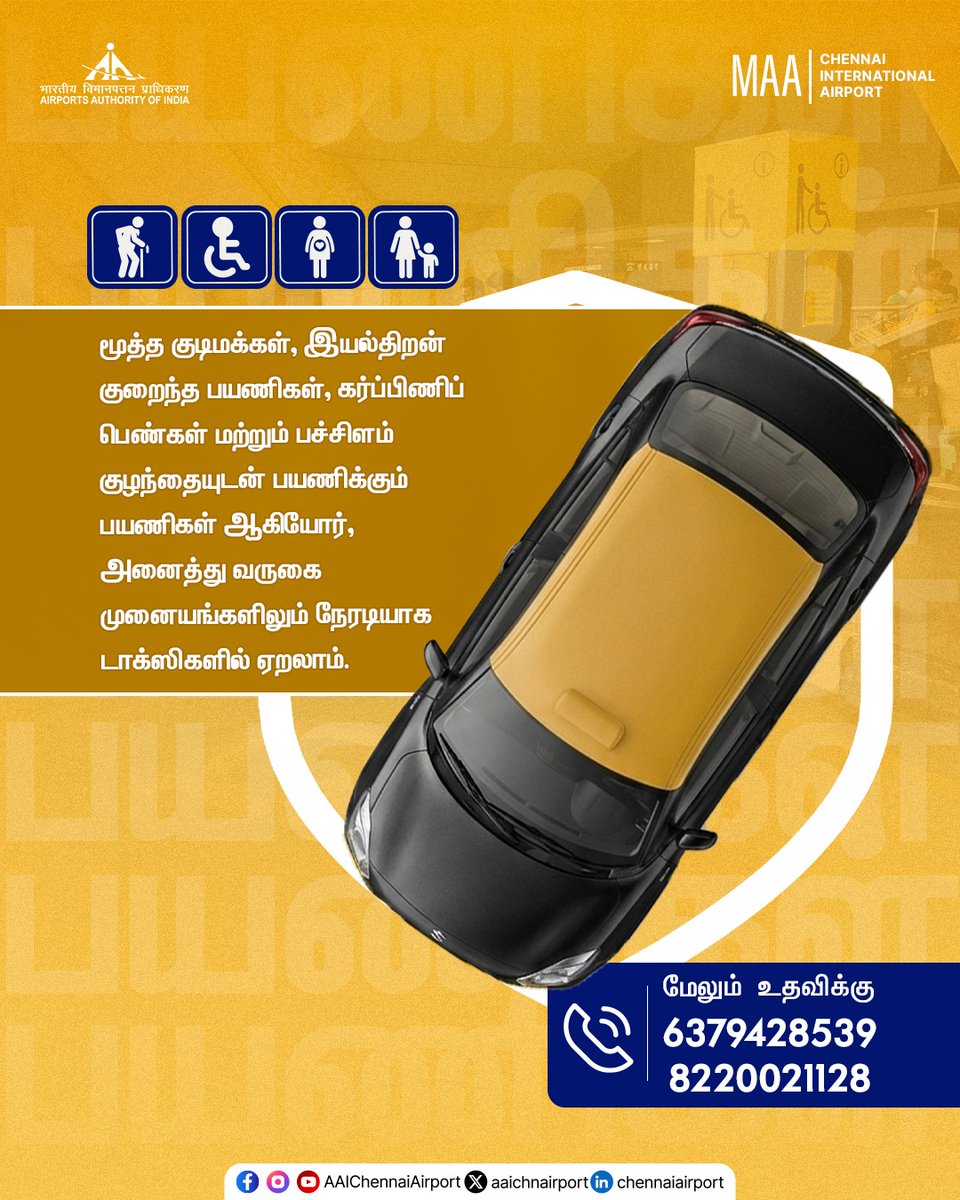
மூத்த குடிமக்கள், இயல்திறன் குறைந்த பயணிகள், கர்ப்பிணிப் பெண்கள் மற்றும் பச்சிளம் குழந்தையுடன் பயணிக்கும் பயணிகள் ஆகியோர், அனைத்து வருகை முனையங்களிலும் நேரடியாக டாக்ஸிகளில் ஏறலாம். மேலும் உதவிக்கு, +91 63794 28539 / 8220021128 என்ற எண்களை தொடர்புகொள்ளவும்.
@MoCA_GoI | @AAI_Official
Your heart disease risk is not determined by just one blood test. It is the combination that matters.
▶️Think of these 3 markers as three different pathways leading to heart attack and stroke:
🟠 LDL-C → Cholesterol that drives plaque formation
🟠Lipoprotein(a) → Genetically inherited risk that accelerates atherosclerosis and clotting
🟠 hs-CRP → Ongoing inflammation that makes plaques more unstable
▶️Recent studies, including a large JACC 2026 cohort, show that each marker independently predicts future cardiovascular disease.
▶️But when 2 or all 3 are elevated, the risk rises progressively, regardless of ethnicity.
✅One marker can miss risk. Together, they provide a much clearer picture.
▶️If you have a strong family history of premature heart disease, or multiple risk factors, discuss with your doctor whether checking all three (LDL-C, Lipoprotein(a), and hs-CRP) would help better estimate your cardiovascular risk.
✅Lower cholesterol, reduce inflammation and know your Lipoprotein(a).
✅Prevention starts before the first heart attack.
Dr Sudhir Kumar @hyderabaddoctor
I am amazed when patients with diabetes don't get ANY blood tests done for 5-6 years continuously.
I am amazed when patients with diabetes continue to take the same medicines continously without seeing any doctor.
Just checking FPG and PPG isn't enough.
Please get HbA1c checked once in 3 months.
Please get the following checked annually if all well. These are the basic tests.
-Serum creatinine
- Liver function tests
- Thyroid function tests
- Lipid profile
- CBP
-Urine albumin creatinine ratio
-Retinal screening
Want to spend a bit more? I would advise for them. Please get :
-Vitamin B12 (can be nicely low in strict vegetarians and in people on metformin)
- Vitamin D ( we all are deficient now a days as we don't go out much in the sun)
- serum calcium.
Patients with diabetes are at risk for developing cardiac problems, hence they should also get
- ECG ( especially if they have neuropathy)
- 2D ECHO if any breathlessness or feet oedema.
- Advanced cardiac tests like cardiac markers, stress ECG or CT calcium scoring based on any symptoms.
#diabetes
الجلطة الدماغية غالبًا ما تجي فجأة… لكن الحقيقة إن الجسم يرسل 5 إشارات قبلها بـ حوالي 30 يوم، بس أغلب الناس تتجاهلها
خصوصًا العلامة رقم 3 ( 90٪ من الناس يعتقدون إنها “بس قلة نوم”)
1. صداع
🫀 Key Cardiac Risk Markers You Shouldn’t Ignore
Heart attacks in 20s & 30s are becoming frighteningly common.
Fit on the outside ≠ Healthy on the inside.
Here’s how to investigate early & prevent silent cardiac risk 👇
🔴 1. Lipid Profile is just the beginning
Check more than just total cholesterol.
✅ LDL (bad cholesterol)
✅ HDL (good cholesterol)
✅ Triglycerides (TG)
✅ VLDL
🔍 Ideal:
• TG < 100
• HDL > 50
• LDL < 100
• TG/HDL ratio < 2
🔴 2. ApoB & ApoA1 – Better than LDL
🔸ApoB = Number of artery-clogging particles
🔸ApoA1 = Protective particles
✅ Ideal ApoB < 90
✅ ApoB/ApoA1 Ratio < 0.6
This is a stronger predictor of heart disease than LDL alone.
🔴 3. Lp(a) – The silent genetic risk
🔸Not tested in basic reports
🔸Genetically inherited
🔸Can increase heart attack risk even if other markers are normal
✅ Ideal Lp(a) < 30 mg/dL
📌 Test it once in life—even if you’re young.
🔴 4. hsCRP – Inflammation matters
🔸High-sensitivity C-Reactive Protein
🔸Marker of chronic low-grade inflammation
✅ Ideal < 1.0 mg/L
🔥 Chronic inflammation silently damages arteries.
🔴 5. Homocysteine – B12 & Heart Link
🔸Elevated in B12/folate deficiency
🔸Promotes clotting & damages blood vessels
✅ Ideal < 10 µmol/L
📌 If high, correct B12, folate, B6 levels.
🔴 6. Fasting Insulin & HOMA-IR
🔸Most missed test. Insulin resistance often starts years before diabetes.
✅ Fasting insulin < 6
✅ HOMA-IR < 1.5
📌 Even with normal sugar, high insulin = silent metabolic risk.
🔴 7. CAC Score (Calcium Score CT)
🔸Non-invasive scan to detect early plaque in coronary arteries
🔸Score 0 = very low risk
🔸Higher scores = hidden artery blockage
📌 Highly recommended if you have family history or are >35 with risk markers.
🧠 Prevention is not just avoiding junk food.
It’s about testing early and tracking the real markers of silent cardiac risk.
✅ Don’t wait for chest pain.
✅ Don’t assume fitness = health.
✅ Investigate > Guess
✅ Act early = Live longer
#HeartHealth #PreventHeartAttack #MetabolicHealth