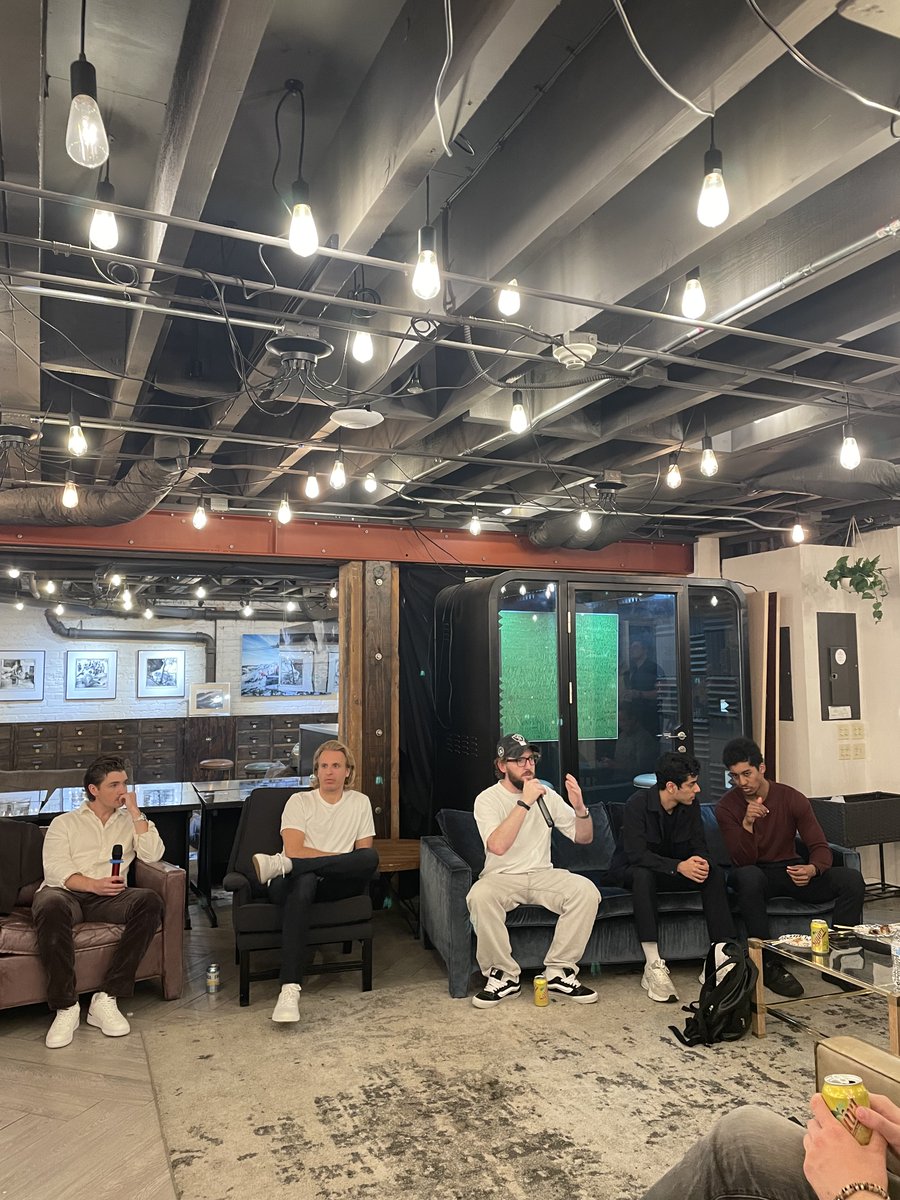
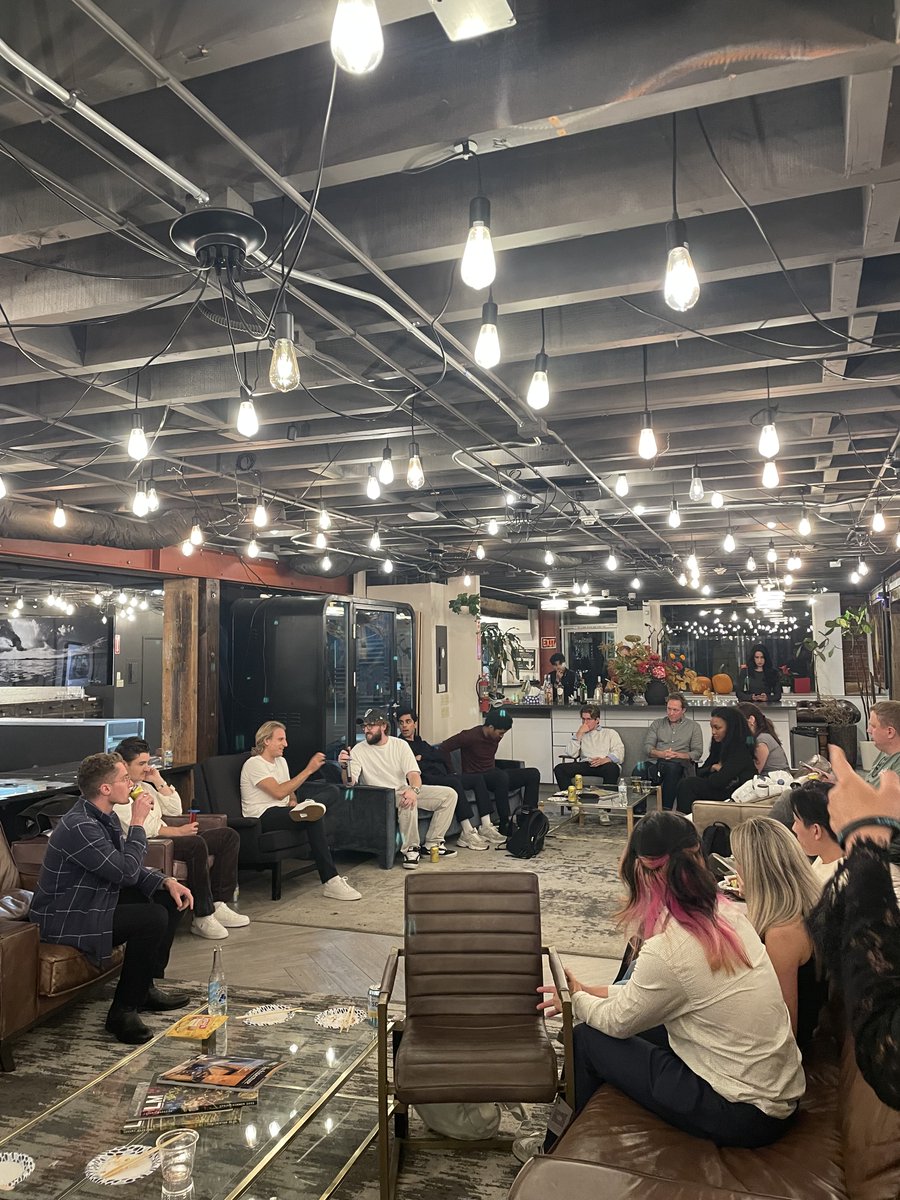
At SF's Anything Applied Agentic Hackathon yesterday - I built equipe's design agent, Seongjae built voice control. https://t.co/JeR97hTJjd
Thanks Geart Ferhati & @join_ef: EF raised $200M this year - heard they're planning further expansion in Asia. Korean founders, take note.
At Sushi & Wine w/ Consumer founders & VCs in SF. Thanks @MarkoOkhman! Met @desno365: his iPhone farm lets AI agents automate marketing with marketers' own tools - even, he says, Instagram DMs. DM me to connect. My takeaway from our chat: build for AI agents as customers.
Our team made the top 10 at the @elastic × @MistralAI hackathon with SF City Memory!
https://t.co/FikIIkP1Hx
Thanks, David, for building with me and contributing to equipe, my open-source AI team. Try it:
https://t.co/JeR97hTbtF
Agents can now control phones.
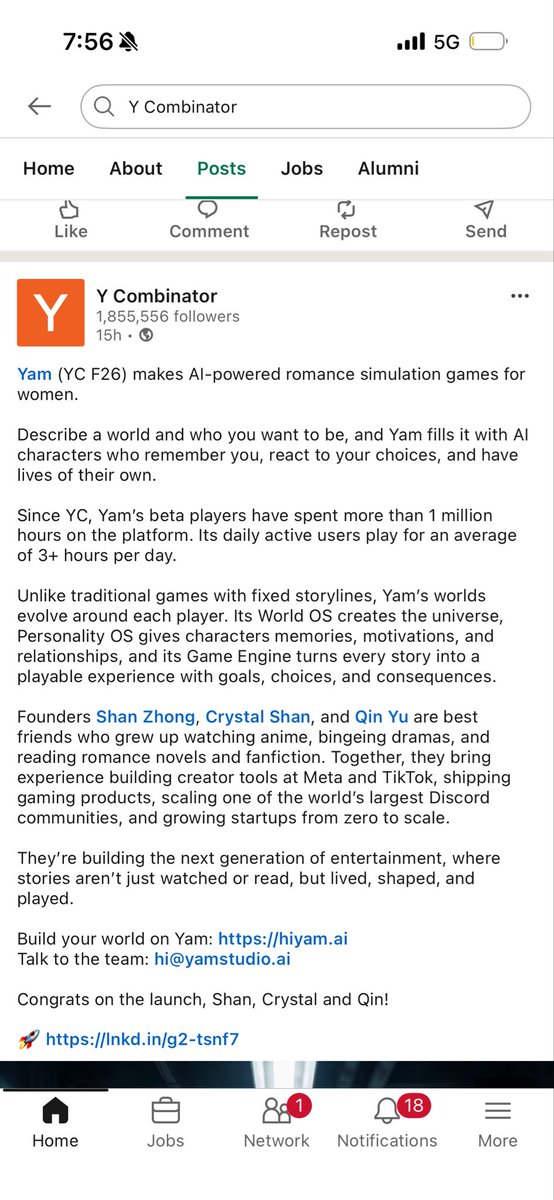
Introducing Phone Harness (YC F26)
Let your agent use your personal phone, or its own iPhone/Android in the cloud
> Test and use real mobile apps
> Message and call people
> Grab verification codes for 2FA
Open source. Connect through MCP, CLI, or API.
Get started at https://t.co/81Idmd4MQb
Introducing agent-desktop
agent-browser, for your whole computer
→ Computer Use for any coding agent
→ macOS, Windows and Linux
→ Runs in bg while you keep working
→ Agents use your computer in parallel, each with its own cursor
I don't understand why everyone isn't doing this yet
Anthropic documented a Claude Code feature where the STRONGEST model only kicks in at key moments instead of running the whole time
The setup: Agent Teams in Claude Code
Rather than one session doing everything, the work splits across a team:
Lead (Opus 5.5, high effort): the main session, creates the tasks and runs the team
Teammates (Sonnet 5.5, medium effort): each owns its own files, UX or backend
Advisor (Fable 5.1): consulted before picking an approach, on a repeated error, before done
Shared task list: teammates claim tasks, file locks stop two of them grabbing the same one
Start the lead from the terminal:
claude --advisor fable
Then tell it: Spawn three teammates, one on UX, one on the backend, one playing devil's advocate. Use Sonnet for each teammate
Paste this to set up your workspace:
In settings.json, add CLAUDE_CODE_EXPERIMENTAL_AGENT_TEAMS=1 to the env block, set effortLevel to high
Define roles in .claude/agents/ with model sonnet and effort medium, plus a devil's advocate role
Give each teammate its own set of files to avoid overwrites
Add a TaskCompleted hook that blocks a task from being marked done if checks fail
Show me every config change before applying it
The CLAUDE.md map your agents read, full guide in the article below
> https://t.co/bpuZk2o0YH
THIS IS AN ACTUAL F*CKING GOLDMINE
Anthropic just shared one of the best tricks for Claude Code.
The idea: run Sonnet, Haiku 5.5 and Opus 5.5 at once, each one doing only the job it's best at.
Better results and way fewer tokens, because every task lands on the right model.
You just launch Claude Code like this:
claude --model sonnet --advisor opus
here's the split:
→ Sonnet 5.5 runs the session, writes the code and applies the fixes
→ Haiku 5.5 swarms the repo in parallel: search, grep and diff audits
→ Opus 5.5 stays on call as advisor for the big calls and signs off on the diff
→ you stop burning Opus context on work that doesn't need it
Opus only steps in at three moments:
→ before a plan locks
→ when the same error shows up twice
→ before calling it done
Sonnet builds. Haiku swarms. Opus reviews.
JEV engineering is the same move one layer down: the forks that need no thinker (which file, which tool, retry or stop) go to JEV in milliseconds, and the big models only see the ones that split
the full tree
> Sonnet 5.5 runs the main session and coordinates the work
> search maps the repo on Haiku 5.5, read-only
> grep finds call sites on Haiku 5.5 in its own context
> audit checks the diff on Haiku 5.5 in a throwaway worktree
> Opus 5.5 on call as advisor, reviews the synthesized diff before sign-off
> JEV routes micro-forks in milliseconds
paste the tree and this prompt into Claude Code ↓
"Reconfigure my Claude Code setup around this tree:
1. Run the main session on Sonnet 5.5 with Opus 5.5 as advisor.
2. Create three Haiku 5.5 subagents in .claude/agents: search (maps the repo), grep (finds call sites), audit (checks the diff).
3. Set isolation: worktree on audit so its checks never touch my working branch.
4. Add one rule to CLAUDE.md: delegate every repo search and test run to the Haiku 5.5 subagents to keep the main context small.
5. Route fast deterministic forks (tool choice, path selection, retries) through JEV.
Show me every change as a diff first. No edits until I say go."
↳ https://t.co/YqkjQiqRGv
save it, it'll come in handy.
This is absolutely stunning!
A static physics textbook turned into an immersive, interactive 3D learning experience.
You can actually explore the concepts instead of just reading about them.
Imagine if more textbooks were built like this.
The MotionSites skill is live 🚀
I turned 700+ of my best website designs into one skill.
Install it and your agent stops making generic AI slop and starts building cinematic, animated sites like these.
Works with Claude Code, Codex, Cursor or any agent.
Free and open source:
https://t.co/2CyitzKzR1
I built the AI chat interface I kept wishing existed. 👀
https://t.co/WvQ3Gln28e - animated, interactive, and none of it looks like a template.
Definitely worth saving before your next project 🔖