Hey Web3! 👋
I’m Abu Abeed — DEX Trader & Educator. 📊
From now on, I’ll be teaching DEX Trading from the very beginning, step by step.
📚 What you’ll learn:
• DEX Trading Fundamentals
• How to Find New Tokens
• Liquidity & Volume
• Market Cap & FDV
• Token Research
• Smart Money
• On-Chain Analysis
• Entry & Exit Strategies
• Risk Management
• Rug Pull & Scam Detection 🚨
• Trading Psychology 🧠
🎯 My goal is simple:
Help beginners understand DEX Trading before they risk their money.
No fake signals.
No guaranteed profits.
No unnecessary hype.
Learn first.
Practice.
Manage risk.
Then trade. 📈
Follow @ABEED324 and let’s learn DEX Trading together. 🚀
DYOR. Never risk more than you can afford to lose.
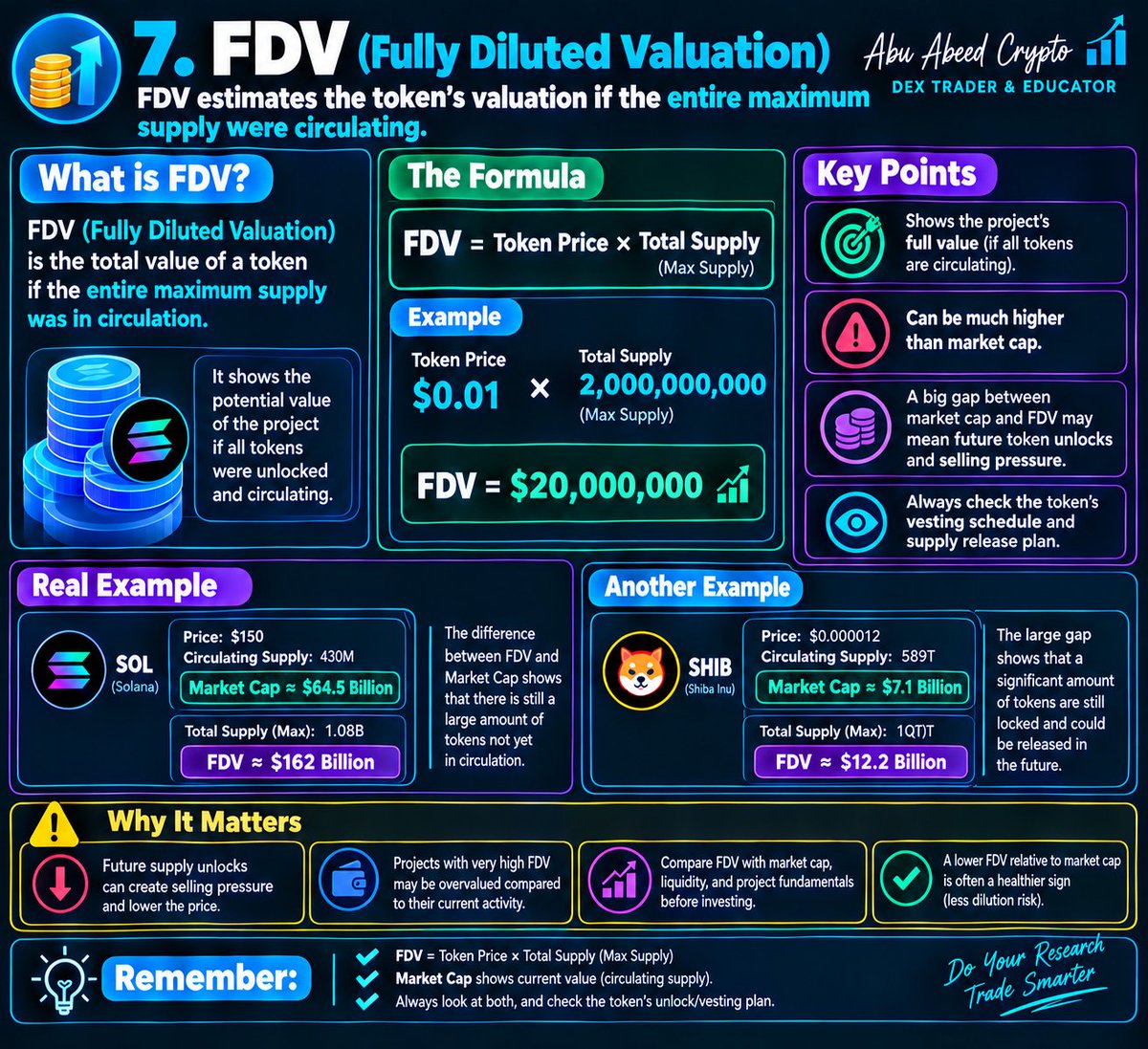
7. FDV
FDV = Fully Diluted Valuation
It estimates the token's valuation if the entire maximum/fully diluted supply were circulating.
A token can have:
Market Cap = $1M
FDV = $20M
That large difference means there may be significant future token supply that could create selling pressure.
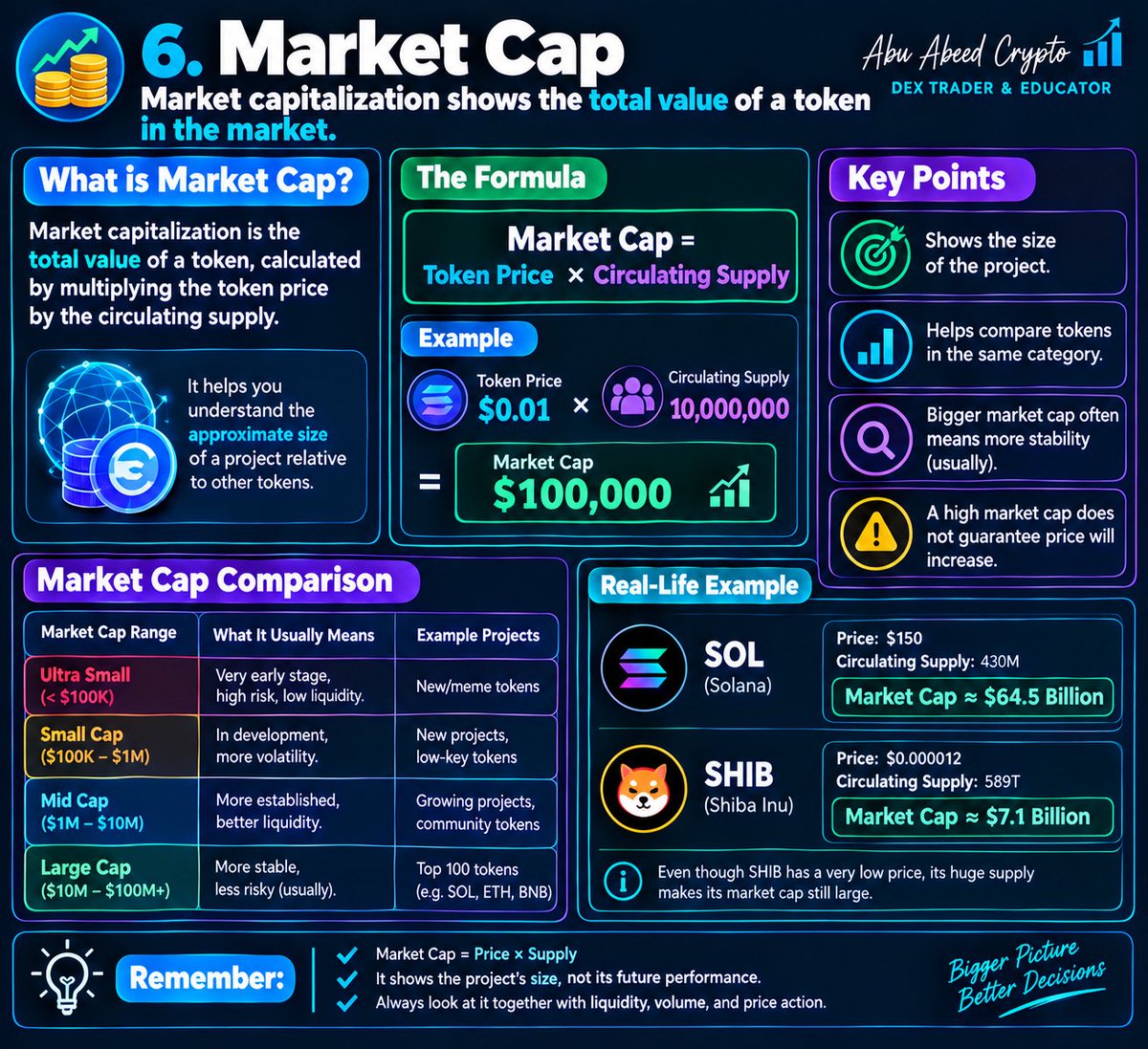
6. Market Cap
Market capitalization is commonly calculated as:
Market Cap = Token Price × Circulating Supply
Example:
If a token has:
Price = $0.01
Circulating supply = 10 million
Then:
Market Cap = $100,000
Market cap helps you understand the approximate size of the project relative to other tokens.
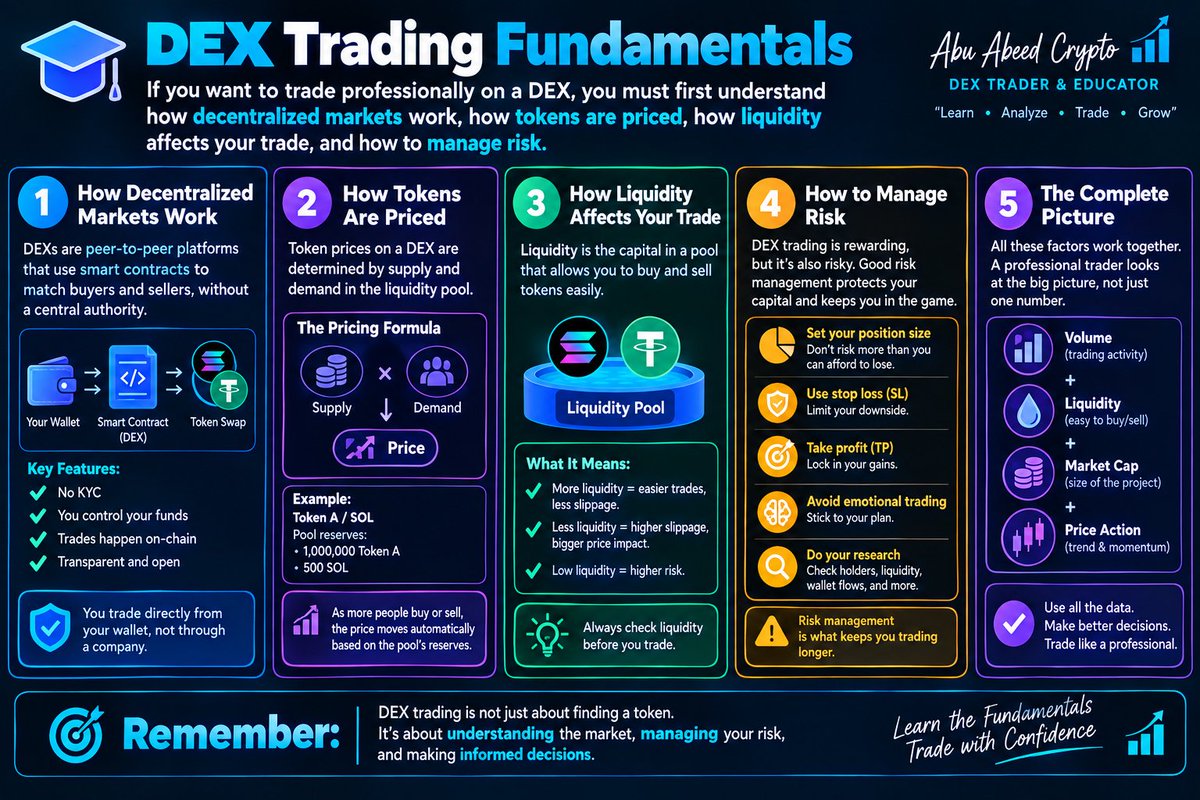
DEX Trading Fundamentals
If you want to trade professionally on a DEX, you must first understand how decentralized markets work, how tokens are priced, how liquidity affects your trade, and how to manage risk.
5. Volume
Volume tells you how much trading activity is happening.
For example:
24h Volume = $500,000
High volume can indicate strong market activity, but high volume alone does not mean a token is safe or bullish.
You should compare:
Volume + Liquidity + Market Cap + Price Action
4. Liquidity
Liquidity is one of the most important concepts in DEX trading.
It represents the capital available in a trading pool that allows traders to buy and sell.
For example:
Token A/SOL liquidity = $100,000
A trade of $1,000 is generally much easier to execute than a $50,000 trade.
Low liquidity = higher slippage + greater price impact + higher risk.
3. Blockchain & Network
Every DEX operates on one or more blockchains.
For example:
Solana 👉 Jupiter / Raydium
Ethereum 👉 Uniswap
BNB Chain 👉 PancakeSwap
Before trading, you need to know:
1. Which blockchain the token is on
2. Which network your wallet is connected to
3. What gas/transaction fee is required
2. Wallet
Your wallet is your gateway to the DEX.
Examples:
Phantom 👉 Solana
MetaMask 👉 Ethereum/EVM
Trust Wallet 👉 multiple chains
Unlike a centralized exchange, you generally control your own wallet and private keys.
Professional rule: Never share your seed phrase/private key with anyone.
📚 DEX Trading Fundamentals
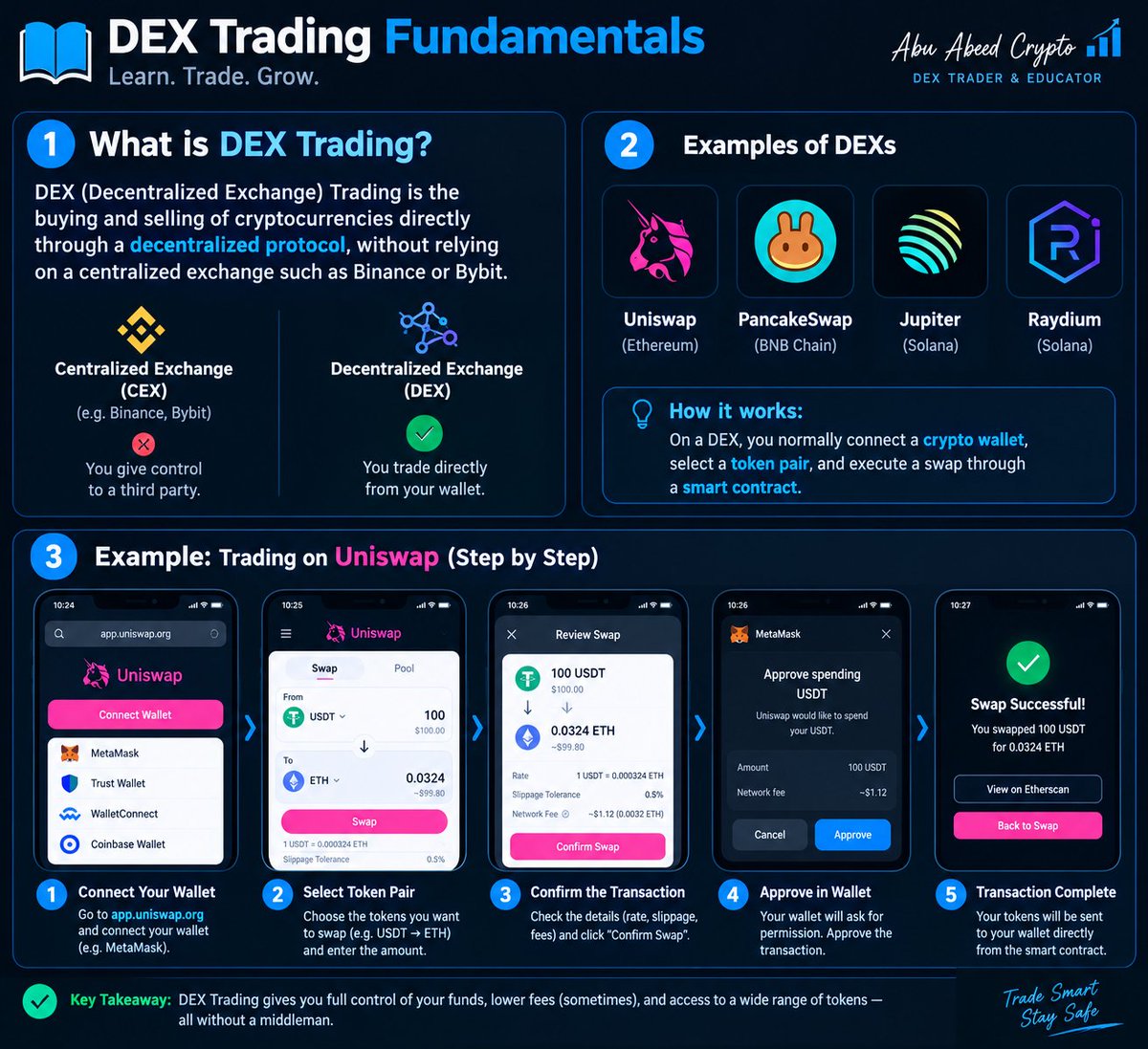
1. What is DEX Trading?
DEX (Decentralized Exchange) Trading is the buying and selling of cryptocurrencies directly through a decentralized protocol, without relying on a centralized exchange such as Binance or Bybit.
Examples include:
Uniswap
PancakeSwap
Jupiter
Raydium
On a DEX, you normally connect a crypto wallet, select a token pair, and execute a swap through a smart contract.