If you really think about it, this pledge has actually been fulfilled beyond what was promised!
The pledge was to expand medical insurance coverage to Thailand and Dubai (UAE). Sure, that expansion never quite made it to the general public, but good news! Our representatives, the MPs, now enjoy medical coverage in Thailand and the UAE, plus Turkey for good measure.
So technically, the promise was delivered… just to the people who made the promise instead of the people it was made to.
Congratulations, Maldivians! 👏
This is one of the main reasons I could never stand with or behind MDP.
It’s what I call the “at any cost” mentality.
MDP has always had and still has educated, principled individuals with strong values. But from its early days until now, the party leadership has too often chosen chaos, harassment, and ridicule as its political tools.
It didn’t matter if it fractured the close-knit bonds we share as small island communities.
It didn’t matter if it eroded long-standing social trust beyond repair.
Nothing seemed to matter as long as it delivered a temporary political win. And today, this mindset is no longer limited to one party. It has become the norm in our politics.
We’ve lost the ability to sit together and have meaningful discussions despite our differences. Instead, politics has turned into a race to destroy the opponent, no matter the social or economic cost. We’ve become a society chasing short-term victories, willing to sacrifice long-term stability for immediate gain.
At this point, it feels less like governance and more like two competing corporations ( MDP vs PPM/PNC ) fighting for control of the presidency, not to serve the nation, but to extract maximum $$$ from the economy.
And in that fight, it is the country, our society, our people, and our very future that suffer the most. Why? Because the foundation of real progress any country is UNITY, a nation that stands together for common causes.
Let’s not trade that away for the temporary gains of today.
From what I’ve gathered, the so-called chemical godown in Thilafushi is being used as a “garage letter” scam, pay for paperwork, show a location there, but actually import and store everything in Male because it’s more profitable.
7 years. 2 governments. Zero real change.
Same companies. Same dirty tactics. Different faces in power.
At this point, it’s clear that public safety is not their concern. So now, people must safeguard themselves before more lives are lost or people lose their homes and life savings.
If you live in the Male’ area, start documenting. Take photos. Take videos. Note locations. Expose these godowns.
Post it. Report it. Force action.
If you can’t post publicly, DM it to those who can. Let’s bring this out.
#ChemicalFreeMale
Breaking:
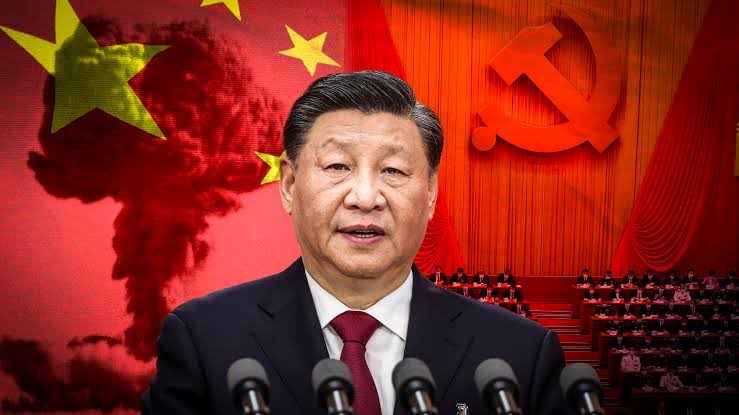
China Becomes First Country in the World to Hit $43 Trillion GDP (PPP)
95% of people in China now own their own homes.
The Largest economies in the world, by GDP ( PPP).
1. 🇨🇳 China — $43.49 trillion
2. 🇺🇸 United States — $31.82 trillion
3. 🇮🇳 India — $19.14 trillion
4. 🇷🇺 Russia — $7.34 trillion
5. 🇯🇵 Japan — $6.92 trillion
6. 🇩🇪 Germany — $6.32 trillion
7. 🇮🇩 Indonesia — ~$5.4 trillion
8. 🇧🇷 Brazil — ~$5.2 trillion
9. 🇫🇷 France — ~$4.7 trillion
10. 🇬🇧 UK — ~$4.6 trillion
11. 🇹🇷 Türkiye — ~$4.0 trillion
12. 🇮🇹 Italy — $3.82 trillion
🌍 Top 10 contributors to global real GDP growth (2026)
1.🇨🇳 China — 26.6%
2.🇮🇳 India — 17.0%
3.🇺🇸 United States — 9.9%
4.🇮🇩 Indonesia — 3.8%
5.🇹🇷 Türkiye — 2.2%
6.🇳🇬 Nigeria — 1.5%
7.🇧🇷 Brazil — 1.5%
8.🇻🇳 Vietnam — 1.6%
9.🇸🇦 Saudi Arabia — 1.7%
10.🇩🇪 Germany — 0.9%
📌 China + India alone = 43.6% of global growth
📌 Asia-Pacific accounts for ~50% of total growth
Source: IMF
Airports generate revenue from airlines. Airlines will operate as long as there’s a passenger demand. The passenger demand to the Maldives is from tourism.
Combination of collaborative effort from tourism stakeholders + airlines operators is what Hanimaadhoo needs.
The National Pay Commission (NPC) was established under Act No. 11/2016 (National Pay Policy Act) with a single, clear mandate: to ensure fairness, consistency, and credibility in public sector remuneration.
Recent changes to the public service pay framework, however, raise serious questions about whether this intent is being upheld.
One of the most troubling outcomes has been the impact on professionals within the judiciary, particularly lawyers. Despite no change in job descriptions, responsibilities, or qualifications, many lawyers have experienced a decline in their take-home pay, whether overtime is included or excluded. Even more concerning is the inconsistency in grading. While Assistant Directors at level 7 have been upgraded to Level 8, the lawyers who were previously at Level 7 have not been similarly upgraded. This disparity signals not a neutral administrative adjustment, but a devaluation of professional roles.
When professional responsibilities remain unchanged yet remuneration and grading stagnate or decline, the very foundation of a merit-based public service is weakened. It is important to note that the Department of Judicial Administration does not have the final authority over grading and remuneration, these decisions rest with the National Pay Commission. Responsibility for these outcomes, therefore, lies squarely with the NPC.
Pay reform must also respect established working hours. Public servants are now reportedly required to work eight hours before becoming eligible for overtime, even though the official working day for public servants remains as six hours. This creates a clear contradiction: employees are effectively expected to work beyond their formal obligations before over time applies. Such inconsistencies contradicts the labour law.
Equally important is the issue of internal equity. There are growing concerns that staff of the National Pay Commission earn higher salaries than highly qualified professionals in the Ministry of Finance and Planning, despite the latter bearing critical responsibility for national budgeting, public debt, resource mobilisation, fiscal stability, and economic policy. When those who design pay structures appear to benefit disproportionately from them, the credibility of the entire reform process is inevitably called into question.
Pay reform is not merely a technical exercise. It is a reflection of how a country values professionalism, expertise, and public service. A framework that results in pay reductions for specialised professionals, unclear overtime rules, and distorted internal hierarchies risks long-term damage, not only to morale, but to institutional capacity and ultimately public trust.
The objective of the National Pay Policy should be to strengthen the public service, not to dilute professional standards or create perceptions of unfairness. This requires transparency in methodology, clear justification for re-grading decisions, and meaningful consultation with affected professionals. Without these, pay reform risks becoming a source of instability rather than progress.
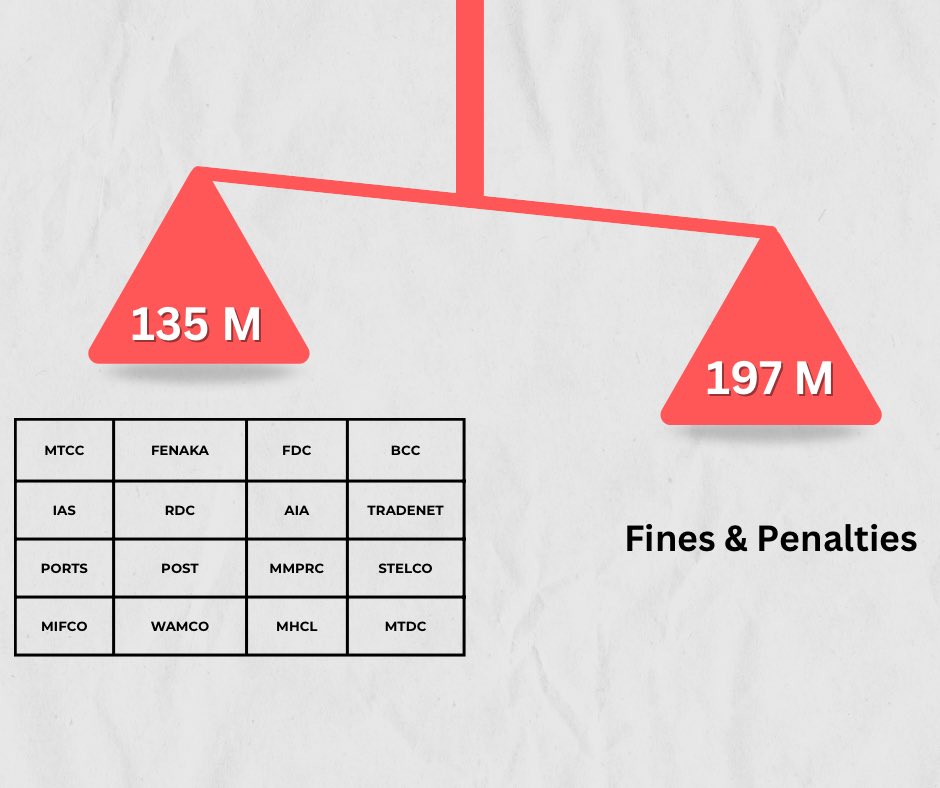
Excluding 3 banks & financial institutions, we have 25 SOEs.
Of those, 18 SOEs (72%) made a combined profit = 135 million in Q1.
Meanwhile, fines & penalties collected by Gov for this year = 197 million.
Most SOEs exist for one purpose: jobs for political people! ( 30,000 + at the moment )
To keep them running and salaries paid, the Gov pours billions of taxpayers money into them and they takes billions more in loans in our name.
As a country, we need to confront this. This is not just unsustainable, it wastes billions of public money that could have been used for something far more beneficial or productive.
Hanimadhoo International Airport has now officially opened, marking a remarkable milestone. The next step is for the airport to focus on growth by attracting airline operators and strengthening its marketing efforts. Initially, viable operations may include regional flights within a two-hour range. Given the current limited number of available beds, partnering with regional carriers or promoting the airport as a potential transit stop could be a practical starting point.
Considering the current loan and operational costs over a 25-year period, the daily operating cost is estimated to be around USD 20,000+.This highlights the importance of ensuring sustainable operations and effective route development to achieve long-term financial viability. Let’s work together.