Absolutely burn everything to the ground. Complete failure by this athletic department to not keep one of the greatest athletes in Florida State history.
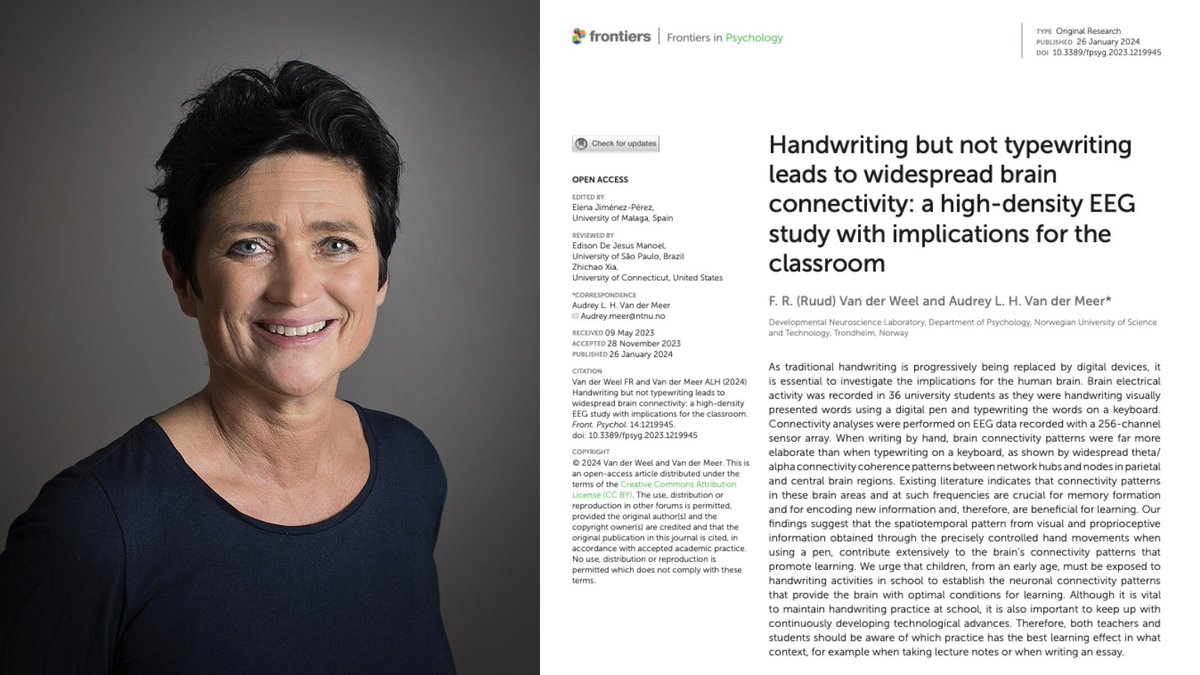
A Norwegian neuroscientist spent 20 years proving that the act of writing by hand changes the human brain in ways typing physically cannot, and almost nobody outside her field has read the paper.
Her name is Audrey van der Meer.
She runs a brain research lab in Trondheim, and the paper that closed the argument was published in 2024 in a journal called Frontiers in Psychology. The finding is brutal enough that it should have changed every classroom on Earth.
The experiment was simple. She recruited 36 university students and put each one in a cap with 256 sensors pressed against their scalp to record brain activity. Words flashed on a screen one at a time.
Sometimes the students wrote the word by hand on a touchscreen using a digital pen, and sometimes they typed the same word on a keyboard. Every neural response was recorded for the full five seconds the word stayed on screen.
Then her team looked at the part of the data most researchers had ignored for years, which is how different parts of the brain were communicating with each other during the task.
When the students wrote by hand, the brain lit up everywhere at once.
The regions responsible for memory, sensory integration, and the encoding of new information were all firing together in a coordinated pattern that spread across the entire cortex. The whole network was awake and connected.
When the same students typed the same word, that pattern collapsed almost completely.
Most of the brain went quiet, and the connections between regions that had been alive seconds earlier were nowhere to be found on the EEG.
Same word, same brain, same person, and two completely different neurological events.
The reason turned out to be something nobody had really paid attention to before her work. Writing by hand is not one motion but a sequence of thousands of tiny micro-movements coordinated with your eyes in real time, where each letter is a different shape that requires the brain to solve a slightly different spatial problem.
Your fingers, wrist, vision, and the parts of your brain that track position in space are all working together to produce one letter, then the next, then the next.
Typing throws all of that away. Every key on a keyboard requires the exact same finger motion regardless of which letter you are pressing, which means the brain has almost nothing to integrate and almost no problem to solve.
Van der Meer said it plainly in her interviews.
Pressing the same key with the same finger over and over does not stimulate the brain in any meaningful way, and she pointed out something that should scare every parent who handed their kid an iPad.
Children who learn to read and write on tablets often cannot tell letters like b and d apart, because they have never physically felt with their bodies what it takes to actually produce those letters on a page.
A decade before her, two researchers at Princeton ran the same fight using a completely different method and ended up at the same answer. Pam Mueller and Daniel Oppenheimer tested 327 students across three experiments, where half took notes on laptops with the internet disabled and half took notes by hand, before testing everyone on what they actually understood from the lectures they had watched.
The handwriting group won by a wide margin on every question that required real understanding rather than surface recall.
The reason was hiding in the transcripts of what the two groups had actually written down.
The laptop students typed almost word for word, capturing more total content but processing almost none of it as they went, while the handwriting students physically could not write fast enough to transcribe a lecture in real time, which forced them to listen carefully, decide what actually mattered, and put it in their own words on the page.
That single act of choosing what to keep was the learning itself, and the keyboard had quietly skipped the choosing and skipped the learning along with it.
Two studies. Two countries. Same answer.
Handwriting makes the brain work. Typing lets it coast.
Every note you have ever typed instead of written went into your brain through a thinner pipe. Every meeting, every book highlight, every idea you captured on your phone instead of on paper was processed at half depth.
You did not forget those things because your memory is bad. You forgot them because typing never woke the part of the brain that would have made them stick.
The fix is the thing your grandmother already knew.
Pick up a pen. Write the thing down. The slower road is the faster one.
I wanted to say that because I felt like I probably shouldn’t be a mom, because I didn’t have this internal pull that many did. A lot of women think that.
But I was wrong.
Being a mother (to six kids) is the very best choice I’ve ever made.
‘She was up until 3am on her phone’
‘I can’t get that phone away from him’
‘It’s all these things he’s seeing online’
‘She’s always on social media’
YOU ARE THE PARENT.
YOU. ARE. THE. PARENT.
I'm a firm believer in assessing spelling. This is one assessment that provides a ton of information. Here is one of my students spelling from beginning of the school year and now. These words were taught in the Word Mapping Project Curriculum.
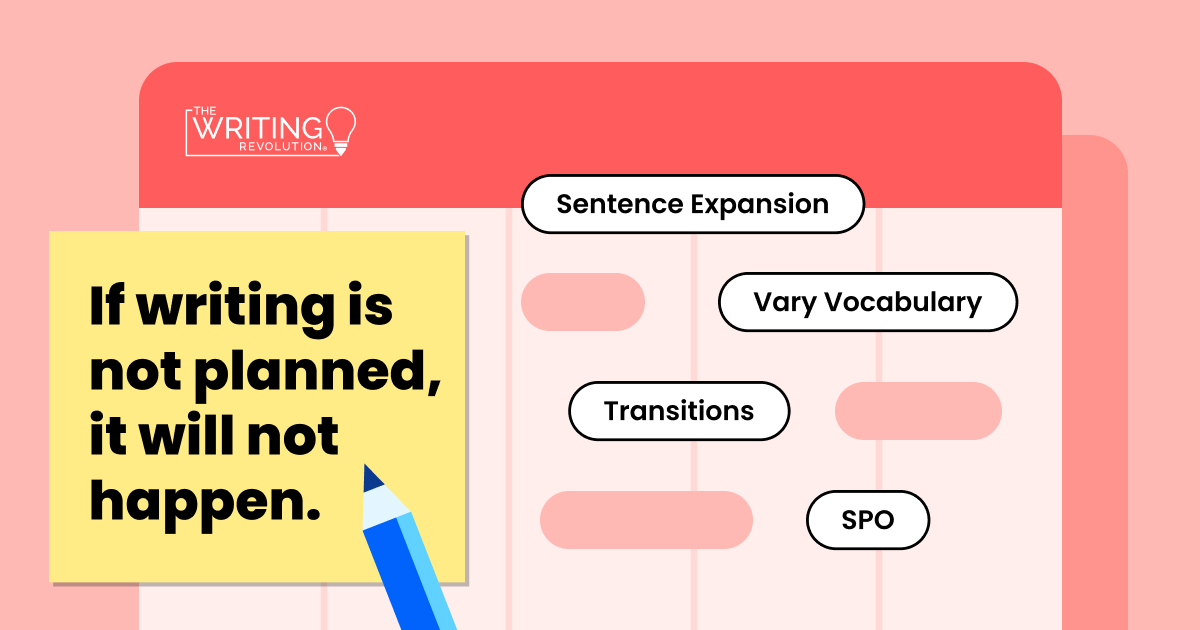
📝 'If writing is not planned, it will not happen' is a cornerstone principle of The Writing Revolution's approach to literacy. This powerful reminder speaks to the intentionality needed in education—writing instruction must be deliberately scheduled, structured, and integrated across all subject areas, not left to chance. The Hochman Method embodies this philosophy by providing systematic writing strategies that teachers can embed within their content instruction every day. Rather than treating writing as an occasional activity or the sole responsibility of ELA teachers, TWR advocates for consistent, purposeful writing opportunities throughout the curriculum. When writing becomes a planned priority in every classroom, students develop the critical thinking and communication skills essential for academic and professional success. #writingrevolution #writinginstruction #WritingAcrossTheCurriculum #IntentionalTeaching
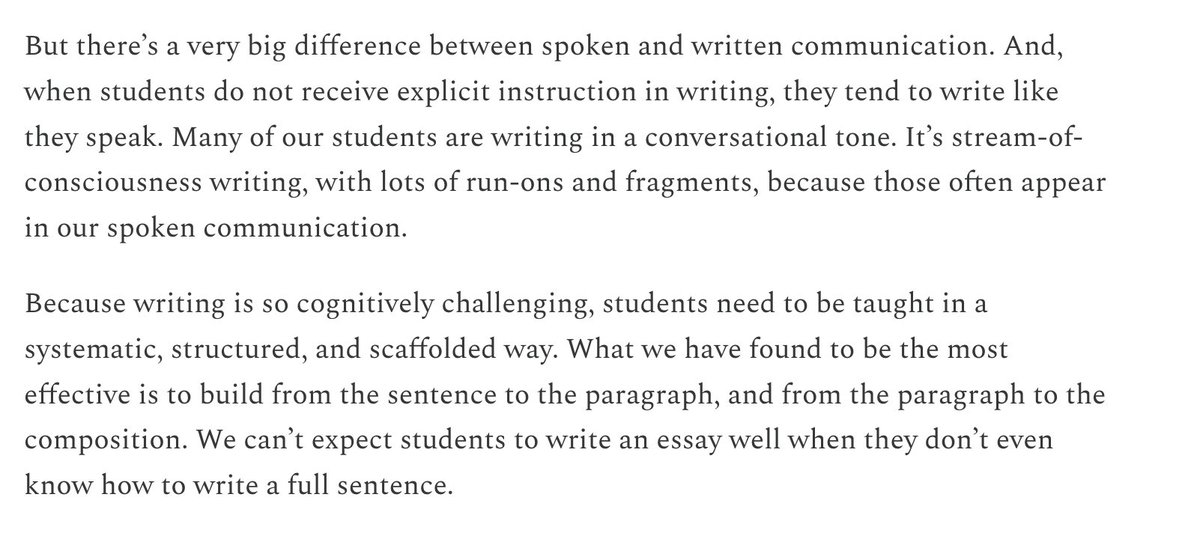
"there’s a very big difference between spoken and written communication. And, when students do not receive explicit instruction in writing, they tend to write like they speak"
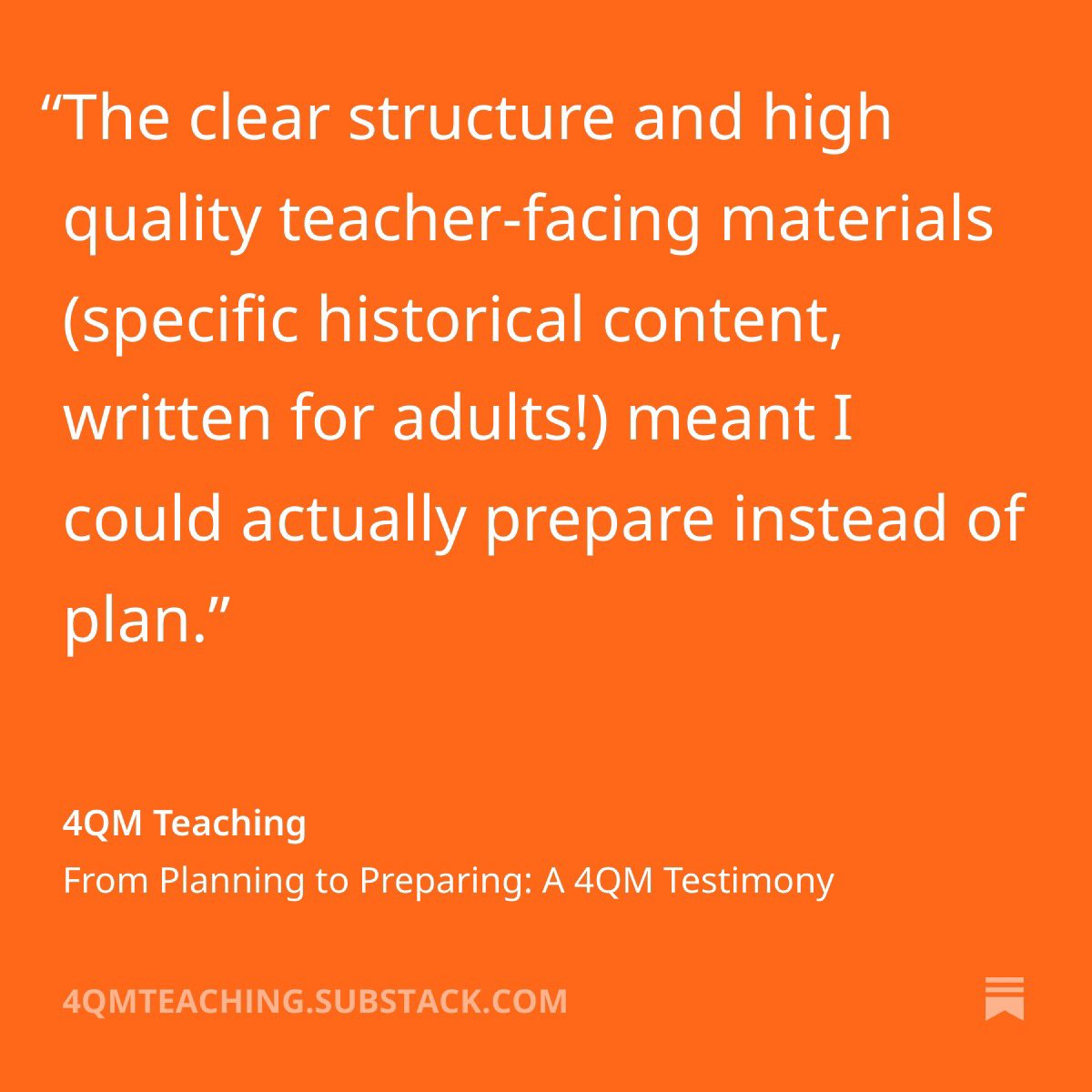
Tyler Schumacher, a 5th Grade teacher in Michigan, listened to the @HistoryMatrs Podcast. He heard Jon + Gary from @4qmTeaching explain why curriculum design exists as a profession for a reason AND why #HistoryMatters.
Read more about Tyler’s experience: https://t.co/mXf3Di6gKK
2025 was the lowest murder rate since 1900. 1900! Thanks to President Trump and police being able to do their jobs. In Washington, DC, the murder rate dropped 40% in one year! It’s incredible & should be the top story in the country.
In 2020, Floridians overwhelmingly supported an amendment to our state constitution that ensured only citizens can vote. It passed with nearly EIGHTY PERCENT of the vote.
We need to pass the SAVE Act YESTERDAY!
Growing numbers of children are starting school unable to grip a pencil, hold a knife and fork, go to the toilet, or even recognise their own name. A culture of extreme tolerance is creating a range of unforeseen problems.
My latest for @unherd:
https://t.co/QZOEBA6uKn
The Case for whole class historical fiction novels. A 🧵
This year my 5th graders have read Number the Stars (WW2 time period), Bud Not Buddy (Great Depression), and are now reading Watsons Go To Birmingham (1960s). In Watsons the author uses an allusion referring to the 1/
Many professional learning sessions spend a great deal of time explaining theory and pedagogy. We think educators also deserve to see it in action.
Teacher modeling is an essential part of our self-paced training here at The Writing Revolution. In this video clip, we see modeled instruction on how to revise and edit an elaborated paragraph. No hypotheticals. No “imagine this part.”
Teachers are expected to model for students every day. We believe professional learning should do the same.
🔗 Learn more about self-paced training: https://t.co/FGBA2GYgNc
#TeacherPD #writingrevolution #K12Teachers #LiteracyInstruction #scienceoflearning #writinginstruction #hochmanmethod #teaching
🚨Teach real math & teach it well. That’s the key to engagement. Projects and gimmicks can look appealing, but without purposeful practice they don’t build competence. Competence is what makes students like math. We like stuff when we're good at it.
Watch the clip 🔽
🎉We are celebrating 10 Years of #KnowledgeMatters and asked voices from the field two ques. for our latest blog:
1. What knowledge does each generation need to sustain a republic?
2. How does teaching content help to preserve our freedoms?
📚Read here: https://t.co/px1aq6BtfQ
Student: "Can I go to the bathroom?"
Me: No. You go to the bathroom every single time we have class, specifically when we need to write.
Student: "But I have ADHD!"
Me: Were you actually diagnosed, by a real medical professional...?
Student: "No... but!
Me: Look, you may have ADHD, I obviously don't know, but the real issue here is that you always leave when the work gets hard and it will never get easier if you keep leaving. You have to sit with it and actually try and I know you are absolutely capable and can do this.
Student: "You're right and I'm going to try but I still do think I have ADHD..."
I'm sympathetic to students and whatever possible "issues" they may have like ADHD but many students will try to exploit whatever they can to get out of doing the work all because its hard and they don't want to sit through that little bit of struggle
We have to push them to not take the easy road!