How are Democrats cheating in L.A.?
Let me show you…
There are 26 registered voters at this toilet in Los Angeles.
I’m not kidding. I have the voter records. See for yourself. The only thing here is a stinky port-a john inside an empty parking lot.
No homes. No mailboxes. No businesses. Yet TWENTY SIX ‘people’ are casting ballots here.
Straight-up voter fraud out in the open. This just a glimpse of what’s happening under Gavin Newsom.
This is why California desperately needs Voter ID — and we must pass the Save Act NOW.
Burglars in LA ran a full surveillance op before robbing homes.
7 were arrested. Their playbook:
— Checked social media to confirm you were traveling — Planted hidden cameras disguised as lawn decor
— Jammed Wi-Fi to kill your Ring camera
— Sent a fake DoorDash to confirm the house was empty
Most of this only worked because people made it easy.
Become a harder target.
After being fired from CBS, former “60 Minutes” correspondent Scott Pelley yesterday said that “new management has instructed me to inject falsehoods and bias into a politically sensitive story. I’ve been told to include assertions that are unverified.”
Those are remarkable claims for which Pelley presented no evidence. Indeed, it would be extraordinary for CBS to demand such things of a correspondent, either verbally or in writing, given the reputational risk to the network.
A more likely explanation is that Pelley disagreed with someone at CBS and then declared a difference of opinion to be a demand to lie. Support for this interpretation comes from the fact that he claimed Tuesday that CBS’s new management, led by Bari Weiss, was trying to kill “60 Minutes,” something for which he also did not provide evidence.
Moreover, the accusation makes no sense. CBS Editor-in-Chief Bari Weiss took the job to rebuild CBS News, not to wreck it, and a ruined “60 Minutes” would hurt her. Paramount’s owners did not pay billions for the network to burn its best asset for spite. So the simpler reading is that Pelley is the one stretching the truth.
Doing so appears to be a habit for Pelley. He told The New York Times, “I have been in combat in Afghanistan. I have been in combat in Iraq,” but being in a combat zone as a journalist is not the same as being “in combat.” The remark is yet more evidence of Pelley’s propensity to exaggerate to the point of lying.
For decades, mainstream liberal journalists have displayed remarkable levels of arrogance, even as they get major stories wrong.
Consider the case of CBS News’ former anchor Dan Rather. In the fall of 2004, two months before the election, Rather presented documents purporting to show favoritism in George W. Bush’s National Guard service. Experts called them forgeries. CBS apologized: “We made a mistake in judgment, and for that I am sorry,” Rather said. On air, he added, “I want to say, personally and directly, I’m sorry.”
But then, a decade later, Rather told Variety he still stands “100 percent” behind the report and reframed the apology.
Or consider NBC’s Katie Couric. In her 2016 documentary “Under the Gun,” editors inserted roughly eight to nine seconds of silence after she asked Virginia gun owners how to keep guns from felons and terrorists without background checks, making them look stumped. The raw audio revealed that they answered immediately.
Couric’s first instinct was to defend what she did, saying she was “very proud of the film.” Only after sustained backlash did she apologize.
In her 2021 memoir “Going There,” Couric admitted she cut Justice Ruth Bader Ginsburg’s harshest anthem-kneeling comments from her 2016 interview. Ginsburg had said kneeling players showed “contempt for a government that has made it possible for their parents and grandparents to live a decent life, which they probably could not have lived in the places they came from.”
NBC’s “Meet the Press,” in the spring of 2020, aired a clip of Attorney General Bill Barr that omitted part of his answer, misleading the public.
When Catherine Herridge interviewed Barr for CBS Evening News, she asked what history would say about his decision to drop the case against a former National Security Advisor to President Trump, Michael Flynn. The Obama administration’s FBI had illegally targeted Flynn for entrapment and prosecution. Barr replied that ”history is written by the winner. So it largely depends on who’s writing the history.”
"Meet the Press'" anchor at the time, Chuck Todd, said on air that Barr “didn’t make the case that he was upholding the rule of law. He was almost admitting that, yeah, this is a political job.’” But “Meet the Press” had left out the second part of Barr’s answer to Herridge, in which he said, “But I think a fair history would say that it was a good decision because it upheld the rule of law.”
The safeguards the journalism profession built against error did not work when it mattered. The corrections, the editors, the fact-checkers, and the standards desks all sat in place while the press got the border, trans medicine, climate, the sixth extinction, Russiagate, the Hunter Biden laptop, Covid and much else wrong. Gerth described how reporters sought to “shoot the messenger” rather than grapple with evidence contradicting the Russia collusion narrative...
https://t.co/K5tE372xGo
Please subscribe now to support Public's award-winning journalism and to read the full article!
Age verification sounds reasonable because people are thinking of IRL situations like checking an ID at a bar.
The problem is that age verification online is way more intrusive and complicated than an IRL ID check. It's effectively KYC for accessing the internet.
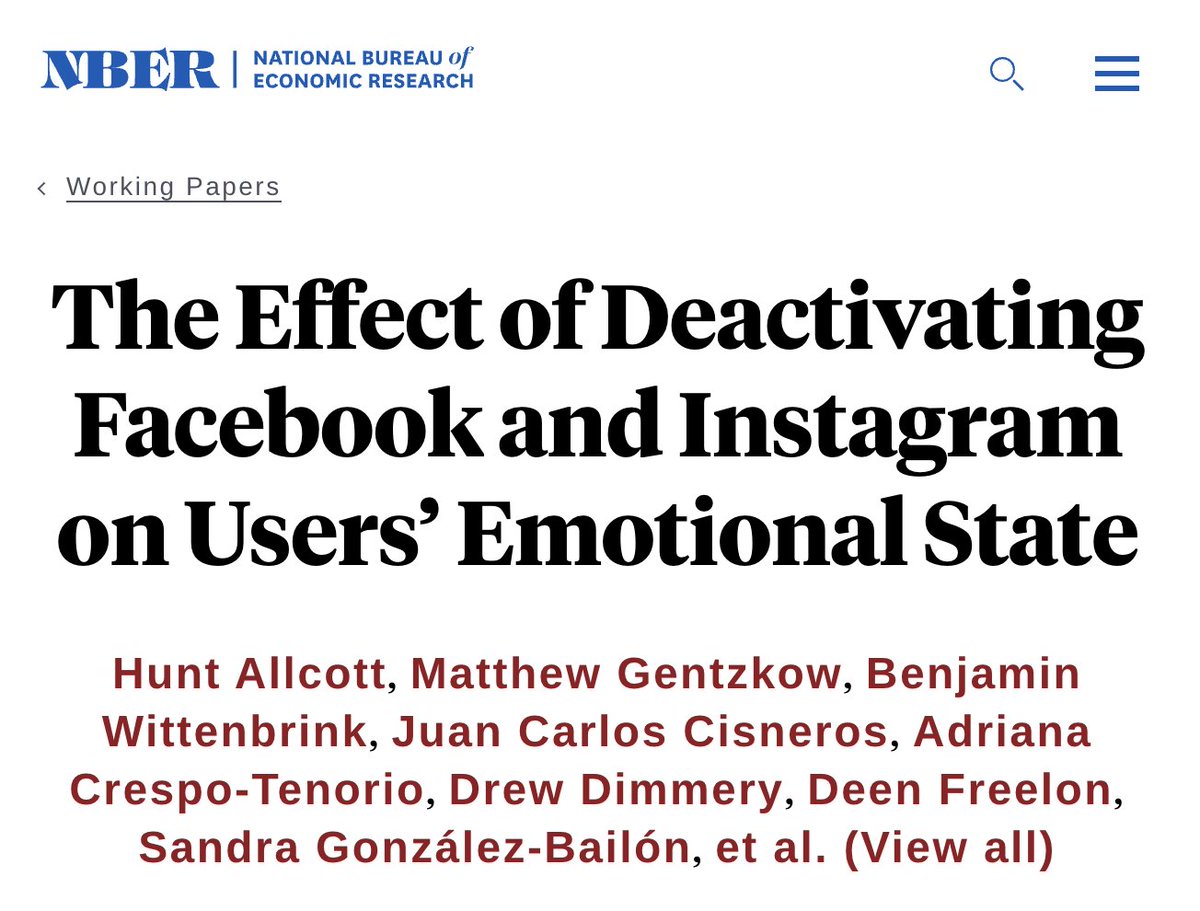
Stanford paid 35,000 people to quit Facebook and Instagram for 6 weeks
Depression dropped. Anxiety dropped. Happiness went up. Women under 25 on Instagram saw the biggest gains
That was 6 weeks. I'm going a full year.
Walter Schramm invested $6,000 in Amazon $AMZN stock in the late 1990s and, following a "buy and hold" strategy
He did not check his account for almost 20 years however
Thinking he had close to $100,000 by then, he checked his account, only to discover it empty
His stock was deemed "abandoned" and liquidated by the state of Delaware in 2008, through a process known as escheatment. Per the state, if you do not check your account for three years, it is deemed abandoned.
The state sold his shares for about $8,000 in 2008, and held the money for him.
Walter did receive a check for $8,000 in the end, but that was still a pittance relative to what the stock would have been worth had he checked his account regularly
The moral of the story is to check your accounts often
Meta supports age verification laws in multiple states.
Not because they care about child safety. Because self-reported birthdays are unreliable for ad targeting.
Verified identity data tied to a real government ID is worth a lot more.
The mandate forces every adult to hand over what Meta could never get voluntarily at scale.
Go deeper. 👇
LASIK eye surgery cost $2,200 per eye in 2000. Today it's around $1,000 per eye despite 24 years of inflation. Meanwhile, an MRI that cost $1,200 in 2000 now costs $3,000+. The difference? LASIK operates in a free market with no insurance interference and minimal regulation.
When patients pay directly, providers must compete on price and quality. LASIK clinics advertise prices, offer financing, and constantly improve technology to attract customers. Compare this to hospital procedures where prices are hidden, patients never see bills, and insurance companies negotiate opaque rates that somehow always increase faster than inflation.
Cosmetic surgery follows the same pattern. Breast augmentation, rhinoplasty, and other elective procedures have become more affordable and safer over decades. Surgeons invest in better techniques and equipment because they must satisfy paying customers, not insurance bureaucrats or hospital administrators focused on maximizing reimbursements.
The lesson is clear: remove third-party payment systems and excessive regulation, and you get Austrian economics in action. Prices fall, quality rises, and innovation accelerates. Healthcare costs aren't rising because of aging populations or new technology—they're rising because we've destroyed the price mechanism that makes markets work.
Zach Werenski got the assist on Jack Hughes' golden goal. Werenski wrestled the puck away from Canada's Nathan MacKinnon in the USA end, skated hard up the ice, and sent a cross-ice centering pass to a wide-open Hughes, who then fired it past Jordan Binnington 1:41 into overtime.
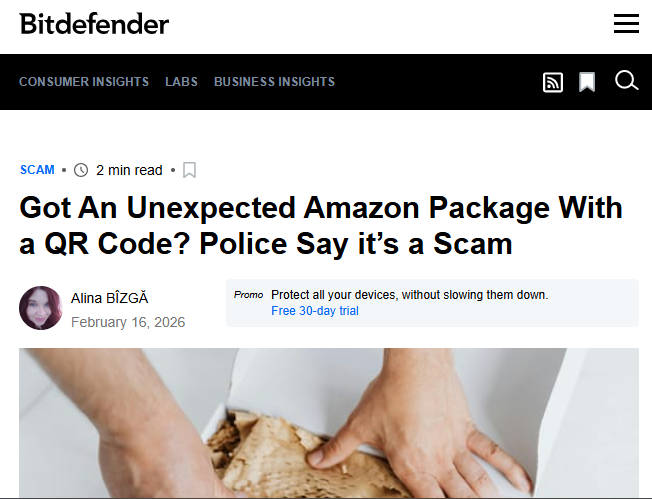
You get a package from Amazon. Your name's on it. Your address is correct.
But you never ordered anything.
This is NOT a mix-up. Police across the US are warning about a new scam, and the QR code inside the package is the trap.
Here's how it works:
Scammers send you an unsolicited package with Amazon branding. It looks completely real. Your name, your address, everything checks out. Inside, there's a small item (or sometimes just a note) and a QR code.The QR code tells you to scan it to "find out who sent this gift," claim a reward for leaving a review, or "report a wrong delivery."
Sounds harmless. It's not.
That QR code redirects you to a fake Amazon page designed to steal your login credentials. In some cases, it prompts you to download something to your phone, which then gives scammers access to sensitive data, including banking information.
One scan. That's all it takes to go from "mystery gift" to unauthorized charges or drained accounts.
This is actually a twist on an older scam called "brushing," where sellers ship cheap items to random addresses so they can post fake verified reviews. The 2026 version adds QR codes to turn a nuisance into an actual threat.
What to do if this happens to you:
✅Don't scan the QR code. Ever.
✅Don't enter any information on a site linked from the package.
✅Open the Amazon app or go to https://t.co/Tni1TKwGfw directly and check your order history. If nothing's there, you have your answer.
✅Monitor your bank and credit card statements for unusual activity.
✅If you already scanned the code and entered any information, change your Amazon password immediately, enable two-factor authentication if you haven't already, and contact your bank to flag potential fraud.
One more thing worth knowing:
QR codes are uniquely dangerous because you can't see where they lead before you scan. At least with a sketchy link in an email, you can hover over it and think twice. QR codes give you nothing. Keep that in mind anytime you encounter one in an unexpected context.
Stay safe out there.
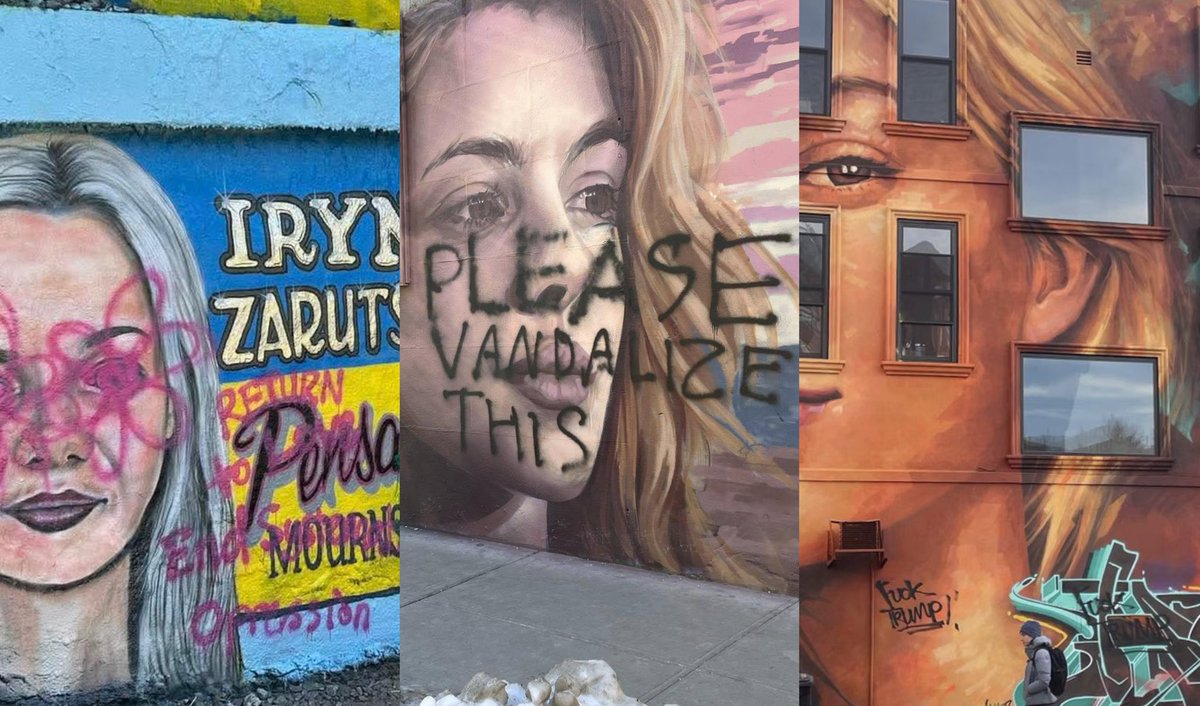
Murals for Iryna in New York and Florida were vandalized
What kind of sicko vandalizes a mural honoring an innocent young woman who was m*rdered in cold blood by a deranged career criminal?
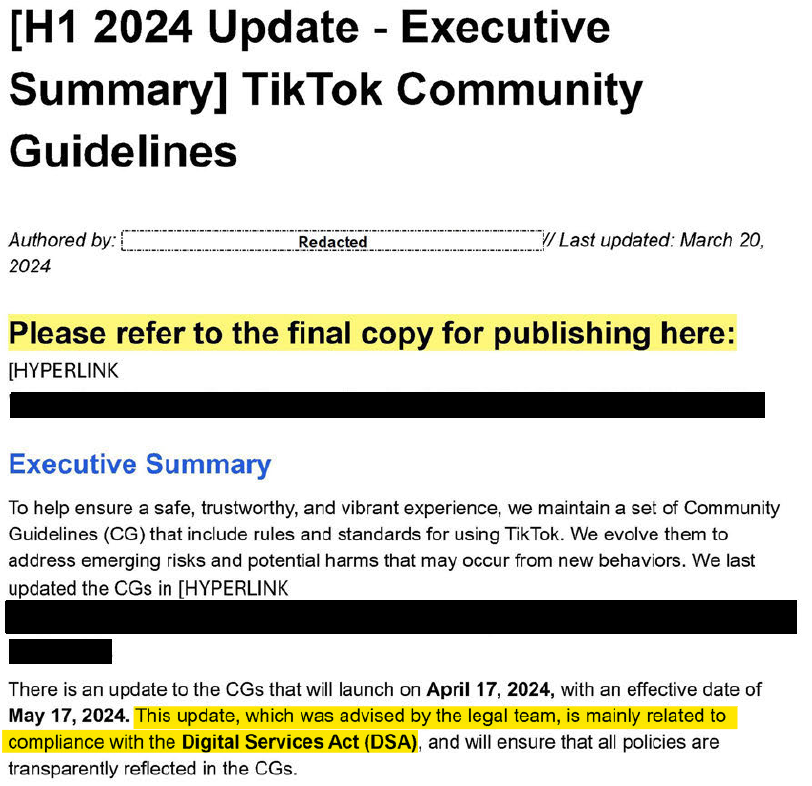
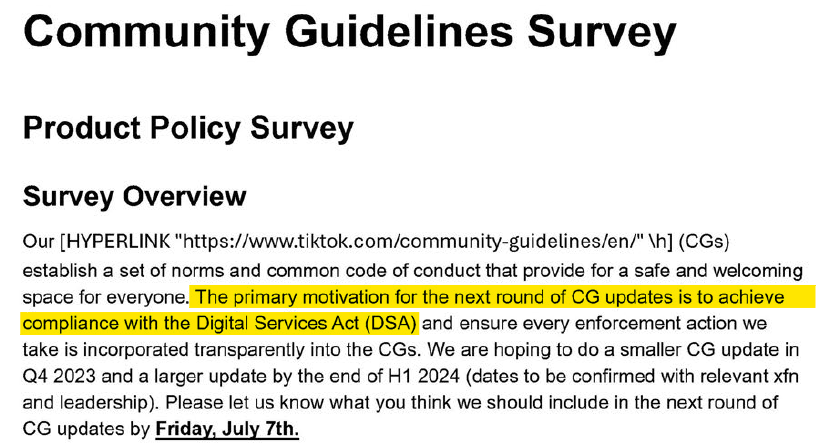
🚨The EU Censorship Files, Part II
For more than a year, the Committee has been warning that European censorship laws threaten U.S. free speech online.
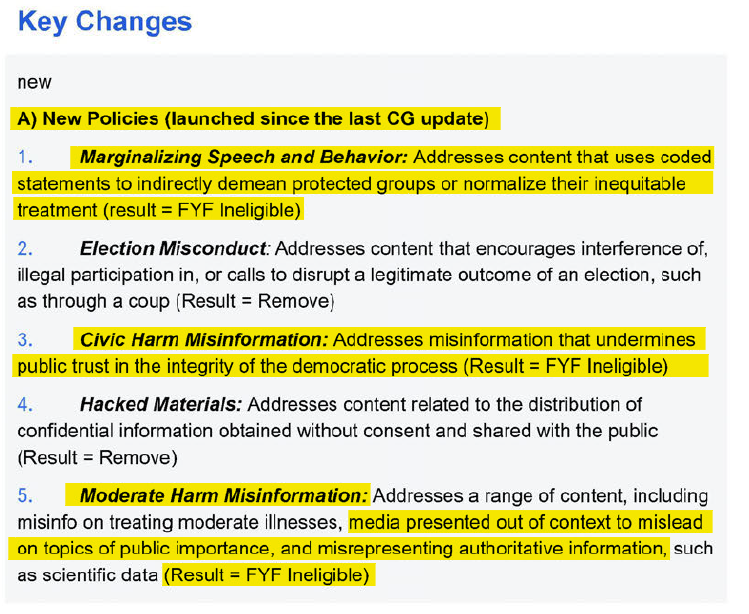
Now, we have proof: Big Tech is censoring Americans’ speech in the U.S., including true information, to comply with Europe’s far-reaching Digital Services Act.
Your fingerprint isn't a password you can change.
The recent raid on a Washington Post reporter is a good reminder of something we've said a few times before:
while biometric locks on your phone are convenient, they’re effectively a vulnerability dressed up as security.
Unlike a passcode you can refuse to divulge under the Fifth Amendment, your fingerprint or face can be compelled. A warrant, a traffic stop, even just physical proximity to your device becomes a potential access point.
Tech companies sold us on biometrics as the future of security. But they inverted the equation. Real security means you control access. Biometrics means your body is the password, which is something you can’t reset.
The better approach for your mobile device? A strong traditional unlock passcode.
Sure, it's not as fast and not as sleek. But it's yours to give or withhold. In a world where your phone contains your entire digital life, that distinction matters.
Your device, your choice. Choose wisely.