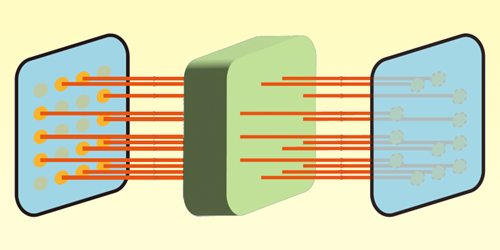
Researchers achieved parallel quantum teleportation across 100 spatially separable channels using programmable holography. The all-optical scheme transmitted a 100-pixel image of the letter “Q” with fidelities that beat classical limits.
Learn more: https://t.co/OT6FGqBMyw
This book is a gem released early this year. By Victor Eijkhout, the mind behind "The Art of HPC" book series. If you love modern c++ and HPC this is a must
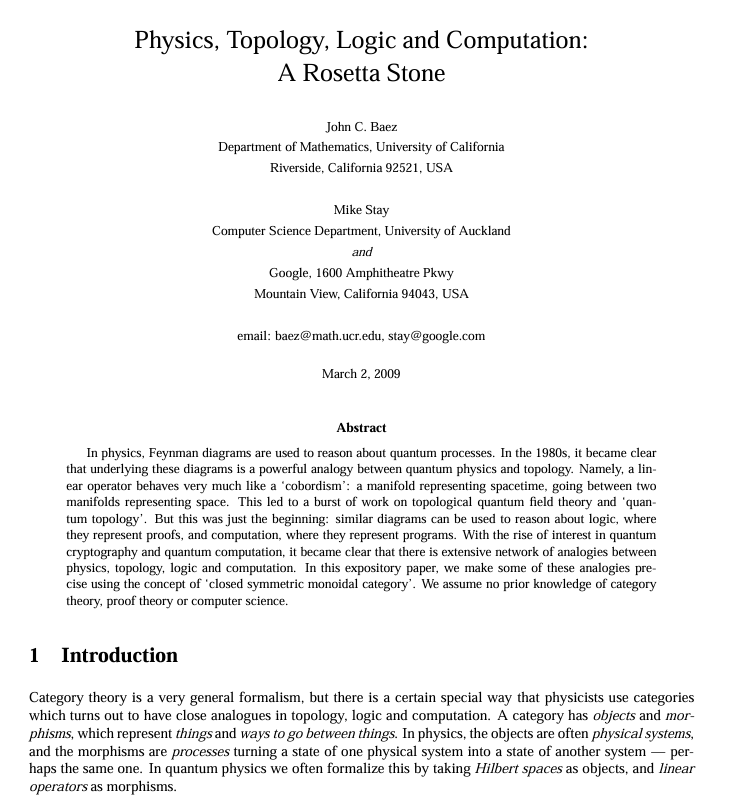
Physics, topology, logic and computation, a Rosetta stone, is a classic 73 page secret text by Mike Stay and John Baez, on the connections between bordism, Feymann diagrams, logic and computation.
Check the arxiv link and take a dive.
Hoy querria el handbook de oxford de filosofia de la fisica donde se encuentran articulos de varios temas fundamentales de filosofia de la fisica como la ontologia del espacio-tiempo hasta algunos muy poco explorados dentro del area como la filosofia de la hidrodinamica.
My side quest learning linguistic continues this week end, and for those who are also interested in the subject , I found this excellent ebook, shared publicly by UCLA, titled 'An Introduction to Syntactic Analysis and Theory' (in 246 pages) by Koopman, Sportiche and Stabler.
Any additional recommendations on syntactic theory are welcomed, will be checking out 'On the definition of words' by Maria and Williams when I'm done with this one!
🧬 Today's protein spotlight: Flavodoxin
Flavodoxin is a small electron-transfer protein that helps cells move electrons between enzymes during metabolism. It carries a flavin cofactor called FMN that temporarily holds electrons during chemical reactions.
Because these reactions involve rapid electron transfers through a flavin, flavodoxin raises an interesting question: could subtle quantum effects influence how these electron movements unfold? 👇
From: Cannon Fodder (1995), dir. Katsuhiro Otomo, Studio 4°C
This film was designed to flow without hard cuts -- the camera just goes and goes and goes
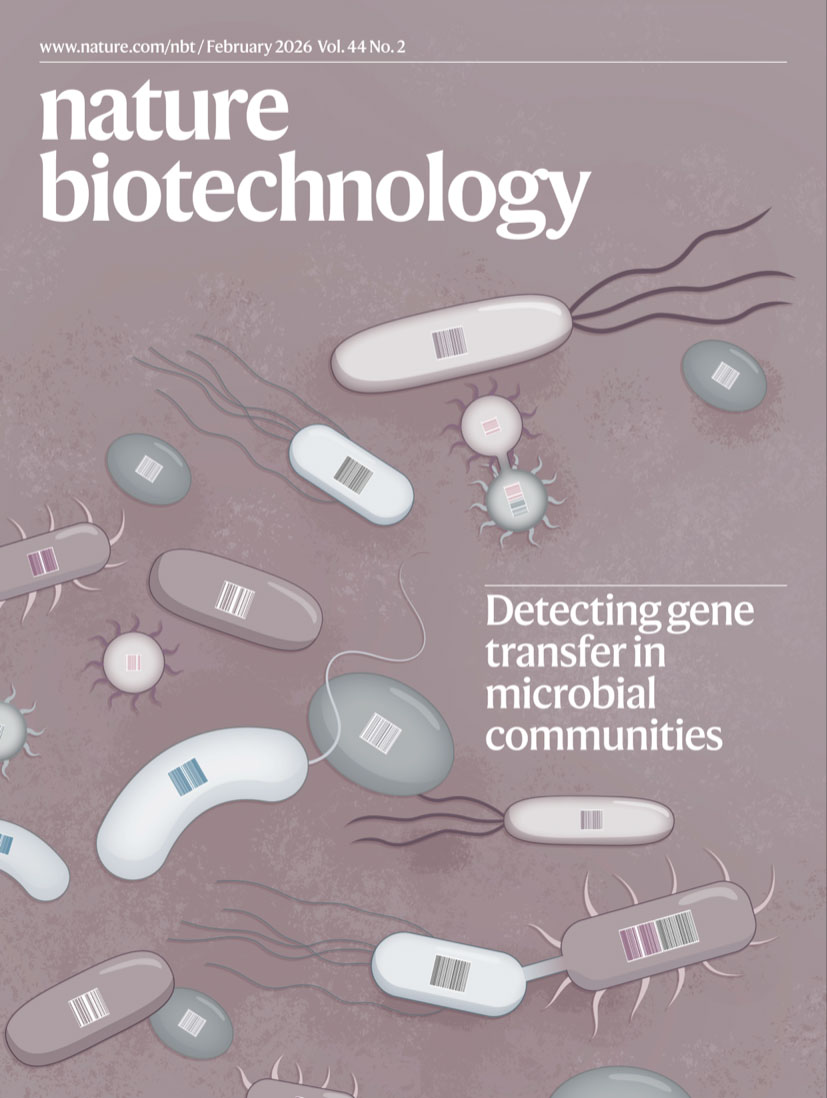
The February issue is live https://t.co/WuS0JH4dxV
On the cover, barcoding microbial ribosomal RNA creates a record of gene transfer events without requiring translation. Kalvapalle et al. designed catalytic RNAs to barcode host RNA upon gene transfer, allowing high-throughput sequencing to identify the community involved https://t.co/kthOXK0nGz
Gilbert Strang's "The Big Picture of Linear Algebra" shows the relationship between four fundamental subspaces of an m by n matrix.
These four subspaces are:
- Column space: all combinations of columns of A
- Row space: all combinations of rows of A
- Nullspace of A: all solutions to Ax = 0
- Nullspace of A^T: all solutions to A^T y = 0
Dimensions:
- Dimension of row space = Dimension of column space = r (rank of matrix)
- Dimension of nullspace of A = n - r
- Dimension of nullspace of A^T = m - r
Orthogonality:
- Vectors in nullspace of A are orthogonal to vectors in row space.
- Vectors in nullspace of A^T are orthogonal to vectors in column space.
(Slide's source: https://t.co/gL43l3hdRW by Gilbert Strang, licensed CC BY-NC-SA 4.0)
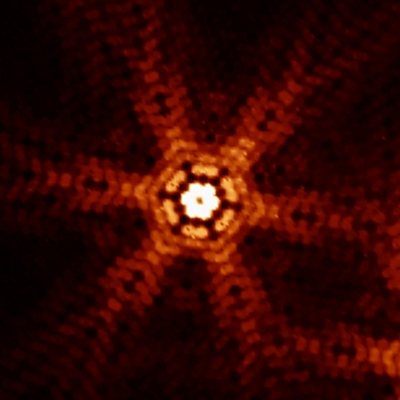
Direct imaging of electron scattering from atomic defects in a single atomic layer of tin on Si(111) reveals a clear microscopic signature of chiral superconductivity — providing evidence for this exotic form of pairing in a 2D material.
Read the paper: https://t.co/5k6z0f2k12
Underrated Ideas in Biology (#9)
Biology hasn't really had a "renaissance" since the 1960s. We can't accurately simulate a cell. There are many unknown unknowns, and a huge number of experiments can't be replicated.
So what do we do?
Well, in the 20th century, physicists used hydrogen atoms to develop a quantum theory of matter. By using the same atom across experiments, they could compare results and build a stronger knowledge base. Biology needs its own hydrogen atom.
Specifically, I think we need to understand an organism in sufficient detail such that we can accurately simulate it computationally. The dream should be to run experiments on computers that faithfully replicate results from the real-world. Markus Covert's group at Stanford has been working on this for decades and has made tons of progress. DARPA recently launched a $35M program toward computational microbe models. But there is still room for an even larger effort here.
We could start with E. coli or M. genitalium. The latter is nice because it has the smallest genome of any free-living organism. In 2006, the J. Craig Venter Institute found that only 382 genes in M. genitalium are essential. A whole-cell model of its life cycle was published in 2012. But even now, dozens of genes in this tiny microbe have unknown functions. We don’t fully understand how its molecules interact to carry out behaviors.
Now is a good time to build an Institute wholly devoted to understanding a single cell.
Everyone in the Institute would use the same cell line, and sequence it regularly to ensure it hasn't mutated. One part of the Institute would map its transcriptome and proteome at high spatial and temporal resolutions, in different environments. Other groups will build predictive models or do basic research into molecular mechanisms or behaviors, working out all the moonlighting proteins, filling in the "known unknowns," and finding "unknown unknowns."
An accurate cell simulation would *prove* what we know and don't know, and also help us separate truthful data from flawed data. It works as a "hydrogen atom" because we can use the simulation to make predictions and then validate them experimentally.
The fact we haven't already done this is quite embarrassing, in my opinion. It means there isn't enough funding or organization for moonshot projects in biology. Lewis Thomas was writing about "solving" an organism back in the 1980s. Even in 1973, Francis Crick published a paper called "Project K: The Complete Solution of E. coli," brainstorming on these ideas. (He was apparently inspired by Sydney Brenner, who was thinking about this by 1967.)
In 2002, Crick gave up on the idea and said his proposal was "hopelessly premature, being before many key technologies, rapid computation, and the web." But now those things have been sorted out. We have the compute and most of the other technologies; and if we need more, we can invent them.
What are we waiting for? Biology needs its hydrogen atom.
Whenever there has been progress, there have been influential thinkers who denied that it was genuine, that it was desirable, or even that the concept was meaningful.
One particular case is of Ernst Mach vs Lugwig Boltzmann.






![BahramShakerin's tweet photo. [Open Access][Book]
Gauge Theory of Weak Decays
Andrzej J. Buras
Cambridge University Press, 2020
https://t.co/SmEy3wBrRy https://t.co/E13kggK613](https://pbs.twimg.com/media/HCGRuhSWIAA8Bnl.png)
![BahramShakerin's tweet photo. [Open Access][Book]
QCD and Collider Physics
R. K. Ellis, W. J. Stirling, B. R. Webber
Cambridge University Press, 2010
https://t.co/GleLFuvzi1 https://t.co/pYsZGafB3h](https://pbs.twimg.com/media/HCGTep1WsAArnm8.png)